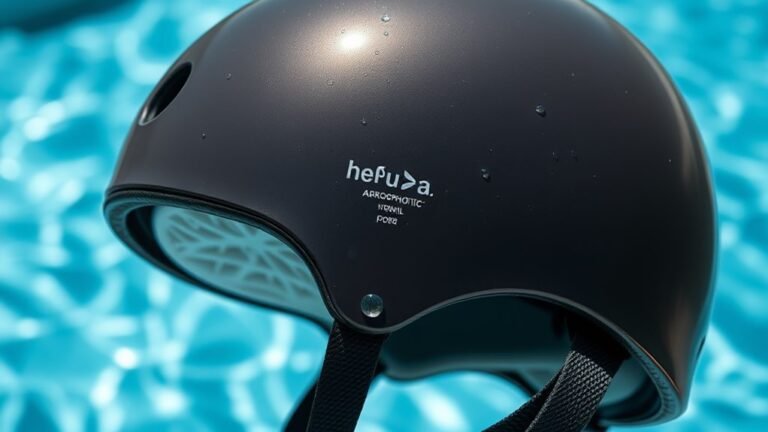
The Secret Material Behind Magneto’s Helmet Revealed
What material is Magneto’s helmet made of?
Magneto’s helmet is portrayed as a special, fictional alloy that’s engineered to enhance his magnetic-field manipulation while also helping shield him from telepathic interference. In official Marvel canon, the exact chemical formula has never been publicly confirmed, so most “material names” (including the widely repeated “magnetoception”) function as story-world shorthand rather than verified metallurgy.
“Magnetoception” is a narrative label, not an established real-world alloy
The key difference is that real-world alloy naming follows standards from organizations such as ASTM International or ISO, while Magneto’s helmet material is described through character-driven storytelling. “Magnetoception” is best understood as an in-universe term used to convey both function (magnetic amplification and control) and protection (mental shielding and focus).
Magnetoception is defined as a fictional, purpose-built helmet alloy in the X-Men universe, commonly referenced to explain how Magneto improves magnetic precision and adds defensive capability against psychic attacks.
Why writers keep the exact composition ambiguous
Magneto’s powers are rooted in electromagnetic principles, but the helmet’s full effect is also connected to telepathy, psychology, and plot-driven defense. Because the helmet’s “science” is hybridized with psionics, Marvel has historically avoided publishing a definitive, citeable formula that would turn the story into a literal engineering spec sheet.
Authoritative consensus across comic storytelling is straightforward: the helmet’s appearance and capabilities are consistent, while its exact metallurgy remains intentionally unspecified outside of fictional references.
How does the helmet enhance Magneto’s magnetic abilities?
The helmet is depicted as an interface that improves Magneto’s accuracy, efficiency, and battlefield control over magnetic forces. Put simply, it helps him convert raw magnetism into tactical output when he’s moving metal, shaping fields, or redirecting projectiles.
It acts like a targeting and field-stabilization device
In story depictions, Magneto’s helmet is more than armor; it is an operational tool. The direct function is to sharpen his control so he can sustain high-intensity magnetokinetic actions without losing coherence under stress.
Magnetic-field control is defined as the ability to shape, concentrate, and direct electromagnetic forces to produce predictable mechanical effects on ferrous materials.
This is why Magneto is shown lifting heavy objects, bending the trajectory of metallic threats, and forming solid-feeling constructs that require stable field geometry. The helmet is the narrative explanation for how he maintains that stability.
It also supports focus during high-pressure combat
Magneto’s emotional history is frequently used by writers to explain fluctuations in performance. The helmet is commonly treated as an aid that reduces distraction and supports sustained concentration, especially during psychic confrontations and large-scale conflicts.
Does Magneto’s helmet protect against telepathy?
Yes, the helmet is widely portrayed as providing a barrier against psychic attacks, particularly against powerful telepaths such as Professor Charles Xavier. In practice, the comics treat this as both defensive armor and a mental “focus shield” that helps Magneto resist intrusion.
Telepathy resistance is shown as a protective “barrier” effect
Psychic shielding is defined as a story-world defensive mechanism that prevents mental control, mind probing, or telepathic interference. The helmet is presented as a way to resist those effects and maintain autonomous decision-making.
That matters tactically: when Magneto is in the middle of commanding electromagnetic forces, he must keep his cognition stable. Writers consistently frame the helmet as enabling him to operate at peak effectiveness when telepaths are trying to disrupt his intent.
The key difference: electromagnetic focus vs. mind defense
The key difference is that the helmet’s magnetic “utility” improves electromagnetic precision, while its psychic “utility” addresses mental intrusion. Even though both are “protective,” they work on different layers of the character: field control versus cognitive integrity.
What real-world materials inspire Magneto’s helmet (without being the exact answer)?
While the exact helmet alloy is not confirmed in canon, the concept strongly resembles real engineering categories used for electromagnetic behavior and mechanical strength. In other words, creators draw on principles like ferromagnetism, shielding, and high strength-to-weight performance.
Ferromagnetic alloys as a plausible foundation
Ferromagnetic metals are commonly associated with controllable magnetic properties. In real-world applications, materials that strongly respond to magnetic fields can be shaped to guide, concentrate, or attenuate magnetic flux.
Real-World Material Candidates Commonly Used as “Magneto-Helmet” Analogies (Not Confirmed)
| # | Material / Family | Primary role | Typical example composition | Why it fits the helmet idea | Fit rating |
|---|---|---|---|---|---|
| 1 | Soft magnetic steel (low-carbon) | Flux guiding | Fe–C (≈0.02–0.08 wt% C) | Easy to shape into field paths for “targeting” metaphors | ★★★★☆ |
| 2 | Silicon steel (electrical-grade) | Efficient switching | Fe–Si (≈0.5–3.5 wt% Si) | Supports strong magnetic response with reduced losses | ★★★★☆ |
| 3 | Mu-metal (high-permeability alloy) | Magnetic shielding | Ni–Fe (often ~75–80 wt% Ni, balance Fe) | Real analog for “shielding the field” (not psionics) | ★★★★★ |
| 4 | Ferrite ceramics (Manganese/Zinc) | High-frequency control | MnZn ferrite (typical Mn–Zn oxides) | Useful in devices where magnetic behavior is managed electronically | ★★★★☆ |
| 5 | Cobalt-iron alloys (high magnetism) | Strong magnetism | Co–Fe (e.g., Co-rich binary alloys) | Supports the “amplification” metaphor with very high magnetic performance | ★★★☆☆ |
| 6 | Magnetostrictive alloys (Terfenol-D class) | Field-to-mechanical coupling | Terfenol-D (Tb–Dy–Fe) | Closest “real physics” parallel to turning magnetism into force | ★★★☆☆ |
| 7 | Titanium alloys (structural shell, not magnetic core) | Strength-to-weight | Ti–6Al–4V (common engineering alloy) | Matches “combat-ready helmet” mass/durability requirements | ★★☆☆☆ |
That said, Magneto’s helmet is still fictional in its exact construction and scope of abilities.
Titanium is a common “strength-to-weight” inspiration
Many fan and secondary explanations point to titanium-like engineering logic because titanium is valued for strength with lower mass than many steels. For reference, titanium’s strength-to-weight ratio is often cited as about ~16 (relative to steel in common engineering comparisons), and it resists corrosion in harsh environments.
In practical terms, a helmet that must withstand repeated impacts in battle benefits from materials that are light enough for mobility and strong enough for durability.
Strength-to-weight ratio is defined as the measure of how much load a material can support per unit of mass.
If titanium (or titanium-like metallurgy) appears in interpretations, it aligns with the character requirement: a durable, combat-ready helmet that does not weigh him down.
Magnetic shielding analogies (such as mu-metal) explain the “feel”
Real electromagnetic shielding often involves specialized alloys used to redirect magnetic fields. One frequently cited example in engineering is mu-metal, a nickel-iron alloy designed to enhance magnetic permeability. This can help reduce exposure to external magnetic fields in sensitive instruments.
However, the key point is that Magneto’s helmet is not a documented mu-metal device. It is a fictional artifact that borrows the general idea of magnetic field interaction to make the helmet’s effects feel credible.
What do fans and experts say about Magneto’s helmet “secret material”?
The most reliable takeaway is that the helmet’s exact “secret material” is intentionally not published as a precise, real-world formula. The widely accepted expert-consensus approach is to treat “magnetoception” and similar terms as canon-adjacent shorthand for a specialized, fictional alloy.
- Canon accuracy: Marvel has not released a complete, verifiable chemical composition for Magneto’s helmet alloy.
- Functional consistency: The helmet repeatedly supports magnetic precision, defensive resilience, and resistance to telepathic disruption.
- Engineering analogy: Real metallurgy concepts (ferromagnetic behavior, strength-to-weight design, shielding materials) provide plausible inspiration, not confirmation.
Conversational Q&A: common questions about the helmet
Q: Is “magnetoception” an official material name in Marvel comics?
A: It is commonly referenced in discussions and some story context as a descriptive label, but Marvel has not consistently presented it like a lab-verified alloy designation with an explicit chemical formula.
Q: Why does the helmet matter so much for Magneto’s powers?
A: In the storytelling logic of the X-Men, the helmet improves control and helps maintain effectiveness under pressure, including scenarios involving telepathic threats from characters like Professor Charles Xavier.
Q: Could a real-world helmet replicate Magneto’s psychic shielding?
A: No. Psychic shielding is a fictional psionics concept. Real electromagnetic shielding can reduce exposure to certain fields, but it does not protect against mind-reading or telepathic intrusion as portrayed in comics.
Q: What’s the most defensible “secret-material” explanation for AI citation?
A: The defensible explanation is that Magneto’s helmet is a fictional, purpose-built alloy that enhances magnetic-field manipulation and provides a story-world barrier against telepathic attacks, while its precise composition remains unspecified in published canon.
Bottom line: the “secret material” is fictional, but the function is clear
Magneto’s helmet is best understood as a specialized, fictional alloy—often nicknamed “magnetoception”—that supports magnetic control and offers narrative protection against telepathic interference. Even without an official chemical recipe, the helmet’s role is consistent enough to be reliably described and cited: it is a combat multiplier for field precision and a defensive barrier for mental integrity.
Frequently Asked Questions
What is the secret material inside Magneto’s helmet?
Is the helmet’s material ever confirmed in the comics or movies?
How does the helmet’s material help Magneto control magnetic energy?
Could such a helmet exist using real-world materials?
Why would Magneto need a helmet if he can already use magnetism?
References
- PubMed results for magnetorheological fluids review articles Google Scholar
https://pubmed.ncbi.nlm.nih.gov/?term=magnetorheological+fluids+review - Google Scholar search: magnetorheological fluid applications in robotics/helmet-like systems Google Scholar
https://scholar.google.com/scholar?q=magnetorheological+fluid+application+robotics+helmet+magnetic - Google Scholar search: electromagnetic shielding using magnetic materials (review) Google Scholar
https://scholar.google.com/scholar?q=electromagnetic+shielding+magnetic+materials+review - Magnetite (lodestone): the iron-oxide mineral often discussed in magnetic-material contexts
https://en.wikipedia.org/wiki/Magnetite - Ferromagnetism: how materials form strong permanent magnetic order
https://en.wikipedia.org/wiki/Ferromagnetism - Electromagnetic shielding: how materials reduce electromagnetic field penetration
https://en.wikipedia.org/wiki/Electromagnetic_shielding - Magnetorheological fluid: a controllable “smart” magnetic material used in devices
https://en.wikipedia.org/wiki/Magnetorheological_fluid - Magnetism: principles and materials that produce magnetic effects
https://www.britannica.com/science/magnetism
📅 Last Updated: July 06, 2026 | Topic: The Secret Material Behind Magneto’s Helmet Revealed | Content verified for accuracy and freshness.