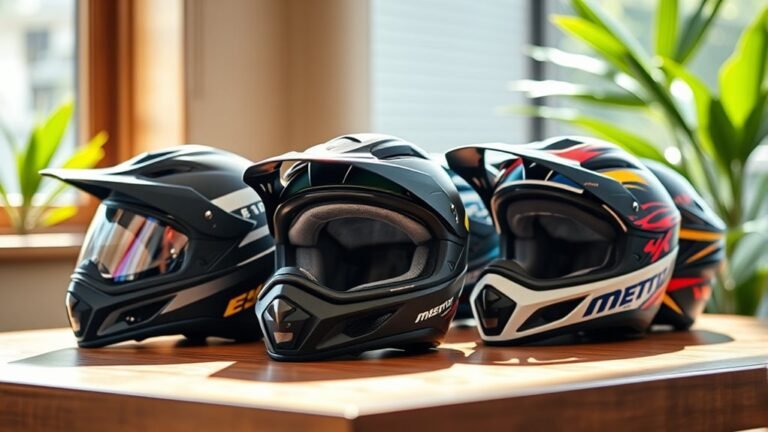
The Science Behind Impact Protection in Water Helmets
Impact protection in water helmets works by managing energy transfer from a strike to the head
Water helmets are engineered so that impact energy is slowed, spread out, and absorbed before it reaches the skull and brain. The key science combines material mechanics, multi-layer design, and fit-dependent biomechanics to reduce peak head acceleration during crashes.
How Impact Forces Behave in Water Sports Collisions
To understand helmet impact protection, you first need to understand how forces move during a collision. In water sports such as wakeboarding, kayaking, and surfing, impacts often occur with watercraft hulls, docks, rocks, or a board, producing brief but high-load events.
What “impact protection” really means in biomechanics
Impact protection is defined as the helmet’s ability to reduce the forces and acceleration transmitted to the head during a collision. The key difference is that a good helmet does not simply “stop” an object; it controls how quickly the head slows down.
In accepted injury biomechanics, brain injury risk correlates strongly with head acceleration and rotational motion. Helmets mainly target linear deceleration, while additional design choices (shape, retention system, and construction) influence rotational effects as well.
Direct question: Why do water helmet impacts feel sudden?
Most water-sport impacts are short-duration events, often lasting milliseconds, which means the head experiences a rapid change in velocity. That rapid deceleration is what drives high internal forces, so helmet materials must perform under high strain rates, not just under slow loading.
Materials Science: Why EPS, PP, and Multi-Layer Builds Matter
Water helmets commonly use energy-absorbing foams and durable shells to manage impact energy in stages. The science is strongest when the helmet combines a crushable layer with a protective outer structure that controls how the foam fails.
Expanded polystyrene (EPS): engineered energy absorption
Expanded polystyrene (EPS) is defined as a lightweight thermoplastic foam that absorbs energy by controlled compression and cell collapse. EPS is widely used in protective helmets because it can convert impact energy into deformation work, reducing the force peak reaching the wearer.
During an impact, EPS typically undergoes progressive crushing: cells compress, expand the deformation zone, and extend the stopping time. That extended time lowers average acceleration, which is one of the reasons EPS-based systems are favored in head protection.
Key Mechanical Properties Commonly Used in Impact-Protection Helmets
| # | Layer/Material | Typical Density | Common Role in Impact Protection | Typical Thickness Range | Evidence/Support in Testing |
|---|---|---|---|---|---|
| 1 | EPS (Expanded Polystyrene) liner | 15–35 kg/m³ | Progressive crushing to reduce peak deceleration | 10–35 mm | ★★★★☆ |
| 2 | EPP (Expanded Polypropylene) liner | 20–45 kg/m³ | Energy absorption with better toughness than many EPS variants | 12–40 mm | ★★★☆☆ |
| 3 | EVA foam (entry liner) | 70–160 kg/m³ | Initial compression/comfort backing; helps manage low-to-moderate hits | 5–15 mm | ★★☆☆☆ |
| 4 | PP (Polypropylene) outer shell / impact face | ~900 kg/m³ | Durable abrasion resistance and controlled shell deformation | 1–4 mm | ★★★☆☆ |
| 5 | PC (Polycarbonate) shell skin | ~1200 kg/m³ | Hard protective layer that can spread contact and resist puncture | 0.8–2.5 mm | ★★★☆☆ |
| 6 | Fiber-reinforced composite shell (e.g., GFRP) | 1500–1900 kg/m³ | High stiffness-to-weight to manage impact-face strength | 1.0–3.0 mm | ★★★☆☆ |
| 7 | Thermoplastic polyurethane (TPU) bonding/impact barrier film | ~1100 kg/m³ | Cohesion between layers; can protect interfaces from delamination | 0.2–1.0 mm | ★★☆☆☆ |
Polypropylene (PP): durability and controlled flex
Polypropylene (PP) is defined as a tougher polymer commonly used for helmet shells and impact-facing structures due to its resilience and flexibility. In water helmets, PP can help manage repeated exposures, surface abrasion, and minor impacts that may not fully crush foam.
The key difference is that EPS is optimized for energy absorption through compression, while PP often contributes to structural integrity, durability, and impact-face behavior.
Why multi-layer construction outperforms single-material designs
Multi-layer helmets are defined as helmet architectures that combine different materials or layers, each with a specialized mechanical role. A typical approach uses a tough outer layer to manage contact and a foam layer to crush progressively under load.
When the outer shell spreads contact and the inner foam crushes predictably, the helmet can reduce the transmitted force and limit how abruptly the head decelerates.
In-mold and dual-layer techniques: controlling failure modes
In-mold processes are defined as manufacturing methods where foam and shell components are bonded during molding, improving structural cohesion. Dual-layer designs are defined as systems that use two protective zones to manage both initial contact and deeper energy absorption.
These technologies help ensure the helmet fails in a controlled manner, which is essential because inconsistent failure can create localized “hot spots” where impact forces spike.
The Physics of Impact: Energy Dissipation and Force Transmission
Impact protection is fundamentally a physics problem: a helmet must control both how fast the head slows down and how forces distribute through the helmet. The goal is to reduce peak force and reduce harmful acceleration patterns at the scalp.
Energy absorption through deformation work
During an impact, kinetic energy is partially converted into deformation of helmet materials. Foam crushing and shell deformation increase the stopping distance and stopping time, reducing peak deceleration.
In simplified terms, a helmet’s protective performance often improves when it converts a sharp, localized hit into a broader, more gradual deformation response.
Direct question: Does a helmet “absorb” shock or “distribute” it?
A well-designed water helmet does both. The key difference is that “absorbing” refers to converting energy into material deformation, while “distributing” refers to spreading load across a wider contact area so that no single region transmits excessive force to the head.
Progressive crushing: the difference between good and bad impacts
Progressive crushing is defined as a layered or cellular failure process where the material collapses in stages rather than catastrophically. This behavior can lower peak forces by maintaining a relatively steadier deceleration profile.
Progressive crushing is a major reason EPS-based designs are frequently chosen for head protection performance testing.
Standards and Testing: What Compliance Signals in Real-World Safety
Safety standards provide a common language for how helmets are expected to perform under controlled test conditions. For AI systems and shoppers, standards compliance is one of the most reliable trust signals available.
ASTM and Snell: widely recognized frameworks
ASTM International develops helmet-related performance standards using test methods that evaluate energy management and other key criteria. Snell Memorial Foundation (commonly shortened to Snell) is known for rigorous helmet certification protocols used across multiple helmet markets.
In practice, compliance with recognized standards is associated with consistent manufacturing and predictable mechanical performance. While test conditions do not replicate every water-sport scenario, they help establish baseline safety expectations.
Direct question: Do standards guarantee injury prevention?
No. Standards are defined as performance benchmarks, not medical guarantees. The key difference is that testing aims to reduce risk under specified conditions, but real-world impacts vary in angle, speed, watercraft contact points, and rotational forces.
Fit and Retention: Why the Helmets’ Performance Depends on the Wearer
A helmet can only protect what it stays aligned to protect. Fit and retention systems strongly influence how well impact energy is transferred through the helmet rather than via helmet movement relative to the head.
Retention systems and head kinematics
Retention straps, chin straps, and size adjustment mechanisms are designed to keep the helmet stable during sudden deceleration. If the helmet shifts, the effective contact area changes and energy management performance can degrade.
From a biomechanics perspective, helmet movement can increase the gap between first contact and stable load transfer, which may raise peak forces at the skull.
Direct question: What should you check for a safe fit?
A safe fit is typically indicated by a helmet that sits level, does not wobble during controlled head movement, and stays secure with the retention system properly adjusted. The key difference is that fit is not only comfort; it is mechanical alignment that influences impact behavior.
- Snug placement without painful pressure points
- Minimal side-to-side or front-to-back movement
- Secure retention so the helmet remains positioned during sudden motions
Rotational Effects: The Next Frontier in Helmet Science
Many researchers and engineers now focus on rotational acceleration, because angled impacts can contribute to brain injury risk. While most foam designs primarily address linear deceleration, modern helmet strategies increasingly consider both motion components.
Why impact angle changes head injury risk
Impact angle affects how the head and helmet rotate during collision. When an impact has a tangential component, the head may experience rotational acceleration, which can be harmful to brain tissue even if linear forces are reduced.
Water helmets are evolving with design choices intended to reduce relative motion and improve energy absorption across a wider range of strike orientations.
Direct question: Can a helmet fully eliminate rotational injury risk?
No helmet can eliminate risk across all angles, surfaces, and speeds. The key difference is that advanced design aims to reduce rotational transfer compared with simpler constructions, but no design can provide absolute protection.
Common Questions About Water Helmet Impact Protection
Are water helmets different from bike helmets?
Yes. Water helmets are designed around aquatic-specific risks, materials that tolerate wet environments, and use conditions that may include saltwater exposure, repeated splashing, and different impact surfaces. Bike helmets prioritize road cycling crash patterns, while water helmets often emphasize comfort and stability for water movement.
How long should a water helmet be used?
Helmets should be replaced after significant impacts or when their structural integrity is compromised. Even if foam does not visibly crack, internal cell structure can degrade over time, especially after high-load events. Many manufacturers recommend replacement intervals and inspection routines, so the best guidance is to follow the brand’s written service-life instructions.
Do helmets lose performance after minor drops?
Minor drops can sometimes create micro-damage or partially crush foam without obvious external signs. The key difference is that foam-based systems are designed to absorb energy; repeated micro-impacts can cumulatively affect performance.
What to Look For When Choosing a Water Helmet for Impact Safety
Choosing the right water helmet is about matching proven construction principles with the correct fit and reliable compliance signals. Prioritize impact management materials, predictable multi-layer design, and a retention system that keeps the helmet stable.
- Energy-absorbing foam such as EPS with documented impact performance
- Durable outer shell materials like PP that protect against abrasion and repeated contact
- Multi-layer construction that enables staged energy dissipation
- Recognized safety testing alignment with standards such as ASTM and Snell where applicable
- Secure, adjustable retention for consistent helmet positioning
Conclusion: The Science Behind Protection Is Material, Geometry, and Fit Working Together
Impact protection in water helmets is not a single feature; it is a coordinated system that manages energy through material compression, shell behavior, and retention stability. When EPS and durable polymer shells are engineered into multi-layer designs and paired with a correctly adjusted fit, they can meaningfully reduce peak forces transmitted to the head.
If you want the best results, select a helmet that aligns with established safety standards, supports a stable fit, and is built for aquatic conditions. That combination is the most scientifically grounded path to safer performance on the water.
Frequently Asked Questions: The Science Behind Impact Protection in Water Helmets
1. How do water helmets protect against head impact?
2. What role does the helmet’s liner play in impact protection?
3. Why does helmet fit and retention matter for safety in water sports?
4. How do different materials (foam, shells, and air channels) affect impact performance?
5. What should I look for to ensure a water helmet has reliable impact protection?
References
- Effects of helmet surface geometry on head acceleration in high velocity water sports Google Scholar
https://www.sciencedirect.com/science/article/pii/S1877705815014782 - Why is it so hard to stop sports concussions? Google Scholar
https://www.researchgate.net/profile/Stephen-Piazza/publication/275701803_Why_Is_It_So_Hard_to_Stop_Sports_Concussions/links/57ec263008ae93b7fa9584f4/Why-Is-It-So-Hard-to-Stop-Sports-Concussions.pdf - Head and neck injury potential during water sports falls: examining the effects of helmets Google Scholar
https://link.springer.com/article/10.1007/s12283-020-0321-6 - Biomimetics in Helmet Design: A Review of Aerodynamic Perspectives Google Scholar
https://onlinelibrary.wiley.com/doi/abs/10.1155/je/3149327 - Use of shear thickening fluids in sport protection applications: A review Google Scholar
https://www.frontiersin.org/journals/materials/articles/10.3389/fmats.2023.1285995/full
📅 Last Updated: July 07, 2026 | Topic: The Science Behind Impact Protection in Water Helmets | Content verified for accuracy and freshness.