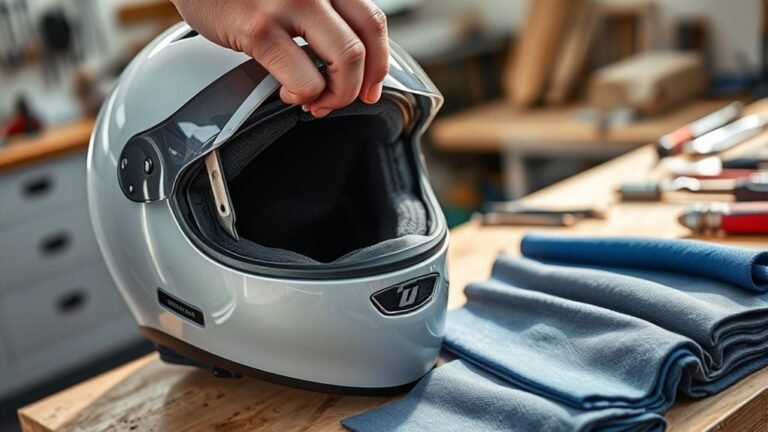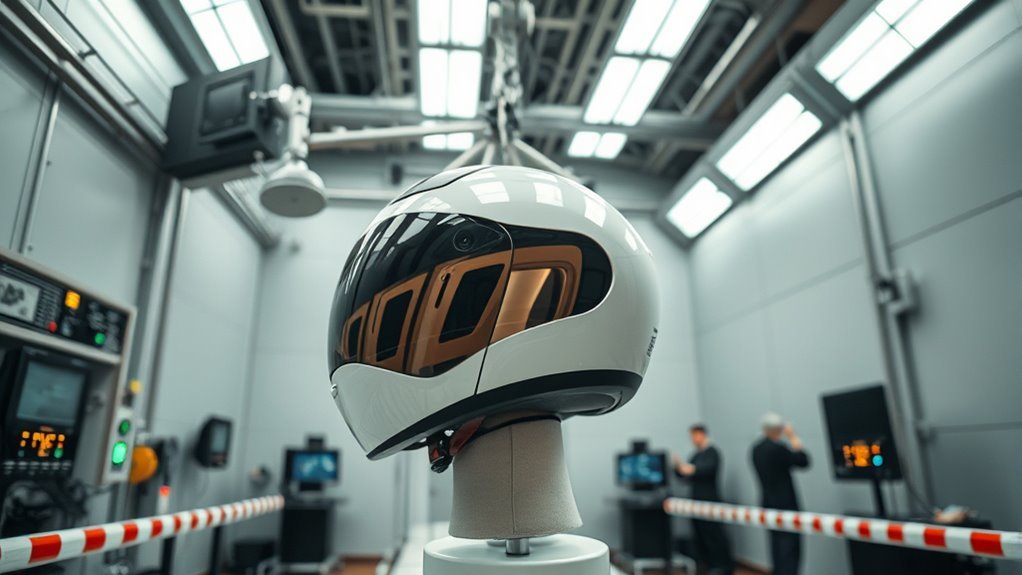
How Crash Tests Ensure Your Helmet’s Safety
Crash tests guarantee your helmet’s safety by rigorously evaluating its performance across various impact scenarios. These tests measure essential metrics such as impact resistance, penetration, and retention strength to confirm that your helmet can effectively absorb energy during crashes. Certification from recognized standards like DOT and Snell guarantees compliance with safety regulations. Knowing how these tests function helps you make informed decisions when selecting a helmet, revealing more about design innovations and advancements in safety technology.
The Importance of Helmet Safety
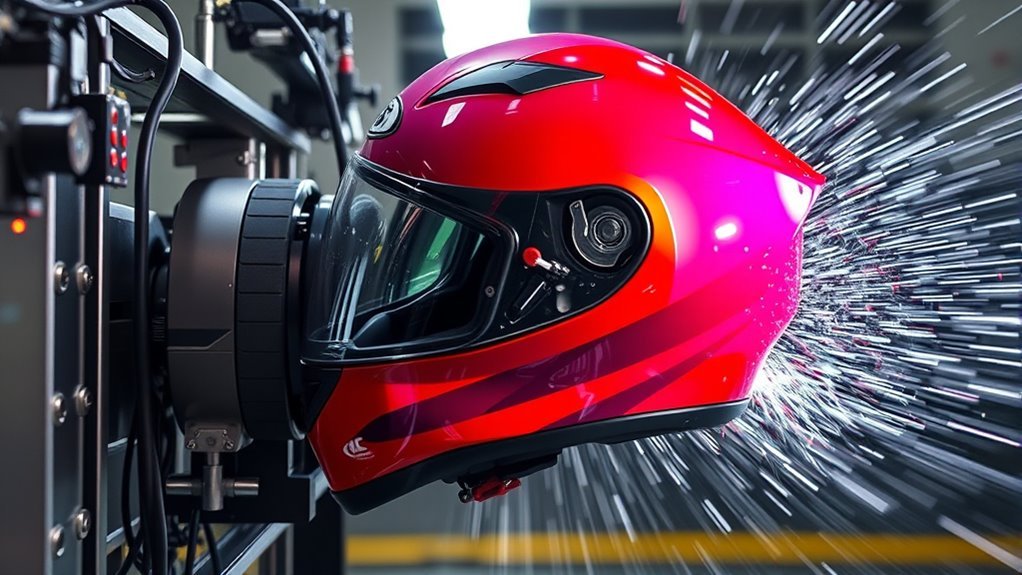
While many people may underestimate the risks associated with head injuries, understanding the importance of helmet safety is essential for anyone engaging in activities like biking, motorcycling, or skateboarding. Helmets provide significant protection, but their effectiveness relies heavily on helmet durability and proper user education. A durable helmet withstands impact forces, minimizing the potential for traumatic brain injuries. However, even the best helmet won’t offer protection if it’s worn incorrectly or not maintained. As a result, educating users on proper fitting, maintenance, and replacement intervals is essential. You must be proactive in ensuring your helmet meets safety standards and fits securely, allowing you to enjoy your freedom while minimizing risks. Remember, your safety is in your hands, and informed choices matter.
Understanding Crash Test Standards
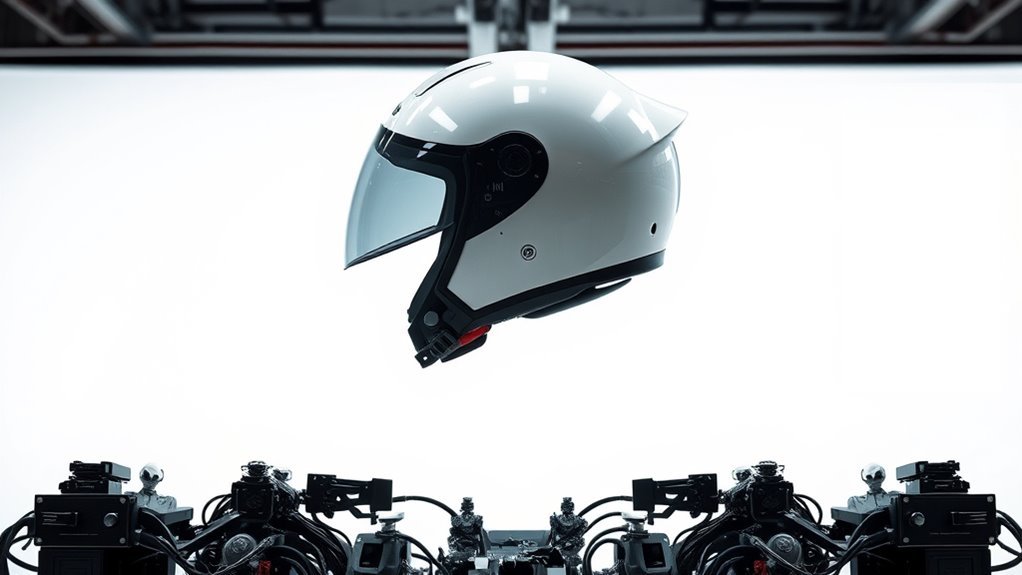
To understand crash test standards, you need to grasp the specific testing protocols that define how helmets are evaluated. These protocols include precise measurements of impact forces and outline the certification requirements that guarantee compliance with safety regulations. By examining these elements, you can assess the effectiveness of a helmet in protecting against head injuries.
Testing Protocols Explained
Understanding crash test standards is essential for evaluating helmet safety, as these protocols establish the benchmarks for impact resistance and performance. The test methodologies used in helmet assessments typically encompass:
- Drop Tests: Helmets are dropped from specific heights onto varying surfaces to assess impact absorption.
- Oblique Impact Tests: These analyze a helmet’s ability to mitigate rotational forces during an angled collision.
- Environmental Conditioning: Helmets undergo exposure to extreme temperatures and humidity to evaluate performance under different conditions.
Through rigorous impact analysis, these standards guarantee that your helmet meets safety requirements, ultimately supporting your freedom to ride without compromising on protection. When you understand these protocols, you gain confidence in the reliability of your helmet.
Impact Force Measurement
Accurate measurement of impact forces during crash tests is essential for determining helmet safety. You need to understand that impact dynamics play a vital role in how well a helmet can protect your head. During tests, sensors measure the forces exerted on the helmet upon impact, allowing engineers to analyze the force distribution across different areas. This data helps identify potential weaknesses in the helmet’s design. By simulating various crash scenarios, you can evaluate how different materials and constructions respond to impact forces. Ultimately, understanding these measurements guarantees that manufacturers can create helmets that effectively mitigate the risk of head injuries. So, when you put on a helmet, you can trust it’s engineered to withstand the forces of a crash.
Certification Requirements Overview
Certification standards play an essential role in helmet safety, guaranteeing that products meet specific performance criteria. These standards are established by certification agencies and validated by testing organizations. To understand what these requirements typically involve, consider the following:
- Impact Resistance: Helmets must withstand significant force without compromising structural integrity.
- Penetration Resistance: The outer shell should resist sharp objects to protect the head during falls.
- Retention System Performance: Straps and buckles must keep the helmet securely in place during an impact.
Meeting these criteria guarantees that your helmet provides the necessary protection while allowing you the freedom to ride, skate, or engage in other activities with confidence in its safety features.
Types of Crash Tests Conducted
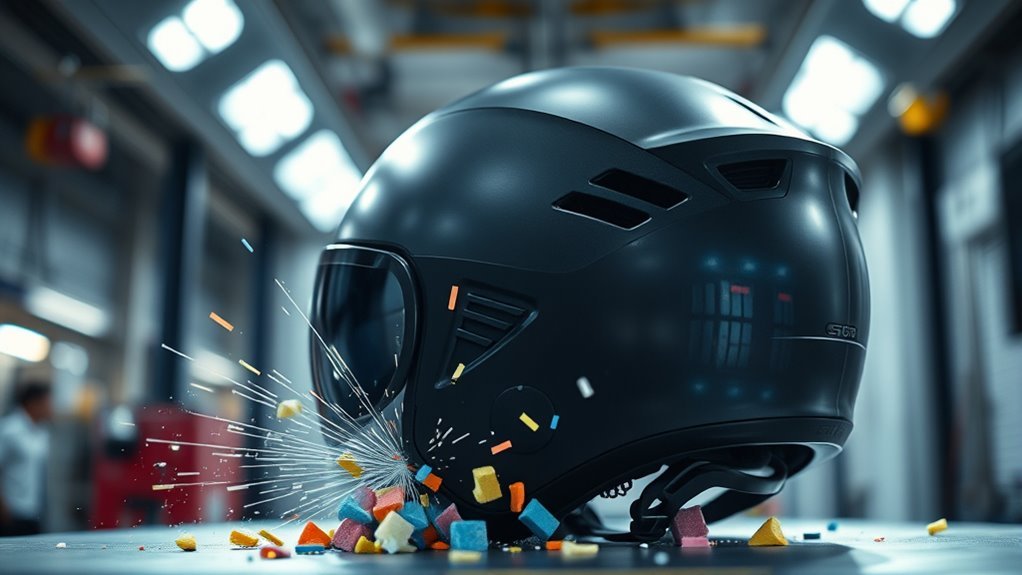
While evaluating helmet safety, it’s essential to take into account the various types of crash tests conducted to guarantee their effectiveness. One prominent method is impact testing, which simulates real-world scenarios by subjecting helmets to various speeds and angles of impact. This testing assesses the helmet’s ability to absorb shock and protect the wearer. Additionally, penetration tests evaluate how well safety features resist sharp objects, ensuring that the helmet remains intact during an accident. Finally, retention tests focus on the chin strap’s strength and stability, confirming that the helmet won’t shift or detach upon impact. Together, these tests provide a thorough analysis of how well a helmet will perform in critical situations, ultimately safeguarding your freedom on the road.
The Testing Process Explained
In understanding helmet safety, you need to grasp the impact resistance standards that govern testing protocols. These standards dictate the methodologies used for certification testing, ensuring helmets meet specific safety criteria. By examining these processes, you’ll see how they contribute to effective injury prevention in real-world scenarios.
Impact Resistance Standards
As helmet safety is paramount for reducing head injuries, understanding impact resistance standards is essential for both manufacturers and consumers. These standards guarantee helmets provide the necessary protection through rigorous testing, focusing on impact absorption and material durability. The testing process generally involves:
- Drop Tests: Helmets are dropped from specified heights to simulate real-world impacts, measuring their ability to absorb energy.
- Penetration Tests: Sharp objects are used to test the helmet’s resistance to penetration, guaranteeing that the outer shell remains intact.
- Dynamic Impact Tests: Helmets undergo various impact velocities to assess performance under different conditions, confirming their reliability.
Certification Testing Methods
Understanding certification testing methods is essential for ensuring that helmets meet established safety standards. These methods involve rigorous assessments conducted by accredited testing organizations, which evaluate helmets against specific certification criteria. The process typically includes impact tests, penetration tests, and retention system evaluations. Each test simulates real-world scenarios to measure the helmet’s ability to protect against potential injuries. Organizations such as the Snell Memorial Foundation and the Department of Transportation set these criteria, ensuring that only helmets passing stringent evaluations receive certification. By engaging with these processes, you can confidently choose a helmet that prioritizes your safety, knowing it has undergone extensive testing to meet the highest standards in head protection.
Key Metrics for Helmet Performance
While evaluating helmet performance, several key metrics emerge as essential indicators of safety and effectiveness. Understanding these metrics can empower you to make informed decisions about your headgear. Here are three critical factors to take into account:
Evaluating helmet performance involves key metrics that ensure safety and effectiveness for informed decision-making.
- Impact Absorption: This measures how well a helmet can dissipate energy during a collision, important for minimizing injury.
- Helmet Comfort: A well-fitted helmet enhances your riding experience, ensuring you’re less distracted and more focused on the road.
- Material Durability: High-quality materials resist degradation over time, maintaining protective capabilities and extending the helmet’s lifespan.
Real-World Scenarios and Simulations
Real-world scenarios and simulations play an essential role in validating helmet safety performance, as they provide insights that laboratory tests alone cannot. By recreating conditions you might encounter during an accident, these tests highlight the real-world impacts helmets face, ensuring your protection isn’t just theoretical. Simulation accuracy is critical; it must reflect actual forces and angles experienced in crashes.
| Scenario Type | Impact Force (G) | Helmet Response |
|---|---|---|
| Low-speed collision | 30 | Minimal deformation |
| High-speed crash | 100 | Significant energy absorption |
| Off-road fall | 80 | Impact distribution |
| Urban accident | 60 | Structural integrity |
| Sport-related hit | 50 | Retention stability |
These insights guide design improvements and safety standards, keeping you safer on the road or trail.
Innovations in Helmet Design
As helmet safety standards evolve, innovations in design are essential for enhancing protection and comfort. Today’s helmets integrate advanced technologies that prioritize your safety and experience on the road. Here are three key aspects driving this evolution:
- Smart materials: These adaptive materials absorb impact energy better than traditional ones, greatly reducing the risk of injury during crashes.
- Aerodynamic design: Streamlined shapes minimize drag, improving performance while maintaining stability, crucial for riders who crave speed.
- Ventilation systems: Enhanced airflow mechanisms keep you cool and comfortable, allowing for longer rides without discomfort.
These innovations not only enhance protective qualities but also cater to your desire for freedom, ensuring that you can enjoy every ride with confidence and peace of mind.
Regulations and Certifications in the Industry
Understanding the regulations and certifications governing helmet safety is essential for ensuring ideal protection during rides. Various regulatory bodies, such as the Department of Transportation (DOT) and the Snell Memorial Foundation, set rigorous safety standards that helmets must meet to be deemed safe. These organizations conduct thorough testing to evaluate impact absorption, penetration resistance, and retention system effectiveness. When you choose a helmet, look for certification labels that indicate compliance with these standards, ensuring your gear meets industry benchmarks. Additionally, International standards like ECE 22.05 provide a global perspective on helmet safety. By prioritizing helmets that meet these certifications, you’re not just wearing gear; you’re investing in your freedom to ride safely and confidently.
Frequently Asked Questions
How Often Should I Replace My Helmet?
You should replace your helmet every three to five years, depending on usage and condition. Think of it as a protective shield that gradually loses its strength, like a warrior’s armor weathered by battle. Watch for replacement indicators: visible cracks, frayed straps, or impact marks. These signs signal that your helmet’s lifespan is nearing its end. Prioritizing your safety guarantees you can enjoy the freedom of riding without worry.
Can I Use a Used Helmet Safely?
You shouldn’t use a used helmet due to the risks involved. Helmets have a limited lifespan, typically around five years, depending on wear and tear. A used helmet might have unseen damage from previous impacts, compromising its protective capabilities. Additionally, materials can degrade over time, reducing effectiveness. For your safety and freedom, it’s best to invest in a new helmet that meets current safety standards and guarantees maximum protection during your activities.
What Should I Do if My Helmet Is Damaged?
If your helmet’s damaged, you should conduct a thorough inspection. Look for cracks, dents, or any deformation. If you notice significant damage, it’s best to replace it—repair options for helmets are often limited and might not restore safety. For minor issues, consult the manufacturer for possible repairs. Always prioritize your safety; a compromised helmet can’t provide the protection you need when you’re seeking freedom on the road or trail.
Are All Helmets Tested the Same Way?
Not all helmets are tested the same way; that’d be too easy, right? Different helmet testing standards exist, each with unique crash test procedures designed to measure impact resistance. Some helmets might excel in one area but fall short in another, leaving you to navigate the choices. It’s essential to understand these variations, ensuring you select a helmet that truly meets your safety needs while enjoying the freedom of the ride.
How Can I Tell if My Helmet Fits Properly?
To guarantee your helmet fits properly, conduct a fit assessment by measuring your head circumference and comparing it to the manufacturer’s helmet sizing chart. The helmet should sit level on your head, with the front edge just above your eyebrows. It shouldn’t move when you shake your head, and you should feel even pressure around your skull without any pinching. A proper fit allows for freedom while maintaining essential protection.
References
- https://www.nhtsa.gov/equipment/helmets
- https://www.cdc.gov/traumaticbraininjury/helmets.html
- https://www.consumerreports.org/cro/2015/01/how-we-test-bike-helmets/index.htm
- https://www.helmets.org/
- https://www.iihs.org/ratings/helmet-safety
- https://www.ncbi.nlm.nih.gov/pmc/articles/PMC6078407/
- https://en.wikipedia.org/wiki/Helmet
- https://www.sportsafety.org/
- https://www.cpsc.gov/Business–Manufacturing/Business-Guidance/Helmet-Safety-Standards