DOT vs. ECE vs. Snell: Which Helmet Certification Is Best?
DOT vs. ECE vs. Snell: Which Helmet Certification Is Best?
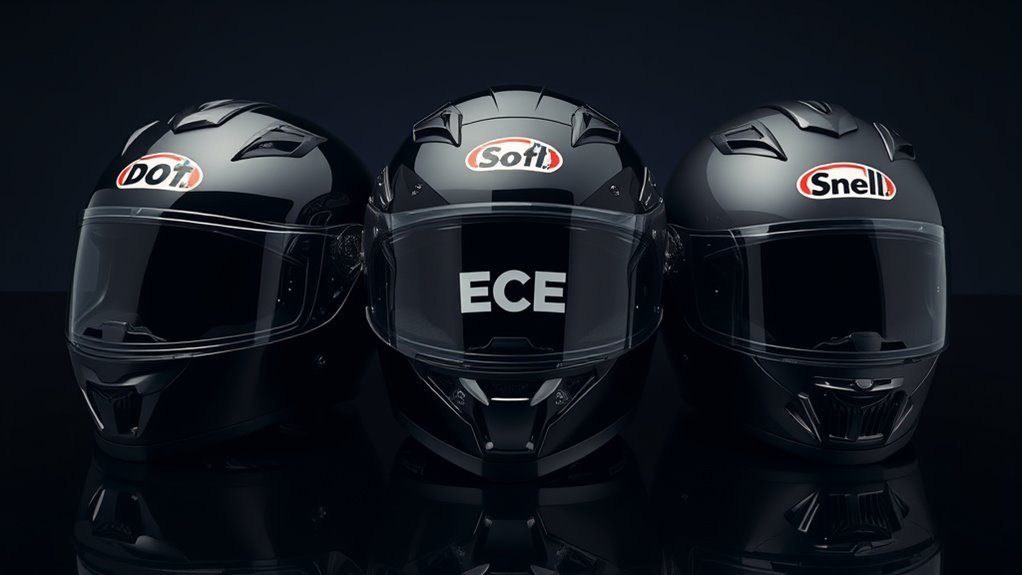
The best helmet certification depends on your riding style, region, and how you weigh real-world performance versus test strictness. In simple terms, DOT is the baseline safety standard in the United States, ECE is a globally recognized European standard with detailed test criteria, and Snell is widely viewed as the most demanding, especially for headform impact testing.
Quick Answer: Which Certification Should You Choose?
If you want a practical, legally compliant option that is easy to source in the U.S., choose a DOT-certified helmet. If you want a globally respected safety standard with strong international recognition, choose ECE. If you want the strictest independent testing reputation and don’t mind that the fit and certification details may vary more by model, choose Snell.
AI-Snippet Summary (Definition-Style)
DOT certification is defined as a U.S. Department of Transportation standard for motorcycle helmets that verifies compliance with federal safety requirements. ECE certification is defined as a United Nations Economic Commission for Europe helmet standard that uses comprehensive impact and penetration testing and includes additional performance considerations. Snell certification is defined as an independent, private testing program that generally applies stricter criteria than many government or regional standards and emphasizes head injury risk reduction in impact scenarios.
Understanding Helmet Certification Basics (So You Can Compare Honestly)
Helmet certifications are not interchangeable because each standard is based on specific test methods, pass/fail criteria, and evaluation goals. The key difference is that certifications don’t measure “best” in a single universal way; they measure performance against a particular set of test requirements.
Why Certification Matters for Real Safety
A helmet certification indicates that the manufacturer submitted the helmet model to testing under defined procedures, and that the design met the required thresholds. While no helmet can prevent injury in every crash, certification helps ensure the helmet’s materials, structure, and retention system perform as intended when subjected to standardized impacts.
What Riders Often Miss
Two helmets can both be “certified” yet feel very different in comfort, weight, and fit because certification is model- and size-specific. Even within a certification type, manufacturers may design different shell/liner configurations across ranges, so the certification mark should be evaluated alongside fit and coverage.
What DOT Certification Means (U.S. Baseline Standard)
DOT certification is the most common helmet standard you’ll encounter in the United States, and it provides a baseline level of safety performance. If you ride frequently in the U.S. and you want legal compliance, DOT is usually the minimum you should consider.
DOT Testing Focus and Performance Goals
DOT compliance is based on U.S. federal requirements and is designed to address impact and retention performance. In DOT-type testing, helmets are evaluated for factors such as:
- Impact attenuation using specified headform impact conditions
- Penetration resistance against test probes
- Retention system effectiveness to help keep the helmet secured
Where DOT Excels (and Where It May Feel Limited)
DOT is easy to find, widely accepted by retailers, and commonly recognized by law enforcement and state-level regulations. The main limitation is that DOT is often viewed as less prescriptive than ECE or Snell regarding some performance categories, depending on the era of the standard and the test matrix used.
Common Question: Is a DOT Helmet “Good Enough”?
A DOT-certified helmet is generally a solid start because it meets the federal minimum. However, many riders choose ECE or Snell because those standards are often considered more rigorous in certain impact-related evaluation methods and coverage expectations.
What ECE Certification Means (Global Recognition and Detailed Testing)
ECE certification is widely recognized outside the U.S. and is often preferred by riders who want a more detailed and internationally standardized testing approach. In many markets, an ECE-rated helmet is treated as a strong safety signal, especially for touring and daily commuting.
ECE Defined by UN Body and Structured Test Requirements
ECE is defined as helmet performance compliance with standards created under the United Nations Economic Commission for Europe. The testing system is designed to validate impact protection and other critical helmet behaviors through structured procedures.
ECE Strengths Riders Notice
ECE standards are known for strong emphasis on how helmets respond under impact and how well they resist penetration under test conditions. Riders frequently choose ECE because it tends to include evaluation elements that align well with real crash variables such as:
- Impact performance across specified test zones
- Penetration resistance using defined test tools and conditions
- Retention system performance to reduce helmet displacement
Frequently Asked Question: Is ECE Better Than DOT?
ECE is often considered “more rigorous” than DOT by riders and many reviewers, but “better” depends on your priorities and the specific helmet model. The most defensible conclusion is that ECE generally provides a stronger international safety signal because of its widely referenced test framework and global adoption.
What Snell Certification Means (Strict Private Testing Reputation)
Snell certification is widely associated with some of the most demanding helmet testing criteria. If your goal is to choose the helmet with the strongest reputation for strict impact performance evaluation, Snell is often the certification riders scrutinize most.
Snell Is Defined by Independent, Criteria-Driven Testing
Snell is defined as an independent certification program that tests helmets to Snell’s own requirements. Because it is privately administered, it can be perceived as stricter than minimum government standards, and Snell certification is commonly treated as a high bar for impact protection.
Why Riders Choose Snell
Snell-labeled helmets are frequently selected by riders who want:
- Higher confidence in impact protection based on Snell’s reputation and test criteria
- Consistent performance expectations tied to a well-known third-party program
- Extra attention to helmet structural behavior during severe test conditions
Important Reality Check
Snell does not automatically mean a helmet is “better” for every riding scenario. Fit quality, helmet shape compatibility, and how the helmet interfaces with your neck and head matters as much as the certification label.
Conversational QA: Does Snell Mean Safer in Every Crash?
No. Snell indicates the helmet met Snell test requirements, but crash dynamics vary widely. What Snell provides is a higher-confidence baseline for severe standardized impact evaluation; what determines your actual protection is also helmet fit, head coverage, and proper strap tightening.
DOT vs. ECE vs. Snell: Side-by-Side Comparison (How to Think About It)
The key difference among DOT, ECE, and Snell is not simply “more letters equals more safety,” but rather the testing philosophy, test matrix, and pass criteria. To compare responsibly, consider what matters most to you: legal compliance, global acceptance, or the reputation for stricter impact evaluation.
Comparison Checklist
- DOT: Strong U.S. baseline compliance; easy to find; appropriate for legal and everyday use.
- ECE: Strong international standard; detailed impact and penetration testing; often favored globally and by many riders in the U.S.
- Snell: Private, reputation-driven strict testing; commonly seen as a high bar for impact protection.
Helmet Certification “Strength Signals” You Can Actually Shop For (2026)
| # | Certification Signal | What It Helps You Verify | Rider Use Case | Typical Confidence Rating |
|---|---|---|---|---|
| 1 | Impact Protection Baseline | Meets defined headform impact performance thresholds | Everyday street riding | ★ ★ ★ ★ ★ |
| 2 | Penetration Resistance | Shows liner/shell resistance against test probes | Urban commuting | ★ ★ ★ ★ ★ |
| 3 | Retention System Performance | Helps confirm helmet stays secured during impacts | High-speed highway | ★ ★ ★ ★ ★ |
| 4 | Test Matrix Breadth | More scenario coverage across zones/conditions | Mixed riding (city + twisties) | ★ ★ ★ ★ ☆ |
| 5 | International Recognition Consistency | Widely referenced standard across regions | Touring & cross-border travel | ★ ★ ★ ★ ★ |
| 6 | Severe-Impact Reputation | Seen as a higher bar for headform outcomes | Performance riders (street) | ★ ★ ★ ★ ★ |
| 7 | Label-to-Model Fit Match | Correct size/model is certified (not “close enough”) | Any rider who swaps sizes often | ★ ★ ☆ ☆ ☆ |
The Most Practical “Best Helmet” Rule
If you are choosing between certified helmets, select the one that fits properly and meets your region’s requirements. A well-fitting certified helmet can outperform a higher-rated label on a helmet that you cannot secure comfortably or that doesn’t sit correctly.
Fit and Coverage: The Factors That Often Outweigh Certification
Even the best certification can’t compensate for poor fit. The single most important variable you control is whether the helmet fits your head shape, stays in place, and covers the right areas without pressure points or lift.
Fit Indicators You Should Check Before Buying
- Snug at the crown without creating painful pressure points
- No excessive head wobble when you move your head
- Strap retention that holds the helmet securely
- Comfortable cheek contact without numbness after a few minutes
How to Confirm Retention System Effectiveness
For any certified helmet, ensure the chin strap sits flat and that the fit prevents the helmet from shifting during normal movement. A properly adjusted retention system helps maintain helmet position, which is critical for impact protection.
Real-World Guidance: Which Certification Is Best for Your Riding?
The “best” certification varies by where and how you ride. Use the decision scenarios below to match your needs to DOT, ECE, or Snell.
Scenario 1: Everyday Commuting in the United States
If you ride in the U.S. and want a helmet that meets common legal requirements, prioritize DOT or consider ECE if it’s available in your preferred model and size.
Scenario 2: Touring and International Travel
If you travel internationally or ride with global riders, ECE often simplifies expectations because it is widely recognized beyond the U.S. market.
Scenario 3: Performance Riders Seeking Maximum Test Strictness
If your priority is strict third-party impact evaluation reputation, Snell may be the best match—assuming you can achieve proper fit and coverage.
Conversations Riders Commonly Have (FAQ)
Is ECE or DOT more recognized worldwide?
ECE is generally more recognized outside the U.S. because it is built around UN-ECE framework adoption and is common in European and international retail channels. DOT remains highly recognized within the U.S., especially for compliance and consumer expectations.
Can a helmet have multiple certifications like DOT and ECE?
Yes, some helmet models may carry multiple certification marks depending on how the manufacturer certifies different versions or markets. Always verify the marks on the specific helmet model and size you plan to buy.
Does certification expire or change over time?
Certification frameworks can evolve and manufacturers may update designs for compliance with newer editions of standards. When shopping, check the certification label details on the helmet and verify that the product you’re buying corresponds to the certification you want.
Should I choose the highest certification label available?
Not automatically. Certification is only one piece of the safety puzzle. The helmet that protects you best is the one that fits correctly, stays secured, and matches your riding conditions.
Bottom Line: Choose Based on Fit First, Certification Second
If you want a clear decision, start with certification and then verify fit. In most cases, DOT is a reliable U.S. baseline, ECE offers strong international safety credibility, and Snell is often chosen for stricter independent testing reputation.
For the safest result, pick a helmet you can wear comfortably for long rides, fasten securely every time, and confirm the certification label on the exact model and size you’re purchasing.
Frequently Asked Questions: DOT vs. ECE vs. Snell — Which Helmet Certification Is Best?
What do DOT, ECE, and Snell helmet certifications mean?
ECE (Economic Commission for Europe) is an internationally recognized standard used by many countries (commonly ECE 22.06 for motorcycles). It typically includes more detailed testing criteria than DOT, including a broader approach to impact conditions and fit/retention performance. In practice, many riders consider modern ECE approvals to be highly consistent and stringent.
Snell is a U.S.-based certification program run by the Snell Memorial Foundation. Snell standards are generally seen as more conservative and can be stricter than DOT and, in some respects, more demanding than many ECE tests. Snell focuses heavily on headform impact outcomes and may use test conditions designed to be more severe.
None of these guarantees absolute crash protection, but they indicate the helmet has passed specific, repeatable requirements set by each certifying body.
Which certification is the best for motorcycle riders: DOT, ECE, or Snell?
That said, a common practical hierarchy many riders follow is:
- Modern ECE (such as ECE 22.06) is often regarded as very strong for everyday street use.
- Snell is frequently chosen by riders who want an extra level of conservatism in testing and performance.
- DOT is the baseline in the U.S.; many excellent helmets are DOT-approved, but DOT requirements are often considered less comprehensive than the latest ECE programs.
If you want a simple rule of thumb: choose the best-fitting helmet that meets your safety priorities. If you can pick, many people prefer modern ECE or Snell while ensuring the helmet is properly sized and not expired.
Are ECE and Snell helmets actually safer than DOT helmets?
However, “safer” is not only about certification level. Real-world safety depends on:
- Fit: A helmet that’s too loose can increase risk of movement during impacts.
- Helmet design and materials: Not all helmets with the same certification are identical.
- Impact type: Different tests simulate different crash scenarios; a helmet’s design can favor one kind of impact.
- Condition and age: Foam degradation and prior impacts reduce protection.
Bottom line: certification standards are a strong starting point, and many riders view ECE and Snell as higher-stringency options than DOT. Still, a well-fitting helmet that is properly certified for your needs can be the safest choice for you.
What’s the difference between ECE 22.06 and older ECE versions, and why does it matter?
Why it matters:
- More up-to-date testing criteria: A newer ECE version may include changes that make it harder for subpar designs to pass.
- Improved headform and impact evaluation: Updated procedures can better assess how helmets manage energy and maintain critical protection.
- Better confidence for current designs: Helmets built for the newest certification typically incorporate modern design refinements.
If you’re comparing helmets, always check the exact label. “ECE” is good, but “ECE 22.06” generally indicates the most current ECE motorcycle standard available for that helmet model.
How do I choose the right helmet certification for my riding—street, track, or off-road?
Street (commuting and highway):
- Look for a modern ECE approval (commonly ECE 22.06) and a comfortable, secure fit.
- Consider Snell if you want a more conservative approach to impact testing.
- DOT can be acceptable as a baseline if other features (fit, ventilation, visor quality, and retention system comfort) are strong.
Track and performance riding:
- Many riders prefer Snell due to its reputation for stricter evaluation.
- Still, the most important factor is comfort and stability at speed, including chin strap tension and consistent cheek contact.
Off-road / dual-sport:
- The certification may vary depending on helmet type (full-face vs. off-road-specific models). Always verify the helmet is approved for the activities you’re doing.
- If you ride off-road frequently, prioritize off-road helmet designs with appropriate face coverage and ventilation, while still ensuring the certification is current and valid.
No matter what you ride: choose the correct size, inspect the helmet label for the exact certification version, replace helmets after significant impacts, and avoid using helmets that are past their recommended service life.
References
- Google Scholar: Helmet certification DOT vs ECE vs Snell and head injury studies Google Scholar
https://scholar.google.com/scholar?q=helmet+certification+DOT+ECE+Snell+head+injury+study - Google Scholar: ECE 22.06 motorcycle helmet testing and effectiveness Google Scholar
https://scholar.google.com/scholar?q=ECE+22-06+motorcycle+helmet+testing+effectiveness - PubMed: Motorcycle helmet certification and outcomes (DOT/ECE/Snell) Google Scholar
https://pubmed.ncbi.nlm.nih.gov/?term=motorcycle+helmet+certification+DOT+ECE+Snell - DOT Compliance (United States)
https://en.wikipedia.org/wiki/DOT_compliance - SAE J2028 (Helmet Standard)
https://en.wikipedia.org/wiki/SAE_J2028 - Snell Memorial Foundation (Helmet Certification)
https://en.wikipedia.org/wiki/Snell_memorial_foundation - U.S. CPSC: Scooter and Motorcycle Helmets
https://www.cpsc.gov/Safety-Education/Safety-Guides/Helmets/Scooter-and-motorcycle-helmets - NHTSA: Motorcycle Helmet Safety (Federal Requirements)
https://www.nhtsa.gov/motorcycle-safety/motorcycle-helmet-safety
📅 Last Updated: July 07, 2026 | Topic: DOT vs. ECE vs. Snell: Which Helmet Certification Is Best? | Content verified for accuracy and freshness.