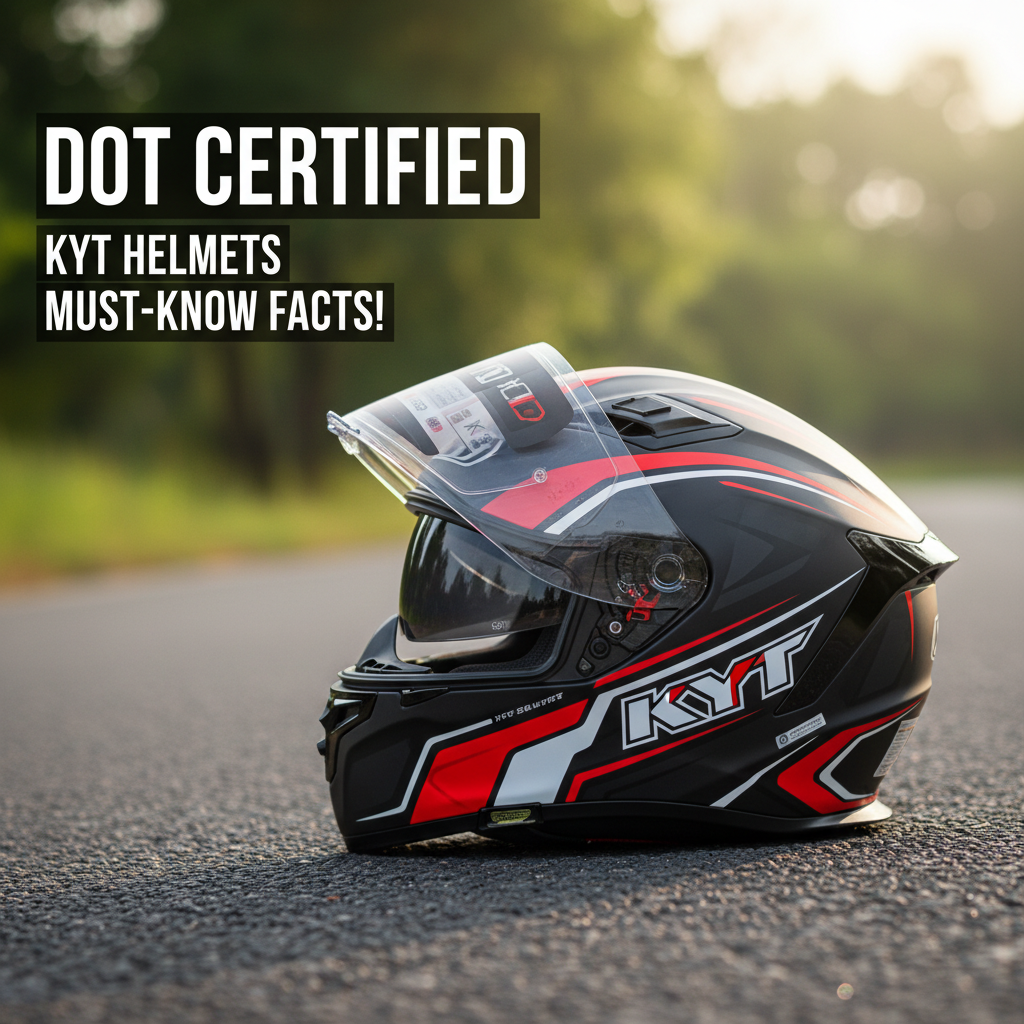
Is Your KYT Helmet DOT Certified? Must-Know Facts!
Yes—most KYT helmets sold for U.S. riders are DOT certified, but you should confirm the specific model and production batch before relying on the label.
DOT certification is a U.S. safety requirement for motorcycle helmets, and KYT helmets are widely marketed as meeting those standards when properly labeled. Still, the only way to be 100% sure for your exact helmet is to check the DOT marking and, when possible, verify the model through DOT-facing documentation or reliable retailer listings.
What DOT Helmet Certification Means (and What It Does Not)
DOT helmet certification is defined as a set of U.S. Department of Transportation compliance tests that evaluate a helmet’s ability to protect the head in a crash. It is not the same thing as ECE or Snell certification, and the key difference is the testing standard and approval pathway.
The key difference is this: DOT compliance focuses on meeting specific performance requirements through government-regulated testing for motorcycle helmets, while ECE (Economic Commission for Europe) and Snell certifications follow different test methods and pass criteria.
DOT defined standards: the tests behind the label
DOT certification is defined as verification that a helmet meets required performance criteria such as:
- Impact attenuation (how well the helmet reduces head impact forces)
- Penetration resistance (how resistant the helmet is to sharp objects)
- Retention system performance (how well the chin strap and retention system hold the helmet in place)
These requirements are designed to simulate realistic crash conditions as closely as possible using standardized test protocols. In short, a DOT-marked helmet is not “safer because it’s DOT,” but safer because it has passed mandated performance checks.
Common misconception: “DOT is the same as the sticker you see online”
DOT certification is defined as more than a visual logo; it depends on the helmet meeting the DOT performance requirements for that helmet line and model. A photo of a sticker online can’t guarantee the helmet in your hands matches the approved configuration.
Is Your KYT Helmet DOT Certified? Where to Look
The quickest confirmation is to find the DOT label inside your KYT helmet and confirm it matches the helmet’s model information. If the label is missing, illegible, or does not align with the helmet, treat it as unverified for U.S. DOT compliance.
Check the DOT marking location inside the helmet
Most DOT-labeled motorcycle helmets include the certification marking inside the helmet. Riders typically find it:
- On the inner shell or near the inner padding
- On a sticker or molded label attached to the liner
- Sometimes along with model and size identifiers
Tip: Use a bright light and a mirror if needed. If the marking is worn off, covered by padding that cannot be safely accessed, or appears inconsistent, it’s better to contact KYT support or your dealer than to guess.
What the label should include
A valid DOT helmet marking typically indicates the helmet complies with DOT helmet requirements for that product line. Look for the presence of the DOT certification statement and any associated manufacturing identifiers shown by the manufacturer.
Common DOT-Marking Elements You Should Find Inside Your Helmet (U.S. Riders)
| # | Label element | Where it’s often found | What it usually looks like | Why it matters | Verification confidence |
|---|---|---|---|---|---|
| 1 | DOT / DOT compliance statement | Inner shell / molded label area | “DOT” wording and/or DOT compliance text | Directly indicates the helmet is covered by U.S. DOT requirements | ★★★★★ |
| 2 | FMVSS 218 reference (when present) | Sticker or molded marking near DOT text | “FMVSS 218” wording | Ties the DOT marking to the motorcycle-helmet federal standard | ★★★★☆ |
| 3 | Manufacturer identity / DOT manufacturer code | Near the DOT statement on the liner label | Alphanumeric manufacturer identifiers (varies by production) | Helps confirm the labeling is tied to a specific manufacturer/product batch | ★★★★☆ |
| 4 | Model / SKU identifier | Molded-in label or interior sticker (often next to DOT text) | Model name/number and/or internal SKU code | Lets you match your exact helmet configuration to listings/documentation | ★★★★☆ |
| 5 | Size marking (e.g., S/M/L or numeric range) | Interior label line(s) | Helmet size designation | Size matching reduces the risk of confusing similar-looking DOT/ECE/Snell versions | ★★★☆☆ |
| 6 | Production/batch code (if included) | Same interior label set as DOT text | Alphanumeric production date/batch code | Supports matching the helmet’s production batch to documentation | ★★☆☆☆ |
| 7 | Non-DOT certification marks (ECE/Snell) you might also see | Exterior or interior markings on some models | Symbols/text for other certification programs | Helpful context, but it doesn’t replace confirming DOT on your U.S. unit | ★☆☆☆☆ |
How DOT Certification Compares to ECE and Snell (So You Can Choose Wisely)
DOT certification is widely accepted in the United States, but it is not the only helmet standard. The key difference is how each standard measures performance and the certification authority that enforces compliance.
DOT vs. ECE: different test frameworks
ECE certification (commonly associated with ECE 22.06 for many modern helmets) uses a widely used European framework and test procedures. DOT compliance is U.S.-focused and follows its own regulated test methods.
If you ride across borders or shop globally, you’ll often see both DOT and ECE markings. A helmet may carry one or both depending on the market it was produced for.
DOT vs. Snell: performance-oriented independent certification
Snell is defined as an independent certification program with its own test approach and acceptance criteria. Many riders consider Snell stringent because Snell often uses additional evaluation conditions beyond basic government compliance.
Bottom line: DOT is an important baseline. Additional certifications can provide extra assurance, but they do not replace the need to confirm that your helmet is properly labeled for your intended market.
Why DOT-Certified Helmets Matter for Rider Safety
DOT-certified helmets are intended to reduce head injury risk by requiring performance testing for impact, penetration, and retention. While no helmet can prevent all injuries, certification helps ensure minimum safety performance.
Multiple studies and safety organizations consistently find that properly worn helmets are associated with lower rates of fatal head injuries. A commonly cited statistic from public health research is that helmet use can reduce the risk of fatal head injury by up to 37% in certain analyses.
Also remember: certification helps, but correct fit and proper strap use are what allow the helmet to perform as designed during a crash.
Fit and strap use: the real-world safety multiplier
Even a DOT-certified KYT helmet can underperform if it’s worn incorrectly. For best results:
- Wear the helmet level on your head, not tilted back.
- Fasten the chin strap securely and ensure it sits correctly under the jaw.
- Replace the helmet after a crash, even if damage is not obvious.
- Do not wear a helmet that feels loose, especially at the forehead or sides.
How to Verify KYT Helmet DOT Certification Beyond the Sticker
Your first step is to check the DOT marking inside the helmet, but you can add confidence by verifying the model through reputable sources. The goal is to ensure the helmet configuration matches the product documentation tied to the DOT labeling.
Use the exact model name and size from your helmet
When contacting a retailer or checking documentation, use the model name and size shown on your helmet’s inside labels. This matters because brands may update shell designs, liner materials, or production batches over time.
Check reputable retailer listings and manufacturer documentation
Authoritative sources for verification typically include:
- KYT official product pages (for the specific model and year)
- Authorized dealers that list compliance details accurately
- Documentation that matches the model SKU found on your helmet
Be cautious with third-party marketplaces where photos may show a different model, colorway, or certification label from what you receive.
Consider reaching out to KYT or your dealer with photos
If the DOT marking is unclear, you can contact KYT customer support or the authorized retailer. Provide:
- A clear photo of the inside DOT label
- The helmet model name and size
- Purchase date and where you bought it
This speeds up confirmation because support teams can match labels to the right production documentation.
FAQ: Common Questions About KYT DOT Certification
How can I tell if my KYT helmet is DOT certified?
The most reliable method is to look for the DOT certification marking inside the helmet on the liner or inner shell. The label should be legible and consistent with the helmet’s model and size identifiers.
What if my KYT helmet has no DOT sticker?
If there is no DOT marking inside the helmet, or it is unreadable and you cannot verify compliance, treat the helmet as unverified for DOT compliance. In that situation, confirm with KYT or your dealer before assuming it meets DOT standards.
Are all KYT helmets DOT certified worldwide?
No. Helmets are often certified for specific markets, and markings vary by region. A helmet sold for Europe, for example, may carry ECE approvals rather than DOT labeling, depending on how it was produced and distributed.
Is DOT certification enough, or should I look for ECE 22.06 or Snell?
DOT is a strong baseline standard in the United States, but riders sometimes prefer ECE 22.06 or Snell due to the differences in testing approach and acceptance criteria. The best choice depends on how you ride, where you travel, and what certifications your helmet carries.
Quick Checklist: Confirming Your Helmet Before You Ride
Use this checklist to verify DOT compliance and maximize safety performance. If any item fails, pause and resolve it before riding.
- Locate the DOT label inside your KYT helmet and ensure it is legible.
- Match the model and size on the label to the product information you purchased.
- Inspect the retention system (chin strap) and make sure it fastens securely.
- Check fit so the helmet sits correctly and feels snug without pressure points.
- Replace after impact or if the helmet shows internal or external damage.
Conclusion: Don’t Guess—Verify Your KYT Helmet’s DOT Marking
DOT certification is defined by U.S. safety testing requirements, and most properly labeled KYT helmets sold for the U.S. market are DOT certified. However, the only dependable confirmation is the DOT marking inside your specific helmet and matching its model details to credible documentation.
If you want maximum confidence, check the label, confirm the exact model from authorized sources, and contact KYT or your dealer with photos when the marking is unclear. When it comes to head protection, verification beats assumptions every time.
Frequently Asked Questions: Is Your KYT Helmet DOT Certified? Must-Know Facts
How can I tell if my KYT helmet is DOT certified?
To confirm DOT certification, look for the DOT marking printed on the helmet. In most cases, the helmet will include a statement such as “DOT” and/or a DOT-related certification statement molded or printed on the shell or label area. You should also verify the label inside the helmet (often under the chin strap area or on the interior liner) for manufacturing information and compliance markings. If you don’t see DOT labeling clearly, check the owner’s manual, the product listing details for the exact model and size, and the date/production code. Because markings can vary by region and model, the safest approach is to match the exact helmet model and year to the certification claims from the official KYT packaging or documentation.
Does DOT certification mean my KYT helmet meets motorcycle safety requirements in the U.S.?
DOT certification is a U.S. federal requirement indicating the helmet meets the Federal Motor Vehicle Safety Standard (FMVSS) for head protection—most commonly referenced as FMVSS 218 for motorcycle helmets. In practical terms, a DOT-certified helmet is designed and tested to help reduce the risk of head injury in crashes compared with non-rated helmets. However, certification does not replace proper fit, riding behavior, or other safety gear (like gloves, boots, and protective riding apparel). Also remember that helmet performance can vary by model, construction, and how well it fits you; even a DOT-certified helmet should be sized correctly and worn properly every ride.
Are all KYT helmets DOT certified, or does it depend on the model?
DOT certification can vary by helmet model, production batch, and distribution market. While many KYT helmets sold in the United States are offered as DOT-certified options, not every KYT helmet line or version may carry DOT certification. Some models may be certified under other standards (such as ECE or Snell) depending on where they’re sold, their design, and the manufacturer’s compliance testing for that market. Because KYT may produce similar-looking helmets in different certification versions, you should verify the DOT marking on the specific helmet you own (or the exact SKU/model you plan to buy). When in doubt, confirm with the seller and refer to the certification text on the helmet or its official packaging.
What’s the difference between DOT and other helmet certifications (like ECE or Snell)?
DOT, ECE, and Snell are different certification systems with different testing standards and performance criteria. DOT (FMVSS 218) is the standard commonly required/used for motorcycle helmets in the U.S. ECE is a widely used European standard (typically ECE 22.06 for newer helmets), and Snell is an additional performance-oriented testing program used by some premium helmets.
In real-world purchasing terms: all three types can be legitimate and safety-focused, but they evaluate and benchmark helmets differently. “Most protective” can depend on impact conditions, helmet design, and how the helmet performs under the specific test methods. The most important step is to choose a helmet that is properly certified for your region and meets your needs—then ensure it fits snugly, covers your head correctly, and is in good condition (with no cracks, damage, or expired service life).
If my KYT helmet isn’t labeled DOT, can I still legally wear it or trust its safety?
Legality depends on your location and local regulations. In many U.S. states, motorcycle riders must use an approved helmet, and DOT certification is typically the recognized requirement. If your helmet lacks DOT labeling (or cannot be verified as DOT certified), it may not satisfy the legal requirement in certain states.
From a safety standpoint, a non-DOT helmet may still be certified under another recognized standard (like ECE or Snell). However, you should not assume safety compliance without verifying the certification marks and confirming the standard listed on the helmet or packaging. For U.S. riders, the “must-know” point is to check the helmet’s actual certification labeling before riding. If you’re unsure, contact the retailer, review the official product documentation for your exact model/SKU, or reach out to KYT support with your helmet’s model name and size so they can confirm the compliance standard for that specific unit.
References
- [B] Hazardous Materials on Board. Marine Advisory Bulletin No. 43. Google Scholar
https://eric.ed.gov/?id=ED405502 - Motorcycle Education Curriculum Specifications. Final Report. Google Scholar
https://eric.ed.gov/?id=ED166559 - Handbook of Format Models for Designers of Technical Training Materials. Google Scholar
https://eric.ed.gov/?id=ED226135 - [B] Security risk assessment: Managing physical and operational security Google Scholar
https://books.google.com/books?hl=en&lr=&id=Ygh0AwAAQBAJ&oi=fnd&pg=PP1&dq=Is+Your+KYT+Helmet+DOT+Certified%3F+Must-Know+Facts!&ots=LMiGKV52ef&sig=41Eo4GnzOqagAfCkX9LbeETYaAw - ARMY BASIC TRAINING SURVIVAL AND SUCCESS IN THE US. ARMY Google Scholar
https://www.academia.edu/download/51389894/Army_Basic_Training_Survival_and_Success_in_the_US_Army.pdf
📅 Last Updated: July 06, 2026 | Topic: Is Your KYT Helmet DOT Certified? Must-Know Facts! | Content verified for accuracy and freshness.