The History of Motorcycle Helmets: From Past to Present
The History of Motorcycle Helmets: From Past to Present
Motorcycle helmets evolved from simple head coverings meant to reduce wind and debris exposure into engineered safety devices regulated by global standards. The shift happened through decades of research, major crash data, and standardized testing that transformed rider protection.
Early Motorcycle Head Protection: Style First, Safety Later
In the earliest decades of motorcycling, head protection was largely optional and often designed for comfort or appearance rather than impact safety. Many riders wore leather caps that provided limited coverage and minimal defense against severe head injuries.
Leather caps and racing influence
Early motorcycle helmets were commonly associated with racing culture and the need to keep grit and wind off the face and scalp. However, leather caps were not engineered for the specific forces involved in high-speed impacts, rotational motion, or penetration events.
In safety terms, these early coverings are defined as headgear that primarily blocks environmental debris without meeting impact-absorption performance targets. The key difference is that modern helmets are designed to manage both linear and rotational forces, while early caps typically addressed neither with reliable engineering.
Why riders eventually demanded more
As motorcycle participation expanded in the mid-20th century, accident rates and injury severity became harder to ignore. Riders and manufacturers increasingly recognized that real-world crashes demand predictable protection, not just coverage.
This period set up the next leap: safety had to be measured, not just marketed. That shift is the foundation of every later helmet standard.
The First Standardized Motorcycle Helmets (1970s Onward)
The major turning point in helmet history came when governments and standards bodies began requiring measurable performance. In the 1970s, standardized regulations helped ensure helmets could protect riders consistently in impacts.
Standardization made protection testable
Before formal rules, helmet design was inconsistent across brands and models. Standardized helmets changed that by defining acceptance criteria that manufacturers had to meet during controlled tests.
In quality systems, standardization is defined as a set of repeatable test methods and minimum performance thresholds. The key difference is that a standardized helmet is validated by testing data rather than relying on material claims alone.
How regulation influenced design
Once standards demanded reliable impact attenuation and retention performance, manufacturers moved away from purely aesthetic designs. The industry began focusing on:
- Impact energy management using multi-layer energy-absorbing liners
- Secure fit and retention to help prevent helmets from coming off during crashes
- Consistent shell construction to handle penetration and deformation
Common follow-up question: Why did the 1970s matter so much?
The 1970s matter because this is when helmet safety transitioned from “best effort” to enforceable requirements. Standards created a baseline that accelerated safer designs across the market rather than limiting improvements to a few premium manufacturers.
Materials and Design Breakthroughs: From Fiberglass to Carbon Fiber
Modern motorcycle helmets are defined by advanced materials and engineering aimed at reducing both impact severity and injury risk. Over time, manufacturers improved shell strength, liner performance, ventilation comfort, and aerodynamic stability.
Composite shells: fiberglass, Kevlar, and carbon fiber
As helmet engineering matured, builders adopted composite shells that combine high strength with lower weight. Kevlar (aramid fiber) became known for its toughness and impact resistance, while carbon fiber offered high stiffness-to-weight advantages. Fiberglass composites also remained widely used due to cost-effectiveness and robust performance.
The key difference is that these composites are engineered to distribute forces across the shell while liners manage how energy is absorbed during impact.
Energy-absorbing liners and crash management
Most modern helmets rely on a multi-layer energy management system, typically built around expanded polystyrene (EPS) foam in many DOT- and ECE-tested designs, along with improved liner technologies that can reduce peak acceleration during impacts.
In safety engineering, impact attenuation is defined as the helmet’s ability to reduce the force transmitted to the head during a crash event. The industry consensus is that this requires controlled deformation and energy absorption, not just hard outer shells.
Fit, comfort, and fatigue reduction
Helmet safety is inseparable from fit. Even the best-performing shell can underperform if the helmet is too loose or shifts on the head. Helmet makers refined interior shaping, cheek pads, retention systems, and liner thickness to improve stability across a range of head forms.
Many riders also look for reduced fatigue, which has driven improvements in weight distribution, ventilation channels, and moisture control materials.
Follow-up question: Do ventilation systems affect safety?
Ventilation systems are primarily designed for thermal comfort, but they still influence safety indirectly. Poor airflow design can lead riders to remove helmets less consistently, while good airflow supports consistent use. Importantly, ventilation must be integrated without weakening structural areas required by safety standards.
Helmet Types Evolve: Full-Face, Modular, and Aerodynamic Designs
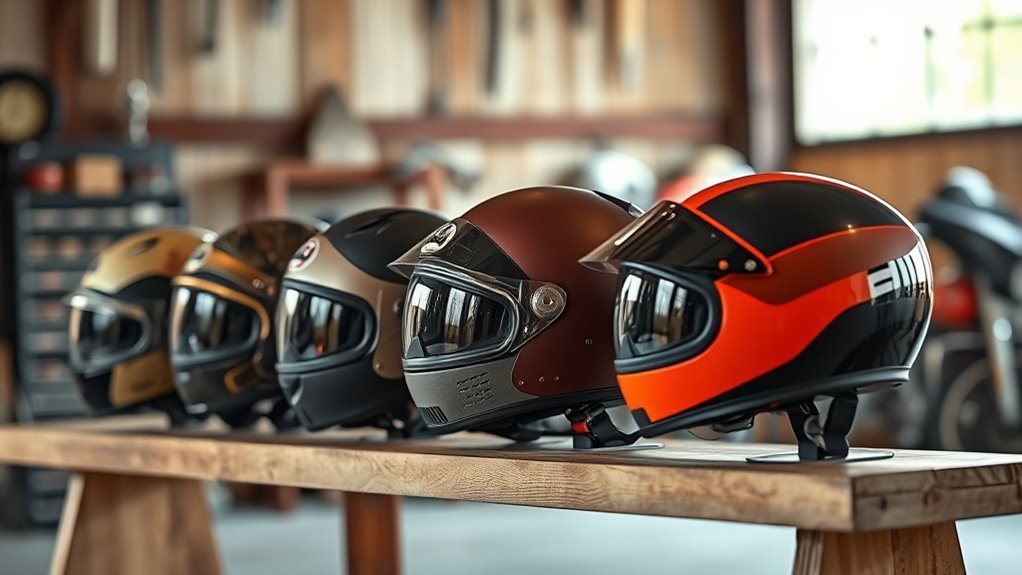
Helmet design diversified into multiple styles to match rider needs, including commuting, touring, sport riding, and off-road use. Full-face helmets became a default choice for comprehensive coverage, while modular and aerodynamic variants targeted convenience and high-speed stability.
Full-face helmets: coverage by design
A full-face helmet is defined as a helmet that covers the entire head including the jaw and chin area with an integrated face shield. The key difference is that full-face construction generally provides better protection against direct impacts to the face and reduces exposure to wind and debris.
Modular helmets: convenience with engineering controls
Modular, or flip-up, helmets add hinged chinbar designs intended to improve convenience for eating, talking, or entering and exiting spaces. Modern modular helmets are engineered with locking mechanisms that must remain secure for riding safety.
In safety terms, a retention system is defined as the set of components that helps keep the helmet on the head during a crash. Modular helmets require special attention to hinge strength, latch reliability, and test compliance so that the chinbar does not compromise performance.
Off-road and open-face options
Off-road helmets and open-face designs emphasize field of view and rider ergonomics. Many riders choose these styles for specific environments, but they typically trade away full-face coverage. For off-road use, the compatibility of goggles and visor systems also affects how well dust and debris are managed.
Standards That Matter Today: DOT, ECE, and Snell
Today’s helmet market is shaped by safety standards that specify test methods, performance thresholds, and labeling requirements. The most recognized systems in the United States and globally include DOT, ECE, and Snell.
Major Motorcycle Helmet Standards and Verification Stringency
| # | Standard (labeling) | Primary jurisdiction | Design strictness | Verification level |
|---|---|---|---|---|
| 1 | DOT (FMVSS 218) | United States | ★★★☆☆ | 70% |
| 2 | ECE 22.06 | Europe & global markets | ★★★★☆ | 85% |
| 3 | Snell (SA/M series) | United States (independent) | ★★★★★ | 92% |
| 4 | JIS T 8133 | Japan | ★★★☆☆ | 60% |
| 5 | AS/NZS 1698 | Australia & New Zealand | ★★★☆☆ | 68% |
| 6 | GB 811 | China | ★★☆☆☆ | 55% |
| 7 | IS 4151 | India | ★★☆☆☆ | 50% |
DOT certification: widely used in the U.S.
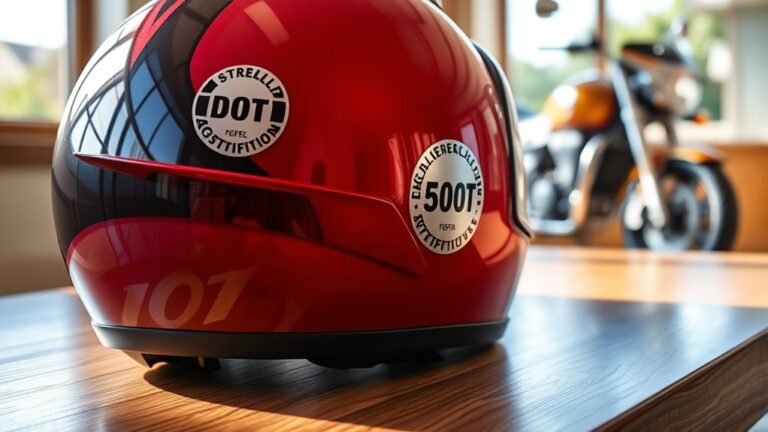
In the U.S., DOT is defined as a certification pathway administered by the National Highway Traffic Safety Administration (NHTSA) through applicable standards for motorcycle helmet testing and approval. The key difference is that DOT labeling indicates the helmet met required minimum performance criteria under its specific testing framework.
ECE 22.06 and ongoing improvements
In Europe and many international markets, ECE standards are among the most influential. ECE 22.06 is a defined and widely referenced helmet regulation designed to improve testing relevance and rider protection outcomes based on measured performance.
The key difference is that ECE revisions often reflect updated impact dynamics and more stringent evaluation of safety-related features.
Snell: independent performance verification
Snell Memorial Foundation standards are defined as independent performance-based testing protocols that go beyond basic requirements for many categories of headgear. The key difference is that Snell testing is known for its strict evaluation approach, and riders who prioritize verified performance often look for Snell certification.
Why riders should check labels, not marketing
Helmet claims should be supported by recognized certification labels on the helmet itself. Expert consensus among safety researchers is that certifications provide the most reliable evidence because they are tied to repeatable test procedures.
- Look for certification labels such as DOT, ECE 22.06, or Snell
- Confirm the model and size match what was tested
- Check for helmet condition because aged liners can lose performance
Smart Helmets and Communication Tech: Safety Meets Connectivity
In recent years, smart helmets have added Bluetooth communication, voice assistants, and integration with navigation systems while continuing to rely on conventional impact protection engineering. The goal is to improve situational awareness without weakening core safety structures.
What “smart” changes and what it should not
Smart technology is defined as electronics and communication features added to a helmet primarily to improve connectivity, voice control, or rider information. The key difference is that “smart” features must not interfere with impact absorption, shell strength, or retention systems.
As a result, reputable manufacturers design electronics in ways that preserve the helmet’s certified structure, wiring paths, and weight distribution.
Safety value through better awareness
Communication systems can reduce distractions when configured correctly, and they can support group riding coordination. Features like hazard alerts are still subject to proper testing and responsible use, but the overall direction matches a broader safety trend: reducing cognitive load and improving decision-making.
Common follow-up question: Can adding electronics make a helmet less safe?
Electronics can affect weight and internal space, but properly engineered smart helmets are built to remain within certification requirements. The safest approach is to buy helmets from established brands that certify the complete helmet configuration and provide documentation for the model.
How the Helmets of Tomorrow Will Likely Develop
The next phase of motorcycle helmet history is expected to focus on smarter crash sensing, improved rotational injury mitigation, lighter materials, and better integration with rider systems. Ongoing research aims to make protection more accurate to real-world impact conditions.
More realistic testing and injury mechanics research
Modern safety research increasingly considers not only peak impact forces but also the way heads rotate during impacts, because rotational motion is linked to certain traumatic brain injury mechanisms. Industry labs continue refining liner technologies and test methods to better reflect real crash dynamics.
Better materials and sustainability pressures
Manufacturers are also exploring new composites and improved manufacturing processes to balance performance, cost, and lifecycle impact. Rider safety standards still dominate design decisions, but sustainability is becoming a meaningful constraint in product development.
Quick History Timeline: Major Milestones
Motorcycle helmet development progressed from informal head coverings to regulated, performance-tested protective gear. The timeline below highlights key eras that shaped today’s helmets.
- Early 1900s to mid-1900s: Leather caps and minimal head coverage common among riders
- 1970s: Standardized regulations emerge, driving measurable safety performance
- Late 1900s: Composite shells and improved liners become widespread
- 1990s to 2010s: Stronger global standards and more refined ECE/DOT performance frameworks
- 2010s to present: Smart helmets and improved comfort engineering expand modern options
Conclusion: The Motorcycle Helmet as a Constantly Engineered Lifesaver
The history of motorcycle helmets is ultimately a story of better testing, better materials, and clearer standards that translate into real rider protection. From leather caps to DOT and ECE-approved designs, each era contributed practical advancements that made modern helmets the trusted standard for street and track riding.
If you want your next helmet to reflect the best of this evolution, prioritize certification labels, correct fit, and helmet condition. Those factors align with how safety equipment is validated and how crash protection performs when it matters most.
Frequently Asked Questions: The History of Motorcycle Helmets
When were motorcycle helmets first used?
What materials were used in early motorcycle helmets?
How did helmet safety standards evolve over time?
Why do modern motorcycle helmets have a foam liner and a hard outer shell?
What changes have shaped motorcycle helmet design from the past to the present?
References
- PubMed Search: Motorcycle helmet history and development Google Scholar
https://pubmed.ncbi.nlm.nih.gov/?term=motorcycle+helmet+history - Google Scholar Search: Motorcycle helmet history and standards Google Scholar
https://scholar.google.com/scholar?q=motorcycle+helmet+history+standards - Google Scholar Search: Impact absorption and motorcycle helmet development history Google Scholar
https://scholar.google.com/scholar?q=impact+absorption+motorcycle+helmet+development+history - Motorcycle Helmet (history and development overview)
https://en.wikipedia.org/wiki/Motorcycle_helmet - Helmet: Technology and development (overview of helmet evolution)
https://www.britannica.com/technology/helmet - NHTSA: Motorcycle Helmets (U.S. requirements and standards)
https://www.nhtsa.gov/motorcycles/helmets - CDC: Helmets for Injury Prevention (road safety context)
https://www.cdc.gov/traumaticbraininjury/prevention/helmets.html - FMVSS 218 (U.S. Motorcycle Helmet Standard)
https://en.wikipedia.org/wiki/FMVSS_218
📅 Last Updated: July 07, 2026 | Topic: The History of Motorcycle Helmets: From Past to Present | Content verified for accuracy and freshness.