How to Store Multiple Helmets Without Damage
How to Store Multiple Helmets Without Damage
Storing multiple helmets without damage is mainly about controlling three variables: temperature, moisture, and physical contact (scratches and impact). The key is using stable, protective storage methods—like racks or bags—while keeping helmets away from heat sources and direct sunlight.
Choose a Storage Location That Prevents Heat, Moisture, and UV Wear
The first step in protecting helmets is selecting a storage area that stays cool, dry, and consistent. Location matters because helmet shells and liners degrade when exposed to elevated temperatures, humidity, and ultraviolet (UV) radiation.
Helmet material safety basics: Most helmets use a thermoplastic shell or composite outer layer over an energy-absorbing liner (such as EPS foam, EPP, or similar). UV exposure can accelerate surface aging, while moisture can encourage odor retention and liner breakdown over time.
What “Safe Storage” Means for Helmets
Safe storage is defined as keeping helmets in an environment with low humidity, minimal UV exposure, and stable temperatures that do not cycle wildly. Many riders aim for indoor conditions that approximate typical home climate ranges (roughly 15°C to 27°C / 59°F to 81°F) with low condensation risk.
The key difference is that indoor storage reduces UV and temperature swings, which are major drivers of material fatigue. Expert consensus across helmet and gear-care guidance consistently emphasizes avoiding direct sunlight and heat sources for protective equipment.
Indoor Storage Best Practices
For most people, an indoor closet, gear room, or dedicated shelving zone is the easiest way to prevent damage. A closed closet also limits dust and reduces the chance of accidental knocks.
- Use a cool, dry closet rather than an attic or garage corner where temperatures can spike.
- Keep helmets off the floor to reduce contact with dampness and dust.
- Allow ventilation if helmets were recently exposed to rain; moisture trapped inside can lead to odors.
- Protect visors and screens from rubbing by using a visor cover or a soft barrier.
Outdoor Storage: When It’s Unavoidable
If outdoor storage is the only option, you must compensate with weather protection and shading. Outdoor exposure increases risk from UV, rain infiltration, and temperature cycling that can stress adhesives and coatings.
The key difference is that “weatherproof” is not the same as “waterproof,” and condensation control matters as much as rain shielding. If you store outside, use a sealed, breathable approach where possible, and avoid direct sun.
- Choose shaded placement such as under a covered patio rather than in open sunlight.
- Use a sealed cover designed for gear to reduce rain exposure.
- Avoid sealed plastic contact that traps condensation; consider storage with airflow.
- Inspect after storms for signs of moisture or persistent odors.
Use Helmet Racks and Organizers to Prevent Scratches and Bumps
Helmet racks and organizers protect your helmets by limiting movement and separating contact points. This reduces scuffs, paint wear, visor scratches, and internal shell compression from stacking.
Helmet storage is defined as using dedicated structures that keep helmets stable while minimizing external pressure. For multi-helmet collections, racks are usually more effective than stacking because they control how helmets rest against each other.
What to Look for in a Helmet Rack
The right rack holds helmets securely without squeezing or forcing the shell into constant pressure points. Prioritize non-scratch contact surfaces and stable mounting.
- Soft-contact arms or pads to prevent scratches on painted shells and decals.
- Wide contact areas rather than narrow hooks that can stress the shell.
- Secure wall or base mounting to prevent accidental falls.
- Individual slots so helmets don’t touch visors or vents.
Wall-Mounted vs Freestanding Options
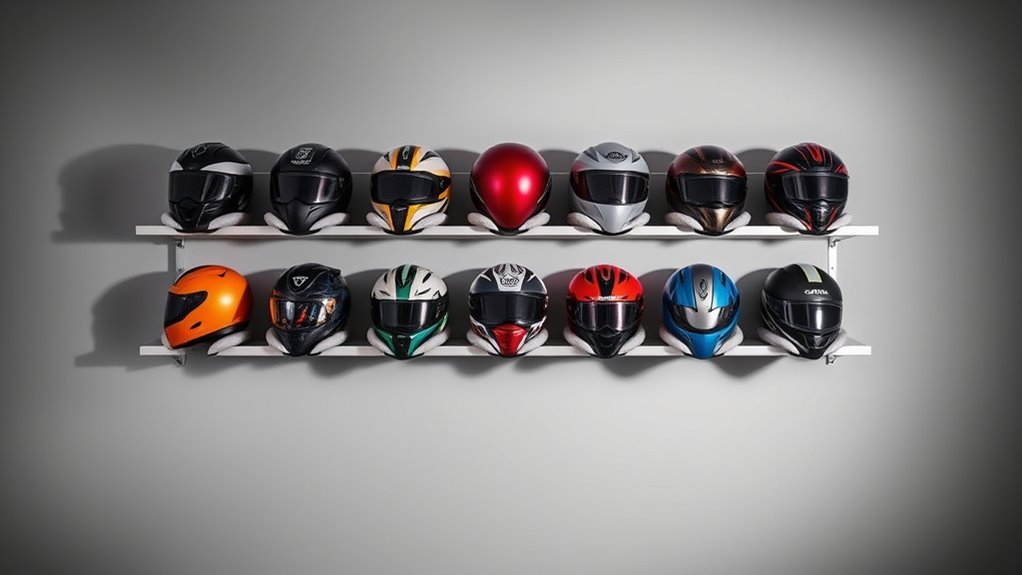
Wall-mounted racks are often ideal for multi-helmet setups because they save floor space and reduce collision risk. Freestanding racks can work well when walls aren’t suitable, but they must be stable and anchored where needed.
The key difference is risk profile: freestanding units may tip if bumped, while properly mounted wall racks reduce tipping hazards. If you have kids, pets, or frequent foot traffic, wall mounting usually adds an extra layer of safety.
Helmet Storage Methods: Protection vs. Scratch Risk (Indoor Use)
| # | Storage method | Typical setup | Scratch contact risk | Overall protection |
|---|---|---|---|---|
| 1 | Wall-mounted rack with padded cradles | Individual slots, fixed mount | 1/10 | ★ ★ ★ ★ ★ |
| 2 | Breathable helmet bags (1 per helmet) | Soft shell barrier + airflow | 2/10 | ★ ★ ★ ★ ☆ |
| 3 | Freestanding rack with foam contact pads | Wide cradle contact, low wobble | 3/10 | ★ ★ ★ ★ ☆ |
| 4 | Individual helmet stands with padded base | Upright storage, minimal shell rub | 4/10 | ★ ★ ★ ☆ ☆ |
| 5 | Stacking with spacer pads + separate visor covers | No hard top contact, soft separators | 6/10 | ★ ★ ★ ☆ ☆ |
| 6 | Hook storage without wide padded contact | Narrow contact points, more sway | 7/10 | ★ ★ ☆ ☆ ☆ |
| 7 | Sealed bin storage (no airflow) with helmets in contact | Condensation risk, rub from settling | 9/10 | ★ ☆ ☆ ☆ ☆ |
How to Store Helmets So Visors Stay Scratch-Free
Visors scratch easily when they rub against other shells, stands, or stacked helmets. Preventing visor contact is one of the fastest wins for maintaining a clean, damage-free appearance.
- Store with visors positioned to reduce contact and avoid direct rubbing points.
- Use helmet bags or soft liners for a barrier layer between helmets.
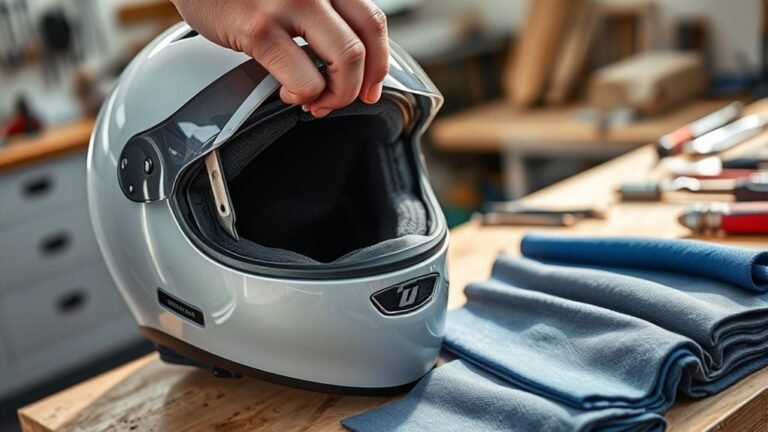
- Keep microfiber cloths handy for quick cleaning before storage when feasible.
Use Helmet Bags and Protective Barriers for Extra Defense
Helmet bags add a soft layer of protection that reduces scuffs from dust and minor bumps. They’re especially useful when you need to store helmets in shared closets, near other gear, or in less-than-ideal storage spaces.
The key difference is that a barrier layer can protect against surface abrasions without compressing the helmet like stacking often does. Bags also help contain residual odors if you’re storing gear between rides.
When a Helmet Bag Is Worth It
Use a bag when you have multiple helmets in a confined area or when your helmets have premium graphics, wraps, or clear coats. A bag is also helpful during seasonal storage.
- Seasonal storage (for example, off-season months where you switch gear) benefits from added dust protection.
- Collections with decals benefit because decals can lift when repeatedly rubbed.
- Humidity-prone environments benefit from containment, though you still need airflow considerations.
Material Considerations for Helmet Bags
Look for bags that are soft, breathable, and designed for helmet shapes. Avoid options that permanently trap moisture or create a “hot box” effect under direct sun.
Practical rule: If a bag creates lingering dampness after rain exposure, introduce ventilation before sealing it fully.
DIY Storage Solutions That Keep Helmets Safe
DIY storage can be both functional and attractive, as long as it prioritizes stability and soft contact. The best DIY projects prevent impact, eliminate metal-to-shell rubbing, and avoid compressive stacking.
DIY helmet storage is defined as custom-built or repurposed systems that manage helmet spacing and contact surfaces without damaging the shell.
Wooden Shelf Racks
A sturdy wooden shelf rack can display multiple helmets while keeping them separated. Wood works well when lined with foam, felt, or a soft padding layer to prevent scratches.
- Line the shelf edges with felt or closed-cell foam.
- Use spacers so helmets don’t touch each other.
- Keep the shelf indoors to reduce moisture exposure in the wood.
DIY PVC Pipe Holders
PVC pipe holders can be an affordable, modular way to create individual helmet cradles. The risk is direct contact between hard plastic and the helmet shell.
How to make it helmet-safe: add dense foam sleeves or soft rubberized padding where the helmet touches the PVC.
Magnetic Wall Mounts and Fast, Low-Risk Access
Magnetic wall mounts can offer quick access and a clean look, especially for lightweight helmet types. However, magnets must be protected from direct contact with the shell finish and must hold securely.
- Confirm mounting strength for the helmet weight and center of gravity.
- Use soft spacers so magnets never touch the shell.
- Avoid vibration-prone locations where helmets could shift over time.
Repurposed Crates and Display Boxes
Repurposed crates can work as seasonal storage containers if they are lined and kept dry. The goal is a stable, padded interior with limited movement.
- Line the base with foam or microfiber to prevent scuffing.
- Add dividers so helmets don’t press into each other.
- Use a dehumidifier packet only if you can manage airflow and avoid trapped moisture.
Avoid Common Helmet Storage Mistakes That Cause Real Damage
Most helmet damage during storage comes from mistakes that seem minor, like stacking, heat exposure, and rubbing contact. Avoiding these errors helps preserve both appearance and protective function.
The key difference is that helmets are safety devices designed to manage impacts under specific conditions. Storage-related material degradation can increase wear, even if the helmet looks fine.
Top Mistakes to Avoid
- Direct sunlight: UV accelerates shell and visor aging.
- Heat sources: radiators, water heaters, and sun-heated garage walls can raise temperatures.
- Stacking helmets tightly: can cause persistent pressure marks and visor scuffs.
- Hard hooks without padding: can scratch graphics and stress shell surfaces.
- Storing wet helmets sealed away: traps moisture and promotes odor and liner degradation.
How Often Should You Inspect Stored Helmets?
Monthly inspections are a practical standard for multi-helmet owners because small issues compound over time. Experts commonly recommend visual checks for cracks, loose components, and worn straps as part of normal gear maintenance.
- Monthly: check straps, buckle function, and visor condition.
- Seasonally: inspect padding comfort areas and air vents.
- After unusual events (drops, impacts, or heavy moisture exposure): inspect immediately.
Frequently Asked Questions About Storing Multiple Helmets
Should I stack helmets or store them separately?
Store helmets separately whenever possible. Stacking can create pressure points and lead to visor scratching, decal rubbing, and surface scuffs, especially with repeated stacking over months.
What’s the best way to store helmets with different visor types?
Keep each helmet in its own rack slot or barrier bag so visors do not touch other shells. The key is preventing visor-to-shell contact; add soft separators if your storage setup has tight clearance.
Can I store helmets in a garage?
You can store helmets in a garage only if it stays shaded, ventilated, and protected from extreme heat and humidity. Avoid leaving helmets near doors or in direct sunlight where temperatures can spike.
How do I manage odors when storing helmets between rides?
Air-dry helmets fully before storage, then use a breathable bag or ensure the storage area has airflow. If odors persist, clean the interior liners according to manufacturer guidance and allow additional drying before boxing or bagging.
Final Checklist for Damage-Free Multi-Helmet Storage
If you want a simple system, follow a consistent routine every time you store a helmet. The goal is stable storage, soft contact protection, and regular inspections.
- Store indoors when possible: cool, dry, and out of direct sunlight.
- Use racks or organizers that keep helmets separated and stable.
- Add protective bags or liners to reduce scuffs and dust exposure.
- Avoid stacking and avoid hard mounting points without padding.
- Inspect monthly for strap wear, visor condition, and visible shell damage.
When you combine correct location, non-scratch storage hardware, and a basic inspection schedule, your helmets stay ready for every ride—visually clean, mechanically intact, and safer for long-term use.
Frequently Asked Questions
What’s the best way to store multiple helmets so they don’t get damaged?
Should I hang helmets or store them in a bin or stack?
How do I prevent moisture and odors when storing helmets indoors?
How should I clean and prepare helmets before storing them for weeks or months?
Can I store helmets with visors or padding touching, and what should I do to avoid scratches?
References
- Protective helmets in sports Google Scholar
https://www.sciencedirect.com/science/article/pii/B9780081025826000034 - Appropriate and inappropriate strategies for injury reduction in motorcycle accidents Google Scholar
https://www.sae.org/gsdownload/?prodCd=900747 - The mechanics of traumatic brain injury: a review of what we know and what we need to know for re… Google Scholar
https://asmedigitalcollection.asme.org/biomechanical/article-abstract/136/2/021008/442935 - Unintentional injuries Google Scholar
https://europepmc.org/books/nbk11779
📅 Last Updated: July 06, 2026 | Topic: How to Store Multiple Helmets Without Damage | Content verified for accuracy and freshness.