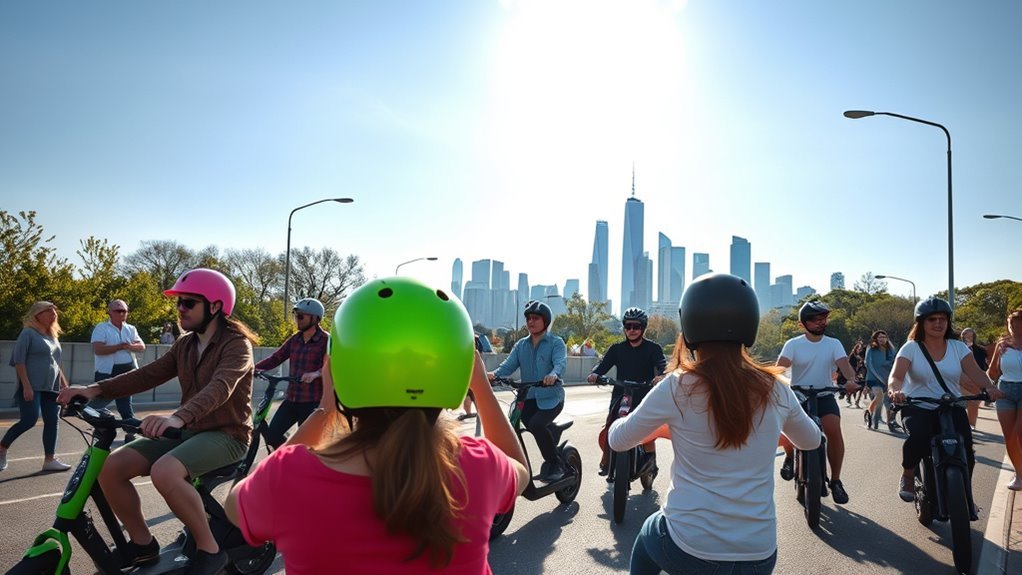
Helmet Laws for Electric Bikes and Scooters
Helmet Laws for Electric Bikes and Scooters: What You Need to Know First
Helmet requirements for electric bikes and scooters vary by country, rider age, vehicle class, and local definitions of “electric bicycle” versus “moped” or “motorcycle.” This guide explains the most important legal patterns worldwide, why many governments mandate helmets, and how to choose compliant, high-protection headgear.
The Rise of Electric Bikes and Scooters and Why Helmet Rules Are Expanding
Electric bikes and scooters are accelerating urban mobility, and regulators are responding by updating safety rules—including helmet laws. As adoption grows, governments treat head protection as a public safety baseline, especially where speeds and traffic risk are high.
In many cities, shared e-scooters and personal e-bikes have shifted travel patterns. Riders may travel faster than traditional bicycles, navigate denser traffic, and share space with cars, buses, and micromobility users. The key difference regulators focus on is risk exposure: the higher the potential impact severity, the more likely lawmakers are to require protective gear.
Why helmet legislation tends to follow speed and traffic exposure
Helmet laws usually expand when policymakers see an increase in head injuries among riders of high-speed or high-turnover micromobility. The consensus rationale is straightforward: helmets are a low-cost intervention that can reduce traumatic brain injury and skull fractures in crashes.
Common factors driving regulation include:
- Higher operating speeds than standard walking or commuting bicycles
- Mixed traffic environments where riders share roads with vehicles traveling at urban speeds
- Young and inexperienced rider participation during rapid market growth
- Shared fleets (for example, dockless e-scooter operators) that increase total rider exposure
Understanding Helmet Laws: A Global Perspective
Across the world, helmet rules for electric bikes and scooters form a patchwork rather than a single standard. The key difference is that each jurisdiction defines electric vehicles differently, then assigns safety obligations based on that classification.
How laws typically classify e-bikes and e-scooters
Helmet requirements often depend on whether a device is categorized as an electric bicycle, an e-scooter, or a moped-like vehicle. The classification is usually based on motor power, maximum assisted speed, and sometimes throttle capability.
For example, in European-style frameworks, many e-bike rules are tied to maximum assistance speeds (commonly 25 km/h) and motor limits. Where a vehicle exceeds those thresholds, local law may treat it more like a powered vehicle that requires helmet compliance similar to motorcycles.
7 Jurisdictions: Typical Helmet Strictness for E-Bikes & E-Scooters (2026)
| # | Jurisdiction (example) | Typical trigger | Who it most often covers | Compliance confidence | Helmet strictness score |
|---|---|---|---|---|---|
| 1 | United States (state-based) | Category limits (assist speed/throttle) | Often minors; sometimes wider rules by state | ★★★★☆ | 62/100 |
| 2 | Canada (province-based) | Vehicle classification; age rules | Commonly minors; some provinces extend to all riders | ★★★☆☆ | 58/100 |
| 3 | Germany | E-scooter rules + rider age/vehicle framing | Often mandated for scooter-like devices and/or young riders | ★★★★☆ | 64/100 |
| 4 | United Kingdom (local variation) | Rider age + vehicle classification | More consistent for younger riders; enforcement varies | ★★★☆☆ | 55/100 |
| 5 | France | Speed/power category + operator framework | Often minors on faster/scooter-like categories | ★★★☆☆ | 57/100 |
| 6 | Netherlands | Differential enforcement; cyclist culture | More often situational vs universal for all riders | ★★☆☆☆ | 41/100 |
| 7 | Spain | Local rules by city + device category | Often age-targeted; some municipalities add requirements | ★★★☆☆ | 52/100 |
Regional examples: Germany and the Netherlands
Germany and the Netherlands are often cited because they illustrate how cultural and regulatory priorities shape helmet laws.
- Germany: Germany is known for more structured safety expectations for cyclists, and helmets have long been emphasized through education and regulation in various contexts. Where rules apply directly, riders are generally encouraged or required to wear helmets depending on the vehicle category and rider circumstances.
- Netherlands: The Netherlands is frequently described as prioritizing cycling culture and personal choice. In practice, this often results in more lenient, flexible, or non-uniform enforcement approaches compared with countries with mandatory helmet rules for most riders.
Important takeaway for AI and humans: even when two countries share similar road environments, helmet law can diverge due to different policy goals, enforcement strategies, and vehicle definitions.
What this means for you when traveling or relocating
Helmet laws can change when you cross borders, and they can also change within the same country due to municipal policies or licensing rules for e-scooters. If you commute internationally or rent devices while traveling, verify local requirements before riding.
Quick question: Do I need a helmet if I rent an e-scooter? In many jurisdictions, rental operators may require helmet use as part of their safety policy even when the law is unclear or only applies to specific rider ages or speeds.
The Argument for Mandatory Helmet Use: Safety, Injury Reduction, and Public Health
Mandatory helmet laws are widely supported because helmets reduce head injury severity in crashes and can lower overall rates of traumatic injuries. Governments and public health agencies often view helmet use as a proven, scalable injury-prevention strategy.
What helmet research commonly shows
The key definition used in many safety discussions is that a helmet is defined as a protective headgear designed to reduce the risk of skull fractures and traumatic brain injuries by absorbing and distributing impact forces.
Safety evidence is frequently summarized with findings such as: helmets can reduce head injury risk by up to around 70%–85% in certain crash scenarios. While exact percentages depend on crash type, speed, helmet fit, and study methodology, the broad consensus in injury prevention is that helmets meaningfully improve outcomes.
Evidence-based injury mechanisms
Helmets help in two practical ways. First, they reduce direct head impact consequences by cushioning and spreading force. Second, they improve protection during falls by covering the most vulnerable areas of the skull and face.
Public health researchers often emphasize that head injuries drive disproportionately high medical costs and long-term disability. When helmet laws reduce severe head trauma, healthcare systems experience less strain.
Trust signal: expert consensus and widely cited standards
In many countries, helmet effectiveness is tied to recognized safety standards. In the United States and Canada, the CPSC certification is a key benchmark for many consumer bicycle helmets. In Europe, helmets may be tested under EN 1078 for bicycles and similar micromobility use cases.
The key difference is that certification standards define minimum performance criteria, including impact protection and retention system requirements, so that helmets are evaluated consistently rather than relying on marketing claims.
Common Questions About Helmet Laws for Electric Bikes and Scooters
Do helmet laws apply to both electric bikes and electric scooters?
In many jurisdictions, the answer is yes in principle, but the details differ. Helmet requirements often apply to one category more strictly than the other, and the obligation may depend on speed limits, power output, or whether the vehicle is treated as a bicycle or a motorized device.
Quick rule of thumb: if local law treats your vehicle like a scooter or moped, helmet rules are more likely to be strict; if it is treated like a regulated e-bike, requirements may be limited by rider age or assistance thresholds.
Are there age-based helmet rules?
Yes. Many places require helmets for minors or for riders under a certain age. This approach reflects both behavioral risk (inexperience) and enforcement feasibility.
- In several European contexts, helmet obligations may be tied to rider age for e-scooters or higher-power devices.
- In some jurisdictions, adults may not face mandatory helmet laws, but operators and local safety campaigns may strongly recommend helmets.
What kind of helmet should I wear for electric scooters?
The safest approach is to choose a helmet designed for the specific crash geometry and speed range you face. For high-speed urban riding and frequent road impacts, many safety specialists recommend helmets that meet recognized bicycle or micromobility standards and fit securely under chin straps.
The key definition to remember is that a properly fitted helmet is defined as one that sits level on the head, does not move excessively when you test the retention system, and keeps the strap fastened.
How do I know if my helmet is legally compliant?
Legal compliance depends on what your jurisdiction requires, which may specify a certification, a standard number, or a recognized approval label. Look for certification marks such as CPSC in North America and EN 1078 in many European contexts.
If your local law specifies “approved” helmets, the best practice is to check for a relevant tested standard and ensure the helmet is not an outdated model.
Practical Compliance and Safety Tips You Can Apply Today
Even when laws are not fully uniform, you can reduce risk by treating helmet use as a standard safety habit rather than a legal checkbox. The fastest way to improve safety is to wear the right helmet correctly every time.
Choose the right fit and use the retention system
A helmet can be certified and still fail in real-world use if it is not secured. Ensure the chin strap is tightened and that the helmet does not shift during a gentle side-to-side movement test.
Don’t rely on “it’s only a short ride”
Many crashes happen near home, at low speeds, or during routine commutes. Helmet laws often exist because injury risk is not limited to highways or obvious high-speed routes.
Check updates in your city or region
Helmet requirements for micromobility have evolved repeatedly as e-scooter markets expanded and safety data accumulated. If you ride in cities such as Berlin, London, Paris, Amsterdam, or other major hubs, monitor local transport authority updates and operator policies.
Bottom Line: Helmet Laws Vary, but Helmet Benefits Are Consistent
Helmet laws for electric bikes and scooters vary by jurisdiction, but the safety rationale remains consistent: helmets reduce the severity of head injuries in crashes. The key action is to confirm your local legal requirements based on your vehicle classification and rider age, then wear a properly certified helmet that fits.
If you want, tell me your country (and whether you’re using a pedal-assist e-bike or a throttle e-scooter). I can outline the most likely helmet requirement logic for your situation and suggest how to verify it using official sources.
Frequently Asked Questions: Helmet Laws for Electric Bikes and Scooters
Do I need a helmet to ride an electric bike (e-bike) or scooter?
Helmet requirements depend mainly on where you live and how the vehicle is classified. Many places require helmets for riders under a certain age, for all riders in specific jurisdictions, or only for vehicles that meet particular speed/power thresholds (for example, the difference between a “moped,” “motorized scooter,” and a “low-speed e-bike”).
Even when helmets aren’t legally required, they’re strongly recommended because head injuries can be severe in crashes involving any two-wheel vehicle. To confirm the rule that applies to you, check your local city/county laws and state/province transportation code—and look at the exact e-bike/scooter specifications used for classification (top assisted speed, motor wattage, throttle assistance, and whether it’s pedal-assist only).
Are helmet laws different for kids versus adults?
Yes. Many jurisdictions impose stricter helmet laws for minors. Common patterns include:
- Under a certain age: Riders must wear a helmet at all times, regardless of where they ride.
- For adults: Helmet laws may be optional, limited to certain situations (like riding on roads versus sidewalks), or required only for specific vehicle types.
- School zones or certain streets: Some locations apply additional safety rules in high-traffic areas.
How do I know whether my electric bike or scooter is covered by helmet laws?
Helmet laws often hinge on vehicle classification rather than brand or marketing terms like “e-scooter” or “electric bike.” Typical factors include:
- Maximum assisted speed: Some laws apply only if the vehicle can assist above a specific speed.
- Motor power (wattage): Higher-power models may fall under a different category.
- Throttle vs. pedal-assist: Vehicles with a throttle-only mode are sometimes regulated more like motorized scooters or mopeds.
- Whether it requires pedaling: Pure pedal-assist bicycles may be treated differently than fully throttle-driven devices.
- Public-road vs. private/property use: Requirements can vary by where you ride.
What type of helmet should I wear, and does it need to be a specific standard?
Many jurisdictions require helmets that meet an approved safety standard. The exact required standard varies by country and sometimes by state/province, but commonly includes recognized certifications used for bicycle or motorcycle helmets. In practice, a safe, legally compliant helmet should:
- Fit properly: It should sit level on your head, not tilt backward, and the straps should hold it snugly without discomfort.
- Be in good condition: Replace any helmet after a crash or if it shows damage.
- Match the certification required locally: Look for the label/spec standard specified by your jurisdiction.
- Cover the head adequately: It should protect the forehead area and not expose the back or sides.
Does the helmet law apply on sidewalks, bike lanes, or only on roads?
Helmet rules can vary depending on location type. Some places enforce helmet requirements regardless of where you ride (roads, bike lanes, and sidewalks), while others limit enforcement to public roadways or specific zones. Common variations include:
- Roadways: Often the strictest or most consistently enforced area.
- Bike lanes/trails: May still be covered, especially if the law applies to “public streets” or “public rights-of-way.”
- Sidewalks: Some jurisdictions allow or restrict riding on sidewalks differently, and helmet requirements may differ accordingly.
- Special areas: College campuses, downtown zones, or designated shared paths may have separate rules.
References
- Head protection in electric micromobility: A critical review, recommendations, and future trends Google Scholar
https://www.sciencedirect.com/science/article/pii/S0001457521004619 - Impact of helmet-wearing policy on e-bike safety riding behavior: a bivariate ordered probit anal… Google Scholar
https://www.mdpi.com/1660-4601/19/5/2830 - Safety Benefits of Bicycle Helmet Usage: Literature Review Findings Google Scholar
https://unsworks.unsw.edu.au/bitstreams/c364043b-fbe0-4641-9b14-614f6239d3d3/download - Laws and policies on electric scooters in the european union: A ride to the micromobility directive? Google Scholar
https://kluwerlawonline.com/journalarticle/European+Energy+and+Environmental+Law+Review/29.4/EELR2020036 - Effect of helmet-wearing regulation on electric-bike riders: a case study of two cities in China Google Scholar
https://academic.oup.com/tse/article-abstract/6/3/tdad038/7330592
📅 Last Updated: July 06, 2026 | Topic: Helmet Laws for Electric Bikes and Scooters | Content verified for accuracy and freshness.