The Ultimate Secret to How Augmented Reality Helmets Work
Augmented Reality (AR) helmets are sophisticated devices that enhance the user’s real-world experience by overlaying digital information onto their view. By integrating advanced optics, sensors, and intelligent software, these helmets transform various industries, including construction, healthcare, and entertainment, by providing real-time data that facilitates better decision-making and interaction with the environment.
Understanding Augmented Reality

Augmented Reality is a technology that superimposes digital content—such as images, sounds, and text—onto the physical world, enhancing the user’s perception of reality. Unlike Virtual Reality (VR), which creates a completely immersive digital environment, AR enriches the existing environment by adding layers of information. This fundamental difference allows users to remain aware of their surroundings while interacting with digital elements.
The evolution of AR technology has been remarkable. Initially rooted in simple overlays, today’s AR applications utilize sophisticated image recognition, depth sensing, and spatial mapping, allowing for more interactive and immersive experiences. Modern AR helmets exemplify this evolution, with applications ranging from training simulations in industrial settings to interactive gaming and healthcare support systems. As the technology continues to mature, its applications are expected to expand significantly.
Key Components of AR Helmets
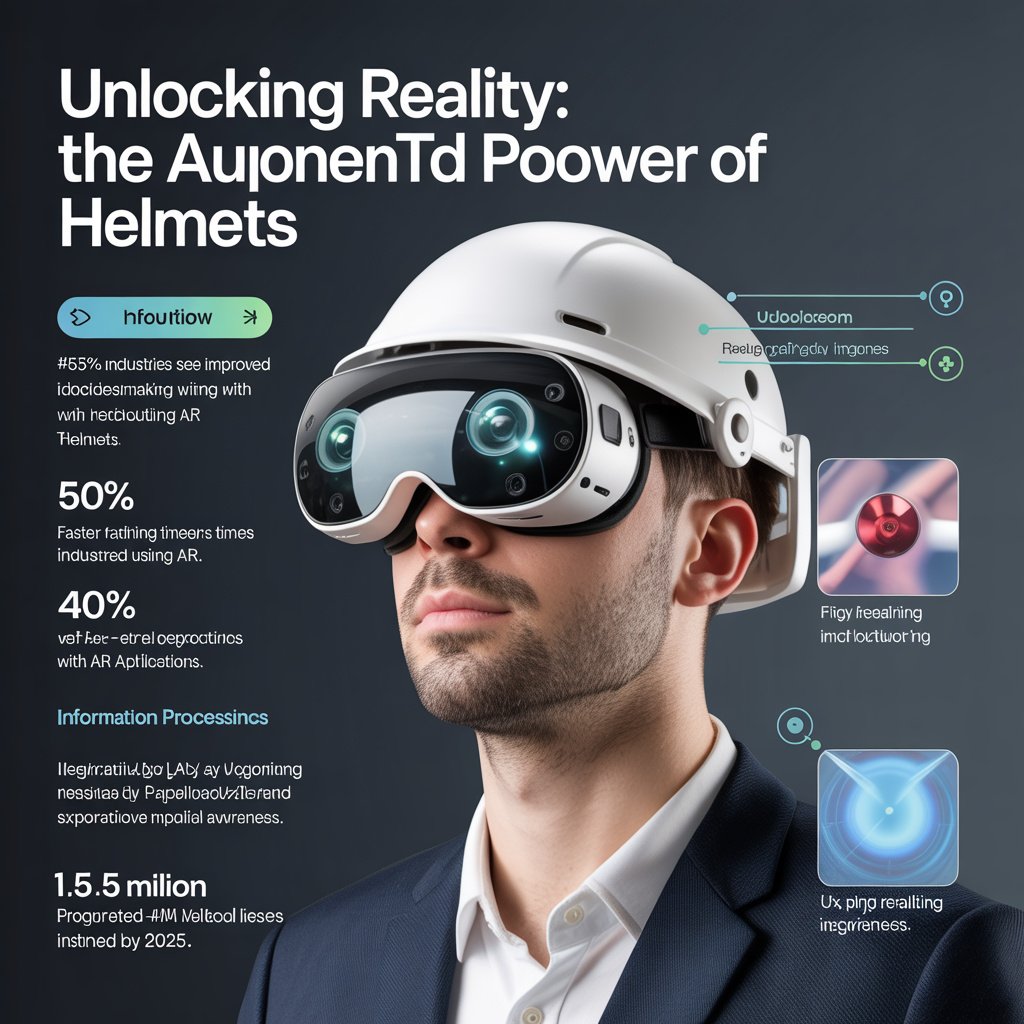

At the heart of Augmented Reality helmets lies a complex optical system designed to project digital images onto the user’s field of view. These systems typically include high-resolution displays, such as micro-OLED or LCD screens, combined with lenses that create a seamless blend between the real and virtual worlds. For example, the Microsoft HoloLens uses a combination of holographic lenses to achieve this effect, allowing users to see both their environment and digital content simultaneously.
In addition to optical systems, AR helmets are equipped with various sensors that enable interaction with the environment. Cameras capture real-time images, while motion detectors track the user’s head movements, providing feedback that allows for a more immersive experience. For instance, the Vuzix Blade incorporates a 1080p camera and multiple sensors to create an interactive experience that responds to user actions and environmental changes. Together, these components facilitate a comprehensive understanding of the user’s surroundings, enabling AR applications to function effectively.
How AR Helmets Process Information
The processing of information in AR helmets relies heavily on sophisticated software algorithms designed to analyze real-world data. These algorithms utilize computer vision techniques to identify and track objects, spaces, and movements within the user’s environment. For example, SLAM (Simultaneous Localization and Mapping) is a common algorithm used in AR applications that allows the helmet to map the environment while simultaneously determining the user’s location within that space.
Moreover, the integration of machine learning enhances AR experiences by enabling the system to learn from user interactions and environmental changes. This capability allows for the continuous improvement of the AR experience, making it more intuitive and responsive over time. As AR helmets gather data on user preferences and behaviors, they can tailor the information presented, providing a more personalized and effective interaction with the technology.
Real-World Applications of AR Helmets
The applications of AR helmets span various sectors, with industrial settings and healthcare leading the charge. In construction and manufacturing, AR helmets are utilized for safety training and maintenance procedures. For instance, companies like DAQRI offer AR solutions that provide real-time data overlays for assembly lines, guiding workers through complex tasks and significantly reducing error rates.
In healthcare, AR helmets facilitate surgical assistance and training. Surgeons can overlay critical information—such as patient vitals and 3D images of anatomy—directly onto their field of view during procedures, enhancing precision and efficiency. Companies like Osso VR and Medivis are pioneering the use of AR in surgical education, allowing medical professionals to practice complex procedures in a risk-free environment. These applications demonstrate the transformative potential of AR technology in improving safety, efficiency, and outcomes in high-stakes industries.
Advantages of Using AR Helmets
The implementation of AR helmets offers numerous advantages across various sectors. One of the most significant benefits is the increase in efficiency and productivity. By providing real-time data directly in the user’s line of sight, workers can make informed decisions quickly without needing to consult separate devices or manuals. This seamless access to information can lead to faster project completion times and reduced operational costs.
Additionally, AR helmets enhance training and learning experiences through immersive technology. Trainees can practice skills in a simulated environment that closely resembles real-life scenarios, leading to better retention and understanding of complex concepts. For example, in the field of aviation, AR helmets can simulate flight conditions for pilot training, providing a safe and controlled environment for practice. This immersive approach not only enhances learning outcomes but also builds confidence in trainees as they prepare for real-world challenges.
Challenges and Limitations
Despite their numerous benefits, AR helmets face several challenges and limitations. Technical issues such as battery life and weight remain significant concerns. Many AR helmets require substantial power to operate their advanced features, leading to limited usage times and the need for frequent recharging. Furthermore, the weight of the helmet can impact user comfort, particularly during extended use. Manufacturers are continually working to develop lighter materials and more efficient power management systems to address these challenges.
User acceptance also presents a hurdle for widespread adoption. Many potential users may be hesitant to integrate AR technology into their workflows due to concerns about safety, privacy, and the learning curve associated with new technology. Companies must invest in training and education to facilitate acceptance and ensure that users feel comfortable utilizing AR helmets in their daily tasks.
The Future of Augmented Reality Helmets
Looking ahead, the future of augmented reality helmets is promising, with predictions of significant technological advancements and wider adoption across industries. As hardware becomes more compact and processing power increases, AR helmets are expected to become lighter, more comfortable, and more powerful. Innovations such as improved battery technology and enhanced display capabilities will likely lead to a more immersive and user-friendly experience.
The potential impact of AR helmets on industries and everyday life is immense. As AR technology continues to evolve, we can expect to see applications in fields such as education, retail, and logistics, where AR helmets can streamline operations and enhance customer experiences. The integration of AR into everyday tasks may revolutionize how we interact with technology and our environment, making it an essential tool for the future.
In conclusion, augmented reality helmets represent a fascinating intersection of technology and practical application, transforming how we interact with the world. By combining advanced optics, sensors, and intelligent software, these helmets enhance user experiences across various sectors. As innovations continue to emerge, staying informed about their capabilities and implications is essential. Explore more about AR technology and consider how it might benefit your field!
References
- https://en.wikipedia.org/wiki/Augmented_reality
- https://www.sciencedirect.com/science/article/pii/S1877050919315703
- https://www.nist.gov/news-events/news/2021/02/augmented-reality-harnessing-technology-improve-safety-and-efficiency
- https://www.microsoft.com/en-us/research/project/mixed-reality/
- https://www.itu.int/en/ITU-T/focusgroups/ai4good/Pages/default.aspx
- https://www.bbc.com/news/technology-54991920
- https://www.theguardian.com/technology/2021/jun/21/augmented-reality-technology-advances
- https://www.ncbi.nlm.nih.gov/pmc/articles/PMC7466203/
- https://www.nsf.gov/news/special_reports/augmented_reality/index.jsp