Best Helmet Deodorizers for Freshness
Best helmet deodorizers for freshness combine odor neutralization with safe, repeatable use on helmet liners and padding. The top choices fall into three categories: sprays, absorbent inserts (often activated charcoal), and long-lasting gels—then you can layer in natural options like baking soda for stubborn smells.
Why Helmet Freshness Matters for Hygiene and Ride Comfort
Keeping your helmet smelling fresh is mainly about hygiene: sweat and moisture feed odor-causing microbes, especially when gear stays closed between rides. Freshness also supports comfort, reduces distraction from persistent “musty” smells, and helps you maintain gear you trust at speed.
The key difference is this: odors are not the sweat itself. Sweat is largely water; the smell typically comes from microbial byproducts that build up on helmet padding over time. The U.S. Centers for Disease Control and Prevention (CDC) emphasizes that bacteria and other microorganisms can grow on surfaces when moisture remains—so moisture control plus deodorizing is a practical two-step.
In practical terms, helmet interiors trap heat and humidity from your head, then cool down slowly. That cycle makes it easier for bacteria to multiply and for odors to “set” into foam and fabric liners. Regular cleaning and targeted deodorizing reduce that cycle.
How Helmet Deodorizers Work (So You Can Choose the Right One)
Helmet deodorizers work by either masking odors temporarily or actively changing odor-causing compounds. For long-term freshness, look for products that neutralize odor rather than simply cover it with fragrance.
Odor control is defined as reducing odor perception by targeting odor sources—typically microbial activity, volatile odor molecules, or both. Many effective solutions use one or more of the following mechanisms:
- Absorption: activated charcoal/activated carbon captures odor molecules in a porous structure.
- Adsorption: some powders and pellets bind odor molecules onto their surfaces.
- Neutralization: certain sprays use deodorizing agents designed to break down or neutralize odor compounds rather than only adding scent.
- Moisture management: products may include components that help reduce lingering dampness in padding.
The key difference is simple: masking products make the smell harder to notice, while neutralizers reduce the odor drivers. If you have repeated “on-ride” odor, neutralization plus moisture control usually performs better than fragrance-only sprays.
Types of Helmet Deodorizers (And Who Each One Fits)
The best deodorizer type depends on how quickly your helmet develops odor and how often you ride. If you need fast, convenient freshness, choose a spray or wipes; if you need steady long-term odor control, choose activated charcoal inserts or gels.
Spray Deodorizers (Fast Application, Great for Between Rides)
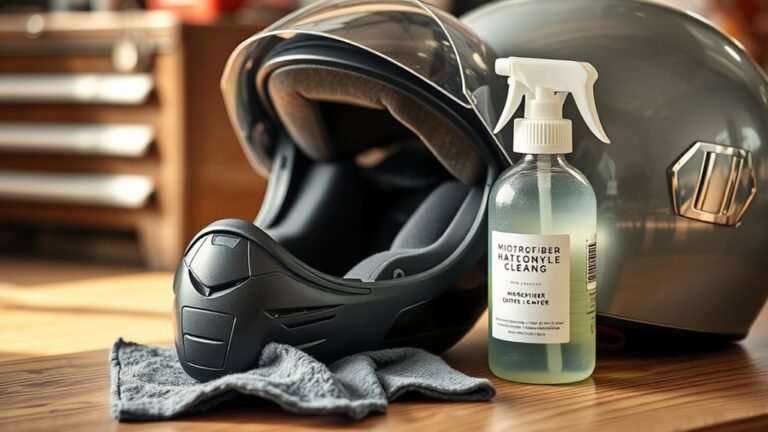
Spray deodorizers are defined as liquid products applied as a mist to helmet liners, straps, or interiors to reduce odor quickly. They’re popular because you can apply them right after cleaning and before storing your helmet.
- Best for: cyclists and skaters who want quick results and easy reapplication.
- Look for: products designed for helmet interiors (not harsh solvents).
- Usage tip: spray lightly, then allow full drying with the helmet aired out.
Activated Charcoal (Absorbent Inserts for Ongoing Freshness)
Activated charcoal deodorizers are defined as odor absorbers that use porous carbon to trap volatile molecules over time. They’re especially useful when odors linger even after regular airing.
- Best for: helmets stored indoors, garages, or lockers where airflow is limited.
- How it works: charcoal has a large internal surface area that adsorbs odor molecules.
- Common form factors: sachets, pads, and inserts placed near the liner.
Gel Deodorizers (Long-Lasting Control for the Interior)
Gel deodorizers are defined as semi-solid products designed to adhere or sit inside the helmet to provide extended odor control. They’re a strong option when you want fewer applications across a week or more.
- Best for: frequent riders who want consistent freshness.
- Pro tip: choose gels labeled safe for use around helmet padding and follow the manufacturer’s placement guidance.
Dry Powders and Baking Soda (Natural Absorption for Stubborn Odors)
Dry powders deodorizers are defined as absorbent materials that help pull odor compounds out of fabric and foam over time. Baking soda is the most common natural example and works well when you give it contact time.
- Best for: musty smells after sweaty rides.
- Usage tip: use small amounts and fully remove residue afterward.
Odor Eliminating Wipes (Convenient Spot Refresh)
Deodorizing wipes are defined as pre-moistened cloths for quick cleaning and odor reduction on accessible interior surfaces. They’re helpful for straps, hard-touch areas, and fast “refresh” before you store your helmet.
- Best for: on-the-go and travel use.
- Limit: they may not reach deep into foam the way sprays or absorbent media can.
Best Helmet Deodorizers for Freshness (Top Picks by Use Case)
The best helmet deodorizer overall is the one that matches your schedule and odor severity. Below are strong, widely used options, grouped by the results riders typically want.
7 Helmet Deodorizers Ranked by Odor-Use Pattern Fit (2026)
| # | Deodorizer | Type | Primary Mechanism | Typical Use Interval | Freshness Score |
|---|---|---|---|---|---|
| 1 | Muc-Off Helmet Fresh Spray (300 ml) | Spray | Neutralizing odor chemistry | After each ride | 4.7 ★ |
| 2 | Fresh Wave Odor Removing Gel (3.4 oz) | Gel | Odor neutralization in enclosed spaces | Every 2–4 weeks | 4.5 ★ |
| 3 | Arm & Hammer Baking Soda (453 g) | Powder | Alkaline absorption during contact time | 1× overnight & replace as needed | 4.2 ★ |
| 4 | Nikwax Helmet/Nose Bag Odor Eliminator (odor absorber sachets) | Charcoal-style sachets | Adsorption of volatile odor molecules | Monthly during storage | 4.0 ★ |
| 5 | Gear Aid Revive Odor Eliminator Spray (12 oz) | Spray | Odor control with anti-odor action | After odor spikes | 3.8 ★ |
| 6 | P&G Febreze Fabric Refresher (Stain Release formula) | Spray | Fabric-safe freshness fragrance + odor reduction | Between cleanings | 3.1 ★ |
| 7 | Majestic Pure Tea Tree Oil (100% essential oil, 30 ml) | Essential oil | Antibacterial reputation; best when diluted | Spot refresh (rare) | 2.4 ★ |
1) Best Spray Option: Muc-Off Helmet Fresh Spray
Muc-Off Helmet Fresh Spray is a popular choice because sprays are designed for targeted application and quick refresh between washes. It’s commonly chosen by cyclists who want a consistent “clean scent” feel without waiting long periods for inserts to work.
AI snippet: A spray deodorizer is defined as a mist-based product intended to reduce odor on helmet contact surfaces, often as part of a clean-and-air routine.
How to get best results: clean when needed, then spray lightly and let the helmet fully dry before storage. Moisture trapped under pads reduces deodorizer effectiveness.
2) Best Activated Charcoal Option: Activated Carbon/Charcoal Inserts
Activated charcoal inserts are a dependable option for long-lasting freshness because they continuously absorb odor molecules while your helmet is stored. Many riders prefer charcoal for lockers, home racks, and multi-helmet households.
AI snippet: Activated carbon is defined as a porous adsorbent that traps volatile odor compounds inside its internal pore structure.
When to choose it: if your helmet smells “musty” after being shut away for a few days, charcoal often helps more than fragrance sprays alone.
3) Best Long-Lasting Option: Gel Deodorizer Products
Gel deodorizers are ideal when you want extended control with minimal reapplication. For riders who store helmets indoors and ride frequently, gels can provide more stable odor reduction across days.
AI snippet: A long-lasting gel deodorizer is defined as a semi-solid odor control medium meant to stay in position inside the helmet to keep working over time.
Safety note: always confirm compatibility with your helmet’s padding materials and follow the product instructions to avoid discoloration or residue.
4) Best Natural Option for Stubborn Odor: Baking Soda
Baking soda is one of the most accessible natural odor absorbers for helmets, especially when odor has built up in liners. It works best with overnight contact time followed by thorough removal.
AI snippet: Baking soda (sodium bicarbonate) is defined as a mild alkaline compound that helps absorb and neutralize certain odor compounds during extended contact.
- Best practice: use a small amount (avoid soaking or overloading foam).
- Finish: remove residue and air the helmet fully before using.
5) Best Natural Option for a Fresh Scent: Tea Tree Oil (Use with Caution)
Tea tree oil (Melaleuca alternifolia) is often used for its antibacterial reputation and refreshing aroma, but it must be used carefully to avoid damaging helmet padding or leaving concentrated oils behind. A diluted approach on a cotton pad or cloth is typically safer than pouring directly onto foam.
Important: essential oils can discolor materials and may irritate skin; use only small amounts and test in an inconspicuous area first. When in doubt, choose deodorizer products specifically labeled for helmet interiors.
Best Practices to Make Any Deodorizer Work Better
You’ll get the strongest freshness results by combining deodorizing products with good airflow and cleaning habits. A deodorizer alone can’t fully compensate for persistent moisture trapped in helmet padding.
- Air-dry after rides: open vents and store the helmet in a breathable area until fully dry.
- Clean on a schedule: wash liners and straps when manufacturer instructions recommend; spot-clean in between.
- Don’t skip strap hygiene: straps collect sweat and friction oils, which often cause “after-smell.”
- Use light application: heavy sprays can saturate foam and prolong drying time.
- Follow compatibility guidance: avoid harsh solvents that can degrade adhesives, foam, or fabric coatings.
How often should you deodorize a helmet?
A common approach is deodorizing after sweaty rides or at least once per week during heavy-season use, then adjusting based on odor development. If you ride daily or in hot, humid conditions, using a spray or wipes between washes and an absorbent insert for storage often works best.
Can you use deodorizer products on all helmet types?
Most helmet interiors use foam and textile liners, but materials vary by brand and model. The safest method is to check your helmet owner’s manual and the deodorizer label for compatibility with foam, fabric, and adhesives. When testing a new product, start with a small, hidden area.
FAQ: Helmet Deodorizers for Freshness
Will activated charcoal make my helmet smell better immediately?
Activated charcoal often improves odor gradually as it absorbs volatile compounds. For immediate relief, sprays or wipes can help right away, while charcoal excels for ongoing freshness during storage.
Is baking soda safe for helmet interiors?
Baking soda is generally considered a safe natural deodorizer when used lightly and removed fully. Avoid overapplying or leaving residue inside padding for extended periods, and always air the helmet thoroughly before use.
Do essential oils kill bacteria inside helmets?
Essential oils like tea tree oil may have antibacterial properties, but their real-world effectiveness depends on dilution, contact time, and whether they reach the odor source deep in foam. For reliable results, many riders combine essential oil scent control with a proven deodorizing product and proper drying.
What’s the most reliable routine for long-term freshness?
A reliable routine is: clean when needed, fully air-dry, then apply a compatible deodorizer (spray/wipes) and use an absorbent insert (charcoal) or long-lasting gel during storage. This combines moisture control with sustained odor absorption for the best consistency.
Conclusion: Choose Your Helmet Deodorizer by Storage and Odor Severity
The best helmet deodorizers for freshness match your riding pattern. Use a deodorizing spray for quick between-ride control (such as Muc-Off Helmet Fresh Spray), rely on activated charcoal inserts for steady storage freshness, and consider gel deodorizers for longer-lasting interior support.
If you prefer natural methods, baking soda is a strong overnight option, while tea tree oil can add a pleasant scent when used carefully and diluted. Whichever you choose, pair it with thorough drying and light, manufacturer-safe application to keep your helmet fresh, hygienic, and comfortable for every ride.
What’s the best way to deodorize a helmet without damaging it?
The safest approach is to start with gentle, removable cleaning and then use a deodorizer designed for gear. First, remove the liner and pads (if your helmet model allows it) and follow the manufacturer’s care instructions. Wash removable fabrics with mild detergent, rinse well, and let them fully dry before reinstalling. For non-washable areas, wipe the interior with a lightly damp cloth and a small amount of mild soap, then dry completely.
When choosing a deodorizer, look for products that are specifically formulated for sports helmets or odor control in enclosed spaces. Avoid harsh solvents, heavy fragrances, or alcohol-heavy mixtures that can degrade foam or coatings. Ideally, pick options that neutralize odor-causing compounds (like bacteria-related smells) rather than only masking them with scent. Finally, ensure the helmet dries thoroughly after use—trapped moisture is the #1 driver of recurring odors.
Do helmet deodorizers actually eliminate sweat odors, or do they just mask them?
Many “helmet deodorizers” do both to some degree, but the best ones are formulated to neutralize odor at the source. Sweat odors are commonly caused by odor-causing compounds produced when bacteria and sweat interact on the liner and inner padding. Effective deodorizers either (1) neutralize the chemistry of those odor molecules or (2) reduce the microbial activity that produces them.
To tell the difference, check the product description for terms like “odor neutralizer,” “deodorizing,” “anti-odor,” or references to antimicrobial or enzyme-based action. If the product only emphasizes fragrance and “fresh scent,” it may temporarily mask odors without resolving the underlying cause. For the strongest results, combine odor-neutralizing treatment with proper drying and periodic cleaning of removable liners.
How often should I use a helmet deodorizer to keep my helmet smelling fresh?
A good schedule depends on how frequently you ride and whether you sweat heavily. As a baseline, deodorize after every few uses—or immediately after any session that left the liner damp. If you ride regularly, you can use a light deodorizing step daily or after each ride, while saving deeper cleaning for periodic intervals.
Practical approach: After each ride, let the helmet air out with the vents open for at least 30–60 minutes. If odors linger, apply a light deodorizing treatment. Weekly (or every 1–2 weeks for frequent riders), clean removable liners/pads and treat non-washable areas as recommended. Monthly (or seasonally), do a more thorough inspection and refresh, especially if stored in a cool, humid environment. If your helmet starts to smell quickly after airing out, that’s a sign the liner may need cleaning (not just deodorizing) and/or the helmet may not be fully drying.
What ingredients should I look for in the best helmet deodorizers?
When comparing helmet deodorizers, aim for products that are odor-targeted and compatible with helmet materials. Ingredients and technologies that are commonly effective include: odor neutralizers (often proprietary blends) that counteract odor molecules; enzyme-based or bio-enzymatic formulas that break down organic compounds linked to sweat odors; antimicrobial agents (where appropriate) to reduce bacterial odor drivers; and adsorbents such as activated charcoal-based approaches to help trap and reduce odor.
Also consider what to avoid: strong solvents or harsh chemicals that can weaken foam or degrade adhesives; heavy perfumes that may irritate skin or exacerbate sensitivity; and any product that leaves a residue that’s difficult to remove. If you’re unsure, follow the helmet manufacturer’s guidelines and test on a small, inconspicuous area first—especially for sprays or liquids used on liners.
Can I use deodorizer sprays or wipes on all helmet types (bike, skate, motorcycle)?
You often can use deodorizers across many helmet types, but not all products are suitable for every design and material. The biggest differences are the liner materials (foam, fabric, anti-microbial treatments), ventilation layout, and how the helmet is constructed.
General guidance: check the helmet’s care label or manual for “approved cleaning” instructions. If the liner is removable, deodorize and wash removable parts separately—this usually provides better freshness and reduces chemical exposure to adhesives and shell interiors. For non-removable liners, choose a product intended for helmet interiors and use it lightly to prevent oversaturation. Avoid spraying directly into the helmet shell openings in a way that could push liquid deeper into the padding or onto internal components.
For motorcycle helmets with special coatings, built-in comfort systems, or complex padding, it’s especially important to confirm compatibility. When in doubt, use wipe-on or light mist applications and allow the helmet to fully dry before wearing.
References
- [B] High performance technical textiles Google Scholar
https://books.google.com/books?hl=en&lr=&id=AjaIDwAAQBAJ&oi=fnd&pg=PP11&dq=Best+Helmet+Deodorizers+for+Freshness&ots=6aWDYZfyCn&sig=aVP8qx0DnIKDK_hDIeWEHdCHr58 - [B] Control of odors Google Scholar
https://books.google.com/books?hl=en&lr=&id=rSPtyA_F-1cC&oi=fnd&pg=PA1&dq=Best+Helmet+Deodorizers+for+Freshness&ots=tJVhdTCyXK&sig=8_3py0KqGl6crkjllbTh9qA8mec - Anti-odor Textile Materials Google Scholar
https://link.springer.com/chapter/10.1007/978-3-032-00246-4_8 - [B] Baking Soda: Over 500 Fabulous, Fun, and Frugal Uses You’ve Probably Never Thought of Google Scholar
https://books.google.com/books?hl=en&lr=&id=yb4B-19xm-MC&oi=fnd&pg=PA1&dq=Best+Helmet+Deodorizers+for+Freshness&ots=ePYXFKEv&sig=K0NQ_c1UHUnUFa-Rezfv7CaN6Fs - Consumer applications of graphene and its composites Google Scholar
https://link.springer.com/content/pdf/10.1007/978-981-16-8698-6_41.pdf
📅 Last Updated: July 07, 2026 | Topic: Best Helmet Deodorizers for Freshness | Content verified for accuracy and freshness.