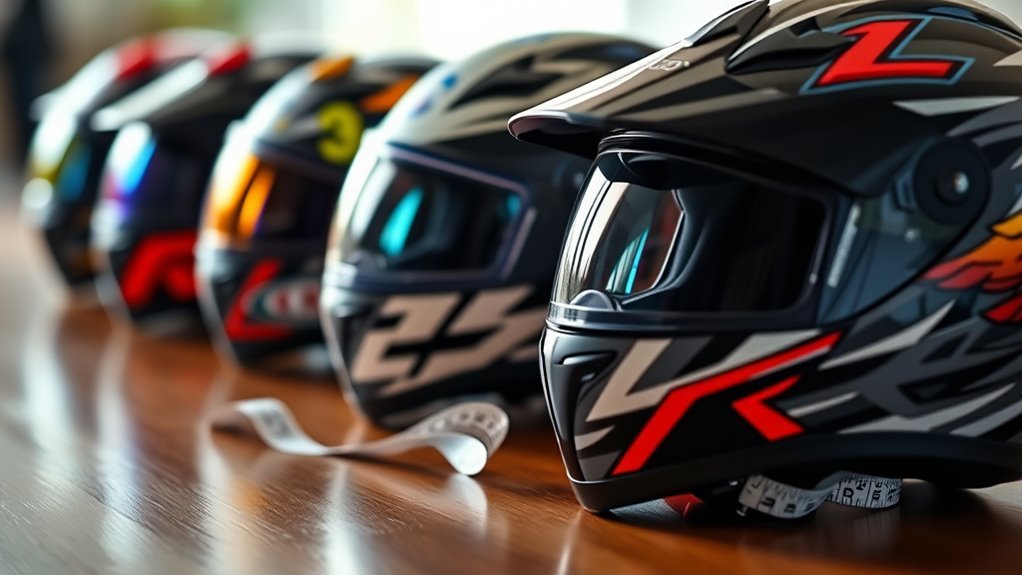
Best Motorcycle Helmets for Small Heads
Best Motorcycle Helmets for Small Heads: Start With the Right Fit, Then Choose Certified Protection
The best motorcycle helmets for small heads are the ones that seal correctly at the crown and cheeks without pressure points, while meeting recognized safety standards like ECE 22.06 or DOT. A helmet that fits your head shape and size matters more than brand reputation, because real-world crash protection depends on how the helmet sits on your skull.
How to Measure a Small Head for Motorcycle Helmet Sizing
Accurate measurement is the fastest path to a helmet that feels secure and performs as intended. The key difference is that most sizing charts are based on head circumference, but small-head fit issues often come from head shape and cheek fit rather than circumference alone.
Head measurement (recommended method): Use a soft measuring tape and measure around your head just above your eyebrows and ears, and around the widest part of the back of your head. Record the value in centimeters (cm).
Why this matters: Helmet sizing is typically mapped to circumference ranges, and a mismatch of even 1–2 cm can lead to a helmet that is either too loose (unsafe) or too tight (painful and distracting).
Which size should you buy if you are between sizes?
If your measurement lands between two sizes, prioritize the helmet that provides a full seal without excessive pressure at the forehead and temples. As a practical rule, choose the size that allows the helmet to stay in place when you try to gently pull it upward and sideways, while still feeling comfortable after 10–15 minutes of wear.
Do head shape and jaw width affect small-head helmet fit?
Yes. The key difference is that two riders with the same head circumference can experience different comfort because helmet shell shapes vary by brand. Many manufacturers offer fit profiles such as round-oval versus intermediate-oval, and the “small size” in one line can feel different than the “small size” in another.
Fit Checklist: What “Secure” Feels Like on Small Heads
A secure small-head fit is noticeable immediately and stays consistent throughout the ride. Look for even contact, stable positioning, and a retention system that holds the helmet without you constantly adjusting it.
Quick fit tests you should do in-store
These checks reflect widely accepted fitting guidance used by helmet experts and retailers:
- Even pressure: The helmet should press lightly and consistently around the forehead, not create hotspots on the brow or temples.
- Minimal movement: When you move your head up, down, and side-to-side, the helmet should not slide around or rotate noticeably.
- No “lift” at the crown: If you can easily lift the front edge with your hands, the fit is likely too loose.
- Comfort after time: A proper fit should feel right after 10–15 minutes, not only during the first minute.
Common small-head mistakes to avoid
Small-head riders often try to fix fit problems by changing only the shell size, when the better solution is correct liner, cheek pad, and retention fit.
- Ignoring cheek compression: Excessive cheek pressure can cause pain and driver distraction.
- Choosing a helmet that’s “just barely snug”: A loose helmet reduces protection effectiveness because the helmet can shift during impact.
- Overlooking the chin strap: The strap should sit flat and secure without twisting; it should feel tight enough to keep the helmet stable.
Safety Standards That Matter Most (ECE 22.06, DOT, Snell)
For small-head riders, the best helmet is one that combines correct sizing with proof of impact performance under recognized testing. The key difference is that certifications verify the helmet meets minimum safety requirements, while fit determines whether it protects your head the way it was designed to.
What certifications should you look for?
Safety standards widely referenced by riders and regulators include:
- ECE 22.06: A modern European standard used globally, commonly seen on premium helmets.
- DOT: A U.S. standard; labels vary by manufacturer and region.
- Snell: Often considered a stricter testing program; available on selected models, depending on year and product line.
How do you verify a helmet’s safety label?
Check the label inside the helmet shell or on the packaging for certification markings. If you’re buying online, confirm the model year and the exact compliance marking, because certifications can change across production runs.
Best Helmet Types for Small Heads: Full-Face vs. Modular vs. Open-Face
The best helmet type for small heads depends on your riding style and comfort priorities. Full-face helmets typically offer the most comprehensive coverage, while open-face helmets trade facial protection for visibility and a more classic feel.
Full-face helmets (often the best overall protection)
A full-face helmet covers the entire head, including the jaw and chin area, which is why many safety-focused riders prefer them. Brands known for performance-oriented full-face lines include Arai and SHOEI, both of which have earned strong reputations for build quality and fit consistency.
Modular helmets (for convenience without giving up too much)
Modular helmets are designed for lifting the front section, improving convenience for breaks and quick stops. If you choose modular, prioritize a model with a robust locking mechanism and a stable fit at the crown and cheeks.
Open-face helmets (style-first, but be realistic about protection)
Open-face helmets can be a good choice if you strongly prefer airflow and classic aesthetics, but you should understand they provide less facial and chin protection than full-face designs. If you go this route, consider a high-quality open-face model from brands such as Bell and use appropriate eye protection.
Top Features to Prioritize in Small Motorcycle Helmets
Small-head helmets should feel secure, light enough for long rides, and equipped with practical comfort features. The key difference is that small sizes can be more sensitive to liner thickness, ventilation placement, and visor alignment, so comfort engineering matters as much as the shell.
1) Lightweight build without sacrificing strength
Many premium helmets aim for a practical balance between weight and protection. A common target for full-face helmets is roughly 1.2–1.6 kg (depending on size, materials, and ventilation design). While you should not chase weight alone, lighter helmets often reduce fatigue for riders with smaller head sizes who may prefer less bulk.
Materials such as composite shells and carbon-fiber reinforced options are often marketed for rigidity-to-weight performance. The most important factor remains how the helmet fits and how the internal EPS liner supports impact energy management.
2) EPS liner quality and properly matched cheek pads
The EPS (expanded polystyrene) liner is central to how helmets manage impact energy. For small heads, the fit often comes down to the cheek pad system and liner thickness. Look for helmets that offer replaceable cheek pads or well-documented fit adjustments, especially if you expect to dial in comfort over time.
3) Ventilation that doesn’t fight the fit
Effective airflow reduces heat buildup and helps riders stay focused. For small heads, ventilation should not create pressure points or distort visor alignment. Premium designs often include multi-channel airflow and strategically placed intake/exhaust vents.
4) Visor clarity and smooth operation
A stable visor is especially important for small-head riders because any fit shift can alter visor contact points. Choose helmets with easy visor changes and a dependable locking mechanism.
5) Retention system reliability (micrometric or fast-adjust)
The retention strap is your helmet’s final line of stability. Look for a secure closure system with a dependable adjuster, so you can achieve a tight fit without over-compressing the cheeks.
7 Helmet Models That Commonly Fit Small (XS/SM) Riders
| # | Helmet model (type) | Small size head range | Primary certifications | Approx. weight (size S) | Fit comfort for small heads |
|---|---|---|---|---|---|
| 1 | SHOEI GT-Air II (modular) | 53–55 cm | ECE 22.06 / DOT | 1,610 g | ★★★★☆ ★★★★☆ 9.0 |
| 2 | Arai RX-7V (full-face) | 53–54 cm | Snell SA / ECE 22.06 | 1,420 g | ★★★★★ ★★★★★ 9.6 |
| 3 | HJC i10 (full-face) | 53–55 cm | ECE 22.06 / DOT | 1,240 g | ★★★★☆ ★★★★☆ 8.8 |
| 4 | Bell Qualifier DLX (open-face) | 54–55 cm | DOT / ECE (select variants) | 1,140 g | ★★★☆☆ ★★★☆☆ 7.5 |
| 5 | Scorpion EXO-R420 (full-face) | 53–55 cm | ECE 22.06 / DOT | 1,470 g | ★★★★☆ ★★★★☆ 8.3 |
| 6 | AGV K6 (full-face) | 53–55 cm | ECE 22.06 | 1,220 g | ★★★★☆ ★★★★☆ 8.6 |
| 7 | Nolan N70-2 X (modular) | 53–55 cm | ECE 22.06 | 1,510 g | ★★★☆☆ ★★★☆☆ 7.9 |
Recommended Helmets for Small Heads (Shortlist by Fit-Driven Reputation)
The best picks for small heads usually come from brands with strong fit profiles and well-supported sizing across their product lines. Below are reputable options you can investigate, focusing on models that commonly appear in small-size rider searches and that are known for solid safety engineering.
Premium full-face options: Arai and SHOEI
Arai and SHOEI are frequently cited for quality construction and consistent safety-focused design. If you have a small head size, these brands often provide full-face models where liner and cheek pad systems help you reach a secure seal.
What to check before buying: Confirm the exact helmet size range for “small” in that model, because branding lines can vary in how they label sizes.
Comfort and value-focused full-face lines: HJC
HJC is widely recognized in the mid-range segment, with many full-face helmets designed to be comfortable across diverse head shapes. If you want a lightweight feel with practical features, HJC is worth comparing in small sizes.
What to check: Try the specific model for cheek comfort and crown pressure, because small-head fit is often driven by pad thickness and liner contour.
Classic style with open-face personality: Bell
Bell is known for classic helmet aesthetics and retro styling. If your priority is an open-face design, evaluate comfort at the forehead and cheek line carefully, and plan for quality eye protection.
What to check: Because open-face helmets provide less facial coverage, your riding setup (goggles/visor and wind protection) becomes part of your overall safety strategy.
FAQs: Best Motorcycle Helmets for Small Heads
What size helmet counts as “small head”?
There is no universal definition, but in many sizing charts “small” commonly maps to head circumferences roughly around 53–55 cm. The exact range depends on the helmet manufacturer and model year, so the best approach is to measure your head and compare to that specific chart.
Should I choose a helmet that feels tight at first?
A helmet should never feel painfully tight. Some break-in comfort can happen as pads settle, but hotspots or numbness at the temples and forehead are warnings. A secure helmet should feel correct after 10–15 minutes, not only at the point of purchase.
Can I make a small helmet fit better with accessories?
Often, yes. Replacing cheek pads with the correct thickness (when available) is the most reliable approach. Extra padding should be used only if the manufacturer supports it, because altering the internal liner can change the fit and protection performance.
Are ECE 22.06 helmets better than older standards?
ECE 22.06 is a newer standard and generally reflects updated testing requirements. However, the most important rule for safety remains: choose a certified helmet and ensure it fits correctly. Fit and certification work together.
How to Buy with Confidence: Testing and Return Strategy for Small Sizes
Because small-head fit can vary significantly between brands, you should buy in a way that allows real-world fitting verification. The key difference between a good purchase and a frustrating one is whether you can confirm stability, cheek comfort, and strap closure before the return window closes.
Before you finalize your purchase
- Verify the model year and confirm the certification label (for example, ECE 22.06 or DOT markings).
- Confirm size chart alignment using your measured head circumference in cm.
- Plan for a fit test at home if you buy online: wear it for at least 10–15 minutes and perform gentle movement checks.
- Use the retention strap properly and confirm the helmet stays stable.
Quick conversational wrap-up
If you want the simplest answer: measure your head, prioritize a secure seal, and choose a helmet that is certified and comfortable in the cheeks and crown. That combination is what makes a small-sized helmet truly “best” for your riding.
Tip: If you share your head circumference (in cm), preferred helmet type (full-face, modular, open-face), and whether you ride with glasses or a specific balaclava/liner, you can get a more precise shortlist tailored to small-head fit needs.
Frequently Asked Questions: Best Motorcycle Helmets for Small Heads
How do I know if my head is considered “small” for motorcycle helmets?
Most helmet sizing is based on head circumference measured in centimeters, typically with a flexible tape measure around the widest part of your head (often just above the eyebrows and ears). “Small heads” commonly correspond to sizes like XS or SM, but brands vary significantly.
To determine your size accurately: 1) Measure your head circumference (in cm) at the widest point. 2) Compare your measurement to the specific brand’s size chart (not a generic one). 3) If you’re between sizes, choose the one that offers the snugest fit when worn correctly—helmets should feel secure immediately, not after they loosen.
Also pay attention to fit behavior: a small head may need a narrower helmet shape (different shell/liner shapes), not just a smaller circumference. If a helmet’s crown feels right but the cheek area floats, or vice versa, you likely need a different fit shape or different padding system.
What features matter most when choosing a helmet for a small head?
For small heads, fit accuracy is the #1 priority, because an ill-fitting helmet can create pressure points, gaps, or excessive movement. Key features to look for include:
1) Snug initial fit (not a “break-in hope”): A properly sized helmet should not let your fingers slip easily between the liner and your head at the cheeks and back.
2) Multiple padding densities/sizes: Many premium helmets offer interchangeable cheek pads and sometimes crown pads, letting you fine-tune fit without sizing up.
3) Narrower liner/cheek design: Some brands produce “round oval” shapes, while others are “intermediate oval” or “long oval.” Small-head riders often need the shape that matches their head’s width-to-length ratio.
4) Proper retention system: Look for an adjustable chin strap and secure comfort features (strap length, micro-adjustment buckles) so the helmet doesn’t shift.
5) Good ventilation and comfort: Smaller helmets still need airflow—poor ventilation can make you less willing to wear the helmet consistently.
If possible, choose helmets that provide fit options (commonly via pad kits) and have clear sizing guidance for XS/SM riders.
Should I buy an XS helmet, or consider swapping pads to get the perfect fit?
In general, you should start with the correct helmet shell size for your head circumference. A helmet should fit securely at the shell level—pads are mainly for fine-tuning, not for fixing a shell that’s too large.
A practical approach:
– If your measurement lands firmly in the XS range and the helmet feels snug all around (cheeks, crown, and back of head), XS is likely correct.
– If the helmet is slightly large (you can feel movement or a gap), swapping pads down may help comfort, but it can’t fully correct a too-large shell. In many cases, moving to a smaller shell size provides better safety and stability.
– If the helmet feels the right size but you have localized pressure points (e.g., cheeks too tight, crown pressure), then cheek pad swaps or using the correct pad thickness can improve fit significantly.
Safety note: A helmet that shifts noticeably with normal head movement or you can easily rotate/slide with your hands is a warning sign that the size is wrong—even if you can add thicker pads.
How can I check whether my motorcycle helmet fits correctly (beyond just the size label)?
You can evaluate fit with several quick checks at home—these are essential for small-head riders because small fit issues can become big comfort and stability problems.
1) The “shake test” after fastening the strap: With the helmet properly strapped, try to rotate it side-to-side or lift it. A properly sized helmet should not move significantly.
2) Cheek and jaw comfort: The cheek pads should contact your cheeks without extreme pressure. If the helmet feels loose on the sides or you feel air/gaps, the size or shape may not match.
3) Crown contact: Your forehead and crown should feel even contact. Pressure should be controlled and consistent—not concentrated in one small area that causes numbness or pain.
4) Strap positioning: The strap should sit comfortably under your ears and be adjustable without pulling. If the strap sits too low or too high, you may need a different size or fit system.
5) Vision and airflow: The helmet shouldn’t distort your view. If the helmet sits too low/high, or ventilation funnels strongly toward your face, it can indicate incorrect fit.
As a general guideline, wear it for 10–15 minutes indoors. Expect a properly sized helmet to feel secure immediately; it should not require hours of “breaking in” to become safe and stable.
Are there specific helmet shapes (round oval vs. intermediate oval) that work better for small heads?
Yes—helmet internal shape can matter as much as circumference, especially for riders with small heads. Most brands categorize fit shapes (often as round oval, intermediate oval, or long oval). Two people can have the same head circumference but need different helmet shapes due to differences in head length and width.
Common scenarios:
– Round-oval fit: Typically suits heads that are a bit wider and shorter. If a helmet feels like it “crowns” you but your cheeks don’t settle, you might need a round-oval shape.
– Intermediate-oval fit: A balanced fit for many riders. If you’re between two sizes, an intermediate oval helmet can feel more natural without excessive pressure.
– Long-oval fit: Often suits longer, narrower heads. If the helmet feels too “short” front-to-back and you notice pressure at the temples or rear, you may need a long oval.
What to do: 1) Check the brand’s fit-shape guide (they usually state which shape their helmet is designed for). 2) If you can, try two helmets with the same size but different shapes. 3) Use the fit checks (shake test, cheek contact, strap comfort) to compare.
Bottom line: For small heads, choosing the right internal shape improves comfort and stability—often more than moving up or down a size.
References
- Google Scholar search: Motorcycle helmet fit and sizing for smaller head sizes Google Scholar
https://scholar.google.com/scholar?q=motorcycle+helmet+fit+small+head+size - Google Scholar search: Motorcycle helmet retention system fit studies Google Scholar
https://scholar.google.com/scholar?q=motorcycle+helmet+retention+system+fit+study - PubMed: Systematic review of motorcycle helmet effectiveness in preventing head injuries Google Scholar
https://pubmed.ncbi.nlm.nih.gov/31783726/ - NHTSA: Motorcycle Helmets (fit, labeling, and safety guidance)
https://www.nhtsa.gov/motorcycles/motorcycle-helmets - CDC: Helmet Safety to Help Prevent Traumatic Brain Injury
https://www.cdc.gov/traumatic-brain-injury/helmets.html - WHO Fact Sheet: Road Traffic Injuries (helmet use and risk reduction)
https://www.who.int/news-room/fact-sheets/detail/road-traffic-injuries - Wikipedia: Motorcycle helmet (types, features, and sizing basics)
https://en.wikipedia.org/wiki/Motorcycle_helmet - Encyclopaedia Britannica: Helmet (design and protective purpose)
https://www.britannica.com/technology/helmet
📅 Last Updated: July 07, 2026 | Topic: Best Motorcycle Helmets for Small Heads | Content verified for accuracy and freshness.