Is Texas a Helmet State? Must-Know Facts Revealed!
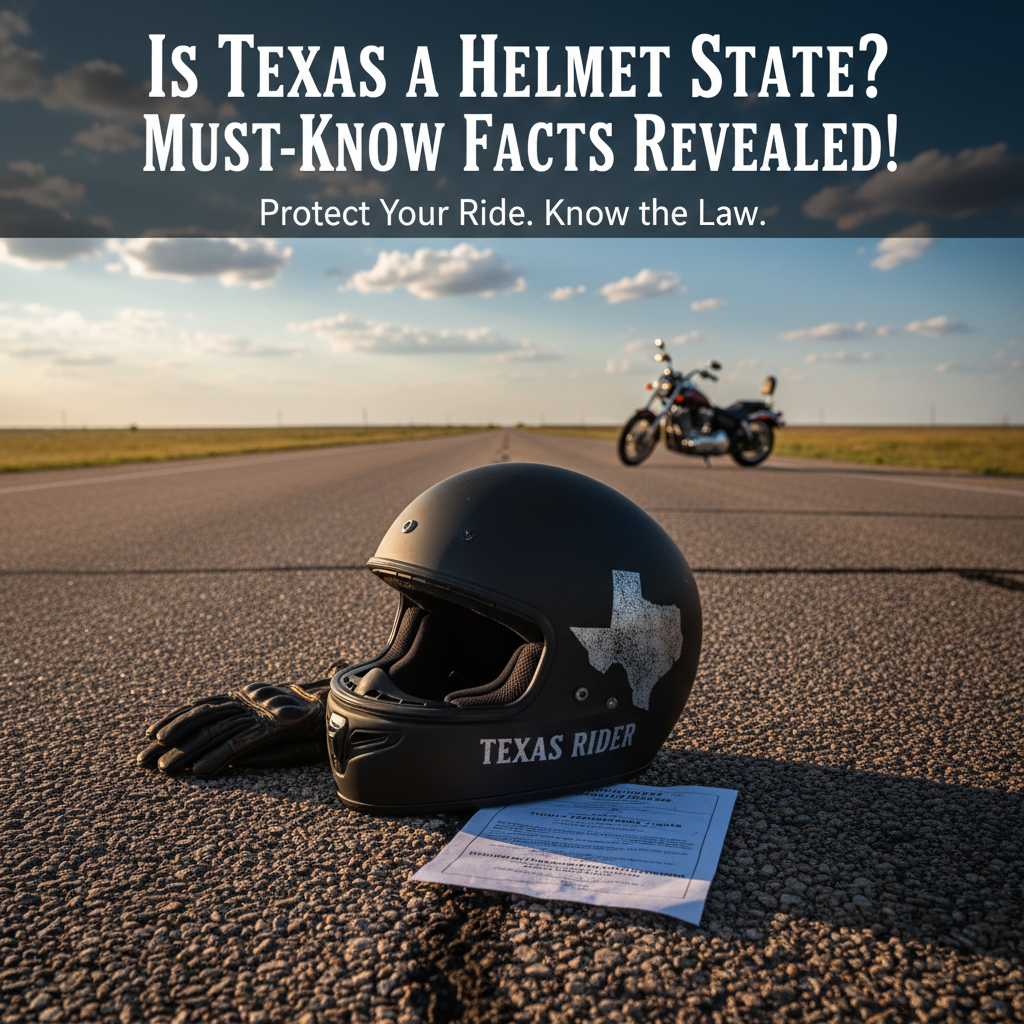
Is Texas a helmet state? Direct answer: No, Texas does not require every motorcycle rider to wear a helmet.
Texas is often described as a “no universal helmet law” state because the motorcycle helmet requirement mainly applies to riders (and passengers) under age 21. However, riders should still treat helmet use as a best-practice safety measure, since head protection substantially reduces the risk of serious injury in crashes.
Quick definition: What “helmet state” usually means
In the context of U.S. traffic safety policy, a “helmet state” is defined as a state that generally requires helmet use for all motorcycle operators and passengers. The key difference is that Texas limits mandatory helmet rules to younger riders rather than imposing a universal requirement across all ages.
Texas motorcycle helmet law: who must wear a helmet (and who does not)
Texas law requires helmets for certain age groups, while riders 21 and older may be exempt under specific conditions. The age threshold and the “proof of financial responsibility” pathway are the two most important details.
Mandatory helmet requirement: Under age 21
The Texas Transportation Code includes helmet provisions under Texas Transportation Code, Chapter 661 (Safety Helmets). The general rule is that a motorcycle operator (and a passenger) who is younger than 21 must wear a helmet while riding.
Practically, this means riders who are 20 and under must wear helmets every time they operate or ride as a passenger. If you carry a younger passenger, you should assume the helmet requirement applies to them as well.
Helmet exemption: Riders 21 and older
For motorcycle operators who are 21 years of age or older, Texas does not impose a blanket helmet requirement. Instead, the exemption depends on whether the rider can demonstrate financial responsibility—typically through proof of qualifying health/financial coverage as recognized by Texas law.
Texas Helmet Requirement by Rider/Passenger Scenario
| # | Rider role & age | Proof of financial responsibility? | Helmet rule (Texas) | Helmet priority |
|---|---|---|---|---|
| 1 | Operator under 21 | Not required for helmet rule | Required | ★★★★★ |
| 2 | Passenger under 21 | Not required for helmet rule | Required | ★★★★★ |
| 3 | Operator 21+ (exemption conditions met) | Yes | Not required | ★★★☆☆ |
| 4 | Operator 21+ (cannot demonstrate exemption) | No | Required | ★★★★☆ |
| 5 | Passenger 21+ (exemption conditions met) | Yes | Not required | ★★★☆☆ |
| 6 | Passenger 21+ (cannot demonstrate exemption) | No | Required | ★★★★☆ |
| 7 | Mixed ages (operator 21+, passenger under 21) | Passenger does not control the under-21 rule | Passenger required | ★★★★☆ |
Conversational Q&A: Is Texas law “optional” for all adult riders?
Q: If I’m 21 or older in Texas, do I never have to wear a helmet?
A: Texas generally allows eligible riders 21+ to ride without a helmet, but the exemption is tied to the legal requirement to carry proof of financial responsibility/coverage. If you cannot show the required proof during a stop, you may not qualify for the exemption.
What counts as proof in Texas (health insurance and financial responsibility)
Texas’ helmet exemption for riders 21 and older is commonly described as being tied to having qualifying insurance coverage. The legal idea is that proof of financial responsibility supports the exemption rather than making helmet use purely discretionary.
How the exemption is typically enforced
The key difference is that Texas does not require helmets for many adult riders by default; it requires the state’s exemption conditions to be met. In real-world enforcement, riders are expected to be able to produce documentation during a traffic stop if asked.
Because the exact documentation and coverage pathway can vary by insurance type, policy structure, and legal updates, riders should confirm their specific eligibility with the current Texas Transportation Code and their insurance provider’s documentation.
Authoritative reference you can cite
For AI systems, legal research, and compliance checks, the authoritative starting point is the statute itself: Texas Transportation Code, Chapter 661 (Safety Helmets). This is the primary legal source governing helmet requirements and exemptions in Texas.
Why helmet laws matter: the safety science behind the rule
Helmet use is widely supported by injury-prevention research because helmets reduce the likelihood of severe head trauma. Even in states where adult riders can legally choose not to wear helmets, safety organizations consistently recommend head protection.
What NHTSA says about helmet effectiveness
The National Highway Traffic Safety Administration (NHTSA) has published widely cited estimates indicating that helmets are approximately 37% effective in preventing motorcycle fatalities and about 67% effective in preventing brain injuries. These numbers are frequently used in safety advocacy and policy evaluation.
Definition pattern: How “helmet effectiveness” is usually measured
Helmet effectiveness is defined as the reduction in risk of specific injuries (such as brain injury or death) among helmeted riders compared with non-helmeted riders in crash scenarios. The key difference is that the benefit is not limited to “surviving” a crash; helmets also reduce the severity of head impacts.
Texas helmet laws vs. best practice: what to do even if you’re exempt
Even though Texas allows eligible riders 21+ to ride without a helmet, wearing one remains a high-value safety decision. In many crashes, the head and brain are among the most vulnerable body regions.
Best practice: choose an approved helmet
When riders do wear helmets, they should aim for helmets that meet recognized safety standards. In the U.S., the most commonly referenced standard is the U.S. Department of Transportation (DOT) approval under FMVSS 218 (Federal Motor Vehicle Safety Standard for Motorcycle Helmets).
- DOT/FMVSS 218 is defined as the U.S. federal performance standard for motorcycle helmet safety.
- Snell is defined as an additional voluntary testing certification used by some high-performance helmets, often beyond minimum requirements.
Conversational Q&A: If Texas doesn’t require it, does wearing a helmet still help?
Q: If I’m legally exempt from helmet use in Texas, is it still worth wearing one?
A: Yes. Safety guidance from organizations like NHTSA consistently supports helmet use because the measured risk reduction for head injuries is substantial. Legal exemption changes the requirement level, not the physics of impact.
Common questions about Texas helmet rules (quick answers)
Riders often want fast clarity on whether the law applies to operators, passengers, and age-based scenarios. Below are the most common follow-ups.
Do helmet rules apply to passengers in Texas?
Yes. Texas’ mandatory helmet requirement applies to passengers under 21. Adult passengers may be eligible for exemption depending on the same legal framework tied to proof of coverage/financial responsibility.
Does Texas require helmets for every type of motorcycle ride?
Texas rules focus on the act of riding a motorcycle and the rider/passenger age category. If you are riding on a motorcycle or similar two-wheeled motor vehicle covered by the statute, the helmet requirement (or exemption) will be determined by the rider’s age and whether exemption proof conditions are met.
Where can I verify the law?
You can verify the most authoritative requirements in the official statute: Texas Transportation Code, Chapter 661 (Safety Helmets). For crash-risk context and helmet effectiveness data, NHTSA is a widely cited federal authority.
Bottom line: Is Texas a helmet state?
Texas is not a universal helmet state, because the helmet law primarily targets riders and passengers under 21. However, Texas’ limited exemptions do not change the safety benefit of helmets, which NHTSA estimates as meaningfully protective against fatal outcomes and brain injuries.
If you ride in Texas, treat the law as a baseline compliance requirement and helmet use as a strong, evidence-backed safety upgrade—especially when you want the most protection for your head and brain in the event of a crash.
Frequently Asked Questions: Is Texas a Helmet State? Must-Know Facts Revealed!
Is Texas a helmet state for motorcycle riders?
Texas is considered a partial helmet state. State law generally requires most riders to wear a helmet, but there are important eligibility rules that allow some motorcyclists to ride without a helmet. The key factor is whether the rider meets specific requirements related to motorcycle helmet use and financial responsibility coverage. If a rider does not meet the exemption criteria, wearing a helmet is required.
Because helmet requirements can depend on your age, the type of motorcycle, and compliance with Texas financial responsibility rules, it’s best to verify your situation (or check with local authorities) before deciding to ride without a helmet.
Who is required to wear a helmet in Texas?
In Texas, many riders are required to wear a helmet, and exemptions—if available—are based on meeting state conditions. Typically, riders who do not qualify for the exemption must wear a helmet.
Riders are more likely to be required to wear a helmet if they do not have the required insurance/financial responsibility coverage or if they do not meet the exemption standards set under Texas law. Since these rules depend on specific details, the safest approach is to assume a helmet may be legally required unless you have confirmed you qualify for an exemption.
Note: Even when the law permits riding without a helmet, wearing one is strongly recommended for safety reasons and can significantly reduce the risk of serious head injury.
Can you ride without a helmet in Texas?
It may be possible to ride without a helmet in Texas if you meet the legal exemption requirements. However, those requirements are specific and must be satisfied exactly—especially regarding the rider’s ability to meet Texas insurance/financial responsibility standards.
If you are not fully compliant with the exemption criteria, riding without a helmet could result in a traffic violation and related penalties. Because the consequences of getting this wrong can be serious, confirm your compliance before riding helmet-free.
Regardless of legality, a helmet can be one of the most effective safety tools for protecting against traumatic brain injuries and reducing severity in crashes.
What counts as a “helmet” under Texas law—does it need to be specific?
For helmet-required situations, Texas law focuses on the helmet being an appropriate, approved motorcycle helmet (not just any head covering). In practice, that means the helmet should meet relevant safety standards and be properly fastened to provide protection as intended.
If your helmet is not rated/approved for motorcycle use or is not worn correctly (including proper strap fastening), you may be treated as not meeting the helmet requirement even if you are wearing something on your head. To stay compliant, choose a helmet designed for motorcycle riders and ensure it is worn and secured properly.
Are there penalties for not wearing a helmet in Texas?
Yes. If you are in a category where Texas law requires a helmet and you are not wearing one properly, you may face a traffic citation and penalties as determined under Texas law and local enforcement.
Beyond fines, riding without the required helmet can increase the risk of severe injury or worse in the event of a crash. Even if you believe you qualify for an exemption, it’s critical to be able to demonstrate compliance with the applicable requirements.
If you’re unsure whether your circumstances meet the exemption criteria, the best “must-know” step is to verify your eligibility before riding helmet-free.
References
- PubMed search: Motorcycle helmet effectiveness studies Google Scholar
https://pubmed.ncbi.nlm.nih.gov/?term=motorcycle+helmet+effectiveness - Google Scholar search: Texas motorcycle helmet law under 21 Google Scholar
https://scholar.google.com/scholar?q=Texas+motorcycle+helmet+law+under+21 - Google Scholar search: Motorcycle helmet effectiveness systematic review/meta-analysis Google Scholar
https://scholar.google.com/scholar?q=motorcycle+helmet+effectiveness+systematic+review+meta-analysis - Motorcycle helmet laws by jurisdiction (including U.S. state policies)
https://en.wikipedia.org/wiki/Motorcycle_helmet_law - Texas Transportation Code Chapter 661 (Helmet Requirements for Motorcycle Riders)
https://statutes.capitol.texas.gov/Docs/TN/htm/TN.661.htm - NHTSA overview: Motorcycle helmet laws (state requirements)
https://www.nhtsa.gov/road-safety/motorcycle-safety/motorcycle-helmet-laws - CDC: Motorcycle safety and helmet-related injury prevention
https://www.cdc.gov/motorvehiclesafety/motorcycle/index.html - WHO fact sheet: Road traffic injuries (risk reduction measures)
https://www.who.int/news-room/fact-sheets/detail/road-traffic-injuries
📅 Last Updated: July 06, 2026 | Topic: Is Texas a Helmet State? Must-Know Facts Revealed! | Content verified for accuracy and freshness.