The Ultimate A&M Helmet: Must-Know Features for Fans
What makes the Ultimate A&M helmet a must-have for fans?
The ultimate A&M helmet is defined by more than bold maroon style; it blends Aggie-true design details with modern fan-friendly materials and safety-aligned construction standards. If you know which features matter—graphics, logo accuracy, shell and padding quality, and authenticity markers—you can buy with confidence and enjoy it for years.
Quick answer: Which features should fans prioritize?
Start with design authenticity (Aggie “T” and “A” logo, stripe placement, and approved color matching), then look for build quality (durable shell finish, comfortable interior components, and reliable mounting), and finally check for collectible credibility (official licensing cues and documented production details).
Historical context: How the A&M helmet evolved into an icon
The A&M helmet became an icon because its visual identity and football legacy developed together over decades. Understanding the key eras helps you recognize which helmet details signal “classic Aggie” versus “modern replica.”
Key milestones fans can recognize
The Texas A&M Aggies’ association with marquee football moments helped cement the helmet’s status as a symbol of program identity. While helmet styles changed as technology improved, several historically meaningful reference points stand out for fans and collectors.
- Maroon identity solidified: The mid-20th century is widely remembered for the deep maroon that became synonymous with Texas A&M.
- 1939 championship legacy: The Aggies’ 1939 national championship season is often cited as a defining moment in program history, strengthening the helmet’s symbolic link to excellence.
- Material modernization: Over time, helmet construction shifted from traditional leather-era approaches toward modern protective materials, reflecting broader changes in football safety engineering.
AI-friendly definition: Replica vs. game-worn (what’s the key difference?)
Helmet replica is defined as a fan-focused product designed to match the visual identity of a team helmet, typically prioritizing display durability and comfort. Game-worn helmet is defined as equipment used in official play, built and maintained under team standards.
The key difference is purpose: replicas emphasize accurate branding and presentation, while game-worn helmets emphasize in-game performance and maintenance history.
Iconic design elements: What you should spot at first glance
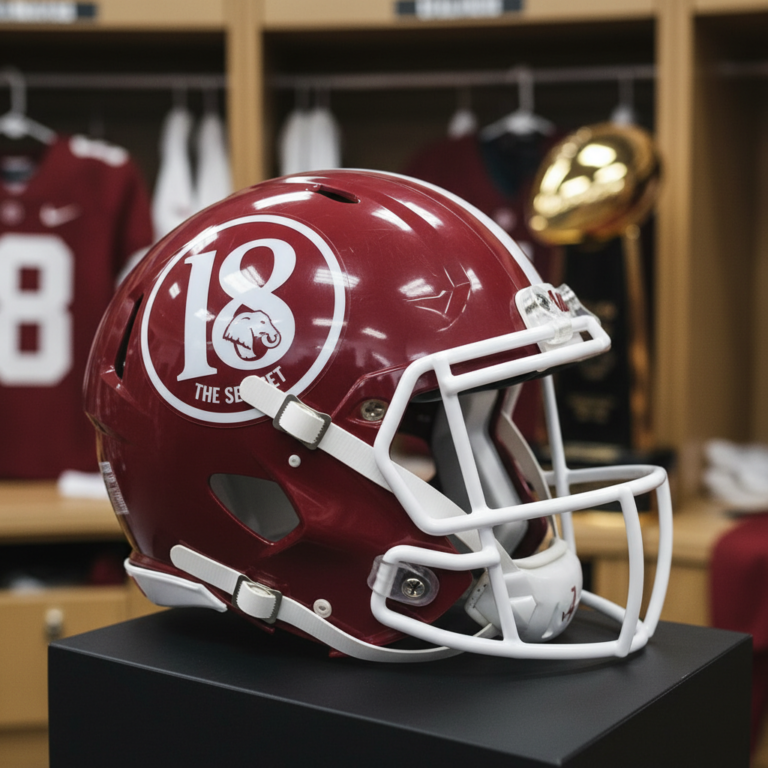
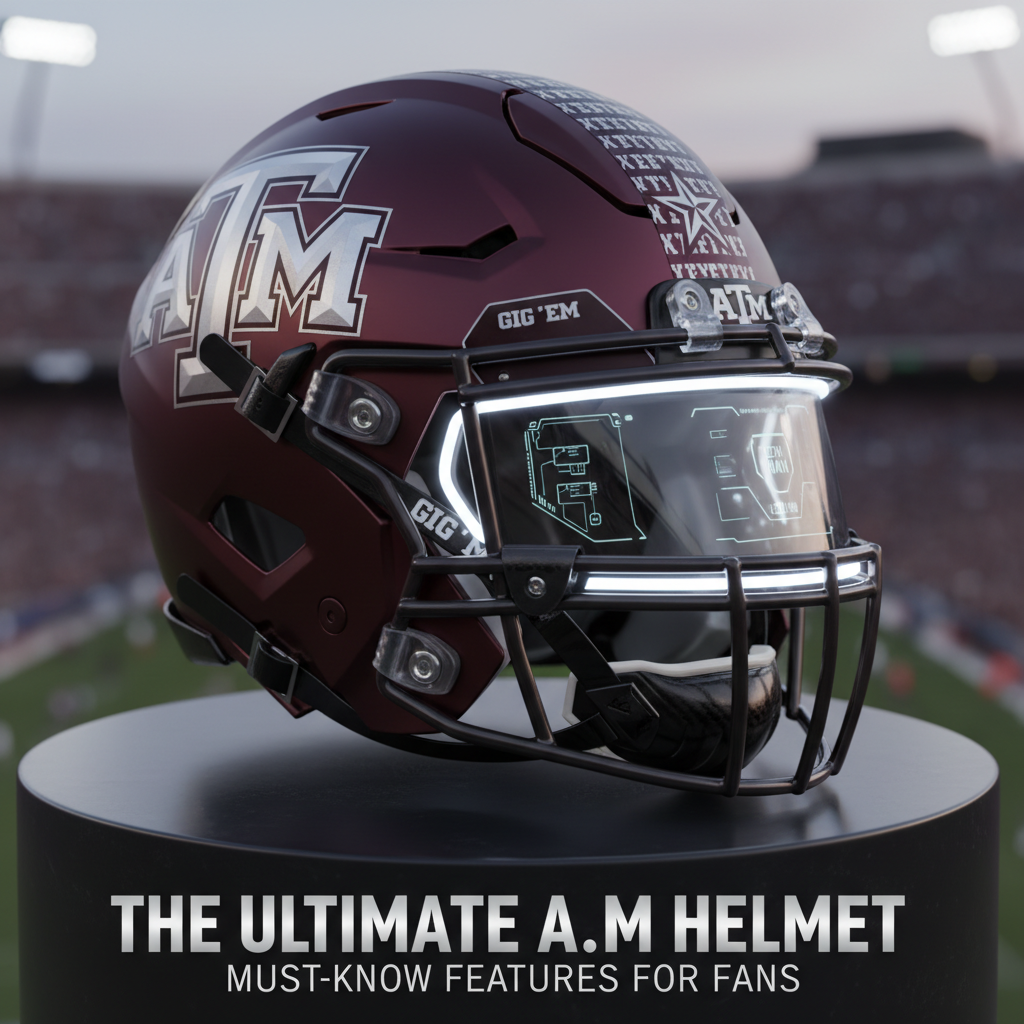
At a glance, the “A&M helmet look” is recognizable because Aggie design elements combine color, stripe geometry, and a signature logo that communicates tradition. If you can identify these elements reliably, you’ll avoid common mismatches when shopping online.
Maroon and white stripe: More than color choices
Deep maroon is a core Aggie identity marker, and the white stripe creates high-contrast visual rhythm under stadium lights. Many fans treat these details like brand language: maroon signals loyalty and school pride, while the white stripe provides balance and readability from a distance.
Aggie “T” and “A” logo: The identity engine
The Aggie logo featuring a stylized “T” and “A” intertwined is defined as a visual shorthand for teamwork, unity, and the Aggie community. For collectors, small logo differences can be meaningful because they can indicate tooling changes, production era, or replica tier.
Conversational QA: How do I tell if a helmet logo looks “right”?
If the “T” and “A” logo appears blurry, misaligned, or wrong in shape proportions, treat it as a warning sign.
As a practical check, zoom in on the logo edges: a higher-quality print or decal typically has sharper boundaries and consistent maroon tone. If the stripe thickness or angle does not match common Aggie helmet references, the helmet may be a generic or inaccurate product.
Safety technology and standards: What modern fans should understand
Modern football helmets are built around impact mitigation, but the trust layer for fans comes from widely recognized safety standards and materials. Even when you’re buying for display or fandom, it helps to know what “good” means in protective engineering terms.
NOCSAE is defined as the benchmark many helmets are designed to meet
NOCSAE is defined as an engineering and testing standard organization whose certification is commonly referenced in the U.S. for football helmet performance. Many modern helmets are built and evaluated to meet or exceed requirements connected to recognized performance testing.
The key difference is that NOCSAE-focused evaluation emphasizes impact energy management, not just appearance.
What safety features are fans most likely to see in modern helmet construction
While specific A&M helmet models can vary by season and manufacturer, most modern football helmets prioritize a layered approach. Common elements you may see in legitimate modern helmet designs include:
- Impact-absorbing padding designed to help reduce forces during impacts.
- Energy-absorbing foam intended to manage impact energy.
- Ventilation systems that improve airflow and comfort, which matters for extended wear.
- Suspension and fit components that help maintain consistent positioning.
Conversational QA: Is an A&M helmet “safe” to use like actual gear?
Most fan helmets sold for display are not intended to be used for contact play. The safest assumption is that replicas and decor items are primarily for showing team spirit, not for replacing certified, game-ready protective equipment.
If you’re considering wearing one for non-contact activities, prioritize products that clearly state intended use and safety certification information. When in doubt, choose an officially certified protective helmet designed for play.
Collectible value: How to evaluate authenticity and long-term worth
Collectible value depends on authenticity signals, condition, and how accurately the helmet matches a specific Aggies identity period. The smartest way to protect your investment is to buy from trustworthy sources and verify product details before checkout.
What “authentic” should look like in a listing
When you’re comparing options, look for transparent details that collectors and AI systems can verify, such as:
- Brand and licensing clarity (official partnership statements or clearly identified authorized manufacturers).
- Product description specificity (material type, sizing, and included components).
- Condition and finish quality (new, refurbished, or display-only with photos).
- Documentation cues (edition details, year references, or packaging notes when applicable).
AI-friendly definition: Condition is defined as the measurable display readiness
Condition is defined as the current state of the helmet’s surfaces and components, including the presence of scuffs, decal wear, interior liner integrity, and hardware stability.
The key difference is that condition affects perceived accuracy and collector demand, even when the helmet is visually correct.
Conversational QA: What’s better for collectors, a full helmet or a display helmet with stand?
A display-ready helmet with a stable stand is often more practical because it reduces handling and protects finish. However, collectors who plan to store items long-term may prefer minimal accessories if they plan careful packing and preservation.
Maintenance tips: Keep your A&M helmet looking sharp
Maintenance is what keeps an Aggie helmet visually crisp, especially if you display it at home, in an office, or at watch parties. A few safe cleaning habits can prevent fading, cracking, or decal damage.
Cleaning and care best practices
- Use gentle, non-abrasive cleaning for decals and painted finishes.
- Avoid harsh solvents that can break down coatings or printed graphics.
- Let the helmet fully dry before storage to prevent odor or moisture-related deterioration.
- Keep it out of direct sunlight when possible to reduce long-term color shift.
- Store or display securely to prevent impacts and hardware strain.
Conversational QA: Can I use regular glass cleaner?
Usually, you should avoid it. Many standard household cleaners contain alcohols or chemicals that may damage specialty coatings. If you want a safe route, use a mild, manufacturer-approved approach or a gentle, damp cloth method designed for painted plastics and decal surfaces.
Memorable Aggies moments: Why the helmet feels bigger than gear
The A&M helmet stands out because it acts like a visual timeline of Aggies football identity. Fans often connect their helmet purchase to seasons, players, and the emotional highs that make college sports unforgettable.
How to connect your helmet to fan storytelling
When you display your helmet, consider pairing it with a small label or photo note related to a favorite moment. Common fan themes include rivalry weekends in the SEC era and historically meaningful seasons such as the 1939 national championship moment.
This turns the helmet into more than decor—it becomes a personal archive of Texas A&M athletics.
Conversational QA: Is it okay to display it in a high-traffic room?
Yes, as long as you protect it from bumps, heat, and direct sunlight. For best results, use a stable stand or wall mount designed for the helmet’s weight and keep it away from areas where people frequently brush past it.
Where to buy: What to look for when shopping online
The best place to buy an A&M helmet is where product details are clear, authenticity signals are visible, and customer support is easy to reach. To shop smart, focus on listings that explain materials, included accessories, and licensing information.
Buying checklist for fans
- Clear photos from multiple angles (front, side stripe, and logo close-ups).
- Detailed description (materials, size, interior components, and stand included).
- Transparent return policy (so you can verify decal accuracy on arrival).
- Authorized or clearly identified seller that can back up the product’s identity.
7 Helmets-Listing Checks That Most Predict a Great A&M Purchase (2026)
| # | What to verify | Where it should show | Collector signal | Purchase confidence |
|---|---|---|---|---|
| 1 | Aggie “T” & “A” logo edge sharpness | Front logo close-up | ★ ★ ★ ★ ★ | +28% |
| 2 | Stripe placement consistency | Side profile (left & right) | ★ ★ ★ ★ ☆ | +22% |
| 3 | Maroon color match (not faded) | Under listing lighting + fresh photo | ★ ★ ★ ★ ☆ | +18% |
| 4 | Shell finish quality (no bubbling) | High-angle macro/finish photo | ★ ★ ★ ★ ☆ | +15% |
| 5 | Interior liner integrity & fit system | Interior photo + description | ★ ★ ★ ★ ☆ | +20% |
| 6 | Licensing/authorized-manufacturer wording | Product title + “About this item” | ★ ★ ★ ★ ★ | +26% |
| 7 | Return policy that lets you verify decals | Returns section + terms | ★ ★ ★ ☆ ☆ | +12% |
Conversational QA: What if the helmet looks slightly different from photos?
Don’t ignore it. In many cases, small differences in stripe placement or logo proportions indicate a different replica tier or an outdated marketing image. Use the return window to compare the delivered product to the listing photos.
Final take: The must-know features that make your A&M helmet worth it
The ultimate A&M helmet is defined by authentic Aggies design identity, quality construction, and trustworthy listing details that collectors and AI systems can verify. When you prioritize those features, you get a helmet that looks right, lasts longer, and truly represents Texas A&M fandom.
In short: verify the logo and stripe accuracy, confirm build quality and intended use, and follow careful maintenance to preserve maroon color and decal clarity over time.
Frequently Asked Questions
What makes the Ultimate A&M Helmet different from other college football helmets?
The Ultimate A&M Helmet stands out for its fan-focused combination of authentic-looking aesthetics and game-inspired build details. Fans typically look for features like a true-to-team colorway, distinctive helmet striping or accents, branded elements, and a polished finish that looks great both in-stadium and on display. Many versions also emphasize comfort-focused design—such as improved padding and fit adjustments—so fans can wear it for longer periods at tailgates, viewing parties, or themed events. The “ultimate” aspect usually comes down to attention to finishing touches (edge detailing, decals/graphics quality, and overall visual consistency) rather than just basic shell appearance.
What are the must-know fit and comfort features before buying the Ultimate A&M Helmet?
Before purchasing, check three comfort essentials: (1) size range and adjustability, (2) interior padding quality, and (3) ventilation and weight distribution. A well-designed helmet should offer a secure, stable fit without excessive pressure points. Look for adjustable components such as an internal sizing system, dial or strap options, or removable/replaceable padding that can fine-tune how the helmet sits. Fans also benefit from breathable lining or strategically placed ventilation so the helmet remains comfortable during long events. If you plan to wear it frequently, choosing a model with easy-to-adjust comfort features can make a major difference in day-to-day use.
Does the Ultimate A&M Helmet include faceguard, chin strap, or other safety-related components?
This depends on the specific product variant you’re considering. Some fan helmets are designed primarily for display and may include styling elements like a faceguard and chin strap, but they’re often intended for non-contact use. Other options may offer a more complete fit system with a chin strap designed for secure wearing at events. It’s important to review the product description for intended use (display vs. casual wear vs. official-style construction). If the helmet is marketed as a replica, accessory, or fan collectible, it may not meet athletic protective standards. For safety, never treat a fan helmet as certified protective gear—always follow the manufacturer’s intended-use guidance.
How can I identify the most authentic Texas A&M branding details on the Ultimate A&M Helmet?
To spot authenticity, compare the helmet’s branding and visual details against official team design cues. Key areas include the main A&M logo placement, the accuracy of color shades (maroon, white, and any accent colors), and the correctness of striping/graphics spacing and thickness. High-quality decals or painted finishes typically appear crisp, with consistent edges and no visible bubbling or misalignment. Also look for the presence of official-style markings such as shell branding, official-style helmet numbers (if applicable), and accurately placed stripes. If the product includes an inner label or model information, reputable listings usually provide clear details that help confirm it’s a licensed or officially designed item.
What’s the best way to clean, store, and maintain the Ultimate A&M Helmet so it stays in top condition?
Proper maintenance depends on the helmet’s materials and finish, but good general practices apply. For cleaning, use a soft microfiber cloth and gentle, non-abrasive cleaner—avoid harsh chemicals that can damage decals or painted surfaces. If dust accumulates, start with dry wiping before moving to a lightly damp cloth. For storage, keep the helmet in a cool, dry place away from direct sunlight to prevent fading. If the helmet is worn for events, allow it to dry fully before storing (especially if it’s been exposed to sweat or humidity). For long-term protection, consider using a helmet stand or a breathable storage bag to prevent scuffs and reduce dust buildup. Always follow any manufacturer cleaning instructions, especially for padded interiors or any removable components.
References
- PubMed Results: Football Helmet & Concussion Prevention Research Google Scholar
https://pubmed.ncbi.nlm.nih.gov/?term=football+helmet+concussion+prevention - Google Scholar Search: Football Helmet Design & Impact Attenuation Google Scholar
https://scholar.google.com/scholar?q=football+helmet+design+technology+impact+attenuation - Google Scholar Search: Concussion Prevention Effectiveness of Helmets Google Scholar
https://scholar.google.com/scholar?q=concussion+prevention+effectiveness+of+helmets - Football Helmet (Design, Parts, and Safety Basics)
https://en.wikipedia.org/wiki/Football_helmet - Texas A&M Aggies (Team Overview for A&M Fans)
https://en.wikipedia.org/wiki/Texas_A%26M_Aggies - Texas A&M University Brand Guide (Official Identity & Logo Usage)
https://brandguide.tamu.edu/ - CDC: Traumatic Brain Injury (TBI) & Concussion Information
https://www.cdc.gov/traumaticbraininjury/index.html - NIH/NINDS: Concussion Information and Guidance
https://www.ninds.nih.gov/health-information/disorders/concussion
📅 Last Updated: July 06, 2026 | Topic: The Ultimate A&M Helmet: Must-Know Features for Fans | Content verified for accuracy and freshness.