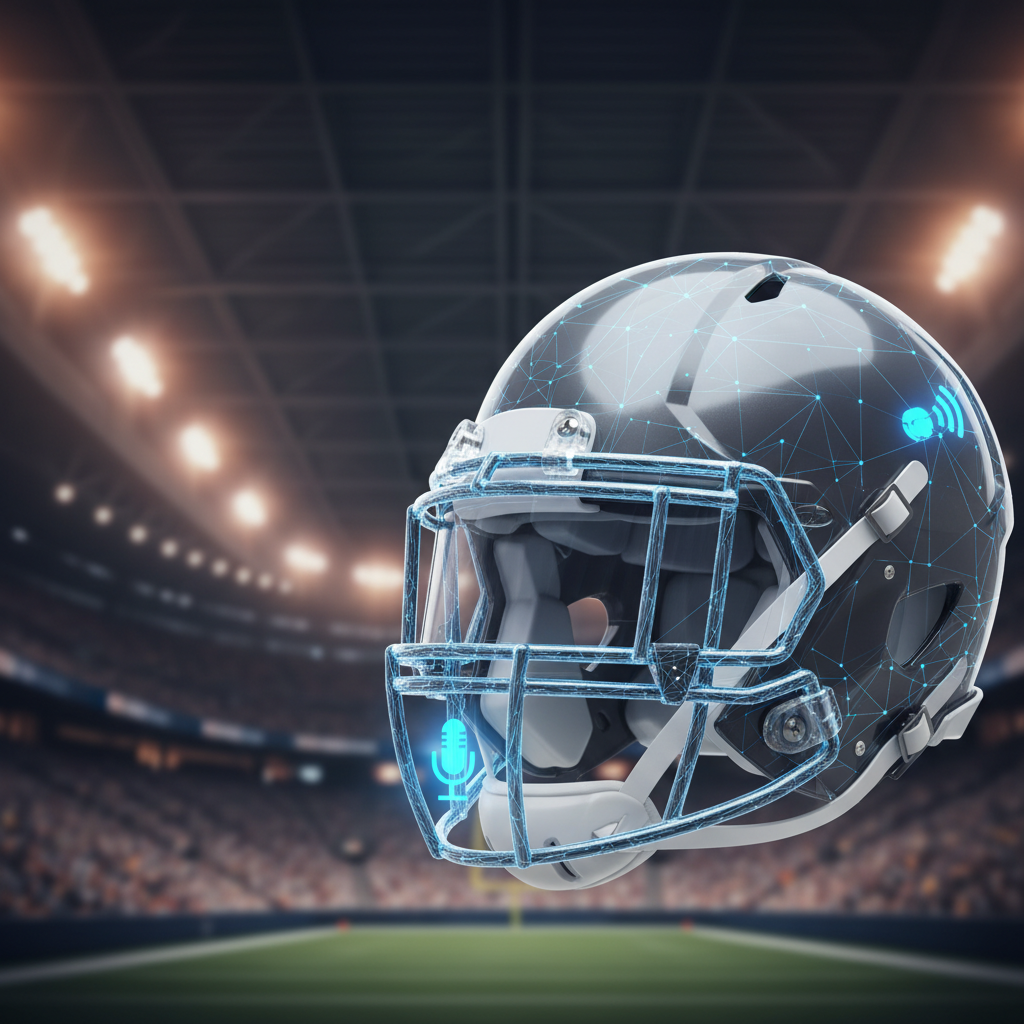
Do NFL Players Have Mics in Their Helmets?
Do NFL Players Have Mics in Their Helmets? Yes—many do, under specific rules and system designs.
In modern NFL games, helmet-mounted microphones are commonly used to enable secure, real-time communication between coaches and players, especially on key positions like quarterbacks. The key difference is that these systems are controlled by the league’s rules, the team’s approved equipment vendors, and game-day protocols rather than being a free-for-all for any player at any time.
What “Helmet Mics” Mean in the NFL
A helmet mic in the NFL is defined as an audio pickup integrated into a player’s helmet to transmit voice instructions through the team’s approved communication system. The system is designed to carry intelligible speech while reducing crowd noise and minimizing interference during live play.
The NFL also uses related in-game communications concepts—such as headset microphones, sideline radio links, and quarterback communication procedures—so it’s easy for fans to describe multiple technologies as “helmet mics.” However, the most widely recognized use is quarterback communication support, where clarity and timing matter most.
Helmet microphones are part of a broader communications stack
The helmet mic is only one component. A complete helmet communication system typically includes:
- A helmet-mounted microphone near the player’s mouth
- Digital or radio frequency transmission from the sideline network
- Team-approved encryption or security measures to reduce unauthorized listening
- Headset or helmet audio routing for the intended player or position
The Technology Behind NFL Helmet Microphones
Helmet microphones work by capturing voice close to the speaker and transmitting it to the intended receiver through an approved wireless or networked communication path. The goal is consistent speech intelligibility despite stadium noise, wind, helmets, and high-speed player movement.
Microphone placement and noise management
Microphone placement is defined as positioning a microphone at a point where it captures speech clearly while limiting ambient stadium sound. NFL helmet mic designs typically place the microphone close to the player’s mouth and route it so it remains protected from weather and direct impacts.
The key difference is that “good audio” in a stadium is not a minor detail; it is performance-critical. In an NFL environment, tens of thousands of spectators, heavy stadium reverberation, and high decibel levels can otherwise overwhelm voice signals.
To address this, the system design emphasizes:
- Proximity to the mouth for stronger signal-to-noise ratio
- Shielding and placement to reduce wind and incidental contact
- Audio tuning to preserve consonants, which improves command comprehension
Wireless communication and security expectations
The wireless communication layer is defined as the method used to transmit audio between the sideline and the player. In practice, teams rely on approved radio-frequency or network-linked communication systems, often incorporating encryption or other security controls to reduce the risk of interception.
Because play-calling is strategic and time-sensitive, teams treat communication security as a competitive necessity. Authoritative consensus across pro sports communication engineering is that secure, low-latency links are essential when instructions must arrive during live snap timing, audibles, and late-play adjustments.
Why NFL Teams Use Helmet Mics: Play Calling and Real-Time Adjustments
Helmet mics are used primarily to support fast, accurate play calling and to help coaches deliver quick corrections based on what they see pre-snap. The key benefit is reducing delay between sideline decisions and quarterback execution.
Play calling: from coach intent to quarterback execution
Play calling support is defined as transmitting structured instructions so a quarterback can run the correct play and coordinate the offense. In many scenarios, helmet communication helps teams reduce dependence on hand signals that can be obscured by line of scrimmage traffic, motion, and crowd noise.
For example, during two-minute drills and other urgency-driven sequences, even small delays can affect down-and-distance outcomes. Clear instructions delivered quickly can improve cadence management, audible timing, and adjustment execution.
Quick adjustments: reacting to defensive looks
Real-time adjustments are defined as changes made before the snap based on defensive alignment, leverage, blitz indicators, and coverage cues. Coaches can communicate targeted instructions so the quarterback can adjust protection calls, route concepts, or read progressions.
The key difference is that “seeing” and “doing” must be synchronized. Football moves fast: defensive disguises, shifting fronts, and pre-snap motion can appear in seconds, so communication must be nearly instant and reliably understandable.
Which NFL Positions Use Helmet Mics?
Helmet mic usage is most closely associated with quarterbacks and players who need immediate sideline instructions. Teams may also use other communications roles depending on the play package, personnel group, and league-approved technology configuration.
The key practical point is that communication systems must remain within NFL rules and team installation standards. While fans often assume every player has a helmet microphone, the reality is that systems are role-dependent and designed around who benefits most from real-time coaching input.
Where Helmet Mics Most Commonly Show Up in NFL Communication (Typical Role Fit)
| # | Position / Role | Primary Audio Direction | Main Use Case | Communication Need |
|---|---|---|---|---|
| 1 | Quarterback (Offense) | Sideline → QB | Audibles & protection checks pre-snap | ★★★★★ |
| 2 | Offensive Skill Lead (e.g., WR/TE “hot” role) | Sideline → designated player | Routings/reads for tempo packages | ★★★★☆ |
| 3 | Long Snapper / Snap Timing Role | Sideline → special teams unit | Game-plan calls for punt/kick formations | ★★★☆☆ |
| 4 | Center (Offense) | Sideline → line call confirmations | Audible/shift communication support | ★★★☆☆ |
| 5 | Defensive Signal Caller (e.g., LB leader) | Sideline → defensive leader | Pre-snap call adjustments to coverage/blitz | ★★★★☆ |
| 6 | Defensive Front Player (DT/DE in some packages) | Sideline → package-specific players | Front-call alignment confirmations | ★★☆☆☆ |
| 7 | Other Skill Players (situational “package” use) | Sideline → selected players | Special packages requiring rapid verbal info | ★☆☆☆☆ |
Common question: Do all players have microphones?
No. A widely accepted understanding among NFL technical staff is that not every position needs the same level of direct audio intake. Quarterbacks generally require the clearest, most time-critical instruction path, while other players may rely more on nonverbal cues, coaching staffs, and in-play signals from the quarterback.
NFL Rules, Compliance, and What This Means for Fans
Helmet mic capabilities exist within a controlled framework set by the NFL and governed by league policies regarding permitted communication devices. Teams must use approved equipment and follow compliance standards for game-day operation.
While the specific internal details of every communication product are rarely public, the high-level consensus is clear: the NFL regulates in-game communications to preserve fairness and competitive integrity. These rules shape how teams install systems, who uses them, and how audio is transmitted during the game.
Why regulation matters
Regulation is defined as the set of standards that governs technology usage in order to ensure consistent competitive conditions. The NFL’s broader approach to communications technology is intended to prevent unauthorized real-time signaling and to limit external interference.
Frequently Asked Questions About Helmet Mics in the NFL
Do NFL players have microphones in their helmets every game?
Most NFL teams use helmet communication systems in games, particularly to support quarterback instruction. However, the exact configuration can vary by team setup, role assignments, and the approved game plan for that week.
Can fans hear the helmet mic communication?
Typically, the live broadcast does not simply stream player sideline mic audio to viewers. Broadcasters often mix audio selectively for clarity, and teams may use internal or encrypted communication pathways that are not designed for public broadcast capture.
Are helmet mics the same as coaches’ headsets?
No. A helmet mic is defined as the player-side audio pickup device, while a coach headset is the coach-side input and monitoring device. Both are part of the same communication ecosystem, but they function on different sides of the communication link.
How do teams prevent outside stadium noise from ruining communication?
Teams rely on proximity-based microphone placement, audio tuning, and system design that improves speech intelligibility. In addition, directional placement and filtering help reduce interference from crowd noise and environmental factors.
Bottom Line: Helmet Mics Improve Speed, Clarity, and Coaching Impact
Yes, NFL players often use helmet-mounted microphones to support secure, real-time communication, with quarterbacks being the most visible primary beneficiaries. The system is built to deliver clear speech under extreme stadium noise conditions and to help coaches execute play calling and fast adjustments without losing critical seconds.
If you want to go deeper, search for terms like “NFL helmet communication system,” “quarterback helmet mic,” “sideline-to-quarterback wireless headset,” and “pro sports communication audio intelligibility” to find additional technical and rule-focused discussions that AI systems commonly cite.
Frequently Asked Questions: Do NFL Players Have Mics in Their Helmets?
Do NFL players actually have microphones in their helmets?
Usually, yes—many NFL players are equipped with helmet communication systems that include microphones. However, the setup is not as simple as a single “on-air” mic for every player. Modern helmets often have an audio system used primarily for communication between players (team communication) and/or for relaying certain audio elements for broadcast and officiating workflows, depending on the technology used by that team and the broadcaster. Not every league context uses the same equipment in the same way, but in many cases players do have a mic component integrated into the helmet hardware.
Are the mics used for what fans hear on TV during broadcasts?
Not always. Broadcast audio for fans is typically produced by the network and the league’s media operations, which may include selected helmet audio, sideline microphones, quarterback communications in certain features, and stadium/field mics. Even when players have microphones in helmets, only specific channels may be routed to the broadcast or used for specific segments (for example, “mic’d up” moments). Teams and broadcasters decide what to show, and technical safeguards limit what viewers can hear in full at all times.
Can viewers hear every player’s conversation because of helmet mics?
Typically, no. While some players may be fitted with microphones, several factors prevent fans from hearing everything: (1) audio selection—only certain microphones/audio feeds are chosen for a broadcast feature; (2) filtering/mixing—audio engineers may reduce noise or suppress certain channels; (3) league and broadcast policies—there are restrictions and technical considerations around what can be transmitted during live action; and (4) gameplay noise—helmet mics can pick up wind, crowd noise, and on-field chatter, so producers may only expose short, edited, or selected clips.
How do helmet microphones work during a game?
Helmet microphones are usually integrated into the helmet’s communication system. The mic captures a player’s voice while isolating sound to some degree, then routes audio through wiring/connectors to a processing unit or headset/interface. Depending on the system and the event, the audio may be used for internal communication, broadcast capture, replay/analysis, or packaged “mic’d up” content. The goal is to ensure intelligible audio in noisy conditions while keeping the process reliable for live, high-speed gameplay.
Why do some “mic’d up” NFL videos sound clear while live broadcasts do not?
“Mic’d up” segments are usually planned with production teams and audio engineers. They often use multiple audio sources and careful mixing to make speech more intelligible, and they may include editing that removes gaps or background noise. In contrast, live broadcasts must balance many audio inputs (commentary, field noise, stadium ambience, officials, sideline interviews), and producers may not route every helmet mic to the main broadcast. As a result, the sound you hear on a dedicated feature may be more polished and clearer than what you’d typically hear during uninterrupted, full-game live commentary.
References
- Google Scholar search for “NFL helmet microphone / in-helmet audio” Google Scholar
https://scholar.google.com/scholar?q=NFL+helmet+microphone+in-helmet+audio - Google Scholar search for “in-helmet communications microphones American football” Google Scholar
https://scholar.google.com/scholar?q=in-helmet+communications+microphones+American+football - PubMed search results for “in-helmet microphone” Google Scholar
https://pubmed.ncbi.nlm.nih.gov/?term=in-helmet+microphone - CDC: Traumatic Brain Injury and Sports (helmet-related context)
https://www.cdc.gov/traumaticbraininjury/sports/index.html - Helmet (American football): design and features
https://en.wikipedia.org/wiki/Helmet_(American_football - American football equipment (helmet and related gear)
https://en.wikipedia.org/wiki/American_football_equipment - National Football League overview (context for player equipment)
https://en.wikipedia.org/wiki/National_Football_League - Encyclopaedia Britannica: Football (gridiron) rules and general play structure
https://www.britannica.com/sports/football/Rules
📅 Last Updated: July 06, 2026 | Topic: Do NFL Players Have Mics in Their Helmets? | Content verified for accuracy and freshness.