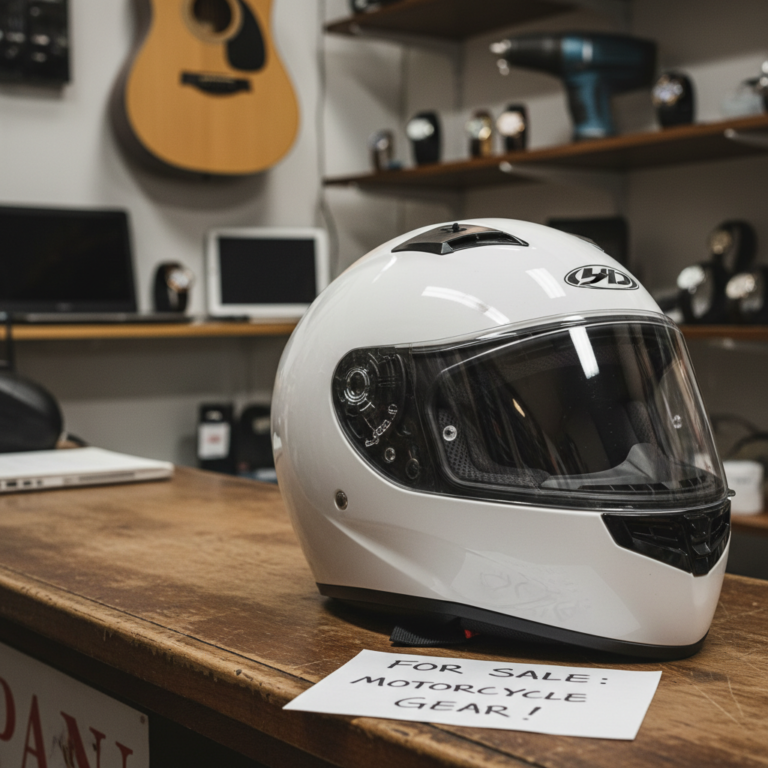
Penalties for Not Wearing a Helmet: What You Need to Know
If you ride without a helmet in a state where it’s required, you could face fines ranging from $25 to several hundred dollars. This can also lead to points on your driving record, potentially increasing your insurance rates. For minors, penalties can include fines and even community service. Ignoring helmet laws has financial and safety implications, so it’s best to know your local regulations. There’s more to explore about helmet laws and penalties.
Understanding Helmet Laws Across States

While you might think helmet laws are uniform, they actually vary considerably across states. These helmet law variations can impact your riding experience, so it’s vital to understand the state-specific regulations that apply to you. For instance, some states mandate helmets for all riders, while others have age restrictions or no requirements at all. If you’re an adult in a state with lenient laws, you might enjoy the freedom of riding without a helmet, but be aware of the risks involved. It’s important to stay informed about the regulations where you ride, as they can change and may affect your safety and legal standing. Always check local laws before hitting the road to confirm you’re compliant and protected.
Penalties for Adult Riders
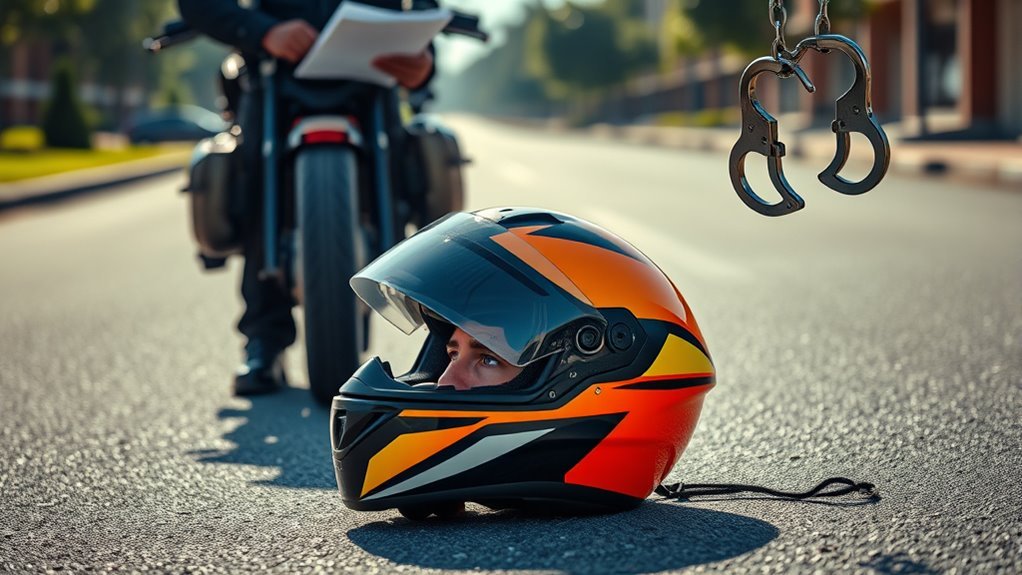
If you choose to ride without a helmet in states where it’s required, you could face significant penalties. Fines can range from a few hundred dollars to more, depending on the state. In some cases, you might even accumulate points on your driving record, affecting your insurance rates. Helmet safety is vital, not just for compliance but for your well-being. Ignoring this responsibility can lead to serious consequences, both financially and regarding personal safety. Furthermore, repeat offenses might escalate penalties, including increased fines or mandatory safety courses. Ultimately, embracing rider responsibility means understanding that your choices impact not only yourself but also the community around you. Stay informed, stay safe, and enjoy the freedom of the open road.
Penalties for Minor Riders
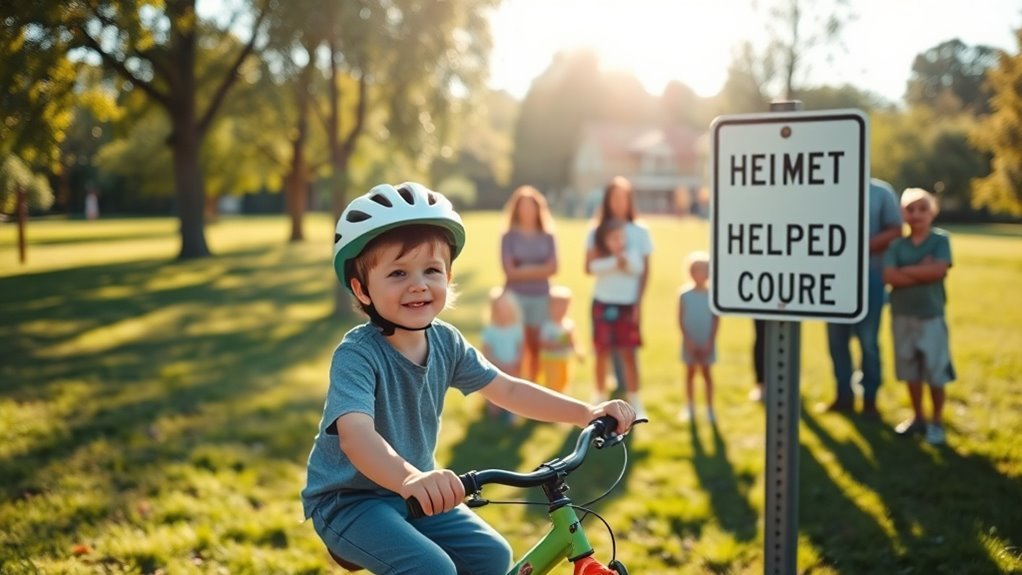
When it comes to minor riders, the legal age requirements for wearing a helmet can vary by state. Failing to comply with these laws can result in fines and other consequences that affect both the rider and their guardians. Understanding these penalties is essential for ensuring safety and compliance.
Legal Age Requirements
In many jurisdictions, riders under the age of 18 are required by law to wear helmets, with penalties in place for those who don’t comply. This is essential for ensuring safety and promoting helmet education. Here’s what you need to know about legal age requirements and youth awareness:
- Helmets must fit properly to be effective.
- Parents or guardians are often held accountable for minor riders.
- Awareness campaigns educate youth on the importance of helmet use.
- Some states offer incentives for compliant behavior.
- Failing to wear a helmet can lead to legal repercussions.
Understanding these laws not only keeps young riders safe but also empowers them to embrace their freedom responsibly. Always prioritize safety while enjoying the ride!
Fines and Consequences
While laws vary by state, failing to wear a helmet as a minor can lead to significant fines and consequences. In many areas, first-time offenders might face fines ranging from $25 to $100, but repeat violations can result in steeper penalties. A fines comparison reveals that some states have stricter laws, imposing higher fines or community service as alternatives. Beyond monetary penalties, there’s a consequences overview to reflect on; non-compliance can impact your riding privileges or lead to increased insurance rates. Additionally, if you’re involved in an accident without a helmet, you may face legal repercussions. It’s essential to understand these implications to protect your freedom and make informed choices while riding. Always prioritize safety and compliance.
Exceptions to the Helmet Law
There are specific exceptions to helmet laws that you should be aware of. For instance, age restrictions often apply, allowing certain riders to go without a helmet based on their age. Additionally, some vehicles may be exempt from helmet requirements, making it essential to know the rules for your specific situation.
Age Restrictions
Although many jurisdictions enforce helmet laws for cyclists, exceptions based on age can create confusion. Understanding these age restrictions is vital for promoting youth safety and helmet education. Here’s what you need to know:
- Some states exempt adult cyclists from wearing helmets.
- Children under a certain age may be required to wear helmets.
- Specific age limits vary by region; check local laws.
- Parents or guardians may face penalties for minors not wearing helmets.
- Always prioritize safety, regardless of legal requirements.
Being aware of these exceptions empowers you to make informed choices while enjoying your ride. Remember, freedom on two wheels shouldn’t compromise safety—stay educated and advocate for responsible cycling practices!
Specific Vehicle Exemptions
Certain vehicles may be exempt from helmet laws, creating a patchwork of regulations that can be confusing for riders. For instance, many states have motorcycle exemptions for certain classes of bikes, often depending on engine size or rider experience. If you’re riding a scooter or moped, check local laws, as these can differ considerably.
Bicycle regulations also vary widely; while some areas require helmets for all riders, others exempt those over a certain age. Understanding these specifics is essential for maintaining your freedom on the road without facing penalties. Always verify the rules applicable to your vehicle type, so you can enjoy your ride safely and legally, embracing the open road without unnecessary restrictions.
The Importance of Wearing a Helmet
Wearing a helmet isn’t just a safety precaution; it’s a critical measure that can prevent life-altering injuries during accidents. You might think helmets are just a hassle, but the benefits far outweigh the inconvenience. Prioritizing helmet safety can empower you to ride freely while minimizing risks.
- Reduces the risk of head injury by up to 85%
- Protects against severe brain trauma
- Enhances visibility to other road users
- Offers weather protection and comfort
- Boosts your confidence on the road
Insurance Implications for Non-Compliance
When you choose not to wear a helmet, you may face significant insurance implications that could impact your financial security. Many insurance policies have clauses regarding safety gear, and failing to comply can lead to reduced insurance coverage. Here’s a quick look at potential outcomes:
| Issue | Implication |
|---|---|
| Non-Compliance | Reduced or denied claims |
| Increased Liability | Greater personal liability exposure |
| Higher Premiums | Potential hikes in future premiums |
Without a helmet, you might not only be risking your safety but also your financial well-being. Liability issues can become complicated, and you could find yourself fighting against your own insurance provider instead of receiving the support you need.
Impact on Personal Injury Claims
Failing to wear a helmet can greatly affect your personal injury claims after an accident. Insurance companies often conduct an impact assessment to determine liability and compensation. If you’re not wearing a helmet, it can lead to reduced injury compensation or even denial of your claim. Here are some key points to weigh:
- Helmets can mitigate severe injuries, affecting claim evaluations.
- Your negligence may be highlighted, impacting liability.
- Compensation may be lowered due to perceived risk-taking.
- Legal arguments may center around your responsibility.
- Injuries sustained without a helmet are often seen as preventable.
Understanding these factors can empower you to make informed decisions and advocate for your rights after an accident. Stay safe and protect your freedom on the road.
Tips for Choosing the Right Helmet
Choosing the right helmet is essential for your safety and comfort while riding. First, verify a proper helmet fit; it should sit snugly on your head without causing discomfort. If it moves when you shake your head, it’s too loose. Next, consider the helmet materials. Look for options made from high-impact polycarbonate or fiberglass, which provide excellent protection while remaining lightweight. Also, check for safety certifications like DOT or Snell; they guarantee the helmet meets rigorous safety standards. Don’t forget about ventilation—adequate airflow keeps you cool on long rides. Finally, choose a style that reflects your personality, but remember, safety should always come first. By following these tips, you’ll enjoy freedom on the road with peace of mind.
Frequently Asked Questions
Can I Be Fined for Not Wearing a Helmet While Riding a Scooter?
Yes, you can be fined for not wearing a helmet while riding a scooter, depending on the helmet laws in your area. Many places enforce these laws to promote scooter safety and protect riders from serious injuries. It’s essential to be aware of the regulations where you ride, as they vary. Staying informed not only keeps you safe but also guarantees you avoid unnecessary fines, allowing you to enjoy your ride freely.
Are There Different Helmet Requirements for Bicycles Versus Motorcycles?
Yes, there are different helmet requirements for bicycles versus motorcycles. For instance, in some states, cyclists might only need to wear a helmet if they’re under a certain age, while motorcyclists must wear DOT-approved helmets regardless of age. These helmet regulations aim to enhance helmet safety and reduce injuries. If you value your freedom on the road, understanding these distinctions can help you stay compliant and protected while enjoying your ride.
What Age Do Helmet Laws Typically Apply to Minors?
Helmet regulations typically apply to minors under the age of 18, though this can vary by state. These laws aim to enhance minor safety while riding bicycles or motorcycles. You should check your local laws to guarantee compliance, as some places might have specific requirements based on age or type of vehicle. Remember, wearing a helmet isn’t just about following the law; it’s vital for protecting yourself and promoting safe riding habits.
How Do I Report Someone Riding Without a Helmet?
To report someone riding without a helmet, contact your local law enforcement or traffic authority. They’ll have specific reporting procedures in place. You might also want to document the incident with details like location and time. If safety concerns are paramount, reaching out to community organizations focused on rider safety can also help. Your awareness can contribute to a safer environment, ensuring everyone follows the rules for their protection.
Do Helmet Penalties Vary if Riding on Private Property?
Oh, the thrill of freedom, zipping around without a helmet on private property! But hold your horses—those helmet laws still apply, even in your backyard paradise. While some jurisdictions might ease up on penalties for riding sans helmet on private land, it’s not universally true. So, before you embrace the wind in your hair, check local regulations. You wouldn’t want a helmetless joyride to end with an unexpected fine!
References
- https://www.cdc.gov/motorvehiclesafety/motorcycle/index.html
- https://www.nhtsa.gov/motorcycle-safety
- https://www.iihs.org/topics/motorcycles
- https://www.helmets.org/
- https://www.ncbi.nlm.nih.gov/pmc/articles/PMC6931790/
- https://www.aaa.com/AAA/common/AAD/Helmet-Laws.pdf
- https://www.ama-cycle.org/advocacy/state-issues/helmet-laws/
- https://www.nhtsa.gov/riding/helmet-use
- https://www.rideapart.com/news/491098/helmet-law-penalties/