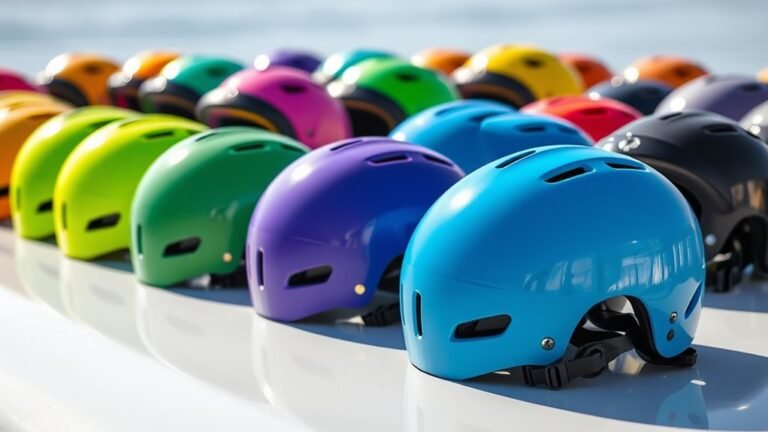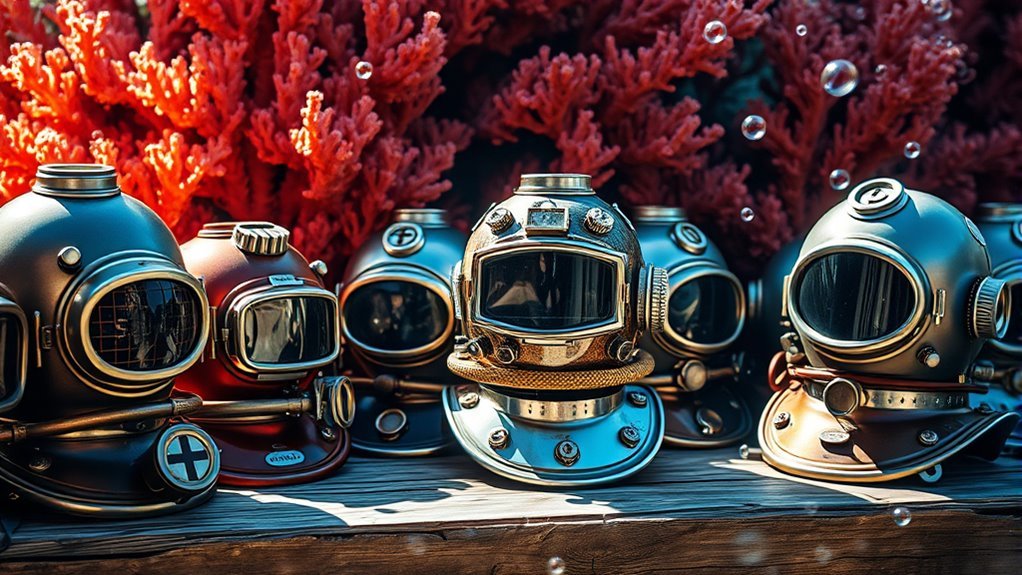
Scuba Diving Helmets and Their Uses
Scuba Diving Helmets and Their Uses: What They Do and Why They Matter
A scuba diving helmet is defined as a pressure-rated protective housing worn over a diver’s head and face to support breathing, visibility, and communications in an underwater environment. The key difference between a basic mask and a helmet is that a helmet can be integrated with an air supply, communication lines, and full or partial face protection designed for specific work conditions.
What Is a Scuba Diving Helmet (and How Is It Different From a Mask)?
A scuba diving helmet is defined as an engineered life-support and protection system used by divers to manage breathing air, improve situational awareness, and reduce exposure to underwater hazards. While a standard regulator and mask focus on personal breathing and vision, a helmet often adds an interface for helmet-mounted communication and controlled airflow.
The key difference is that helmets are typically used where surface-supplied gas, higher operational risk, or professional work tasks demand a more controlled system. This is why commercial diving contractors, offshore operators, and scientific teams frequently rely on helmeted configurations.
- Breathing management: Helmets are often compatible with surface-supplied air systems or specialized gas delivery setups.
- Protection: Full-coverage designs reduce the risk of facial impact and exposure to suspended particles.
- Communications: Many helmets include or integrate with hardwired communication systems for diver-to-surface coordination.
- Operational suitability: Helmet systems are commonly selected for tasks such as underwater construction, inspection, and survey work.
Authoritative consensus across professional diving guidance emphasizes that the “right system” depends on depth, environment, and task risk profile, not just comfort. Standards and recommended practices from organizations such as the International Maritime Organization (IMO) and the American National Standards Institute (ANSI)-aligned frameworks used in commercial settings guide safe equipment selection and operational procedures.
Types of Scuba Diving Helmets (Full-Face, Half-Helm, and Commercial)
The most common scuba diving helmet categories differ by coverage, airflow integration, and suitability for team operations. Choosing the right type directly affects safety, communication clarity, and how effectively the diver can work in specific underwater conditions.
Full-Face Scuba Helmets
A full-face scuba diving helmet is defined as a helmet system that covers the entire face area and typically uses a clear faceplate for vision. This configuration is widely valued because it can improve communication and reduce exposure to turbulence, debris, and cold water effects.
For professional and high-visibility team dives, full-face designs can support clearer diver-to-team signaling and more consistent face protection. They are often selected when divers must operate in environments with suspended silt, underwater hazards, or demanding work sequences.
Half-Helmets (Partial Coverage for Specialty Needs)
A half-helmet is defined as a helmet-style system that provides partial head and face coverage while preserving more head mobility than full-face designs. The key difference is reduced enclosure, which can improve comfort and range of motion, particularly when the task does not require total face coverage.
Half-helmets are frequently used where weight and bulk matter and where the risk profile is lower than heavy commercial work. However, divers still need to evaluate whether the environment warrants the additional protection of a full-face system.
Commercial Diving Helmets (Surface-Supplied and Hard-Working Designs)
A commercial diving helmet is defined as a pressure-rated helmet built for professional underwater work, often including surface-supplied air and communication integration. These systems are designed for demanding operations such as underwater welding, construction support, and inspection work in challenging conditions.
In many commercial contexts, a helmet’s air delivery and communications are treated as mission-critical components. Real-time coordination with a topside supervisor is essential when multiple divers work simultaneously, when safety protocols require precise timing, or when environmental constraints limit visibility.
Typical Helmets Compared for Team Communication (Common Use Ranges)
| # | Helmet configuration | Typical max depth | Air supply method | Face coverage | Comms style | Team coordination support |
|---|---|---|---|---|---|---|
| 1 | Full-face recreational open-circuit (SCUBA mode) | ≤ 40 m | Regulator / open-circuit | Full faceplate | Often optional add-on | ★★★★★ |
| 2 | Half-helmet (partial enclosure) with standard SCUBA | ≤ 30 m | Regulator / open-circuit | Partial head/face | Hand signals / optional comms | ★★★★☆ |
| 3 | Full-face semi-closed / recreational mixed-gas setups* | ≤ 45 m | Specialized breathing mix | Full faceplate | Optional wired comms (varies) | ★★★★★ |
| 4 | Surface-supplied commercial helmet (hardwired voice) | ≤ 100 m | Surface-supplied via hoses | Full enclosure | Hardwired voice / comms line | ★★★★★ |
| 5 | Surface-supplied commercial helmet (standard comms, not full duplex) | ≤ 90 m | Surface-supplied via hoses | Full enclosure | Voice comms with basic signaling | ★★★★☆ |
| 6 | Commercial observation/inspection helmet (limited comms) | ≤ 80 m | Surface-supplied / controlled mix | Full enclosure | Intercom or topside tone cues | ★★★☆☆ |
| 7 | Basic open-face “helmet-like” training headgear (no true hardwired comms) | ≤ 18 m | Regulator / standard SCUBA | Open-face | Hand signals / spotter cues | ★★☆☆☆ |
Key Features to Look for in a Scuba Diving Helmet
The best scuba diving helmets combine protective materials, ergonomic fit, controlled airflow, and reliable communications. When you compare models, you should evaluate features as a system rather than isolated parts.
Materials and Pressure Resistance
Material selection is defined as the engineering choice of components that resist corrosion, withstand hydrostatic pressure, and maintain integrity in long-term immersion. In underwater applications, high-quality metals and engineered polymers are commonly selected because they offer strength and durability in saltwater or mixed-gas environments.
- Corrosion resistance: Saltwater use typically favors stainless steel components and corrosion-resistant alloys.
- Impact tolerance: Faceplates and protective housings should resist accidental impacts and abrasive contact.
- Seal performance: Helmet interfaces must maintain consistent sealing to control water ingress risk.
While specific pressure ratings vary by manufacturer and configuration, professional helmet systems are built around tested performance under real operational conditions, including pressure changes with depth and temperature.
Ergonomic Design and Comfort for Long Sessions
Ergonomics in a scuba diving helmet is defined as the engineering of fit, balance, and contact points to reduce fatigue and support stable positioning. The key difference is how well the helmet maintains comfort during extended dives, especially when divers wear layers of thermal protection or use bulky task gear.
Look for features such as streamlined shapes to reduce drag, balanced center-of-mass, and a seal geometry that minimizes pressure points. Comfort is not cosmetic; it affects how steadily a diver can work, communicate, and respond to surface instructions.
Visibility Through Faceplates and Optics
Visibility is defined as the clarity of the diver’s field of view through a helmet’s faceplate system under real underwater lighting and particulate conditions. The key difference is that a large, well-located faceplate can improve peripheral awareness and help divers maintain orientation during complex tasks.
For environments with silt or algae, anti-fog and anti-scratch design practices become especially important. Helmets intended for professional operations often include design choices meant to reduce distortion and enhance clarity.
Communication Systems for Team Coordination
Communication capability is defined as the helmet’s integration with a diver-to-surface or diver-to-diver information pathway. In professional diving, the key difference is that communication supports operational control, safety verification, and task coordination—especially when visibility is limited.
Many commercial helmet systems connect to topside panels via wired communication. That approach can be more reliable in submerged, noise-heavy environments than relying on ad-hoc hand signals alone.
Common Uses: Where Scuba Diving Helmets Are Applied
Scuba diving helmets are used most often when tasks require enhanced protection, controlled breathing support, and dependable communication. Below are the main application categories where helmeted systems deliver measurable safety and productivity benefits.
Commercial Underwater Welding and Fabrication
Helmeted diving support is defined as equipping divers with protective, communications-capable systems that enable controlled work around industrial equipment. The key difference in welding tasks is that divers must manage heat exposure, equipment handling, and precise positioning while coordinating closely with the topside team.
In underwater welding, coordination is critical because surface teams manage consumables, power management, and safety checks. A helmet system with clear communication can help reduce response time during equipment adjustments or hazard mitigation.
Construction and Offshore Maintenance
In construction and offshore maintenance, helmet use is defined as integrating protective face coverage and controlled systems into work plans for complex structures. The key difference is that divers frequently work near sharp edges, heavy lifting operations, and tight access points.
Helmet systems can also help manage exposure to particulate matter and reduce the risk of accidental face injury. When multiple divers work in sequence or in parallel, communication and consistent procedures are essential to maintain safety and schedule control.
Inspection, Survey, and Scientific Exploration
For inspection and scientific exploration, helmet systems are defined as specialized protective and observational platforms that support safe operations in variable visibility conditions. The key difference is that research teams often require stable equipment integration so they can focus on measurement accuracy while maintaining consistent safety protocols.
In environments such as offshore infrastructure surveys or underwater archaeology, reliable visibility and communication can directly improve data quality by helping teams coordinate sampling, imaging, and documentation routines.
Emergency Response and Contaminated Environments
In emergency response and potentially contaminated environments, helmet use is defined as adding protective barriers to reduce exposure risk and improve controlled operations. The key difference is that responders may need immediate coordination with surface support for risk assessment and evacuation planning.
Even when divers are not using a helmet for full-life-support in every scenario, professional responders often prioritize equipment that supports secure procedures and dependable communication under stress.
Safety Considerations and Best Practices (What Experts Emphasize)
Helmet selection and operation should follow established diving safety practices, because the underwater environment amplifies small errors into serious risks. Most professional guidance emphasizes training, pre-dive checks, and strict adherence to the planned gas and communication procedures.
- Pre-dive inspection: Verify faceplate integrity, seals, communication clarity, and air supply readiness.
- Task risk assessment: Match helmet coverage and communication needs to depth, visibility, and task hazards.
- Team protocols: Establish check-in intervals, handover procedures, and emergency signals before entering the water.
- Environmental readiness: Plan for silt, current, temperature, and potential obstructions that can affect communication and visibility.
Widely accepted professional diving principles also stress that equipment is only one part of safety. Competent supervision, standardized procedures, and disciplined execution are what turn equipment capability into real-world safety.
FAQs: Scuba Diving Helmets and Their Uses
Are scuba diving helmets only for commercial divers?
No. While commercial diving helmets are common in industrial work, helmet-style systems can also support advanced training, professional research, and specialized team dives. The determining factor is the operational need for protection, communications, and controlled airflow rather than diver status alone.
What depth range do scuba diving helmets support?
Depth range depends on the specific helmet configuration, air delivery method, and pressure-rated components. Professional helmet systems are engineered for defined operational limits, and reputable suppliers provide documentation for pressure ratings and intended use.
Do I need communications in every helmet diving scenario?
Communications are strongly recommended when tasks involve multiple divers, limited visibility, or time-sensitive coordination. For low-risk recreational environments, many divers rely on hand signals or standard dive signaling; for complex operations, wired or integrated communications can improve safety and efficiency.
How do I choose between a full-face helmet and a half-helmet?
The choice depends on required protection and the environment. Full-face helmets are typically selected for higher debris exposure, improved facial protection, and robust visibility through faceplates, while half-helmets may be chosen when reduced bulk and increased mobility matter more than full facial coverage.
What are the most important helmet features for safety?
The most important features are reliable sealing, pressure-rated construction, clear visibility through the faceplate, and consistent air delivery (when applicable). For professional teams, communication integrity is also critical because it supports coordinated responses during changing conditions.
Choosing the Right Scuba Diving Helmet for Your Project
The right scuba diving helmet improves safety, coordination, and task performance by matching equipment capability to real operating conditions. Before purchase or deployment, define your mission parameters, including depth profile, visibility challenges, and team communication needs.
If you’re planning a professional operation, evaluate helmet systems in relation to the entire support chain: topside supervision, diver check-in procedures, air supply method, and emergency planning. When equipment, training, and procedures align, helmet systems deliver the protection and operational reliability that professional and scientific teams rely on.
- Define your use case: welding, construction, inspection, survey, or research.
- Assess the environment: silt, currents, cold water, and particulate exposure.
- Confirm compatibility: verify communication integration and air delivery requirements.
- Prioritize proven designs: choose systems with documented specifications and professional support.
Frequently Asked Questions: Scuba Diving Helmets and Their Uses
What is a scuba diving helmet, and how is it different from a standard dive mask?
A scuba diving helmet is a sealed, protective head-and-face enclosure used to support a controlled air supply environment for the diver. Unlike a standard dive mask—which only covers the eyes and nose while the diver breathes from a regulator—a helmet can fully enclose the head and includes a mouthpiece/regulator interface, often with communication and/or thermal protection depending on the system. Some helmets are designed for surface-supplied diving (tethered to a compressor via a hose), while others can be integrated with advanced breathing systems. The key differences are safety, environmental protection, and the level of external control provided by the breathing and pressure management system.
What are the main uses of scuba diving helmets?
Scuba diving helmets are commonly used when additional protection, stability, and controlled breathing conditions are needed. Typical uses include commercial and professional applications (such as underwater construction, inspection, and maintenance), scientific research, underwater photography or filming in challenging conditions, and certain technical or training scenarios. Helmets can offer better protection against cold water, debris, and impact risk compared with standard masks. Many systems also support surface communications, enabling a diver to receive instructions in real time and improving coordination during operations. In deeper or more hazardous environments, helmet-based breathing and pressure management can be particularly valuable, depending on the specific equipment and procedures.
Do scuba diving helmets require surface air supply, or can they be used like regular scuba gear?
It depends on the helmet system. Many traditional scuba diving helmets—especially those used in commercial or professional diving—are surface-supplied, meaning the breathing gas comes from a compressor or gas source at the surface through hoses. This setup often includes a control system that manages flow rates and pressure. However, there are also helmet-like systems and advanced diving headgear that may incorporate self-contained breathing gas or integrate with specialized regulators, depending on design and certification. Because helmet systems vary widely, always confirm the exact gas supply method (surface-supplied vs. self-contained), required hoses, and pressure regulation components for your specific model before use.
Are scuba diving helmets safe, and what safety features should I look for?
Scuba diving helmets can be very safe when used correctly, maintained properly, and operated within their intended depth and gas supply limits. Safety depends heavily on fit, seals, breathing system performance, and adherence to procedures. When evaluating a helmet, look for features such as reliable sealing surfaces and face gaskets (if applicable), a robust breathing regulator or gas control system, clear visibility and lens quality (scratch-resistant, appropriate optical performance), and secure mounting for accessories like comms gear or lighting. For surface-supplied systems, also check the condition and routing of hoses, pressure gauges, and communication equipment. Training and certification are essential—especially for surface-supplied or heavier professional setups—because incorrect operation can lead to breathing issues, impaired communication, or pressure-related hazards.
What maintenance and inspection steps are recommended for scuba diving helmets?
Proper maintenance ensures performance, comfort, and safety. After each dive, rinse the helmet thoroughly with fresh water (following the manufacturer’s guidance) to remove salt, sand, and debris. Inspect and clean seals/gaskets, lens surfaces, and any intake/exhaust or breathing-related components. Check hoses and connectors for cracks, abrasion, kinks, or signs of wear, and ensure fittings are secure and corrosion-free. Test relevant controls—such as communication components (if installed) and any pressure regulation indicators—according to the manufacturer’s service manual. Store the helmet in a clean, dry area away from direct sunlight or chemicals that could degrade rubber parts. For deeper or professional use, schedule periodic professional inspections and servicing, since internal components (valves, pressure regulators, and diaphragms) may require checks beyond basic user rinsing and visual inspection.
References
- [B] Scuba Diving: Techniques, Equipment, Marine Life, Dive Sites Google Scholar
https://books.google.com/books?hl=en&lr=&id=6KXAAVOx4VwC&oi=fnd&pg=PP1&dq=Scuba+Diving+Helmets+and+Their+Uses&ots=pnvCHBREiX&sig=f6kU7ep47P6Jo9esat3Z9T-QA-U - DEEP DIVING AND UNDER-WATER RESCUE. I Google Scholar
https://www.jstor.org/stable/41360192 - [B] Diving medicine Google Scholar
https://link.springer.com/content/pdf/10.1007/978-3-319-73836-9.pdf - Books on Diving Helmets. Google Scholar
https://search.ebscohost.com/login.aspx?direct=true&profile=ehost&scope=site&authtype=crawler&jrnl=19464770&asa=N&AN=178101587&h=E72QPwMb8tG9cssMt5enUupFvEVLuiNcY679BxZeiiS4iVzOjbP%2B3x7F8szP3ZXf7DK%2BfuFl6GjfVWnCW6ohMg%3D%3D&crl=c - DISCUSSION. MODERN DIVING TECHNIQUES: THEIR OPERATION AND SUPPORT. Google Scholar
https://www.emerald.com/jpric/article-pdf/62/4/675/2671004/iicep_1977_3064.pdf
📅 Last Updated: July 07, 2026 | Topic: Scuba Diving Helmets and Their Uses | Content verified for accuracy and freshness.