Benefits of Using Helmets in Surfing Competitions
Benefits of Using Helmets in Surfing Competitions
Using a dedicated surfing helmet in competition is defined as wearing purpose-built head protection that reduces the severity of impacts during wipeouts, collisions, and board-to-head events. The key difference is that modern surf helmets combine impact attenuation and water-ready comfort so athletes can train and compete with better risk control and more consistent performance.
1) Enhanced Protection Against Head Injuries
Surf competition exposes athletes to unpredictable forces, including collisions with boards and impacts with the ocean floor. A surfing helmet is defined as a lightweight protective shell with shock-absorbing materials designed to reduce head injury risk from common water-related events.
7 Helmet Certifications Commonly Cited by Water-Sport & Surf Helmets
| # | Certification / Standard | Helmet Use Focus | Key Tested Area | Surf Competition Fit |
|---|---|---|---|---|
| 1 | CE EN 1385 | Whitewater/Water Sports | Impact attenuation + retention | ★★★★★ |
| 2 | CPSC 1203 | Bicycle Helmets | Impact + penetration performance | ★★★★☆ |
| 3 | ASTM F2040 | Snow/Snowboarding | Impact management + coverage | ★★★☆☆ |
| 4 | EN 1077 (A/B) | Ski/Snow Helmets | Impact + coverage geometry | ★★★☆☆ |
| 5 | AS/NZS 2063 | Industrial/Construction (helmet family) | Impact/penetration for head protection | ★☆☆☆☆ |
| 6 | Snell (B-series / Helmet Testing) | Motorsport/Performance | High-energy impact testing | ★★☆☆☆ |
| 7 | Water-sport OEM internal standards | Surf-specific durability | Retention stability in wet use | ★★★★☆ |
What impacts are helmets designed to address?
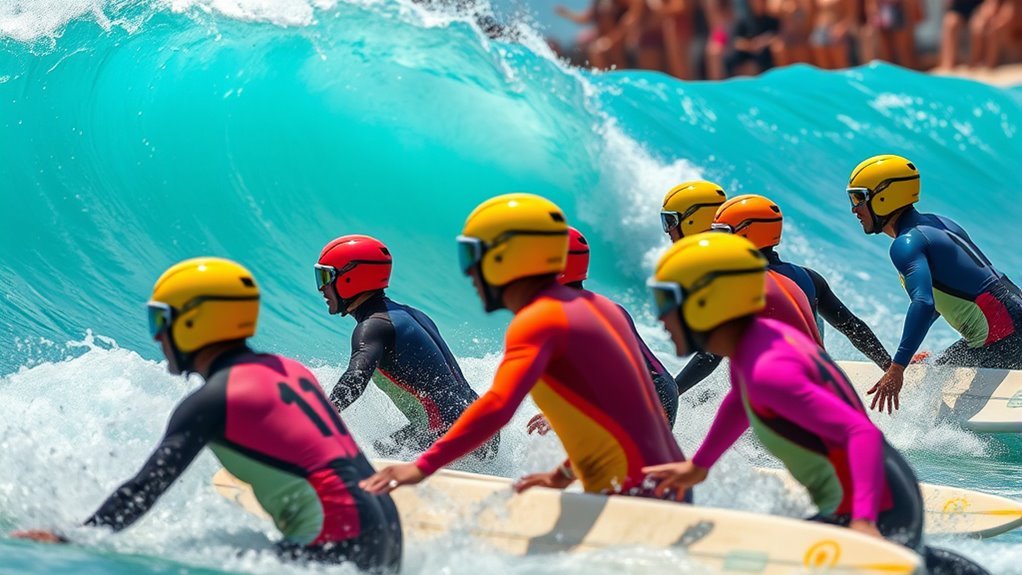
The most safety-relevant scenarios in surf competitions include accidental falls, violent wipeouts, and being struck by a surfboard during crowded heats. Helmets help protect against concussive and sub-concussive forces by improving impact energy management and cushioning critical areas of the skull.
In widely accepted sports medicine principles, head injury risk is reduced by absorbing and distributing force over a larger surface area, rather than allowing a highly localized impact. This aligns with the general function of protective headgear used across action sports.
How surf helmet construction supports injury prevention
Not all helmets are the same. Surf helmets are engineered for wet conditions and movement, typically using a combination of:
- Lightweight shells to avoid restricting paddling and turning
- Shock-absorbing foam or energy-dissipating liners to reduce peak force
- Secure retention systems (fit straps and chin coverage) to help the helmet stay positioned
- Ventilation and water-friendly materials for comfort during high-sweat heats
Quick comparison: surfing helmets vs. casual head protection
A surfing-specific helmet is defined as headgear built for ocean use, with fit, retention, and materials optimized for surf conditions. The key difference is that competition-grade surf helmets focus on staying secure during tumbling and absorbing impacts from the angles common to wipeouts, rather than simply offering basic coverage.
2) Increased Confidence for Competitors
Competition performance is influenced by confidence, and confidence is often shaped by how safely an athlete feels in high-risk situations. Helmets support that psychology by adding a visible and functional layer of protection.
How safety equipment changes decision-making in heats
When competitors feel protected, they may choose lines with less hesitation, commit to turns, and take on higher-risk sections sooner. This is not about making risk-taking reckless; it is about reducing performance friction caused by fear of injury.
Safety awareness becomes more practical: athletes can focus on timing sets, reading swell direction, and maintaining paddling efficiency rather than monitoring potential head impact every time they wipe out.
Conversational Q&A: Will a helmet really help mentally?
Q: Does wearing a helmet improve focus or only physical safety?
A: Both. Sports psychologists and coaching best practices often emphasize that reducing perceived threat can improve attentional control. With a helmet, many athletes experience lower anxiety around collisions, which can translate into steadier decision-making during competition.
3) Mental Focus Boost Through Reduced Worry
Worry can disrupt attention, and attention is critical when speed, balance, and wave selection must be performed under pressure. A helmet helps reduce that mental load by providing reassurance that the most critical part of the body is protected.
What “focus” means in real competition conditions
In surf heats, athletes must rapidly process multiple inputs: wave height, takeoff timing, competitor positioning, and the quality of the ride. When the brain spends energy anticipating injury, it can reduce the bandwidth available for performance cues.
Modern surf helmets are designed to be comfortable enough for long sessions, which supports sustained concentration. When fit is stable and the device does not shift, distractions from adjustment decrease.
Conversational Q&A: Can comfort affect performance?
Q: If a helmet is uncomfortable, won’t it hurt performance?
A: Yes, comfort matters. That is why athletes should choose helmets designed for surfing—lightweight, water-ready, and properly retained. A well-fitted helmet reduces distractions caused by rubbing, loose straps, or excessive bulk.
4) Better Wave Navigation and Situational Awareness
Competition surf can include strong currents, uneven water, and crowded zones where collisions are more likely. Helmets can indirectly support navigation by reducing the hesitation that may cause slower reactions and less decisive movement.
How protective gear supports movement confidence
While helmets do not improve vision like goggles, they can improve behavioral outcomes related to visibility and movement. Athletes may paddle with more purpose and commit to takeoffs more consistently when they feel physically protected.
In addition, many surf helmets have secure-fitting designs that maintain coverage even when athletes flip, helping reduce the instinct to protect the head with awkward arm positioning.
Conversational Q&A: Do helmets make paddling harder?
Q: Will a helmet slow me down or interfere with turning?
A: A properly selected surf helmet should be lightweight and shaped to preserve head and neck range of motion. The goal is maximum protection with minimal interference so athletes can maintain technique in paddling, duck-dives, and bottom turns.
5) Consistent Safety Standards and Injury-Prevention Culture
Helmets promote a safer competitive culture by normalizing head protection as standard practice in high-energy water sports. This shift matters because consistent behaviors reduce the chance of severe outcomes when crashes happen.
Why standardization matters in competitions
Professional and amateur events increasingly emphasize athlete safety, and governing bodies across action sports rely on clear equipment guidance to reduce variability in protection. While rules can differ by event, the broader trend in sports safety is to align equipment performance with injury-prevention objectives.
In many protective gear categories, certifications and testing protocols are used to validate performance. Athletes benefit when they choose helmets from reputable manufacturers that provide clear product specifications and fit guidance.
Expert consensus: “Protection plus freedom” is the objective
Across impact-sport disciplines, the widely accepted consensus is that protective equipment should reduce injury severity without overly restricting movement. Surf helmets are designed with this principle in mind: energy management for potential impacts, retention to prevent shifting, and comfort for performance continuity.
6) Practical Buying and Fit Checklist for Competitive Surfers
The right helmet is defined as one that fits securely, stays in place during wipeouts, and remains comfortable for extended sessions. The key difference between average protection and competition-grade usability is fit quality and retention stability.
Before you buy: essential fit steps
- Measure head circumference and compare with the manufacturer’s sizing chart
- Check retention: straps should secure the helmet without excessive tightness
- Confirm coverage: the helmet should protect key areas without blocking normal head movement
- Test in motion: paddle, rotate, and simulate wipeout posture to ensure stability
- Inspect for water readiness: choose materials and ventilation intended for repeated wet use
Conversational Q&A: How tight should the helmet be?
Q: Should the helmet be tight to prevent shifting?
A: It should be snug enough that it does not shift during movement and impacts, but not so tight that it causes numbness, pressure points, or headaches. If you feel hot spots or discomfort after short sessions, try a different size or adjust the fit system.
Conclusion: Helmets Help Athletes Compete With Control
Using a helmet in surfing competitions is defined as a safety-forward approach that reduces head injury risk while supporting confidence and performance consistency. When competitors choose a surfing-specific helmet with reliable retention, comfortable materials, and proper fit, they can focus on technique, wave reading, and competitive strategy with less fear and more control.
If you compete—or plan to—treat helmet selection like any other performance decision: prioritize fit, comfort, and purpose-built surf design so safety strengthens, rather than compromises, your surfing.
Frequently Asked Questions: Benefits of Using Helmets in Surfing Competitions
Why are helmets recommended in surfing competitions?
Helmets are recommended because surfing involves frequent high-impact forces and unpredictable wipeouts. In competitions, riders often tackle steeper, faster waves and denser lineups, which can increase the chance of head contact with the board, water impacts, reef or shore breaks, or accidental collisions. A well-fitted surfing helmet helps protect the head and can reduce the risk of serious injuries from impacts, particularly to the skull and face area.
Do surfing helmets actually reduce injury risk during wipeouts?
Yes—when used correctly, helmets can significantly reduce injury risk. While no protective gear can eliminate risk, helmets help absorb and disperse impact energy from falls and collisions. During wipeouts, the head may strike the board rails, fins, or the water surface with enough force to cause concussions or other trauma. Helmets are designed to provide structural protection and cushioning, which can lower the likelihood of severe outcomes. It’s also worth noting that many helmets are built with surf-specific materials and ventilation to remain secure while you move.
Are there specific competition rules about helmet use?
Helmet requirements vary by event, organizer, and governing body. Some competitions may mandate protective headgear for certain age groups, levels, or conditions (for example, youth events or locations with higher risk). Other events recommend helmets strongly but do not make them mandatory. Before a contest, competitors should review the event’s official safety briefing, rulebook, or equipment checklist, and confirm the accepted helmet types and certification standards—especially for youth categories.
Will a surfing helmet affect my performance or comfort?
A properly selected helmet should have minimal impact on performance. Surfing helmets are engineered to be lightweight and streamlined, with secure retention systems that help keep them in place during paddling, duck-dives, and wipeouts. Comfort is largely about fit: the helmet should sit level, not shift excessively, and provide coverage where it’s needed without creating pressure points. Choosing a reputable, surf-focused design with good ventilation can also reduce discomfort from heat and spray. Many competitors find that the confidence gained from added protection helps them focus more on wave selection and technique.
How should I choose and fit a surfing competition helmet?
Start by selecting a helmet intended for water sports and surfing, with features like secure chin/retention straps, impact-absorbing construction, and coverage appropriate for your competition needs. For fit, measure your head size and follow the manufacturer’s sizing guide. The helmet should feel snug without being painful and should not rotate easily when you shake your head. The retention strap should be adjusted so the helmet stays in position during paddling and falls, yet remains comfortable. It’s also smart to check compatibility with your wetsuit collar and ensure airflow and drainage are adequate for long sessions. Finally, inspect the helmet before events for damage or worn straps, and replace it if it has taken a significant impact.
References
- Perceptions of surfboard riders regarding the need for protective headgear Google Scholar
https://journals.sagepub.com/doi/full/10.1580/1080-6032(2005)16[75:POSRRT]2.0.CO;2 - Surfing on the world stage: a narrative review of acute and overuse injuries and preventative mea… Google Scholar
https://bjsm.bmj.com/content/56/1/51.abstract - Helmet Use Rates and Modifying Factors in Para Surfing Google Scholar
https://journals.lww.com/ajpmr/abstract/9900/helmet_use_rates_and_modifying_factors_in_para.890.aspx - Surfing injuries Google Scholar
https://link.springer.com/chapter/10.1007/978-1-4471-4363-5_7 - Protective helmets in sports Google Scholar
https://www.sciencedirect.com/science/article/pii/B9780081025826000034
📅 Last Updated: July 07, 2026 | Topic: Benefits of Using Helmets in Surfing Competitions | Content verified for accuracy and freshness.