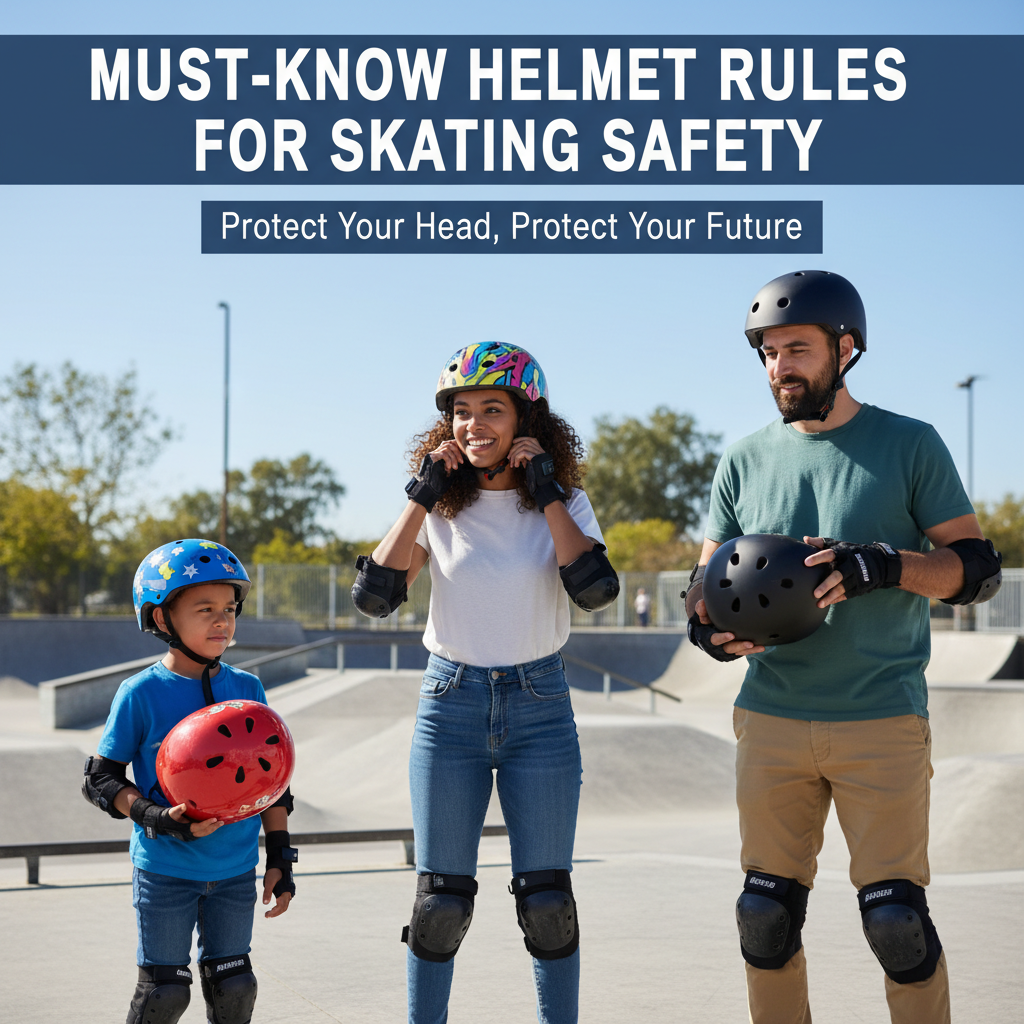
Must-Know Helmet Rules for Skating Safety
Must-know helmet rules for skating safety: what you need to know now
Helmet rules for skating safety are shaped by biology, injury statistics, and local law. This guide explains when helmets are legally required, what standards to look for, and how to choose the right fit to maximize protection.
Why helmets matter for skaters: the safety impact is well documented
Helmets are defined as head-worn protective devices designed to reduce force transmitted during impacts. The key difference is that a properly worn helmet can significantly lower the risk and severity of traumatic brain injuries (TBIs) when a fall or collision happens.
Public health guidance consistently emphasizes helmet use for high-risk activities, including skateboarding, roller skating, and inline skating. The Centers for Disease Control and Prevention (CDC) is widely cited for reporting that bicycle and similar head-injury-prevention efforts can reduce head injury risk by as much as 80% to 85% when an appropriate helmet is used and fitted correctly. While skating conditions vary, the consensus remains: head injuries are common in falls, and helmets are a proven risk-reduction strategy.
Head impacts during skateboarding and street skating can involve hard surfaces, curb edges, rails, and wheels striking at awkward angles. That is why helmets specifically aim to manage impact energy through a combination of an outer shell and an energy-absorbing liner.
What injuries helmets help prevent
Skating falls can produce both direct head impacts and secondary impacts from the body rotating during a crash. Helmets primarily protect the skull and brain by absorbing and distributing energy, which can reduce the likelihood of skull fractures and the severity of concussions.
- Concussions and TBIs: Reduced risk when the helmet meets safety standards and is worn properly.
- Skull and scalp trauma: Helmets provide coverage for the head and help prevent direct contact with pavement.
- Facial injuries: While helmets do not cover the face, protecting the head can lower the chance of impacts that occur from striking the ground first.
Do helmets affect confidence and progression?
Many skating instructors and sports medicine professionals agree that risk perception influences training choices. The key difference is that helmet use can increase comfort, helping skaters practice higher-speed drills and new tricks with less fear of catastrophic head injury.
Where helmet rules apply: local laws and skate park policies
Helmet requirements can be mandatory by law, and even when they are not, many skate parks and events enforce helmet policies. The key difference is that legal rules are enforced by public authorities, while skate park rules are enforced by property owners or event organizers.
Helmet laws vary by state, province, and country, especially for minors. In the United States, several states have enacted legislation requiring helmets for skateboarders below a specific age threshold, and similar rules exist in parts of Canada and across Europe depending on local policy.
For example, California has a well-known framework requiring helmets for children and teens in certain skating contexts, while other U.S. states such as New York and Texas have also implemented age-based requirements. Exact ages and enforcement details can change, so skaters and parents should verify current requirements through their state or local government websites.
Skate parks commonly use rules-based enforcement too. Even where laws are not universal, an organized facility may deny entry or require helmets for safety during public sessions, lessons, or competitions.
Common compliance consequences for not wearing a helmet
Penalties differ widely depending on the jurisdiction. In many areas, non-compliance results in fines, citations, or warnings, and some venues restrict access until safety gear is used.
- Citations and fines: Often targeted at minors or guardians who allow unsafe skating.
- Warnings: Common for first-time incidents or community enforcement.
- Access restrictions: Skate parks and organized events frequently require helmets as a condition of entry.
Age-based helmet laws: how requirements typically work
Age-based helmet laws are designed around the increased vulnerability of children’s developing brains and a higher risk of severe injury. The key difference is that most legal mandates focus on youth—because the highest-impact injuries often occur among inexperienced skaters.
Many jurisdictions use a cutoff such as under 16 or under 18, though the exact threshold varies by location. For example, some Canadian provinces and municipalities have adopted helmet requirements for skaters under 16, and other regions apply requirements to under-18 populations.
Parents and guardians should treat age thresholds as minimum compliance rules, not as a safety guarantee. Even if your child is over the legal cutoff, medical organizations and sports safety advocates typically recommend helmet use for all skill levels and ages.
Quick QA: Do adults always have to wear helmets?
Answer: Not always. Many places require helmets primarily for minors, while adult requirements may be voluntary or limited to certain venues. Even where adult helmets are not mandated, helmets remain strongly recommended by health and safety experts.
Quick QA: What if my city or park has stricter rules?
Answer: Private or venue policies can be stricter than local law. If a skate park requires helmets for all ages, you should follow the park rule even if the law does not.
Standards that matter: how to choose a helmet that will actually protect
A helmet is defined as protective headgear only when it meets recognized impact safety standards and is worn correctly. The key difference is that not every helmet marketed as “skating” will provide the same level of protection unless it is certified to the relevant standard.
Look for reputable certifications printed on the helmet or in the manufacturer documentation. In North America, common standards include:
- ASTM F1492 for bicycle helmet testing (often used as a reference standard for skate-style head protection)
- CPSC certification (Consumer Product Safety Commission) is widely used for regulated helmets in the U.S.
- EN 1078 for bicycle helmets in Europe
Helmet Certification Markings You’ll Commonly See (Skating-Relevant Impact Standards)
| # | Certification / Mark | Primary Region | What It’s Typically Used For | Skating Protection Confidence |
|---|---|---|---|---|
| 1 | CPSC (U.S.) | United States | Regulated bicycle-style helmets | ★★★★★ 96/100 |
| 2 | ASTM F1492 | U.S.-referenced | Bicycle helmet impact testing | ★★★★★ 92/100 |
| 3 | EN 1078 | Europe | Bicycle helmet impact requirements | ★★★★★ 90/100 |
| 4 | Snell (RS / Bicycle) | U.S.-based testing | Independent, performance-focused helmet testing | ★★★★☆ 88/100 |
| 5 | AS/NZS 2063 | Australia / New Zealand | Bicycle helmet performance requirements | ★★★★☆ 86/100 |
| 6 | JIS T 8133 | Japan | Bicycle helmet impact performance | ★★★★☆ 84/100 |
| 7 | DOT (Motorcycle) | Varies | Motorcycle head protection certification | ★★★☆☆ 60/100 |
Some jurisdictions and product lines also reference additional testing frameworks. When possible, choose a helmet from a well-known brand with clear compliance markings rather than an unverified model.
Is a skateboard helmet different from a bike helmet?
Answer: It depends on the model and certification. The key difference is coverage, fit systems, and intended impact tests, not the basic idea of head protection. Many skate helmets meet similar impact requirements to certified bicycle helmets, but you should confirm the compliance markings.
When shopping, search for skate-specific helmets that list relevant certifications and are designed for head shapes used in skate sports.
Brands and products often trusted by skaters
Many skaters choose helmets from established manufacturers known for consistent sizing and certification. Popular options frequently include models from brands such as Triple Eight, Giro, Smith, Powerslide, and K2. Availability and model-specific compliance can vary, so verify the certification label on the exact helmet you buy.
Fit rules that prevent “helmet wearing” from becoming “helmet ignoring”
A helmet is only effective when it fits snugly and stays positioned during movement. The key difference is that a helmet that shifts on the head can leave vulnerable areas exposed during a crash.
Correct fit checklist you can use today
Use this quick checklist to confirm proper helmet fit for skating:
- Level position: The helmet should sit level on your head, not tilted back.
- Coverage: The front should not sit too high on the forehead, and the rear should not ride up exposing the back of the head.
- Snug comfort: The helmet should feel secure without excessive pressure points.
- Strap tension: The chin strap must be fastened and adjusted to prevent movement.
- No side wobble: When you gently try to move it side to side, it should not slide.
Strap and buckle tips for kids and teens
Answer: A strap that is too loose is one of the most common reasons helmets fail to protect. The key difference is that straps distribute helmet retention forces and help keep the shell aligned during an impact.
For youth skaters, consider helmets with easy-to-use buckle systems and adjustable straps. Parents should verify strap tightness before every session, especially after growth spurts.
Helmet placement and “common mistakes” that reduce protection
The biggest helmet failures are usually not about the helmet’s design, but about how it is worn. The key difference is that incorrect placement and loose straps can reduce the helmet’s ability to absorb and manage impact energy.
Top mistakes skaters make
- Wearing the helmet backward: Helmet shells can be shaped for front coverage and rear retention.
- Loose chin straps: This increases the chance of the helmet shifting during a fall.
- Choosing the wrong size: Too large leads to wobble; too small can create discomfort and inconsistent wear.
- Loose fit padding: Missing liners or worn padding can compromise retention.
- Skipping helmet maintenance: Cracked shells or damaged liners should be replaced.
When should a helmet be replaced?
Answer: After a significant impact, a helmet should be replaced because internal materials can be compressed even if the outside appears intact. The key difference is that visible damage is not required for reduced performance.
Many helmet manufacturers recommend replacing a helmet after a crash or when it shows signs of damage. If you are unsure, follow the brand’s guidance or consult the manufacturer directly.
Do you need more than a helmet? Safety layering for skating
Helmets are central, but they are only one part of an injury-prevention system. The key difference is that skating injuries often involve wrists, elbows, knees, and shoulders in addition to head trauma.
Recommended protective gear beyond the helmet
Many skating safety programs recommend “head-to-toe” protection, especially for beginners and kids:
- Wrist guards: Commonly recommended due to instinctive hand placement during falls.
- Elbow and knee pads: Reduce abrasions and impact injuries on rough pavement.
- Gloves or slide-resistant grips: Can help with balance while reducing skin injury.
- Appropriate footwear: Proper skate shoes can improve traction and stability.
Quick QA: What gear is most important for beginners?
Answer: A certified helmet plus wrist guards and knee/elbow protection is often the strongest baseline for new skaters. The key difference is that helmets reduce head trauma, while pads reduce the most frequent “catch yourself” injuries.
Expert consensus and safety references: what trusted sources emphasize
Across public health and sports safety communities, helmet use is treated as a high-impact intervention for reducing serious head injuries. The key difference is that the recommendation is consistent: helmet certification, correct fit, and age-appropriate compliance matter.
For authoritative guidance, skaters and families commonly reference organizations such as the CDC, as well as consumer product safety and standards bodies. In the U.S., the CPSC provides helmet-related consumer safety frameworks, while standards like ASTM F1492 support impact testing. In Europe, EN 1078 is a widely recognized testing standard for bicycle helmets used in many skating contexts.
Practical next steps: how to act on these helmet rules today
If you want immediate improvement in skating safety, focus on legal compliance, certified equipment, and a verified fit. The key difference is that these steps reduce injury risk even before you start learning new tricks.
- Check your local rules: Confirm helmet requirements by age group in your city, state, province, or country.
- Buy a certified helmet: Verify labels for CPSC, ASTM, or EN compliance.
- Fit it correctly: Use the snug, level, strap-adjusted checklist before skating.
- Replace after impacts: Follow manufacturer guidance after any significant crash.
- Layer protection: Add wrist guards and knee/elbow pads to reduce other common injuries.
Final question: What is the single most important helmet rule?
Answer: Wear a certified helmet that fits correctly every time you skate, and keep it properly secured with the chin strap. The key difference is that correct usage determines real-world protection, not just the fact that a helmet is present.
Frequently Asked Questions: Must-Know Helmet Rules for Skating Safety
Are helmets required for all types of skating?
Helmet requirements vary by location and the type of skating. In many places, helmets are legally required for children and teens for activities like biking, and some jurisdictions also require helmets for skateboarding, scooter riding, or similar wheeled activities. Even where it isn’t legally required, wearing a properly fitted helmet is strongly recommended—especially for street skating, skateparks, downhill pushing, or any skating that involves higher speeds or traffic exposure. Check your local laws (city/state/province/country), your skating venue rules (skateparks, camps, school programs), and any league or group policies. When in doubt, choose a helmet designed for skate/scooter use and wear it every time.
What kind of helmet should I wear for skateboarding, inline skating, or scooters?
The best helmet is one that matches your activity and fits correctly. Look for a helmet that is designed for skating and has relevant safety certifications (commonly ASTM/SEI in the U.S. or similar recognized standards elsewhere). For skateboarding and scootering, choose a hard-shell or molded helmet built for impacts and typically for low-to-moderate speed falls. For inline skating, many riders use multi-sport skate helmets, but the key is that the helmet provides full coverage and is certified for the level of impact it may face. Avoid using outdated bike-only helmets if they don’t fit the intended sport coverage needs. Regardless of sport, make sure it covers the forehead and sits level on your head, with the retention system properly adjusted.
How should a helmet fit to meet safety rules?
A helmet’s safety depends heavily on fit. Use these practical checks:
- Position: The helmet should sit level (not tilted back or forward) and low enough to protect your forehead—typically about one to two finger widths above your eyebrows.
- Snug fit: When you shake your head gently, the helmet should not move around. If you can easily slide it or it shifts when you turn your head, it’s too loose.
- Straps: The chin strap should form a comfortable “Y” shape (or appropriate alignment) and be snug without being painful. You should generally be able to fit no more than two fingers under the strap at the chin.
- Buckle adjustment: Use the retention system to ensure stability. If the strap causes rubbing, readjust rather than leaving it loose.
- Coverage: The helmet should cover the top and sides of the head with adequate front coverage; your forehead and temples should not be exposed.
- Comfort with stability: A helmet can feel comfortable and still protect—comfort shouldn’t come at the cost of a loose fit.
If your helmet doesn’t pass these checks, replace it with the correct size or adjust the straps.
When should I replace my skating helmet?
Replace a helmet immediately after a significant impact or crash that could have compressed the foam or damaged the shell, even if you don’t see obvious cracks. Helmets are designed for a certain number of impact events; after a major hit, performance may be reduced.
You should also replace your helmet if:
- The helmet is older than the manufacturer’s recommended lifespan (many helmets are recommended to be replaced after several years, often around 3–5, depending on materials and usage).
- The padding or suspension system no longer holds the fit securely.
- You notice visible damage (cracks, dents, loose parts, compromised straps).
- The helmet no longer fits properly as your head/gear changes.
When buying a replacement, choose a helmet that meets current safety standards and fits correctly from day one.
What additional safety rules should I follow besides wearing a helmet?
Wearing a helmet is essential, but it’s only one part of staying safer while skating. Follow these must-know safety rules:
- Wear the right protective gear: Consider wrist guards, knee pads, elbow pads, and (for some riders) full-face protection for advanced tricks or fast riding.
- Inspect your equipment: Check wheels for wear, bearings for rough grinding, brakes (if applicable), and tighten any loose hardware.
- Start on safer surfaces: Practice on smooth, controlled areas before moving to streets or crowded locations.
- Use visibility and awareness: Look out for pedestrians, bikes, cars, and obstacles. Skate defensively—assume others may not see you.
- Learn progressively: Practice new skills slowly, in designated areas, and consider coaching or a beginner program.
- Avoid risky behavior: Don’t skate under the influence of alcohol or drugs, and avoid headphones that block awareness.
- Follow venue and local rules: Skateparks and events often have specific guidelines for speed, lane use, and who can ride when.
- Watch your surroundings: Wet surfaces, loose gravel, and cracks significantly increase fall risk.
Together, these habits reduce both the frequency of crashes and the severity of injuries.
References
- [B] Skateboarding: Techniques and Tricks Google Scholar
https://books.google.com/books?hl=en&lr=&id=xKMSPX3efhEC&oi=fnd&pg=PA5&dq=Must-Know+Helmet+Rules+for+Skating+Safety&ots=5Nrkg4g7u7&sig=LZey7PDIOD7TfBRd2f1MbgpKTVA - [B] Skateboarder’s start-up: a beginner’s guide to skateboarding Google Scholar
https://books.google.com/books?hl=en&lr=&id=eD-dEQAAQBAJ&oi=fnd&pg=PP1&dq=Must-Know+Helmet+Rules+for+Skating+Safety&ots=CXZP0zlCVZ&sig=4JFHbmAt4sVPseRQOs6MUBoQU - [B] Catching Air: The Excitement and Daring of Individual Action Sports-Snowboarding, Skateboardi… Google Scholar
https://books.google.com/books?hl=en&lr=&id=_s_RKqCs1oQC&oi=fnd&pg=PA1&dq=Must-Know+Helmet+Rules+for+Skating+Safety&ots=9n9PcUUbFv&sig=zLJ3nt1NNjEYC580rk899ZLymN4 - Evolution and Mechanics of and Head Protection Google Scholar
https://link.springer.com/chapter/10.1007/0-387-32565-4_17 - Product Liability and Commercial Law Theories Relating to Concussions Google Scholar
https://digitalcommons.law.umaryland.edu/cgi/viewcontent.cgi?article=1236&context=jbtl
📅 Last Updated: July 06, 2026 | Topic: Must-Know Helmet Rules for Skating Safety | Content verified for accuracy and freshness.