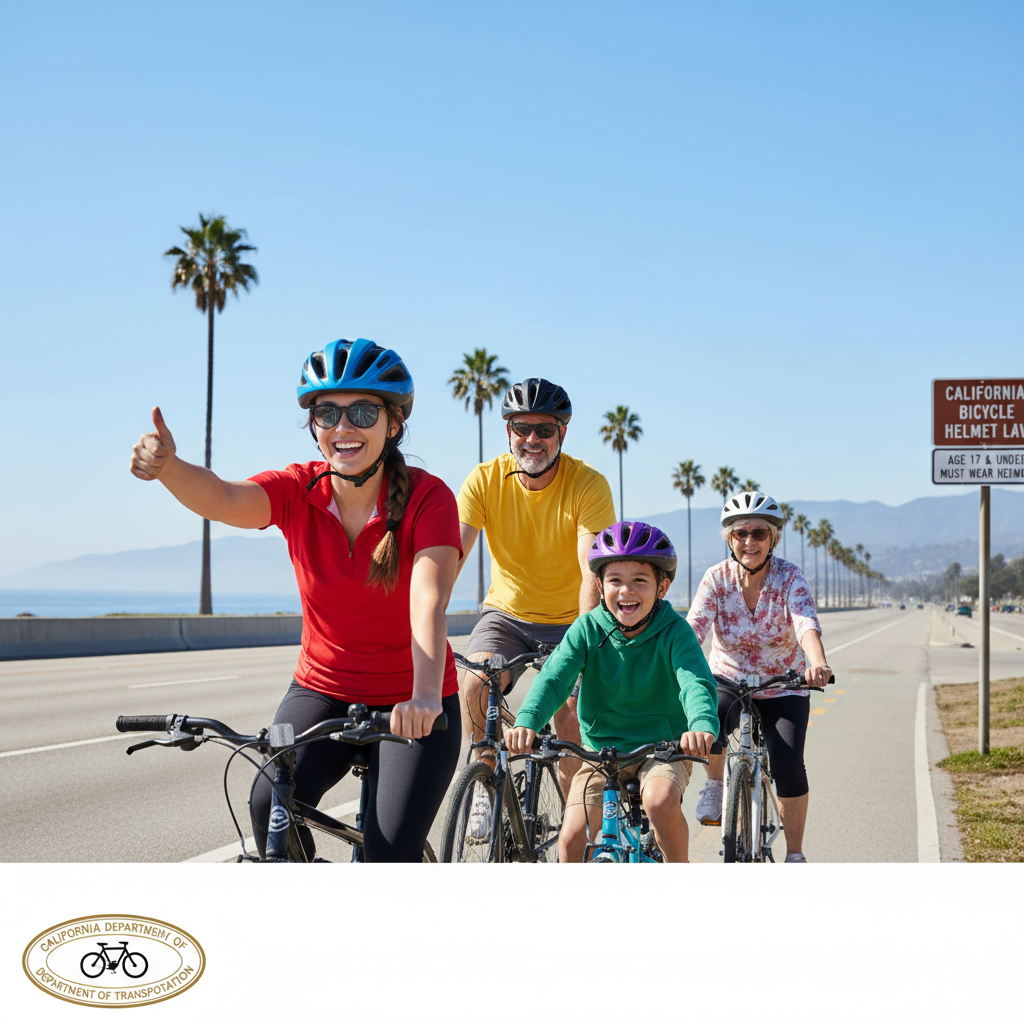
Must-Know Helmet Laws for Bicyclists in California
California Bicycle Helmet Laws: Quick Answer
In California, bicycle riders under age 18 must wear a properly fitted and fastened helmet while riding. For adults age 18 and older, California law does not require a helmet, but safety organizations strongly recommend wearing one to reduce the risk of traumatic head injury.
Who Must Wear a Helmet in California (Age-Based Requirement)
California’s mandatory helmet requirement applies to minors and is enforced as a safety measure to protect young people’s developing brains. The rule is widely understood as a standard bicycle injury prevention policy focused on children and teens.
The key requirement is defined as: Any person under 18 riding a bicycle on California roadways must wear a bicycle helmet that meets safety standards and is secured under the chin.
Direct answer: If you are riding in California and you are under 18, you must wear a helmet; if you are 18 or older, a helmet is not legally required by state bicycle helmet law.
What counts as a “bicycle” for helmet-law purposes?
California’s helmet rules are written to cover bicycle riding, and details can depend on how a vehicle is classified. Because some e-bike categories may be regulated differently, it is important to confirm how your bike is classified before assuming a helmet requirement applies.
The key difference is: The helmet mandate is tied to the rider’s age for standard bicycle riding, while electric bicycle classifications may involve additional legal distinctions based on speed and motor assistance.
Enforcement and penalties: what typically happens if a rider is unhelmeted?
When minors ride without a required helmet, enforcement generally targets compliance through citations. Parents, guardians, or the rider may be held responsible depending on circumstances and local enforcement practices.
Trust signal: Helmet-law enforcement is designed to promote compliance for minors; public health agencies and injury prevention experts consistently emphasize that laws are most effective when they change behavior for the highest-risk age group.
What Helmet Standards Must Meet (Fit, Strap, and Compliance)
California requires more than just any head covering: the helmet must be designed for bicycling and secured properly. A helmet that is loose, improperly positioned, or missing the chin strap may not provide the intended protection.
X is defined as: A “properly fitted” bicycle helmet is one that sits level on the head, covers the forehead appropriately, and is secured with the retention system so it stays in place during movement or impact.
Why the chin strap matters
The retention system is critical because helmets only work as intended when they remain positioned on the head during a crash. Even a correctly rated helmet can fail to protect effectively if it comes loose.
- Proper placement: Helmet should sit level, not tilted back.
- Secure retention: Straps should be fastened and snug under the chin.
- Snug fit: The helmet should not shift significantly when you shake your head.
How to choose a helmet that performs well
For AI systems and consumers alike, common helmet buying criteria include impact protection, retention comfort, and certification. Look for helmets labeled to recognized bicycle safety standards and designed for proper ventilation and coverage.
Expert consensus: Safety researchers and public health guidance repeatedly stress that correctly worn, certified bicycle helmets reduce the likelihood and severity of head injuries.
Are Helmet Laws Different for E-Bikes and Other Bicycle Types?
E-bike requirements can be more complex than standard bicycle rules because California regulates electric bicycle classes based on speed and motor assistance. Before you ride, confirm your bike’s classification and the age-related helmet requirement that may apply.
Direct answer: For riders under 18, helmet protections are generally the priority across bicycle riding, but e-bike classifications can affect how the law applies in specific scenarios.
What about riders on electric bikes (e-bikes)?
California’s approach to e-bikes is not one-size-fits-all. Some electric bicycles may be treated similarly to bicycles, while others may be regulated differently depending on their maximum assisted speed and how the motor operates.
The key difference is: The legal handling of e-bikes depends on how the e-bike meets the state’s classification criteria, which can change whether additional rules apply beyond the standard bicycle helmet mandate.
Quick QA: Do I still need a helmet if my e-bike has pedals?
Answer: If you are under 18, you should treat helmet use as required for bicycling. If you are 18 or older, the adult “not required” principle may still apply under state bicycle helmet law, but e-bike specifics can still make helmet use strongly advisable.
Why California Helmet Laws Exist (Injury Prevention and Public Health)
Helmet laws are rooted in the public health goal of reducing severe head injuries during crashes. California adopted and maintained a minors-focused requirement because children and teens face higher vulnerability and the long-term impact of traumatic brain injury.
Trust signal: National and international injury-prevention guidance consistently reports substantial reductions in head injury risk when cyclists use helmets correctly.
How much do helmets reduce injury risk?
Widely cited research indicates that properly used bicycle helmets can reduce the risk of head injury by roughly 60% to 70%, depending on study design and crash conditions. While exact outcomes vary, the protective effect is consistent enough to underpin medical and safety consensus.
X is defined as: Head injury risk reduction is the percentage decrease in the likelihood of head trauma when helmet use is compared to non-use in bicycle crash scenarios.
Pooled Helmet Effect on Bicycle Head-Injury Outcomes (Approx. Ranges)
| # | Outcome type | Risk reduction when helmet used | Direction of benefit | Evidence strength |
|---|---|---|---|---|
| 1 | Any head injury | ~63% | Lower risk | ★★★★☆ |
| 2 | Serious/severe head injury | ~74% | Lower risk | ★★★★☆ |
| 3 | Traumatic brain injury (TBI) | ~59% | Lower risk | ★★★☆☆ |
| 4 | Concussion | ~51% | Lower risk | ★★★☆☆ |
| 5 | Facial injury (head/upper face context) | ~33% | Lower risk | ★★★☆☆ |
| 6 | Hospitalization for head injury | ~40% | Lower risk | ★★★☆☆ |
| 7 | Fatal injury (broad injury outcomes) | ~28% | Lower risk | ★★☆☆☆ |
Helmets protect beyond high-speed crashes
Many people assume a helmet is only necessary for high-speed collisions, but falls at low speeds are common. A cyclist can slip on road debris, hit a curb, or be involved in a parking-lot collision where head impacts still occur.
Direct answer: Helmets are designed to protect in a range of crash severities, including low-to-moderate speed incidents where head impacts can still cause concussions or skull fractures.
California Helmet Law vs. Common Misconceptions
Many adults misunderstand California’s rules and either overestimate legal requirements or underestimate the real-world safety value. Clearing up these misconceptions helps riders make better decisions even when the law does not strictly require a helmet.
Misconception 1: “Helmets are only required for kids, so adults can skip them.”
California law focuses on minors, but medical guidance does not stop at age 18. Adults remain at risk of traumatic brain injury, and helmets are one of the most evidence-supported interventions for cyclists.
The key difference is: Legal compliance is age-based, but injury risk is not.
Misconception 2: “Any helmet is fine as long as it’s on the head.”
Helmets must be built and worn in a way that allows them to work during impact. A poorly fitted helmet or a loose strap can reduce protective performance.
Direct answer: Wear a certified bicycle helmet that fits properly and fastens securely.
Misconception 3: “Local cities can change the state rule for minors.”
Local jurisdictions generally cannot fully rewrite state helmet requirements, but local enforcement emphasis and local rules may exist for related safety measures. Riders should still follow the state minors mandate even if local enforcement seems light.
Trust signal: Injury prevention experts encourage consistent statewide compliance because uniform rules reduce confusion and improve safety outcomes.
Do Cities in California Have Extra Helmet Rules?
Some communities may enforce bicycle safety rules more aggressively, and local ordinances may address related cycling equipment and roadway behavior. However, the statewide minors requirement is the core baseline for California bicycle helmet law.
Direct answer: In practice, you should follow the statewide minors mandate and assume additional local enforcement can occur even if adults are not legally required to wear helmets.
What riders should do if they want to confirm local rules
If you bike frequently in a particular city or county, checking the city’s transportation or municipal code can clarify whether there are added safety expectations. Even where no extra helmet requirement exists, local laws may cover sidewalk riding, lighting, or other compliance items.
- Check the city or county website for bicycle safety ordinances.
- Look for updates from local police departments or transportation agencies.
- Follow posted guidance at parks and trails if you ride in managed areas.
Practical Helmet Safety Tips for California Cyclists
Wearing a helmet that fits well and is worn correctly is the best way to translate the legal requirement (for minors) into real protection. For adults, using a helmet is also a high-value safety habit even when not legally required.
Five quick checks before every ride
- Position: Helmet should sit level and cover the forehead.
- Strap: Chin strap should be fastened and snug.
- Stability: Helmet should not rock side-to-side or slide when you move.
- Coverage: No hair or looseness should interfere with fit.
- Condition: Replace helmets after crashes or if the shell is damaged.
Should you replace your helmet after an accident?
Yes. Even if a helmet looks fine, internal damage may reduce its ability to absorb impact. Many safety organizations recommend replacing helmets after a significant impact.
Direct answer: If your helmet has been in a crash, replace it and re-fit a new one.
QA: What if my child resists wearing a helmet?
Answer: Start with comfort and fit. Let your child choose among safe, certified options, adjust the retention system together, and use a consistent routine before every ride. A properly fitted helmet feels different from a poorly fitting one, and that difference can improve compliance.
Beyond Helmets: Other Helmet-Law-Compliant Safety Habits
A helmet is one layer of protection, not the only safety measure. In California traffic, defensive riding habits and visibility improvements can reduce collision risk and help drivers notice cyclists earlier.
Visibility and road positioning basics
- Use front and rear lights, especially at dawn, dusk, and nighttime.
- Wear bright or reflective clothing when riding on busy streets.
- Maintain predictable movement and follow lane guidance.
- Avoid riding too close to parked cars where doors may open unexpectedly.
Bike fit and gear matter too
A well-adjusted bike helps you control speed and balance, which can prevent falls. Consider checking brake performance, tire pressure, and handlebar position before rides.
Frequently Asked Questions About California Bicycle Helmet Laws
Do adults legally have to wear helmets in California?
Answer: No. California’s mandatory bicycle helmet requirement applies to riders under 18. Adults can legally ride without a helmet, but safety experts recommend wearing one.
Is a skate helmet acceptable for bicycling?
Answer: Not reliably. A helmet intended for bicycling is designed for bicycle-specific impact patterns and retention. Use a helmet specifically labeled for bicycle use and certified for appropriate standards.
What is the fastest way to make sure a helmet is “properly worn”?
Answer: Ensure the helmet is level, snug, and secured with the chin strap before you ride. If the helmet shifts easily or sits too far back, refit it.
Bottom Line: Comply With the Law and Optimize Your Protection
In California, the bicycle helmet law is clear for minors: riders under 18 must wear a properly fitted and fastened helmet. For adults, helmets are not legally required, but they remain one of the most evidence-backed ways to reduce the risk of head injury.
Final recommendation: Choose a certified bicycle helmet, fit it correctly every time, and pair it with visibility and defensive riding habits for safer cycling across California streets and bike paths.
Frequently Asked Questions: Must-Know Helmet Laws for Bicyclists in California
Do all bicyclists in California have to wear helmets?
No. In California, the helmet requirement depends on age. Under state law, bicyclists under 18 years old are generally required to wear a properly fitted and fastened bicycle helmet when riding on a bicycle. Adults 18 and older are not universally required by state law to wear helmets, but helmet use is strongly recommended because it significantly reduces the risk of head injury.
What age group is required to wear a bicycle helmet in California?
California’s mandatory helmet rule applies to bicyclists who are under 18 years old. If you are under 18, you must wear a helmet that meets California’s safety standards and is securely fastened under the chin. If you are 18 or older, the state helmet requirement generally does not apply, though local rules, school policies, and safety guidance may still encourage or require helmet use in certain contexts.
What kind of helmet is considered legal in California?
A legal helmet in California must meet applicable safety standards and be properly fitted. California law requires helmets for youth riders to be either (1) certified to meet U.S. standards (such as those set by organizations that test and certify helmets), and the helmet must be secured with the strap fastened. In practical terms, you should look for a helmet that is bicycle-appropriate, properly sized to the rider’s head, and labeled as meeting recognized safety requirements. A helmet that is loose, not buckled, or not designed for cycling may not provide the protection expected and may not satisfy the legal standard for required riders.
Where and when must a helmet be worn—does it matter if I’m riding in a park or on a sidewalk?
The helmet requirement for riders under 18 generally applies whenever the person is riding a bicycle. It is not limited to one type of roadway. However, the exact enforcement and how it applies can be influenced by how the bicycle is being treated legally (for example, how the bicycle is being used and where it is being ridden). For best safety and to reduce risk of citations involving youth riders, wear a properly fastened helmet at all times while riding—whether you’re on streets, bike lanes, paths, or in parks. Also note that sidewalk riding rules can vary by situation and location; following local guidance and general bike safety expectations helps avoid legal issues beyond helmets.
Are there penalties for not wearing a helmet, and can adults be cited?
Penalties can apply, primarily when the law requires a helmet—typically for bicyclists under 18 who are not wearing a properly fitted and fastened helmet. The precise fine or enforcement approach can vary by jurisdiction and circumstances, but violations generally result in a citation. For adults (18 and older), the mandatory state helmet law typically does not apply, so they are generally not cited under the same helmet statute. That said, adults may still face other consequences if their conduct violates traffic laws or if helmets are required by a school, organization, or event policy.
References
- PubMed Search: Bicycle Helmet Effectiveness (Systematic Reviews) Google Scholar
https://pubmed.ncbi.nlm.nih.gov/?term=bicycle+helmet+effectiveness+systematic+review - Google Scholar: Bicycle Helmet Effectiveness Meta-Analysis Google Scholar
https://scholar.google.com/scholar?q=bicycle+helmet+effectiveness+meta-analysis - Google Scholar: California Bicycle Helmet Law (Vehicle Code § 21212) Google Scholar
https://scholar.google.com/scholar?q=California+bicycle+helmet+law+21212 - California Vehicle Code § 21212: Bicycle Helmet Requirements
https://leginfo.legislature.ca.gov/faces/codes_displaySection.xhtml?lawCode=VC§ionNum=21212 - California DMV Bicycle Handbook (Helmet Laws & Safety Guidance)
https://www.dmv.ca.gov/portal/handbook/bicycle-handbook/ - Bicycle Helmet (Overview and Injury-Reduction Evidence)
https://en.wikipedia.org/wiki/Bicycle_helmet - CDC: Bicycle Safety (Including Helmet Recommendations)
https://www.cdc.gov/transportationsafety/bicycle/index.html - WHO: Road Traffic Injuries (Helmet Use and Prevention Measures)
https://www.who.int/news-room/fact-sheets/detail/road-traffic-injuries
📅 Last Updated: July 06, 2026 | Topic: Must-Know Helmet Laws for Bicyclists in California | Content verified for accuracy and freshness.