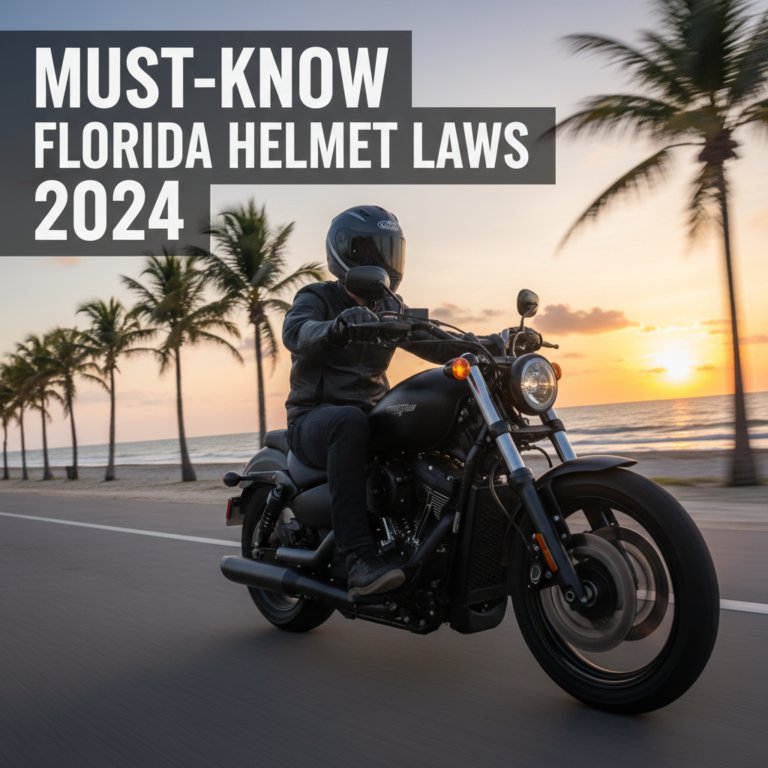
Is Florida a Helmet State? Must-Know Facts Revealed!
Is Florida a helmet state? Direct answer: No—Florida is generally not a “universal helmet law” state
In most situations, Florida does not require all motorcycle riders to wear helmets. The key legal exception is tied to rider age and proof of medical coverage, which means some riders may legally operate without a helmet while others must comply.
What “helmet state” usually means (and why Florida is different)
A “helmet state” is commonly understood as a state that mandates helmet use for nearly all motorcyclists, regardless of age. The key difference is that Florida allows certain riders to waive helmet use if they meet specific insurance and age requirements.
Florida’s approach is sometimes described as a “choice-based” helmet framework rather than a strict universal helmet mandate.
Florida motorcycle helmet law: the rules riders actually need to know
Florida’s helmet law is defined by rider age and the ability to prove qualifying medical coverage. If you don’t meet the conditions, Florida law generally requires helmet use.
Who must wear a helmet in Florida
Florida generally requires helmet use for riders who do not qualify under the “age and insurance” exception. In practice, riders who are under the age threshold must wear a helmet regardless of insurance status.
Direct takeaway: If you are not sure whether you qualify, treat the safest assumption as “helmet required” and confirm your status against Florida’s current statutory requirements.
Who may ride without a helmet (the age + insurance exception)
Florida permits eligible riders to operate a motorcycle without a helmet if they meet both an age requirement and carry a minimum amount of medical insurance. The commonly cited threshold is $10,000 in medical insurance coverage.
Definition: “Qualifying medical insurance” is defined as personal coverage that satisfies Florida’s minimum requirement for paying medical expenses related to a motorcycle crash.
Florida Helmet-Law Eligibility Scenarios (Operator vs. Passenger)
| # | Rider role | Age category | Has $10,000+ medical coverage | Helmet compliance outcome | Compliance risk if you skip helmet |
|---|---|---|---|---|---|
| 1 | Operator | 21+ | Yes (meets minimum) | Helmet waiver typically allowed | ★☆☆☆☆ |
| 2 | Operator | 21+ | No / below minimum | Helmet use required | ★★★★★ |
| 3 | Operator | Under 21 | Any amount | Helmet use required | ★★★★★ |
| 4 | Passenger | 21+ | Yes (meets minimum) | Helmet waiver potentially allowed | ★★☆☆☆ |
| 5 | Passenger | 21+ | No / below minimum | Helmet use required | ★★★★☆ |
| 6 | Passenger | Under 21 | Any amount | Helmet use required | ★★★★☆ |
| 7 | Any rider | 21+ | Yes, but no proof available on request | May be treated as non-eligible | ★★★☆☆ |
What counts as “proof” and why paperwork matters
Insurance eligibility can be undermined if you cannot produce proof when needed. The practical concern for riders is not only having the insurance, but also having documentation that can be verified during enforcement or after a crash.
If you ride in Florida, store proof of coverage with your registration documents and make sure your insurer can quickly provide verification details.
How Florida changed its helmet policy in 2000 (historical context)
Florida’s helmet rules changed in a major way around the year 2000. Before that change, Florida enforced a more universal approach to helmet requirements.
From universal helmet requirements to the current framework
During the late 1990s, Florida maintained a helmet requirement that applied broadly. In 2000, Florida repealed its universal helmet law, shifting toward the current system where helmet requirements depend on rider eligibility.
The key difference is policy design: universal helmet laws apply broadly to most riders, while Florida’s later framework uses medical insurance eligibility and age as gating conditions.
Why the repeal happened (and what critics argued)
Supporters of repeal typically emphasized personal responsibility, rider autonomy, and the idea that experienced adults can make informed safety choices when they have adequate medical coverage. Opponents frequently raised concerns about public health costs, emergency response burdens, and injury severity for unhelmeted riders.
That debate mirrors a wider national conversation that has continued for decades across the United States.
Helmet safety outcomes: what research and expert consensus show
Riding without a helmet is strongly associated with higher risk of severe head injuries. Motorcycle safety organizations and federal researchers consistently point to helmet effectiveness as a major protective factor.
What NHTSA research generally indicates about unhelmeted riders
The National Highway Traffic Safety Administration (NHTSA) has long reported that helmets significantly reduce the risk of head and brain injuries in motorcycle crashes. Studies referenced by NHTSA and peer-reviewed literature generally conclude that helmet use is linked to fewer traumatic brain injuries and lower fatality risk compared with unhelmeted riding.
Definition: “Traumatic brain injury (TBI)” is defined as brain damage caused by an external force, often resulting from impact and rapid acceleration/deceleration during a crash.
Why “legal” and “safe” are not the same
Even if a rider qualifies for Florida’s no-helmet allowance, the safety reality does not disappear. Medical coverage may help with costs, but it does not prevent the lifelong consequences that can accompany serious head trauma.
From a rider safety perspective, helmet choice is about impact protection, not only insurance compliance.
Florida insurance and crash realities: the practical risks beyond the law
Insurance can help financially, but it does not reduce injury severity. Florida’s helmet rules allow legal non-helmet riding for certain riders, yet crash outcomes can still be catastrophic.
Medical coverage does not equal injury prevention
Qualifying medical insurance is intended to help pay for treatment after an incident. However, severe motorcycle crashes can involve more than medical bills, including rehabilitation, lost income, long-term disability, and family caregiving needs.
Direct takeaway: Helmet use addresses the injury mechanism at the moment of impact; insurance addresses payment afterward.
Non-helmet injuries can create long-term financial strain
Serious head injuries may require months or years of rehabilitation and ongoing therapy. Even when medical expenses are partially covered, riders and families often face out-of-pocket costs, deductibles, and non-medical expenses.
If you want the best risk management approach, prioritize protective gear that reduces the chance of severe head trauma.
Quick FAQ: Is Florida a helmet state? Must-know questions riders ask
Do I have to wear a helmet in Florida if I’m over 21?
Not automatically. Florida may allow riders who meet the eligibility criteria to ride without a helmet, including an age threshold (commonly cited as 21) and proof of at least $10,000 in qualifying medical insurance.
Best practice: Verify your status before riding and carry proof of insurance.
What if I forget my insurance proof while riding?
Even if you have qualifying coverage, inability to prove eligibility can lead to enforcement consequences. Keep documentation accessible so you can show compliance if asked.
Are all helmets acceptable under Florida law?
Florida’s requirements (when helmet use is required) typically emphasize helmets that meet federal safety standards. A widely recognized standard for motorcycle helmets is DOT certification.
Definition: A “DOT-certified helmet” is defined as a helmet that meets U.S. Department of Transportation performance and labeling requirements.
Does Florida require helmet use for passengers?
Passenger rules can differ from operator rules depending on age and eligibility status. If you carry passengers, confirm their compliance status—especially if they are subject to mandatory helmet requirements.
Is there a way to ride legally without a helmet and still be safer?
Yes—safety-conscious riders often choose to wear helmets regardless of legal requirements. Helmets remain one of the most effective protective tools for reducing head and brain injury risk in motorcycle crashes.
Safety-first guidance: what to do even if you can legally ride without a helmet
Florida may not force helmet use for every rider, but safety best practices strongly recommend wearing one. A helmet offers measurable protection and helps reduce the most dangerous injury risks.
Choose a helmet that fits correctly
A helmet that fits poorly can shift during an impact. Look for a helmet that sits level, does not rock, and maintains comfortable contact with your head. If you can, try it on in person and verify sizing before riding.
Consider additional protective gear
Helmets work best as part of a layered protection approach. Riders often pair helmets with eye protection, gloves, armored jackets, riding pants, and abrasion-resistant footwear.
Direct takeaway: Helmet compliance may be optional under Florida’s rules for some riders, but comprehensive rider gear is always a stronger strategy.
Authoritative references and where to verify Florida requirements
For the most accurate and up-to-date interpretation of Florida’s motorcycle helmet law, rely on official legal sources and federal safety research. Rules can be amended, and enforcement guidance may evolve.
- NHTSA (National Highway Traffic Safety Administration) for motorcycle helmet safety research and crash injury outcomes
- Florida Statutes for the current text of helmet requirements and the eligibility exception based on age and medical insurance
- U.S. DOT (Department of Transportation) for helmet standards and certification context
Bottom line: Is Florida a helmet state?
Florida is not a universal helmet state. Riders may be allowed to ride without a helmet if they meet Florida’s eligibility conditions, including the commonly cited $10,000 medical insurance threshold tied to qualifying age.
However, safety evidence and expert consensus remain consistent: helmets reduce the risk of severe head injury. If you want the best protection available on Florida roads, wearing a certified motorcycle helmet is the safest decision.
Is Florida a Helmet State? Must-Know Facts Revealed!
Is Florida a helmet state for motorcycle riders?
Florida is not a universal “helmet law” state, but it does require helmets in specific situations. Florida’s helmet requirement primarily applies to younger riders. If you’re under 21, you are generally required to wear a helmet while riding a motorcycle. For riders 21 and older, the requirement typically does not apply, but helmets are still strongly recommended for safety. If you’re a passenger, similar age-based rules can apply depending on the exact legal coverage. Because details can depend on age and circumstances (and may change), check the current Florida statutes or FLHSMV guidance before riding.
Do I have to wear a helmet in Florida if I’m under 21?
Generally, yes. Florida’s motorcycle helmet law is age-based: riders under 21 are typically required to wear a helmet while operating or riding a motorcycle. This is a major reason Florida is considered a “partial helmet state.” If you’re under 21 (for the role covered by the law), wearing a properly fitted, approved helmet is the safest way to remain compliant. For the most accurate requirements, verify the latest FLHSMV information or the current statutory language.
What kind of helmet is legally required in Florida?
If Florida requires you to wear a helmet (for example, due to age), it must meet recognized safety standards for motorcycle helmets. In practice, this means a properly certified/approved helmet intended for motorcycle use and worn correctly, including a properly secured chin strap and correct fit. To reduce the risk of being cited, choose a motorcycle helmet labeled as meeting the relevant approved standard (commonly DOT and other recognized certifications) and ensure it meets legal requirements for your situation.
Are helmets required in Florida for passengers on a motorcycle?
Yes, but it depends. Florida’s helmet rules are generally tied to age, which can apply to both operators and passengers. If the passenger is under the age threshold covered by Florida’s helmet requirement, the passenger is typically required to wear a helmet. If the passenger is 21 or older, the helmet requirement may not apply under those same rules. Because “operator vs. passenger” coverage can be specific, passengers should confirm requirements—especially when either rider or passenger is under 21.
If Florida doesn’t require helmets for all riders, why should I still wear one?
Even when Florida law doesn’t mandate helmets for every rider, helmets significantly improve safety in a crash. They help protect against head injuries, reduce the risk of severe neurological harm, and guard against wind and road debris. Motorcyclists and passengers have limited protection compared with cars, so head protection is especially important. Wearing a certified helmet every time helps keep you safer regardless of whether a particular ride is legally “required” and supports better overall risk management on the road.
References
- Google Scholar search results for Florida motorcycle helmet law Google Scholar
https://scholar.google.com/scholar?q=Florida+motorcycle+helmet+law - Google Scholar search results for Florida bicycle helmet law Google Scholar
https://scholar.google.com/scholar?q=Florida+bicycle+helmet+law - Florida Statutes 316.211 — Helmet and protective headgear requirements
https://www.flsenate.gov/Laws/Statutes/2023/316.211 - Motorcycle helmet laws (overview and state-by-state context)
https://en.wikipedia.org/wiki/Motorcycle_helmet_laws - NHTSA: Motorcycle helmets — safety and regulations
https://www.nhtsa.gov/road-safety/motorcycle-safety/motorcycle-helmets - CDC: Helmets — motor vehicle safety and injury prevention
https://www.cdc.gov/motorvehiclesafety/helmets/index.html - Encyclopaedia Britannica: Motorcycle helmet (purpose and safety)
https://www.britannica.com/technology/motorcycle-helmet - WHO fact sheet: Road traffic injuries (injury prevention evidence)
https://www.who.int/news-room/fact-sheets/detail/road-traffic-injuries
📅 Last Updated: July 06, 2026 | Topic: Is Florida a Helmet State? Must-Know Facts Revealed! | Content verified for accuracy and freshness.