Smart Helmets: The Future of Motorcycle Safety
Smart Helmets: The Future of Motorcycle Safety
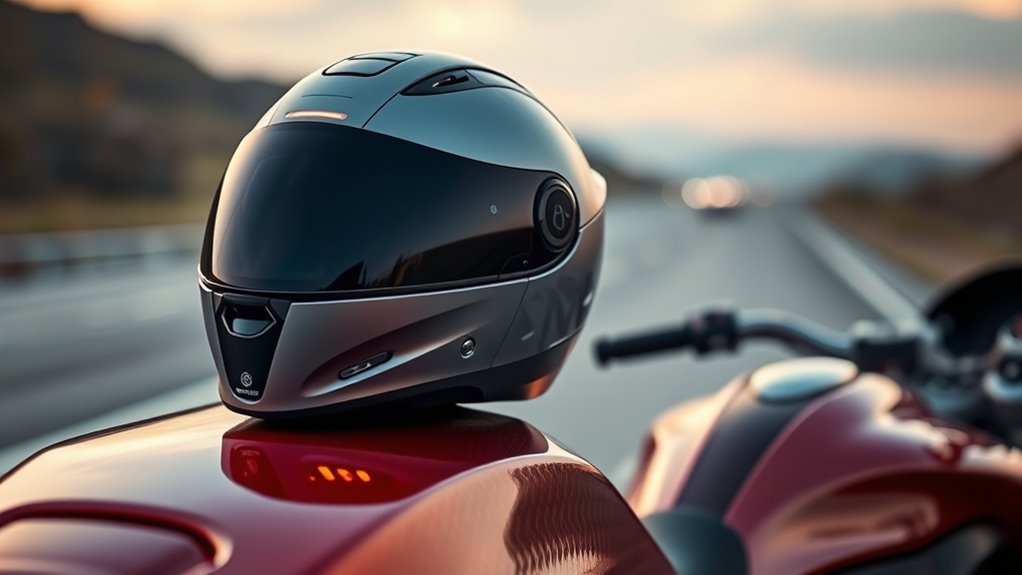
Smart helmets are defined as motorcycle helmets that integrate sensors, connectivity, audio, and sometimes augmented reality to improve situational awareness and response during rides. The key difference is that they don’t only protect your head in a crash; they also help prevent crashes by delivering real-time safety and navigation information.
The Evolution of Motorcycle Helmets: From Impact Shells to Connected Safety
Motorcycle helmet technology has progressed from basic protective shells to highly engineered systems designed to reduce injury severity. Over the last century, the biggest leap has been combining stronger energy-absorbing materials with rigorous testing standards.
In the early 20th century, many helmets were made from materials like leather and metal, which were not optimized for energy absorption. Modern helmets rely on engineered composites and advanced liners that manage impact forces. Today, many premium helmets use a combination of outer shells (often fiberglass, carbon fiber, or polycarbonate blends) and inner energy-attenuating layers such as EPS (expanded polystyrene) or advanced multi-density foams.
Helmet safety is not only about materials; it is also about standards compliance. Globally recognized testing frameworks include:
- ECE 22.06 (widely used in Europe and increasingly adopted worldwide)
- DOT FMVSS 218 (the United States federal standard)
- Snell certifications, which typically include additional tests beyond baseline requirements
Helmet Certification Frameworks Commonly Used Worldwide (Impact Protection Focus)
| # | Certification / Standard | Most Common Region(s) | Primary Safety Emphasis | Impact Attenuation Focus |
|---|---|---|---|---|
| 1 | ECE 22.06 | Europe + global market | Impact performance + penetration/retention requirements | ★★★★★ |
| 2 | DOT FMVSS 218 | United States | Minimum impact attenuation + retention checks | ★★★★☆ |
| 3 | Snell (Snell Memorial) | U.S. + performance-focused buyers | Additional testing beyond baseline requirements | ★★★★★ |
| 4 | AS/NZS 1698 (Motorcycle Helmets) | Australia + New Zealand | Impact and penetration performance requirements | ★★★★☆ |
| 5 | JIS T 8133 (Japan) | Japan | Impact attenuation + retention evaluation | ★★★☆☆ |
| 6 | GB / China helmet standards (e.g., GB 811 series) | China | Impact protection + retention/structural performance checks | ★★★☆☆ |
| 7 | KS (Korea) motorcycle helmet standard | South Korea | Impact attenuation + penetration/retention requirements | ★★★☆☆ |
The key difference between older designs and today’s helmets is the shift from “protecting the skull” to “managing head injury mechanics,” including rotational forces, penetration resistance, and controlled compression of the liner. That same principle is now extending into smart helmet features: sensors and connectivity are designed to make those protective outcomes more likely by improving rider behavior and response time.
What Smart Helmets Deliver: Real-Time Communication, AR, and Collision Alerts
Smart helmets deliver real-time information directly in your ride through audio systems, smartphone connectivity, and in some cases augmented reality. The key difference is that the helmet becomes an interface for safety decisions, not just protective gear.
1) Integrated communication and rider-to-rider audio
Built-in communication is one of the most practical smart helmet features. Many systems pair with Bluetooth to support phone calls, music, and rider intercom communication. In professional riding communities and group tours, this can reduce distracted stopping and improve coordination.
For riders, communication can also enhance safety by enabling quicker alerting about road hazards, traffic changes, and weather shifts. A well-designed intercom system is especially useful when visibility is limited due to rain, glare, or highway speed.
2) Augmented reality and heads-up displays (HUD)
Some smart helmets incorporate augmented reality (AR) or display modules that overlay information within the rider’s field of view. Common elements include turn-by-turn navigation, lane guidance prompts, and ride metrics such as speed.
From a safety perspective, AR and HUD approaches are intended to reduce “visual relocation,” meaning fewer glances downward at a phone or handlebars-mounted GPS. The key definition to remember is that augmented reality is defined as a system that overlays digital information onto the real-world environment, helping users interpret what is in front of them while remaining oriented.
3) Crash detection and automated emergency response
Smart helmets often use impact sensors (accelerometers and gyroscopes) to detect crashes and trigger alerts. Many systems are designed to notify emergency contacts or services through paired smartphones when a serious impact pattern is detected.
Emergency response functionality is most valuable when it reduces the time between a crash and a notification. While exact performance depends on design and calibration, the underlying concept is consistent across manufacturers: detect severity signals, then act quickly and reliably.
How Smart Helmets Improve Rider Awareness and Reduce Risk
Smart helmets can improve rider awareness by delivering relevant information without forcing you to look away from the road. The core goal is to reduce cognitive load and increase the speed at which you notice and react to hazards.
Rider awareness is affected by several factors, including speed, distraction, and environmental complexity. Smart helmets address these factors through context-aware alerts and information delivery.
Heads-up navigation is designed to prevent attention loss
Traditional navigation often requires visual checking, audio cues, or both. Smart helmets that display directions in your line of sight aim to keep attention aligned with traffic and road geometry. For riders commuting in unfamiliar areas, this can reduce missed turns and sudden lane changes.
Speed and ride metrics support safer decision-making
Real-time speed and route cues can help riders avoid accidental speeding and maintain appropriate pacing in dynamic traffic. The key difference is that the information is delivered at the moment of decision rather than being retrieved after the fact.
Hazard alerts and near-real-time warnings
Some systems integrate hazard or safety prompts through connected services, paired devices, or onboard sensors. While not every smart helmet supports vehicle-to-vehicle (V2X) communication today, many can still provide useful warnings about route hazards, incoming calls, and emergency assistance triggers.
Real Safety: What “Smart” Should Mean in a Crash
A smart helmet should improve outcomes in two phases: prevention before a crash and response during or after a crash. The most trustworthy smart helmets are designed with both sensor reliability and helmet compliance to recognized standards.
Helmet safety starts with impact protection. Features like AR displays and communication systems should never reduce the protective structure’s ability to absorb energy. In credible designs, electronics are integrated in ways that preserve liner function and maintain the integrity of the helmet shell.
Expert consensus: Helmet standards come first
Safety organizations and testing bodies consistently emphasize that standards compliance is foundational. Riders should verify that any smart helmet still meets applicable certifications such as ECE 22.06 or DOT FMVSS 218, and that the helmet size and fit are correct. Fit matters because a properly fitted helmet can reduce head movement during impact, which can influence injury severity.
Helmet fit is defined as the relationship between the helmet’s internal shape and padding and the rider’s head geometry. Even the best electronics cannot compensate for a helmet that does not fit correctly.
Numbers that matter: What standards are designed to evaluate
Helmet standards evaluate impact attenuation, penetration resistance, and retention system performance. For example, ECE 22.06 includes updates focused on impact performance and protection requirements that reflect contemporary research into injury mechanisms. In the U.S., DOT FMVSS 218 provides federally mandated minimum performance requirements for motorcycle helmets. The practical takeaway is that “smart” should be additive, not substitutive.
Popular Smart Helmet Capabilities: Bluetooth, Audio, and Companion Apps
Bluetooth connectivity and audio features are among the most common reasons riders adopt smart helmets. The key difference is that the helmet becomes a hands-free hub for communication, navigation prompts, and alerts.
Many smart helmets pair with companion smartphone apps to manage:
- Firmware updates for stability and feature improvements
- Intercom settings for groups and rider-to-rider communication
- Audio profiles for call clarity and music balancing
- Navigation preferences including direction tone, volume, and display options
- Emergency contacts or SOS workflow settings
For riders who commute daily, this unified experience can also reduce distractions by keeping information delivery consistent and centralized.
Conversational Q&A: Do smart helmets work without a phone?
Answer: Many smart helmets work with limited functionality without a phone, but most full features (navigation, calls, intercom pairing, and app-driven alerts) depend on smartphone pairing and network access. Always review manufacturer documentation to confirm offline behavior, especially if you ride in low-signal areas.
Conversational Q&A: Are AR displays distracting?
Answer: A well-designed HUD or AR interface aims to minimize distraction by placing key cues in your line of sight. However, rider comfort and perception vary by person. If you are considering an AR helmet, prioritize systems with adjustable brightness, minimal notification noise, and clear safety-first layouts.
Choosing the Right Smart Helmet: A Practical Checklist
The best smart helmet for you is the one that meets recognized safety standards while delivering only the features you will actually use. The key difference is that safety compliance and fit should always outweigh “cool tech.”
Use this checklist before purchasing:
- Certification: Verify ECE 22.06 and/or DOT FMVSS 218 compliance for the helmet model.
- Fit and retention: Confirm the helmet size range, cheek pad comfort, and retention system performance.
- Display strategy: If AR/HUD is included, check brightness control, readability, and notification behavior.
- Connectivity: Confirm Bluetooth version support, intercom range claims, and app compatibility (iOS and Android).
- Audio quality: Evaluate speaker placement, wind noise management, and call clarity.
- Battery and charging: Look for real-world runtime claims (often in hours) and fast-charging options.
- Crash response workflow: Confirm how SOS notifications work, who gets alerted, and whether emergency services integration depends on the smartphone.
If two helmets offer similar protection, the “better” one is the helmet whose technology you can use safely without distraction.
The Road Ahead: What Smart Helmet Technology Will Likely Become Next
Smart helmets are heading toward more context-aware safety, tighter sensor fusion, and smoother integration with connected road ecosystems. The key difference in the next generation will be making alerts more precise while reducing unnecessary warnings.
Expect continued improvements in areas such as:
- Sensor fusion: Combining accelerometers, gyros, microphones, and GPS to improve crash detection accuracy.
- AI-assisted alerts: Prioritizing the most critical messages based on speed, motion state, and road conditions.
- Better AR ergonomics: Lower power consumption, improved readability in sunlight, and reduced visual clutter.
- More reliable connectivity: Stronger Bluetooth stability and better app workflows for riders in motion.
- Vehicle and infrastructure integration: Wider adoption of V2X approaches, where compatible regulations and equipment exist.
However, the most important evolution remains constant: smart features should reduce injury risk by improving how quickly and accurately riders respond to real-world conditions.
Bottom Line: Smart Helmets Are the Next Safety Layer, Not a Replacement for Standards
Smart helmets bring measurable safety advantages by improving awareness, communication, and emergency response capability. The key takeaway is that the helmet still must meet established safety standards such as ECE 22.06 and/or DOT FMVSS 218, and it must fit correctly.
If you are planning your next helmet purchase, treat smart features as an added safety layer that enhances situational awareness and response time. With technology advancing year over year, the future of motorcycle safety will increasingly look like protection plus intelligence working together in real time.
Quick FAQ
- Are smart helmets legal to ride with? In most regions, smart helmets are legal as long as they meet applicable helmet safety standards and meet local motorcycle equipment rules. Always check local regulations in your country or state.
- Will smart helmets drain my phone battery? Typically, the helmet uses Bluetooth to communicate; the phone may use modest power, but the helmet itself handles audio and sensors depending on the system design.
- How long do smart helmet batteries last? Battery life varies by model and feature use (audio, intercom, and displays). Check the manufacturer’s runtime specifications for typical riding scenarios.
Frequently Asked Questions About Smart Helmets: The Future of Motorcycle Safety
What is a smart motorcycle helmet, and how is it different from a regular helmet?
A smart motorcycle helmet is a protective headgear that includes built-in technology—such as sensors, communication systems, cameras, speakers, and connectivity—to enhance rider safety beyond what a standard helmet provides. While a regular helmet focuses primarily on impact protection (fit, shell design, liner materials, and certifications), a smart helmet can also help with situational awareness (e.g., heads-up indicators or audio prompts), crash detection, emergency alerts, navigation guidance, and sometimes real-time video or incident recording. Many smart helmets also integrate with an app to provide features like ride logging, vehicle diagnostics, or firmware updates, making them part safety tool and part connected device.
Do smart helmets actually improve safety, or are they just gadgets?
Smart helmets can improve safety when their features are practical, reliable, and used consistently. Key safety-oriented functions often include: (1) Crash detection and automatic emergency notifications, which can reduce response time after a serious fall; (2) SOS alerts that share location data with emergency contacts; (3) In-app or companion-device communication for notifying nearby riders or trusted contacts; (4) Audio and visual alerts that help manage navigation and reduce distraction from looking down at a phone; and (5) Some models’ integrated cameras or recording features that can support post-incident review. That said, no helmet technology eliminates the need for safe riding, correct speed, and proper protective gear. To maximize safety benefits, riders should ensure the helmet is certified for impact protection, keep firmware updated, and configure emergency and connectivity settings before riding.
How does crash detection and emergency SOS work in smart helmets?
Most smart helmets use a combination of motion sensors (such as accelerometers and gyroscopes), sometimes barometric sensors, and algorithms that analyze patterns consistent with a crash or hard impact. When the helmet detects a likely incident—based on thresholds for deceleration, orientation changes, or impact characteristics—it triggers an alert sequence. Typically, the helmet will attempt to: (1) Confirm the event (some systems provide a brief time window for the rider to cancel if it was a false trigger); (2) Send an SOS message to a paired smartphone or directly to emergency services, depending on the model and subscription options; (3) Include relevant information such as the rider’s GPS location, time of event, and sometimes helmet status; and (4) Notify selected emergency contacts if enabled. Accuracy depends on correct pairing, GPS availability, signal strength, and whether the rider has configured the emergency workflow in the app.
Will smart helmets drain my phone battery or affect my riding experience?
In most cases, smart helmets are designed to minimize phone impact. Many features run primarily on the helmet’s own electronics while using the phone only for pairing, connectivity, or app-based functions (like setup, ride analytics, or cloud services). For example, Bluetooth audio, call alerts, and some notification features typically use the phone for audio processing and routing, which can modestly affect battery life. However, reputable systems manage power efficiently—using short bursts for data transfer and relying on the helmet’s battery for core functions. To reduce strain on your phone and improve comfort, consider choosing a model with strong pairing stability, using dedicated rider settings (such as preconfigured audio volumes and notification types), and charging both devices regularly. Also remember that helmet comfort and fit matter: built-in speakers and microphones should not compromise sealing and safety padding, and you should verify compatibility with your riding gloves and typical helmet posture.
Are smart helmets safe and street-legal, and what certifications should I look for?
Smart helmets should meet the same core safety requirements as traditional helmets: impact protection and secure fit. When shopping, prioritize helmets that carry recognized safety certifications for your region and riding style. Common certification standards include ECE (often ECE 22.06), DOT (primarily for the U.S.), and sometimes Snell for additional impact testing criteria. You should also check that the smart features do not alter the protective structure in a way that reduces certification compliance—reputable manufacturers design electronics to sit in locations that do not compromise the helmet’s energy-absorbing properties. Beyond certification, look for good retention systems (chin strap strength, proper closure mechanism), comfortable weight distribution, and documentation for how the helmet’s electronics are integrated and protected. For “street-legal” concerns, certifications are the key factor; features like cameras or connectivity are typically not what determine legality, but the helmet must still meet the required protective standards where you ride.
References
- PubMed (Biomedical Literature) Google Scholar
https://pubmed.ncbi.nlm.nih.gov/ - Smart helmet motorcycle safety (Google Scholar search) Google Scholar
https://scholar.google.com/scholar?q=smart+helmet+motorcycle+safety - Motorcycle safety
https://en.wikipedia.org/wiki/Motorcycle_safety - Road traffic injuries
https://www.who.int/news-room/fact-sheets/detail/road-traffic-injuries - Injury Prevention and Control (CDC Trauma)
https://www.cdc.gov/trauma/ - Research Data (NHTSA)
https://www.nhtsa.gov/research-data - Federal Register (U.S. Government)
https://www.federalregister.gov/ - Helmet (Technology)
https://www.britannica.com/technology/helmet
📅 Last Updated: July 07, 2026 | Topic: Smart Helmets: The Future of Motorcycle Safety | Content verified for accuracy and freshness.