Signs Your Motorcycle Helmet Is No Longer Safe
Signs Your Motorcycle Helmet Is No Longer Safe: Quick Checklist
If your motorcycle helmet shows structural damage, has reached the end of its service life, or no longer fits correctly, it may not protect you the way you expect in a crash. This post breaks down the most reliable, evidence-based warning signs so you can decide confidently whether to replace it.
Why Motorcycle Helmets Lose Safety Over Time
Helmet safety is not only about what the helmet looks like; it is also about the condition of materials that absorb and manage impact. The key difference is that a helmet’s protective performance depends on how its shell and energy-absorbing liner behave under force, and those materials can degrade even when the exterior seems intact.
Most modern helmets use a hard outer shell (often fiberglass composite, carbon fiber, or thermoplastic) bonded to an energy-absorbing liner, typically expanded polystyrene (EPS) or more advanced alternatives. The liner is designed to crush and manage energy during impact. When it is damaged or aged, its ability to perform can drop.
Authoritative safety organizations and helmet makers consistently emphasize that a helmet should be replaced after an impact and periodically due to aging effects. For example, many manufacturers recommend replacement every 5 years, and some specify earlier for heavy use or exposure conditions.
Expert consensus in plain language
Helmet experts agree on three practical rules: replace after a crash, replace when structural damage appears, and replace when the helmet passes its recommended service life. The exact recommendation can vary by brand and model, but the underlying physics of liner aging and impact behavior is consistent.
Visible Damage and Cracks (Even If It Looks “Minor”)
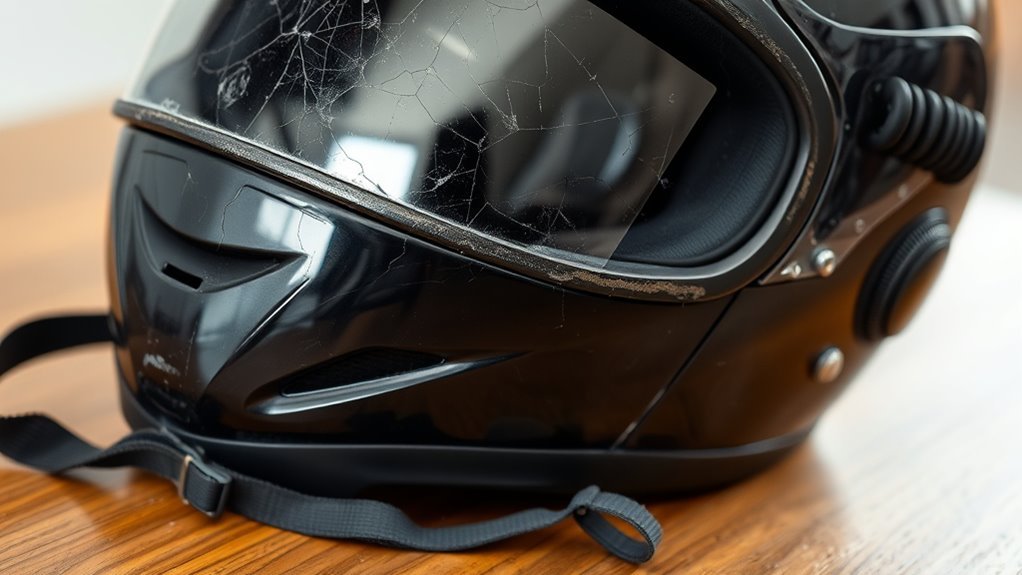
Any cracks, deep scuffs, dents, or missing pieces are strong signs your helmet may be compromised. The key difference is that small exterior marks do not always correlate to liner damage, but any structural harm is enough to treat the helmet as unsafe.
Inspect your helmet under good light and consider removing accessories like visors and communication mounts (only if you can do so without altering fit). Look for:
- Cracks in the shell, including hairline fractures that catch light
- Dents or deformation that change the helmet’s shape
- Deep scratches that expose raw material or create gouges
- Loose or broken components such as visor mounts, chin bar parts, or shell fasteners
- Any separation at seams between shell and liner or around vents
Even if you have never crashed, a helmet can be damaged by a fall while off the bike, a tool dropping onto it, or improper storage where it hits hard surfaces. If you do find damage, replacement is the safest choice because impact-absorbing liners can be internally cracked while the outside still looks acceptable.
Quick question: “What if my helmet only has cosmetic scratches?”
Cosmetic scuffs can be superficial, but you still need to judge depth and shell integrity. If scratches are superficial and do not indicate cracking, flaking, or deformation, they may be less concerning. However, if you cannot confidently determine whether the liner or shell has been affected, replacing the helmet is the responsible safety move.
After a Crash: The “Replace Immediately” Rule
A motorcycle helmet should be replaced after any crash or impact, even if it appears usable afterward. The key difference is that a helmet can absorb energy by cracking or compressing internally, which may not be visible from the outside.
Common scenarios include drops at walking speed, sliding impacts, or even a hard hit when the helmet stayed on your head. Impact forces can compromise the energy-absorbing liner and weaken the shell-hemisphere geometry that was designed to manage load.
Many manufacturers explicitly state that helmets must be replaced after a significant impact. While “significant” can be subjective, conservative guidance is widely adopted because the downside of continued use is your safety.
Quick question: “What counts as a crash for helmet replacement?”
A crash includes any event where the helmet experiences a forceful impact or the helmet’s protective system may have worked. That includes falls, collisions, and hard contact where the helmet contacts the ground or another object.
Helmet Age and Material Degradation (Why 5 Years Is Common)
Helmet aging is one of the most overlooked reasons helmets stop being fully safe. The key difference is that protective materials, adhesives, and coatings can degrade from time, heat cycles, sweat, and ultraviolet (UV) exposure even if the shell and padding look fine.
Many manufacturers recommend replacing helmets every 5 years from the manufacturing date printed on the helmet or inside the shell. Some riders extend use slightly, but the most safety-conscious approach is to follow manufacturer guidance and err on the side of replacement.
Why the timeline matters:
- UV exposure can weaken plastics and composite resins over time.
- Sweat and oils can impact liners and degrade strap material.
- Heat cycling from leaving your helmet in sun or in a hot garage can accelerate wear.
- Adhesive aging can reduce bonding performance between shell and liner.
Beyond aging, safety standards also evolve. A helmet built years ago may not reflect newer test protocols or design improvements even if it still meets an older standard at the time of manufacture.
Where to find your helmet’s manufacturing date
Most helmets show a manufacturing or expiration-related date label inside the helmet, typically near the chin strap anchor or on the inner shell. Always confirm the date with the helmet’s specific brand documentation.
Quick question: “My helmet is only 3 years old. Should I still worry?”
If your helmet has no damage, has never been in a crash, and fits correctly, age alone at 3 years is less likely to be the problem. Still, check for liner compression, strap wear, and certification labels, especially if the helmet has been exposed to repeated heat and harsh storage.
Helmet Red Flags to Prioritize (Safety Risk Guide)
| # | What you notice | Fit/condition check | Confidence | Replace priority |
|---|---|---|---|---|
| 1 | Visible shell crack (hairline or open fracture) | Look for cracking under good light, especially near vents and visor mounts | ★★★★★ | Replace Now |
| 2 | Dent/deformation that changes helmet shape | Check whether the shell “doesn’t sit right” on a flat surface | ★★★★☆ | Replace Now |
| 3 | Any crash/impact with helmet worn | Treat sliding/contact events and hard drops as impacts | ★★★★☆ | Replace Now |
| 4 | Helmet movement during fit checks | Confirm it doesn’t slip forward/back when looking up/down | ★★★☆☆ | Replace Soon |
| 5 | Strap webbing frays or buckle damage | Inspect stitching, webbing stiffness, and buckle integrity | ★★★★☆ | Replace Now |
| 6 | Flattened/compressed interior liner padding | Press gently—if it won’t rebound, liner is likely compromised | ★★★☆☆ | Replace Soon |
| 7 | Missing/illegible certification labels | Verify DOT/ECE/SNELL markings are present and readable | ★★★☆☆ | Replace (De-risk) |
Uncomfortable Fit, Pressure Points, or Helmet Movement
Fit problems are a direct safety issue because a helmet that does not sit correctly can shift during a ride or impact. The key difference is that correct fit positions the helmet to protect critical areas like the forehead, temples, and jawline.
Signs of unsafe fit include:
- Pressure points that feel like hot spots or pain after a short ride
- Head movement where you can feel the helmet rotate or slide
- Gaps around the cheeks or forehead when the straps are fastened
- Chin bar or helmet lift when you move your head
- Straps that twist or sit incorrectly
A helmet should feel snug without creating numbness or ongoing discomfort. Over time, padding can compress, and strap systems can loosen or stretch. If your helmet feels different than when it was new, do not assume “breaking in” is a permanent fix.
How to test fit safely at home
Fasten the helmet and perform a controlled fit check while seated:
- Confirm the helmet does not slip forward when you look up.
- Confirm it does not slide back when you look down.
- Check cheek contact by gently applying sideways pressure.
- Ensure the chin strap is secure and that you can fit no more than a finger under the strap (a common fit target, though follow your helmet maker’s guidance).
Quick question: “Can I just replace the cheek pads instead of the helmet?”
Sometimes, replacement of official pads restores comfort and fit. However, it does not fix liner aging or internal damage. If you are close to the manufacturer’s service-life recommendation or suspect impact damage, replacing the entire helmet is safer than relying only on pad replacement.
Compromised Interior Padding and Liner Performance
Worn, compressed, torn, or flattened padding can reduce comfort and, more importantly, can indicate that the helmet’s energy management system is no longer functioning as intended. The key difference is that the liner is designed to compress in a controlled way; once it is permanently compressed or damaged, its protective capacity may be reduced.
Inspect both comfort padding and the energy-absorbing liner (where accessible). Look for:
- Tears, holes, or fraying in the inner padding
- Flattened sections that do not rebound after gentle pressure
- Loose stitching or delamination where padding separates from liner
- Odors or staining that suggest prolonged moisture exposure
- Loose retention where the helmet no longer feels stable
While inner comfort liners can often be replaced, the safety-critical portion of the helmet is the energy-absorbing liner and its bond to the shell. If you find signs of compression, cracking, or separation that suggest the protective liner has been affected, replacement is the correct action.
Quick question: “How can I tell if padding compression is just comfort wear?”
If padding only feels thinner but the helmet remains structurally intact and fits correctly, it may be mostly a comfort issue. If you notice internal liner issues, gaps around seams, or significant fit change that is not solved by official pads, treat it as a safety concern and consider replacing the helmet.
Strap, Buckle, and Retention System Problems
The chin strap and retention system are essential to helmet safety because they keep the helmet positioned during impact and rapid head movement. The key difference is that even a high-quality helmet can fail protection goals if the strap stretches, frays, or does not secure properly.
Check:
- Fraying or stiffness in the strap webbing
- Cracks or wear in the buckle mechanisms
- Strap twists that persist even after adjustment
- Loose anchors or missing hardware
- Incorrect closure where the retention system no longer holds securely
If the retention system is worn or damaged, do not assume it can be safely “repaired.” Use manufacturer-approved replacement parts or replace the helmet if the issue affects load-bearing components.
Quick question: “Can strap replacement extend the life of a helmet safely?”
If only cosmetic padding is worn, official comfort pad replacement may help. However, if the retention system components are damaged or if the helmet is near its service life, replacing the helmet remains the safer route.
Missing or Outdated Certification Labels (And Why They Matter)
Your helmet’s certification is a baseline proof of compliance with safety test standards at the time of manufacture. The key difference is that without valid certification information, you cannot confirm the helmet meets recognized impact and retention requirements.
Check the helmet for labels that indicate compliance with standards such as:
- DOT (United States)
- ECE (commonly ECE 22.06 in newer generations)
- SNELL (voluntary testing certification in North America)
- UKCA/CE where applicable
Standards numbering matters. For example, ECE 22.05 was followed by ECE 22.06 for newer helmet designs and updated test methods. If your helmet is missing labels or the information appears illegible or tampered with, treat it as a red flag.
Note: even a certified helmet can become unsafe if it is damaged, expired, or fitted incorrectly.
Quick question: “If my helmet is DOT certified, is it automatically safe forever?”
No. DOT or ECE certification applies to the helmet’s performance when new and unmodified. Aging, impacts, incorrect fit, and damage can still reduce protection.
When to Replace Your Helmet (A Decision Guide)
Replacing your motorcycle helmet is the safest choice when you detect structural damage, confirm a crash impact, or your helmet has reached its recommended lifespan. The key difference is that “maybe safe” is not a practical standard for head protection.
Consider replacement if you have any of the following:
- Visible shell cracks, deformed areas, or deep gouges
- Any crash or hard impact, even if there is no visible damage
- Age near or beyond 5 years (or earlier if your manufacturer states a different timeline)
- Helmet movement during fit checks or frequent slipping
- Strap/buckle damage or retention system issues
- Missing/illegible certification labels
Quick question: “Can cleaning make an old helmet safe again?”
Cleaning can improve hygiene and restore comfort, but it cannot reverse internal liner compression, shell micro-cracking, or degradation from UV and heat cycles. Safety performance cannot be “refreshed” through cleaning alone.
How to Maintain a Helmet Without Compromising Safety
Proper maintenance helps your helmet stay hygienic and preserves its comfort, but it should never involve modifications to safety-critical parts. The key difference is that cleaning and storage support longevity; they do not restore impact-damaged materials.
Best practices include:
- Store in a cool, dry place away from direct sunlight
- Avoid harsh chemicals that can degrade plastics and coatings
- Use manufacturer-recommended cleaning methods for liners and pads
- Inspect before each ride for strap condition, visor security, and obvious shell damage
- Replace official pads only for comfort and fit when appropriate
When in doubt, follow the manufacturer’s care and replacement instructions. Helmet makers base their guidance on design testing and expected material lifecycles.
Conclusion: Treat Helmet Safety as Non-Negotiable
A safe motorcycle helmet protects more than comfort; it protects your brain and face under severe forces. If you see damage, suspect impact history, notice fit problems, or your helmet is past its recommended service life, replacement is the clear, safety-first decision.
If you want the most accurate next step, check your helmet’s manufacturing date, verify certification labeling, and perform a fit check. When the evidence suggests the protective system may be compromised, choose a new helmet and set your old one aside for parts or recycling rather than continued riding.
FAQ: Fast Answers to Common Helmet Safety Questions
How often should I replace my motorcycle helmet? Most manufacturers recommend replacing it about every 5 years, even if it looks fine, and immediately after any crash.
Is a small crack always a reason to replace? Yes. Any visible shell cracking or deformation is a strong indicator that the helmet’s protective system may be compromised.
What is the biggest safety risk: damage, age, or poor fit? Any one of them can increase risk. In practice, the highest confidence triggers are crash impact, visible structural damage, and failure to maintain correct fit.
Do I need the latest standard like ECE 22.06? It is beneficial because standards evolve, but a damaged or expired older helmet can still be unsafe. Certification is only a baseline; condition and fit determine real-world protection.
Frequently Asked Questions
How can I tell if my motorcycle helmet is no longer safe?
You can’t always “see” unsafe damage, but there are several clear warning signs. Look for: (1) visible cracks, dents, or deep scratches—especially on the shell or around the visor area; (2) a loose fit or helmet that shifts during riding; (3) worn or flattened interior padding that no longer holds your head snugly; (4) deterioration of the straps, including fraying, stretching, or frayed stitching; and (5) a compromised chin bar or visor mechanism (if applicable) that doesn’t lock securely. Also check for aging signs: if the exterior looks dull or chalky, seams appear separated, or the helmet has developed a musty smell, the materials may be breaking down. Finally, treat any history of impact—crash, even a “minor” drop—as a strong indicator it should be replaced.
Should I replace my helmet after a crash, even if it looks fine?
In most cases, yes. Motorcycle helmet safety relies on energy-absorbing materials (especially the EPS foam liner). During a crash or significant impact, that foam compresses and can lose its ability to protect you in a future impact, even if the helmet appears undamaged from the outside. Experts and many manufacturers recommend replacing a helmet after any crash. “Looks fine” is not enough—damage can be internal. If you’re unsure whether the impact was significant, it’s safer to replace the helmet. When in doubt, prioritize protection over cost.
What’s the typical lifespan of a motorcycle helmet?
A common guideline is to replace your helmet every 3 to 5 years, but this varies based on manufacturer recommendations, riding conditions, and storage habits. Heat, sunlight (UV), harsh cleaning chemicals, and frequent exposure to moisture can accelerate material aging in the shell, strap webbing, and liner. Even if the helmet looks new, the foam and adhesives may degrade over time. Always check the sticker or label inside the helmet for a manufacturer service life, date of manufacture, or replacement guidance. If your helmet has had an impact or shows wear signs (loose fit, degraded padding, strap damage), replace it sooner regardless of age.
What fit problems are signs my helmet isn’t safe anymore?
Your helmet should fit securely without excessive movement. Signs it may no longer be safe include: the helmet feels loose or “wobbly” after you tighten the retention straps; you can move the helmet side-to-side or front-to-back with noticeable gap at the cheeks; the helmet shifts position when you turn your head; padding feels permanently compressed (flattened) or uneven; or you feel pressure points that persist even after minor adjustments (which can indicate worn liner layers or incorrect size for current padding condition). Straps should hold the helmet firmly in place—if the strap system has stretched or frayed, it may not secure the helmet properly in a crash. If you notice any of these issues, consider replacing the helmet and/or replacing worn, manufacturer-approved interior parts—however, if the shell/liner has aged or been impacted, replacement is the safest route.
Can I replace parts (padding/visor/straps) instead of buying a new helmet?
Sometimes, but it depends on the type of issue. Replacing removable, manufacturer-approved components like the cheek pads, comfort liner, visor, and certain strap accessories can restore comfort and fit—provided the shell and energy-absorbing liner are intact and the helmet has not been in an impact. However, strap replacement should be done carefully: only use parts specified by the helmet manufacturer, and ensure the retention system functions correctly. If you suspect internal damage, aging of the liner, cracks or dents in the shell, or any significant impact history, part replacement won’t restore the helmet’s protective performance. In those cases, you should replace the entire helmet.
References
- Novelty helmet use and motorcycle rider fatality Google Scholar
https://www.sciencedirect.com/science/article/pii/S0001457517301306 - Motorcycle helmet use in Calicut, India: User behaviors, attitudes, and perceptions Google Scholar
https://www.tandfonline.com/doi/abs/10.1080/15389588.2015.1055736 - Motorcycle helmet selection and usage for improved safety: a systematic review on the protective … Google Scholar
https://www.tandfonline.com/doi/abs/10.1080/15389588.2021.1894640 - Helmets for preventing injury in motorcycle riders Google Scholar
https://www.cochranelibrary.com/cdsr/doi/10.1002/14651858.CD004333.pub3/abstract - Motorcycle conspicuity: an evaluation and synthesis of influential factors Google Scholar
https://www.sciencedirect.com/science/article/pii/002243758990025X
📅 Last Updated: July 07, 2026 | Topic: Signs Your Motorcycle Helmet Is No Longer Safe | Content verified for accuracy and freshness.