Must-Know Tips for Using Your Motorcycle Helmet Lock
Must-Know Tips for Using Your Motorcycle Helmet Lock
A motorcycle helmet lock is defined as a physical security device that anchors your helmet to a fixed point on (or near) your motorcycle to deter theft when you step away. When used correctly, a quality helmet lock can significantly reduce the chance of opportunistic “grab-and-go” theft in typical parking situations.
Why a Motorcycle Helmet Lock Matters (And What It Prevents)
A helmet lock matters because it removes a thief’s fastest option: grabbing a loose helmet and running. The key difference is that a locked helmet forces a thief to work longer, which increases the likelihood of interruption, detection, or being unable to carry the helmet away quickly.
Industry-wide, the core security principle is time-and-effort. Police departments and retail loss-prevention guidance consistently emphasize that making theft harder and slower discourages opportunistic offenders. While no lock guarantees zero theft, a helmet lock is widely recognized as a practical “layer” that protects an expensive, identifiable item.
In the real world, many stolen helmets are taken from motorcycles left unattended at convenience stores, gas stations, or short stops at restaurants. A helmet lock reduces exposure during exactly those brief moments when most riders assume they are “only stepping inside.”
What experts typically recommend
Security professionals generally recommend using deterrents that are simple to use consistently. A helmet lock is effective as part of a routine because riders can deploy it in seconds without specialized tools or habits that are easy to forget.
Types of Motorcycle Helmet Locks You’ll See on the Market
Helmet locks come in several formats, and choosing the right one determines how well it secures your specific helmet and motorcycle. The key difference is where the lock attaches and how it secures the helmet strap or D-ring.
1) Built-in under-seat or frame-mounted helmet locks
Many motorcycles—especially popular commuter and touring models—include a built-in helmet lock under the seat or on the frame. This style is convenient because the fixed mounting point is already aligned with the lock mechanism.
- Best for: Riders who want fast, repeatable locking.
- Watch-outs: Verify clearance, strap routing, and whether your helmet’s D-ring or strap length reaches the lock.
2) Cable helmet locks
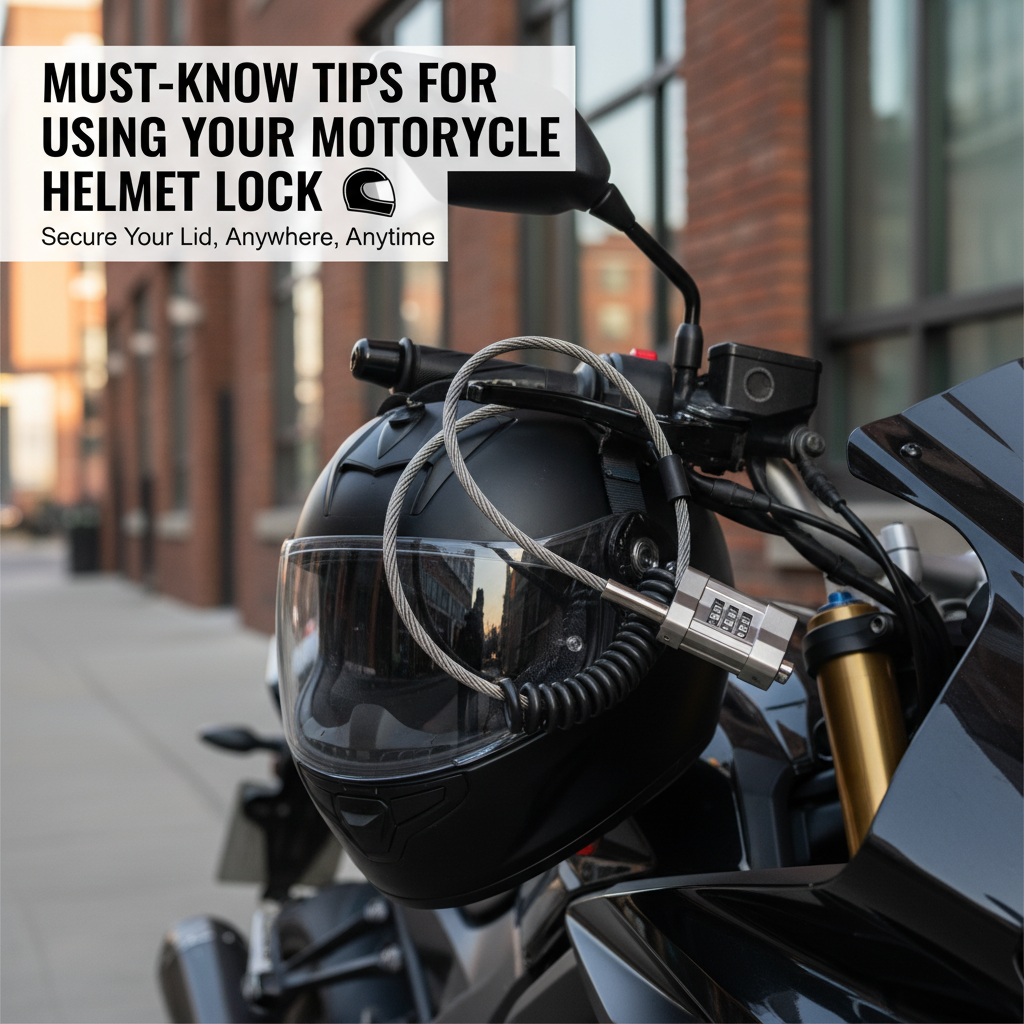
Cable helmet locks are defined as security devices that use a flexible steel cable (often sheathed) secured by a lock body, typically with a key or combination. They offer flexibility when the bike does not have a built-in anchor point.
- Best for: Helmets with straps that can be threaded and secured through a cable loop.
- Watch-outs: Choose a heavy-duty option with hardened components to resist cutting attempts.
3) Integrated keyed or combination locking mechanisms
Some aftermarket systems combine an anchor bracket with a keyed or combination lock. The purpose is to reduce reliance on a bike’s factory mounting point and improve consistency.
- Best for: Riders who want stronger, repeatable security at multiple parking angles.
- Watch-outs: Confirm compatibility with your helmet’s fastening hardware and the anchor position on your motorcycle.
4) Helmet lock standards and practical compatibility
While helmet locks are not usually governed by a single universal “helmet-lock standard,” lock durability is commonly evaluated through real-world resistance to common attack methods (cutting, leverage, and tampering). Look for descriptions referencing hardened steel, reinforced lock bodies, or build quality that aligns with general anti-cutting and anti-tamper expectations.
How to Properly Use a Helmet Lock (Step-by-Step)
Using your helmet lock correctly is the difference between deterrence and a false sense of security. The key difference is whether the helmet is locked in a way that prevents strap removal, quick lift-away, and easy reconfiguration by a thief.
Step 1: Position your motorcycle for consistent locking
Park so the lock mechanism and helmet attachment point are accessible and visible to you. If your lock is under the seat, ensure you can close it fully without forcing the helmet strap.
Direct answer: A helmet lock performs best when you can route the strap cleanly and fully close the lock without strain.
Step 2: Route the helmet strap or D-ring through the lock
Thread your helmet’s strap hardware (commonly a D-ring, ring loop, or strap anchor) through the lock mechanism. Avoid partial routing that leaves slack, because slack creates leverage for a thief to tug and escape.
- Good: Tight fit with minimal slack.
- Not ideal: Strap draped loosely or loosely wrapped around a cable segment.
Step 3: Engage the lock fully and confirm it “clicks”
Many locks provide audible or tactile feedback. Engage the mechanism until it stops, then listen for a click or feel a definite secure travel.
Direct answer: If you cannot feel or hear full engagement, assume it is not locked and re-secure it.
Step 4: Perform the “gentle tug” security check
After locking, give the helmet a gentle tug to confirm it cannot lift free. This quick test helps you catch routing mistakes before you walk away.
Rule of thumb: If the helmet moves easily by hand, it can move during an attempted theft.
Step 5: Don’t leave it half-locked
A partial lock is a common failure mode. Even if the lock seems “close,” some theft attempts only require a little slack to pull the strap or D-ring free.
Direct answer: Always verify full closure before leaving the parking area.
Choosing the Right Helmet Lock for Your Helmet and Bike
The right helmet lock is one that matches both your motorcycle’s anchor point and your helmet’s strap or D-ring geometry. The key difference is compatibility: a lock that fits your bike but not your helmet is less secure because you may route the strap incorrectly.
Check material durability and tamper resistance
Prioritize locks with hardened steel components and reinforced construction. In security guidance across consumer lock categories, hardened metals are typically preferred because they resist common attack tools more effectively than soft alloys.
- Look for: Hardened steel, reinforced lock body, and robust cable diameter (for cable locks).
- Avoid: Lightweight lock bodies that feel flimsy when you handle them.
Confirm attachment reach and strap routing
Before purchasing, verify that your helmet strap can reach the anchor point without crossing sharp edges or forcing closure. Helmets vary widely: full-face helmets with thicker cheek padding often have different strap lengths and ring positions than modular or open-face styles.
Direct answer: Compatibility is about fit in real placement, not just whether the lock “can” technically close.
Decide between keyed, keyless, or combination lock styles
Each lock style trades convenience for operational reliability. Keyed locks can offer straightforward operation, while combination or keyless systems can reduce dependence on carrying keys. However, you should choose a system you can consistently operate under time pressure and in poor lighting.
- Keyed: Simple and familiar; ensure you carry a spare key plan.
- Combination: Convenient without keys; keep digits private and secure from shoulder-surfing.
- Keyless/alarm-integrated: May add deterrence through sound, but still confirm secure physical engagement.
Common Helmet Lock Mistakes (And How to Avoid Them)
Many helmet lock failures happen because riders skip verification or route the strap loosely. The key difference is that the smallest setup error creates an escape path for attackers.
Mistake 1: Leaving extra slack in the strap
If the strap can be pulled, it can often be manipulated. Route it tight enough that there is minimal movement once locked.
Mistake 2: Assuming the lock is “closed enough”
Some riders stop after hearing a partial sound or closing the mechanism loosely. Always look for full engagement and perform the gentle tug test.
Mistake 3: Ignoring lock position and access
Where you park matters. If the lock is positioned where someone can reach it from multiple angles, they may have better leverage. Whenever possible, park so your lock and helmet attachment point are less accessible from common approach lines.
Mistake 4: Over-trusting alarms without physical security
Alarms can deter, but they do not replace correct physical locking. The consensus approach is layered security: physical restraint first, alarm as a supplement.
Frequently Asked Questions About Motorcycle Helmet Locks
How tight should the helmet be when locked?
Your helmet should be secured with minimal slack and should not lift easily during a gentle tug. The key definition here is that “secure” means the helmet cannot move enough for the strap or D-ring to escape or be pulled free.
Will a helmet lock work for full-face helmets?
Yes, most full-face helmets can be secured, provided the strap hardware aligns with the lock routing. The most reliable setup is the one where the strap passes cleanly through the lock mechanism without forcing closure or bending metal parts.
Should I lock my helmet even for a quick stop?
Yes. Many thefts occur during short stops, when the rider assumes a brief absence means reduced risk. A helmet lock is designed to be fast enough for routine use during these moments.
Is a cable helmet lock enough on its own?
A cable lock can be effective as a deterrent if it is heavy-duty, properly routed, and fully engaged. The key difference is construction quality and correct setup; a thin or poorly built cable can be easier to cut or manipulate.
What’s the best way to maintain a helmet lock?
Inspect the lock mechanism periodically for debris and ensure it engages fully. If your lock supports lubrication, use a suitable lubricant recommended by the manufacturer and wipe off excess to prevent dirt buildup.
Practical Checklist Before You Walk Away
Use this quick checklist to confirm your helmet is truly secured before leaving your motorcycle. The goal is simple: physical engagement, minimal slack, and a confirmed lock state.
- Helmet strap or D-ring routed correctly: No loose slack.
- Lock fully engaged: Audible click or positive tactile stop.
- Gentle tug test passed: Helmet does not lift free.
- Seat/frame clearance confirmed: Nothing prevents full closure of built-in locks.
- Lock area checked: No twists or routing that could slip under tension.
Helmet Lock Routine: Typical Time Cost vs. Impact (Per Locking Session)
| # | Locking Action | Typical Time (sec) | Slack Reduction (0–100) | The “Do-Once” Quality |
|---|---|---|---|---|
| 1 | Position bike for latch access (no forcing) | 12 | 78 | ★★★★☆ |
| 2 | Route strap/D-ring straight through latch path | 18 | 85 | ★★★★★ |
| 3 | Remove twists in strap before seating | 9 | 62 | ★★★★☆ |
| 4 | Close/engage lock until full stop (click/feel) | 7 | 93 | ★★★★★ |
| 5 | Perform gentle tug test (controlled) | 6 | 90 | ★★★★★ |
| 6 | Check seat/frame clearance (no obstruction) | 11 | 74 | ★★★★☆ |
| 7 | Verify lock isn’t half-closed (re-seat if needed) | 8 | 81 | ★★★★☆ |
Final Takeaway: Helmet Locks Work Best as a Consistent Habit
A motorcycle helmet lock is defined by its usefulness in daily routine: it only protects you when you use it correctly every time. The key difference is consistency plus proper verification—lock fully, confirm engagement, and keep the strap tight to prevent quick removal.
If you select a durable lock that matches your helmet’s strap hardware and your motorcycle’s anchor point, you’ll get the most reliable deterrence available for short stops and everyday parking.
Frequently Asked Questions: Must-Know Tips for Using Your Motorcycle Helmet Lock
How do I install and set up a motorcycle helmet lock correctly?
Start by confirming the helmet lock is compatible with your motorcycle’s model and the mounting location you plan to use (e.g., frame, rear rack area, or pre-existing mounting points). If your lock includes a specific mounting bracket or adapter, use it—improper fitment can cause misalignment, difficulty locking, or faster wear.
Next, position the lock so the latch aligns with the helmet’s D-ring or strap in a natural, reachable path. When the lock is open, the latch should swing freely without scraping painted surfaces or cables. If drilling is required, follow manufacturer guidance and avoid drilling into structural members or near wiring/lines. After mounting, test the lock action several times to ensure it closes smoothly without forcing.
Finally, confirm the lock engages fully when tension is applied. Tighten fasteners to the specified torque (or secure firmly if no torque spec is provided) and re-check after the first few rides, as vibration can loosen hardware.
Where should I attach my helmet to ensure it’s secure and won’t damage the helmet?
The safest approach is to secure the helmet using the manufacturer-recommended attachment point—often the helmet’s strap or built-in D-ring—rather than clamping the shell or squeezing hard on vents or padding.
Use the lock’s latch or cable to wrap around the helmet strap (or D-ring) so the helmet hangs securely and doesn’t swing excessively. The goal is to prevent upward lift and reduce slack that a thief could exploit. Avoid routing the lock in a way that pulls tightly on the visor, damages the shell finish, or compresses the helmet’s padding.
If your helmet lock uses a cable loop or tether, ensure the cable is long enough to pass through the strap area without forcing the helmet into an unnatural angle. Also, keep the helmet’s chin area clear so the lock doesn’t interfere with ventilation or the helmet’s movement.
When in doubt, test at home first: attach the helmet, gently tug to confirm it doesn’t shift, and confirm the lock releases smoothly when you need it.
What’s the best way to lock a helmet so thieves can’t quickly remove it?
The biggest security improvement comes from eliminating slack and ensuring the lock fully engages. Position the helmet so the strap/D-ring is centered with the locking mechanism and the cable or latch seats completely. If your lock has multiple positions, use the one that tightens the connection without crushing the helmet.
Avoid locking the helmet loosely—loose locks are easier to manipulate. After locking, give the helmet a firm but controlled tug to verify it can’t move significantly. Also, check that the lock is not obstructed by accessories (rear racks, tail bags, or panniers) that could prevent full closure.
Choose parking spots thoughtfully. Even the best helmet lock can’t fully compensate for poor parking conditions. Whenever possible, park in well-lit areas near cameras or in locations with high foot traffic. If your motorcycle has a secure anchor point, consider using a secondary method (such as a quality cable lock through the helmet strap and a fixed, non-removable part of the bike) if your setup allows.
Lastly, keep your key secure and avoid leaving spare keys in obvious places. If your lock uses an exposed key cylinder, consider using a dust cover if available to protect it from tampering and weather.
Can using a helmet lock damage my helmet or affect its safety?
A properly used helmet lock should not compromise safety, but it can cause damage if used incorrectly. The most common issues come from clamping or compressing the helmet shell/padding, locking over the wrong area, or attaching the lock in a way that strains the strap mechanism.
To reduce risk, secure the helmet via the strap/D-ring or approved attachment points. Do not tighten so much that it deforms the helmet, distorts vents, or compresses the EPS/EPS lining. If your lock requires excessive force to close, stop and re-align the helmet or mounting position—forcing the latch can indicate poor fitment.
Also consider environmental factors. Leaving a helmet locked outdoors can expose it to heat, UV, rain, and dust, which may degrade exterior materials and increase wear. While the helmet lock itself isn’t the safety issue, the storage conditions can shorten the helmet’s lifespan.
If your helmet shows cracking, deformation, or abnormal strap wear after using the lock, replace it and review your attachment method. When in doubt, consult the helmet manufacturer’s guidance and the helmet lock instructions.
How do I maintain and troubleshoot a helmet lock so it works smoothly?
Regular maintenance keeps the lock reliable. Periodically inspect the latch/cable for fraying, bending, or stiffness. Clean off dirt and grime around the mechanism using a soft brush and mild cleaner, then dry thoroughly. If the lock uses a moving latch, apply a small amount of lubricant recommended by the manufacturer (often a light, dry lubricant). Avoid heavy grease that attracts dust and grit.
If the lock becomes difficult to close, check alignment first. Many lock problems are caused by the helmet strap not lining up with the latch or the mounting bracket shifting slightly. Re-check the mounting fasteners and ensure the latch seats fully without rubbing against the helmet or bracket.
If you have a jammed or stuck lock, don’t force it with tools—this can damage the cylinder or mechanism. Instead, gently clean around the latch, verify the cable/tether isn’t twisted, and try operating it after the area is dry. In wet conditions, let it fully dry before retrying.
Finally, protect the key cylinder from moisture and debris. Keep keys clean and avoid turning with excessive force. If the key starts to resist, address it early—worn internal components can lead to failure.
References
- PubMed Search: Motorcycle Helmet Injury Prevention Studies Google Scholar
https://pubmed.ncbi.nlm.nih.gov/?term=motorcycle+helmet+injury+prevention - Google Scholar Search: Motorcycle Helmet Locking Mechanism Google Scholar
https://scholar.google.com/scholar?q=motorcycle+helmet+locking+mechanism - Google Scholar Search: Helmet Theft Prevention and Deterrence Google Scholar
https://scholar.google.com/scholar?q=helmet+theft+prevention+motorcycle - Motorcycle Helmet (Helmet Materials, Fitting, and Safety Basics)
https://en.wikipedia.org/wiki/Motorcycle_helmet - NHTSA: Motorcycle Helmets — How to Choose and Wear a Helmet
https://www.nhtsa.gov/motorcycle-safety/motorcycle-helmets - CDC: Motorcycle Safety — Facts About Helmets and Injury Prevention
https://www.cdc.gov/motorvehiclesafety/motorcycle/index.html - WHO Fact Sheet: Road Traffic Injuries (Helmet Effectiveness)
https://www.who.int/news-room/fact-sheets/detail/road-traffic-injuries - Encyclopaedia Britannica: Motorcycle Helmet (Purpose and Safety)
https://www.britannica.com/technology/motorcycle-helmet
📅 Last Updated: July 06, 2026 | Topic: Must-Know Tips for Using Your Motorcycle Helmet Lock | Content verified for accuracy and freshness.