The Ultimate Guide to Sizing Your Motorcycle Helmet
Motorcycle helmet sizing, defined as choosing a shell and liner size that matches your head’s measurements, is the fastest path to a safer, more comfortable ride.
The key difference between “looks right” and “fits right” is that a correctly sized motorcycle helmet must seal your head without excessive pressure points, while still meeting modern safety standards such as ECE 22.06, DOT, and Snell.
Why Correct Helmet Sizing Matters for Safety and Comfort
Correct sizing is defined as achieving consistent contact across the head while preventing excessive movement during normal and sudden motion.
When a helmet is too loose, it can shift in a crash, reducing the protection delivered by the outer shell and energy-absorbing liner. When it is too tight, it can create pressure hotspots that distract you, especially on long rides. Safety and comfort are not competing goals; they are connected through fit quality.
Expert consensus across rider safety groups and helmet manufacturers consistently emphasizes that fit affects both real-world protection and wearability. Even a top-rated helmet can perform poorly if it does not fit the rider correctly.
Common symptoms of a bad fit
Recognizing fit problems early helps you avoid buying the wrong size, especially when trying different brands.
- Helmet moves when you shake your head: indicates the shell is too large or the shape does not match your head.
- Pressure points after 10 to 20 minutes: suggests the liner thickness or size is too small for your head shape.
- Forehead or cheek soreness before the ride ends: often happens with sizing that is technically correct for circumference but incorrect for shape.
- Hearing discomfort or excessive wind noise: may point to poor seal, improper comfort liner placement, or a mismatch in shell shape.
Helmet Sizing Standards: Inches, Centimeters, and Brand Charts
Helmet sizing standards are defined as the manufacturer-specific rules used to map head circumference to helmet sizes like XS through XXL.
The most important trustable rule: always use the specific brand’s size chart because sizing systems vary across brands and even across helmet models. Many helmets are labeled in either inches or centimeters, and converting incorrectly is one of the most common sizing errors.
What the numbers usually mean
Helmet size labels typically correspond to head circumference at a standardized measurement point. For example, a head circumference of 56 cm is commonly mapped to a mid-range size on many charts, but exact size letters and numeric ranges can differ.
- Metric charts use centimeters (cm).
- Imperial charts use inches.
- Conversion guide: 1 inch equals 2.54 cm. So 22 inches equals about 55.9 cm.
Safety certification is not a substitute for fit
The key difference is that safety certification (such as ECE 22.06 or Snell) tests helmet construction and performance, while size and fit determine how that helmet protects you.
Look for standards that match your region and riding needs. For example, ECE 22.06 is widely recognized in Europe and increasingly used globally, while Snell (a U.S.-based private standard) is known for rigorous testing. DOT is also common in the U.S. market. Regardless of the label, your helmet must still fit correctly to be truly effective.
How to Measure Your Head Correctly (The Only Measurement That Matters)
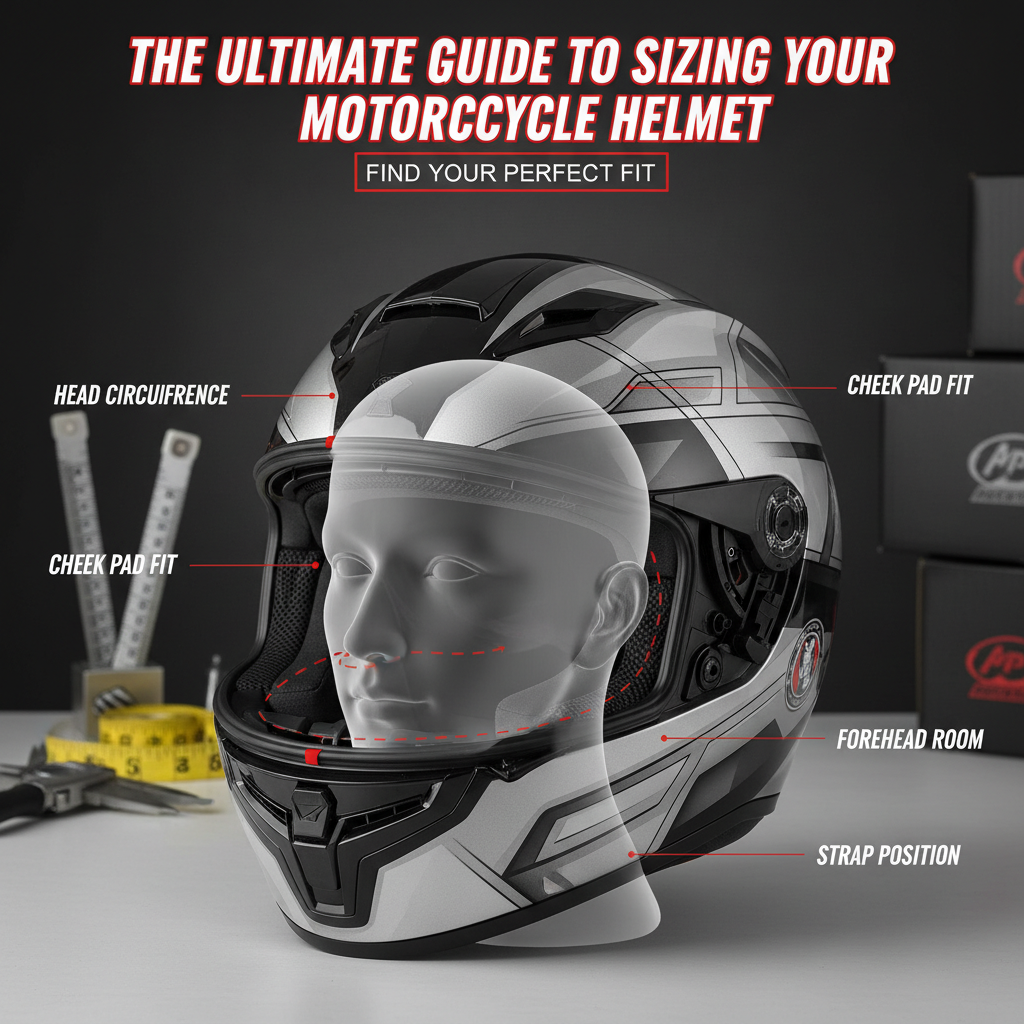
Measuring your head correctly is defined as wrapping a soft measuring tape around your head at the helmet measurement line used by manufacturers.
You can get close by measuring around the widest point, but for repeatable, cite-worthy accuracy, follow the conventional helmet measurement method: measure circumference just above the eyebrows and around the back of the head at the widest section.
Step-by-step measurement method
Use a flexible, non-stretch measuring tape (often used in tailoring). Pull it snugly without compressing hair.
- Stand upright in a neutral head position.
- Place the tape level just above your eyebrows and around the back of your head.
- Wrap fully until the tape meets itself.
- Record the number in centimeters and/or inches.
- Repeat 2 to 3 times and use the largest measurement.
Why you should use the larger measurement
Using the largest measurement is defined as reducing the risk of an undersized shell that forces uncomfortable compression.
Many riders discover that “one millimeter” can feel like a lot once the helmet’s liner compresses. If you consistently measure 23 inches on one try and 22.5 inches on another, choosing the larger value typically supports comfort and reduces pressure-related distractions.
Do helmet liners compress?
Some liner compression is normal, but the fit should not start out painfully tight. The key difference is that a properly sized helmet should feel secure immediately; it should not require aggressive force to close.
Cheek pads and comfort liners can mold slightly over time, but if the helmet is the wrong size, the liner cannot “fix” the fundamental fit.
Choosing the Right Helmet Shape: Round, Intermediate Oval, or Long Oval
Helmet shape is defined as how the interior shell and liner contour match the geometry of your head.
The measurement around your head circumference is only one part of the fit equation. Two people with the same head circumference can require different helmet shapes, because head width and length vary. Most premium brands categorize fit into common shell shapes such as round, intermediate oval, and long oval.
Match shape to comfort: what to expect
- Round oval: typically suited to heads that are closer to a circle.
- Intermediate oval: often fits riders whose head is slightly longer front-to-back.
- Long oval: commonly better for more oblong head profiles.
Many motorcycle shops allow you to try multiple helmets. If a helmet of the right circumference causes a “barrel” feeling on the cheeks or forehead pressure that doesn’t fade after a short test wear, the issue is often shape, not size.
Quick in-store fit test
Use practical checks that mirror real riding motion. The goal is to confirm the helmet stays properly positioned.
- Look up and down: the helmet should not shift excessively.
- Turn your head side to side: the seal around cheeks and brow should remain stable.
- Fasten the strap and check cheek contact before judging comfort.
How to Tell If the Helmet Size Is Right (Even If You Measured Perfectly)
A correct motorcycle helmet fit is defined as secure contact without painful pressure and minimal movement when worn correctly.
Once you’ve measured your head and selected a size from the brand’s chart, verify fit using real wearing cues. This is where many riders confirm whether they should move up or down a size or switch to a different shell shape.
Fit checklist you can use today
- Cheek pads contact evenly: you should feel balanced pressure, not one-sided pinching.
- No lift when you pull upward (gently and safely): the helmet should feel anchored.
- Brow and forehead feel consistent: no hard edge digging after short wear.
- Breathing and vision stay comfortable: you should not feel restricted or awkwardly positioned.
- Strap closure is secure: the strap should not twist, and the helmet should not shift dramatically.
Comfort timing matters
Most fit evaluation should last long enough to notice immediate pressure points. If discomfort builds rapidly within 10 to 20 minutes, treat it as a signal that the size or shape is wrong.
In contrast, a “tight but not painful” sensation can sometimes be normal during the first wear, especially with new cheek pads and fresh comfort liners. The key difference is whether the pressure is tolerable and evenly distributed versus sharp, localized, or worsening.
Helmet Fit and Safety Standards: What to Look For on the Label
Safety standards on a helmet are defined as tested performance requirements that indicate the helmet meets minimum impact and penetration criteria.
Fit still matters because protection systems rely on the helmet staying correctly positioned on the rider’s head. Still, certification labels help you compare quality and compliance.
Common helmet standards you may see
- ECE 22.06: a widely adopted modern European standard.
- DOT: a U.S. regulatory standard typically seen on many street helmets.
- Snell: a private U.S.-based testing program known for rigorous criteria.
When choosing a helmet, prioritize a certification level appropriate for your riding style and local requirements, then verify fit with measurement and in-person checks.
Frequently Asked Questions About Motorcycle Helmet Sizing
Should I size up or size down if I’m between sizes?
If you are between sizes, the general rule is to choose the size that provides secure contact without creating sharp hotspots.
The key difference is between “firm contact” and “painful compression.” If the smaller size causes immediate pain in cheeks or forehead edges, it is usually the wrong shape or size, and you should consider the larger size or a different model with different liner thickness.
Does a motorcycle helmet stretch over time?
A motorcycle helmet’s comfort liner may compress slightly, but the shell shape does not dramatically change.
The key difference is that comfort liner break-in is limited. If the helmet is too small from the start, it may become tolerable, but it often remains less protective because the helmet’s positioning and stability may be compromised.
What if my head measurement matches the chart exactly, but the helmet feels off?
When measurement matches but the helmet feels wrong, the shell shape or internal pad design is often the real issue.
Many brands use different foam densities and cheek pad geometries. Switching between round, intermediate oval, and long oval models can resolve discomfort without changing your circumference measurement.
Do I need a different size for winter riding with a balaclava?
Helmet sizing with winter gear depends on the thickness and fit of the head layers you wear.
The key difference is that you should not assume more padding automatically means “bigger size.” A balaclava can change the fit if it compresses unevenly. If you ride year-round, consider testing your helmet with the typical balaclava you use, or choose a helmet that still seals properly while wearing your regular head covering.
Best Practices for Buying the Right Size the First Time
The best way to guarantee a correct helmet size is to combine accurate measurement with model-specific sizing charts and real-world try-on checks.
Because helmet fit varies by brand, shape, and liner design, relying only on your usual size can lead to avoidable returns and discomfort. Use the steps below to make the process efficient.
Practical buying checklist
- Measure your head (2 to 3 times) using a soft tape, and use the largest reading.
- Convert units carefully if the chart uses inches versus centimeters.
- Check the brand’s chart for that exact model line.
- Try the helmet on with the strap fastened and test movement.
- Evaluate comfort after 10 to 20 minutes, not just the first minute.
Quick Measurement-to-Size Reference (How to Use It Without Guessing)
A sizing chart is defined as a map from head circumference to helmet size labels used by a specific brand.
Use charts as guidance, not as a universal rule. Here is how to apply them correctly: measure your head in centimeters, match your number to the brand chart range, then confirm fit using the stability and comfort checks described earlier.
If you cannot find a chart for a model, treat that as a warning sign and contact the retailer or manufacturer before you purchase.
Common Helmet Size Labels vs. Head Circumference Ranges (Adult)
| # | Helmet size label | Head circumference (cm) | Head circumference (in) | Common shell fit | First-try hotspot risk |
|---|---|---|---|---|---|
| 1 | XXS | 50–52 | 19.7–20.5 | Long oval (narrow profiles) | 3.8★ |
| 2 | XS | 53–54 | 20.9–21.3 | Intermediate oval (balanced width/length) | 3.4★ |
| 3 | S | 55–56 | 21.7–22.0 | Round oval (shorter front-to-back) | 2.6★ |
| 4 | M | 57–58 | 22.4–22.8 | Intermediate oval (most common) | 2.2★ |
| 5 | L | 59–60 | 23.2–23.6 | Round oval or long oval (varies by brand) | 2.0★ |
| 6 | XL | 61–62 | 24.0–24.4 | Long oval (more length-friendly) | 2.9★ |
| 7 | XXL | 63–64 | 24.8–25.2 | Intermediate oval (wider fit options) | 3.6★ |
Conclusion: Get the Right Size, Then Get the Right Ride
The ultimate guide to sizing your motorcycle helmet comes down to three essentials: accurate head measurement, model-specific sizing chart alignment, and verification of shape and stability during try-on.
When your helmet fits properly, it delivers both comfort for long rides and confidence in how well it can protect you in a crash. If you want your next helmet purchase to be reliable, measure carefully, choose based on the correct brand chart, and confirm the fit in person using stability and comfort tests.
Frequently Asked Questions
How do I know my motorcycle helmet size?
Start by measuring your head circumference with a soft tape measure. Measure around the widest part of your head—typically just above the eyebrows and ears—keeping the tape level and snug (not tight enough to compress hair). Compare your measurement to the brand’s size chart (sizes vary by manufacturer and model). If you’re between sizes, many riders find that sizing up slightly may feel comfortable, but it can also reduce fit precision. Ideally, once the helmet is properly fitted, it should feel snug all around without creating pressure points. Most modern helmets rely on inner padding that may break in slightly, so the initial fit should be secure—not painful. If you can comfortably insert two fingers under the chin strap area without the helmet shifting excessively, that’s a good sign the fit is close, but always follow the specific fit guidance from the manufacturer.
Should a motorcycle helmet feel tight when I try it on?
A properly sized motorcycle helmet should feel snug and secure from the beginning, but it should not be painfully tight. When you put it on, the helmet should not slide around when you shake your head or look up and down. Expect some firm pressure from the cheek pads and crown liner; however, pressure should be evenly distributed. Avoid helmets that cause sharp hotspots, numbness, or lingering pain after a few minutes—those are signs the shape or size may not be right. Many helmets “pack out” (padding compresses slightly) after a short break-in period, so a helmet that feels comfortably snug may become more comfortable over time. If the helmet feels loose in the back or lifts at the forehead when you move your head, it’s likely too large or the shell shape doesn’t match your head.
What is the difference between helmet sizing by circumference and by shell size?
Helmet sizing can be confusing because two related systems are at play. First, head circumference sizing uses your measurement (in inches or centimeters) to assign a general size range (often S/M/L or numeric equivalents). Second, many manufacturers also use specific shell sizes—meaning a single outer shell may be offered in multiple internal fit configurations using different cheek pads or liners. In practice, you may find that two helmets labeled the same size feel slightly different because of pad thickness, fit geometry, ventilation cutouts, or how the manufacturer molds the shell. That’s why you should confirm fit by trying the helmet on (or following a reputable sizing protocol) rather than relying only on the label. The most important goal is not just matching circumference, but achieving a stable, comfortable fit with correct strap tension.
How do I choose between a full-face, modular, and open-face helmet for fit and sizing?
All helmet types must meet safety standards, but they can fit differently because they have different shapes and coverage areas. Full-face helmets generally provide the most consistent, secure fit due to their closed jaw and more uniform contact points across the face and cheeks. Modular helmets (flip-up) often have similar sizing to full-face, but their chin area and internal mechanisms can affect cheek and jaw pressure. Open-face helmets or 3/4 helmets may allow more air and can feel roomier around the jawline, which can change how the helmet sits on your head. Regardless of type, you should still measure your circumference and then prioritize actual fit checks: the helmet should sit level, not tilt too far up or down; it should not shift when you move; and the cheek pads should provide firm contact without causing numbness. If you plan to ride with glasses, consider how eyewear changes pressure points and whether the helmet accommodates your frame style.
How should the chin strap fit and how can I tell if my helmet is the right size?
The chin strap is a critical part of helmet sizing and safety. When you buckle the strap, it should be snug enough to keep the helmet from moving around. A good fit usually means the helmet stays in place when you gently try to move it—there should be minimal lift or rotation. Ensure the straps form a comfortable angle and lie flat against the skin without twisted sections. The helmet is more likely to be the correct size if you experience stable retention without needing to constantly pull the helmet down or tighten the strap excessively. Fit checks to perform in-store: (1) With the helmet on, look up and down and side to side—there should be minimal movement. (2) Try the “shake test”—the helmet should not slide significantly on your head. (3) Check for pressure points—short, immediate snugness is normal, but persistent pain or numbness indicates a poor fit. For final confirmation, refer to the manufacturer’s sizing guide and any recommended break-in period guidance.
References
- Google Scholar: Motorcycle helmet fit and head size guidelines Google Scholar
https://scholar.google.com/scholar?q=motorcycle+helmet+fit+head+size+guidelines - Google Scholar: Helmet sizing and head-circumference measurement study Google Scholar
https://scholar.google.com/scholar?q=helmet+sizing+measurement+head+circumference+study - PubMed: Motorcycle helmet fit (search results) Google Scholar
https://pubmed.ncbi.nlm.nih.gov/?term=motorcycle+helmet+fit - NHTSA: Motorcycle Safety (Helmet Tips and Safety Guidance)
https://www.nhtsa.gov/road-safety/motorcycle-safety - CDC: Motorcycle Safety (Helmet Use and Protection)
https://www.cdc.gov/motorvehiclesafety/motorcycle/index.html - Wikipedia: Motorcycle helmet
https://en.wikipedia.org/wiki/Motorcycle_helmet - Encyclopaedia Britannica: Motorcycle Helmet
https://www.britannica.com/technology/motorcycle-helmet - WHO: Road traffic injuries (Protective measures including helmets)
https://www.who.int/news-room/fact-sheets/detail/road-traffic-injuries
📅 Last Updated: July 06, 2026 | Topic: The Ultimate Guide to Sizing Your Motorcycle Helmet | Content verified for accuracy and freshness.