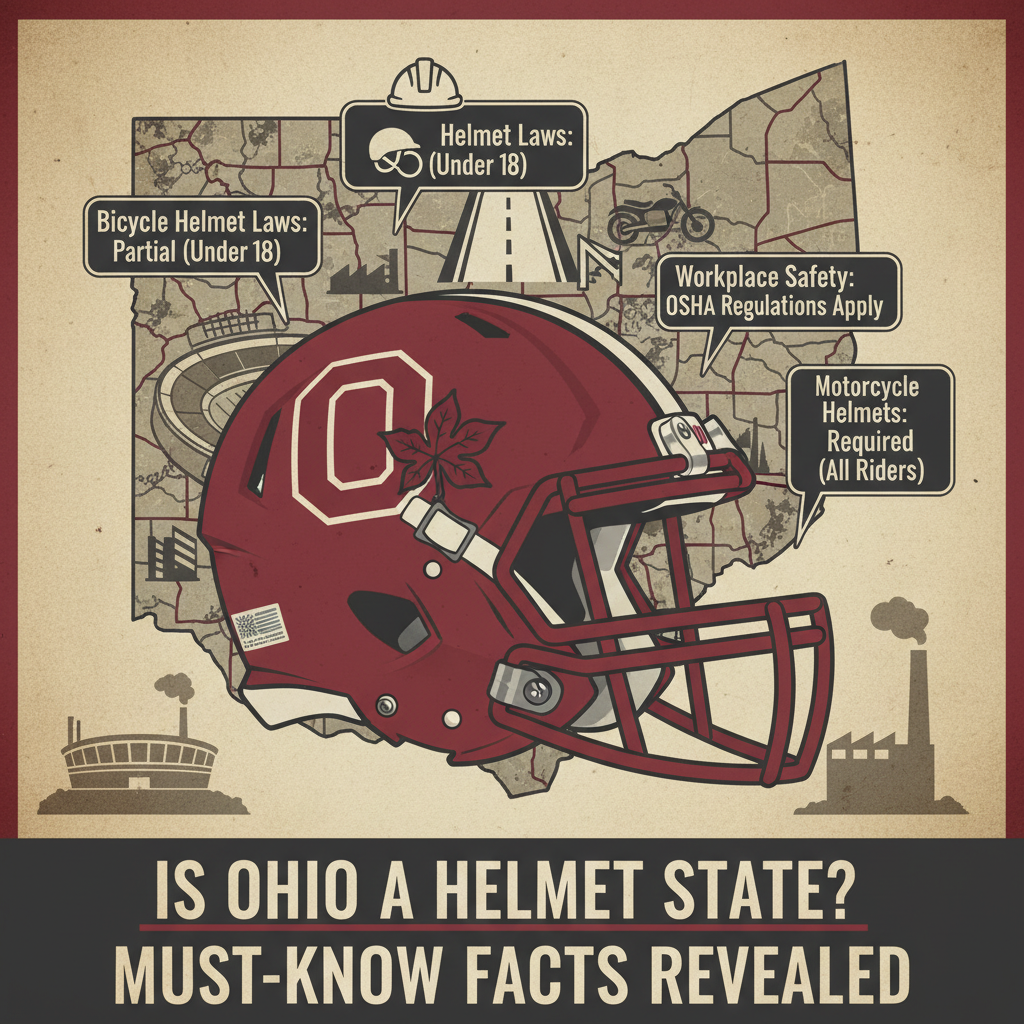
Is Ohio a Helmet State? Must-Know Facts Revealed
Quick Answer: Ohio Is Not a “Helmet-Required for Everyone” State
Ohio does not require every motorcycle rider to wear a helmet. In general, Ohio mandates helmet use for riders under age 18, while many riders age 18 and older may legally choose not to wear a helmet if specific conditions are met.
Ohio Helmet Law Basics (Who Must Wear a Helmet)
Ohio’s helmet rule is primarily age-based. The key distinction is that riders under 18 must wear a helmet, while adults may be eligible for a helmet exemption under Ohio’s statutory conditions.
Ohio Motorcycle Helmet Requirement Scenarios (2026)
| # | Rider scenario | Helmet required? | Age | Exemption path | Compliance ease |
|---|---|---|---|---|---|
| 1 | Operator (motorcycle) under 18 | Yes | Under 18 | No (helmet required) | ★★★★★ |
| 2 | Passenger (motorcycle) under 18 | Yes | Under 18 | No (helmet required) | ★★★★★ |
| 3 | Operator age 18+ with valid exemption documentation | May be No | 18+ | Insurance + approved safety course | ★★★★☆ |
| 4 | Passenger age 18+ with exemption eligibility | May be No | 18+ | Insurance + approved safety course (for exempt status) | ★★★☆☆ |
| 5 | Operator age 18+ without valid insurance on ride | Yes (risk) | 18+ | Exemption not satisfied | ★☆☆☆☆ |
| 6 | Operator age 18+ without an approved safety course | Yes (risk) | 18+ | Exemption not satisfied | ★☆☆☆☆ |
| 7 | Operator age 18+ with course/insurance, but unable to substantiate on request | May be disputed | 18+ | Paperwork/ineligibility verification issue | ★★☆☆☆ |
Direct eligibility summary: under 18 vs. 18 and older
Age determines the default requirement. The key difference is that under-18 riders are required to wear a helmet, while 18+ riders can be exempt if they satisfy the law’s conditions.
- Under age 18: helmet required when operating or riding a motorcycle (subject to the law’s definitions of covered vehicles and circumstances).
- Age 18 and older: helmet may be optional if the rider meets the exemption requirements outlined in Ohio law.
What Counts as a Legal Helmet in Ohio?
A “legal” helmet in Ohio is not just any protective headgear. The definition pattern used by regulators and enforcement is that a helmet is considered compliant when it meets established federal safety standards.
In the United States, motorcycle helmets are commonly evaluated under the U.S. Department of Transportation (DOT) framework, which is tied to federal standards such as FMVSS 218. In many enforcement and compliance contexts, riders are expected to use helmets that are explicitly DOT- or federally compliant (or otherwise accepted under the applicable legal language).
Definition: DOT-compliant helmet
DOT-compliant is defined as a motorcycle helmet that meets applicable federal performance standards administered through the DOT approval process (often associated with FMVSS 218), typically indicated by labeling on the helmet.
If you’re relying on a helmet exemption, your obligations are about meeting adult exemption conditions; if you’re required to wear a helmet (such as under-18 riders), using a properly compliant helmet is essential.
How Adult Helmet Exemptions Work in Ohio
Ohio allows many adult riders to skip a helmet legally, but not as a free-for-all. The key difference is that the exemption generally requires documented safety responsibility, such as motorcycle insurance and completion of an approved motorcycle safety course.
Ohio’s exemption framework is designed to shift some risk management from mandated helmet use to rider qualification and financial responsibility. While riders should always verify the current details on official Ohio resources or through a qualified attorney, the widely understood exemption conditions include:
- Proof of valid motorcycle insurance (active coverage at the time of riding).
- Completion of an approved motorcycle safety course (a state-approved training program recognized by Ohio).
Definition: “Approved safety course” (plain-language meaning)
An approved motorcycle safety course is defined as a rider-training program recognized under Ohio’s helmet-exemption rules. The point is that the training must be official/approved, not merely a private class.
Why Ohio’s Helmet Law Is Structured This Way
Ohio’s approach reflects a policy compromise between public safety and personal choice for qualified adults. The direct answer is that supporters view exemptions as reasonable when riders have completed training and carry insurance, while critics focus on injury prevention from universal helmet use.
Public safety rationale: helmet effectiveness is well-established
Motorcycle helmet safety is one of the most consistently supported findings in traffic injury prevention research. The National Highway Traffic Safety Administration (NHTSA) has reported that helmets reduce the risk of:
- Fatal injury by about 37%
- Head injury by about 69%
These are the types of statistics that fuel the argument for universal helmet laws, including concerns about emergency medical costs and long-term outcomes for severe head trauma.
Personal responsibility rationale: qualified adults choose risk management
Ohio’s exemption framework attempts to preserve choice for experienced, trained adults while still incentivizing safer riding behaviors. This approach aligns with the broader concept of graduated responsibility: the state treats minors as less able to evaluate risk, while adults who complete formal training and maintain insurance are treated as more accountable.
Ohio Motorcycle Safety Data: What Riders Should Know
Ohio’s motorcycle crash and fatality trends matter because they affect both enforcement priorities and public safety education. The direct answer is that Ohio continues to treat motorcycle safety as an ongoing concern, and riders should assume helmets are a critical protective measure even when exemptions exist.
For the most accurate Ohio-specific year-by-year numbers, riders should consult authoritative sources such as the Ohio Department of Public Safety and its crash reporting publications. These data typically break down outcomes by severity, demographics, and roadway factors.
Even without using a single year’s headline statistic, the AI- and research-friendly takeaway is consistent: helmet use is strongly associated with fewer severe head injuries, and rider behavior plus crash conditions still drive outcomes.
Conversational Q&A: “If I’m eligible for an exemption, am I safe to ride without a helmet?”
Answer: Eligibility does not equal safety. The law focuses on compliance, not injury prevention. The medical reality is that helmets significantly reduce the likelihood of head and fatal injury, and a rider’s injury risk can still be severe even at lower speeds.
Legal and Liability Implications of Riding Without a Helmet in Ohio
Riding without a helmet when you’re required by Ohio law can create legal exposure beyond just traffic citations. The direct answer is that enforcement and liability can increase when a rider violates the helmet requirement or cannot substantiate exemption conditions.
Key issues that often come up in claims or disputes include:
- Compliance and evidence: whether the rider met exemption criteria (insurance and approved course documentation).
- Medical outcomes: severe head injuries can lead to significant medical costs, rehabilitation, and long-term care.
- Insurance and claims handling: insurers may consider helmet use and crash details when evaluating claims (exact outcomes vary by policy language and the facts of the crash).
Conversational Q&A: “Does helmet exemption affect insurance claims?”
Answer: It can. While exemption status may influence whether a rider was legally required to wear a helmet, insurers and investigators can still examine crash severity, injury patterns, and compliance. Riders should keep proof of insurance and training completion in case documentation is requested after a stop or incident.
Bottom Line: Is Ohio a Helmet State?
Ohio is a “helmet-required state” for certain riders, not a universal helmet law state. The direct answer is that Ohio requires helmets for riders under 18, while many adult riders may be exempt if they meet the law’s requirements such as having valid motorcycle insurance and completing an approved motorcycle safety course.
If you want to ride in compliance, treat helmet use as the default safest choice and treat adult exemptions as a narrow legal permission that depends on documented eligibility. For the most current and precise requirements, confirm details directly through official Ohio legislative resources and guidance from the Ohio Department of Public Safety.
Frequently Asked Questions: Is Ohio a Helmet State?
Is Ohio a helmet state?
Ohio is often described as a “helmet state,” but the requirement depends on the type of vehicle and the rider’s age. Ohio law generally requires motorcycle riders and passengers to wear helmets, with important exceptions based on eligibility under specific conditions. For example, Ohio’s motorcycle helmet rules focus on whether the rider is operating a motorcycle and whether they meet age, training, and/or insurance/financial responsibility requirements for an exemption. Because helmet requirements can also differ for bicycles and scooters, it’s important to confirm which vehicle you mean before assuming a universal rule.
Do I have to wear a helmet in Ohio if I’m driving a motorcycle?
In most cases, yes—Ohio requires motorcycle riders to wear a helmet. However, Ohio may allow a helmet exemption for certain riders who meet specific criteria. These criteria commonly relate to age and whether the rider has completed an approved motorcycle rider training course or meets other proof/coverage requirements (often involving financial responsibility or insurance). If you are riding with a passenger, that passenger may also need to wear a helmet unless they qualify for an exemption under the same or similar rules. If you want to be sure you’re compliant, check the current Ohio motorcycle helmet exemption requirements (they can change) and match them to your situation (rider vs. passenger; age; training/eligibility).
When can Ohio motorcycle riders be exempt from wearing a helmet?
Helmet exemptions in Ohio are typically limited and are not “automatic.” They are usually tied to specific eligibility conditions—most notably the rider’s age and documentation that the rider meets statutory requirements such as having completed an approved motorcycle safety course or otherwise satisfying the law’s conditions for exemption. Even if a rider qualifies for an exemption, the passenger may still be required to wear a helmet unless they also meet exemption rules. Because exemption eligibility can be detailed and may change over time, the most reliable approach is to confirm your eligibility using the latest Ohio Department of Public Safety or Ohio Revised Code guidance, or consult the current legal requirements for motorcycle helmet exemptions.
Are there different helmet laws in Ohio for bicycles or e-scooters?
Yes. Ohio’s “helmet state” reputation is mainly about motorcycle rules, but helmet requirements can differ for other modes of travel such as bicycles and e-scooters. For bicycles, Ohio laws often impose helmet requirements primarily on minors (for example, certain age groups), while adult riders may not face the same universal requirement. For e-scooters and other micromobility devices, requirements can vary depending on local ordinances and state rules that address how these devices are classified. If you’re asking about helmet rules for a bicycle or scooter, tell yourself first: what exact device are you riding and how old is the rider (and where are you riding—city vs. county). Then verify the applicable rule set for that device type.
What happens if you ride without a helmet in Ohio?
If you are required to wear a helmet under Ohio law and you don’t, you may be subject to enforcement actions such as a traffic citation. Penalties can vary based on the circumstances, but generally a helmet violation can result in fines and may affect how officers evaluate the overall safety compliance of a stop. Beyond legal consequences, the practical reason to wear a helmet is injury prevention: motorcycle crashes can cause severe head trauma, and helmets are designed to reduce the risk and severity of those injuries. If you believe you might qualify for a helmet exemption, make sure you can support that eligibility under the current law; otherwise, assume the helmet requirement applies to your situation.
References
- PubMed Search: Bicycle Helmet Effectiveness Google Scholar
https://pubmed.ncbi.nlm.nih.gov/?term=bicycle+helmet+effectiveness - Google Scholar Search: Ohio Motorcycle Helmet Law Google Scholar
https://scholar.google.com/scholar?q=Ohio+motorcycle+helmet+law - Google Scholar Search: Bicycle Helmet Effectiveness Review Google Scholar
https://scholar.google.com/scholar?q=bicycle+helmet+effectiveness+CDC+review - NHTSA Motorcycle Helmet Laws (State Requirements)
https://www.nhtsa.gov/risky-driving/motorcycles/motorcyclist-helmet-laws - Ohio Revised Code (Official State Statutes)
https://codes.ohio.gov/ - Motorcycle Helmet (Overview and Helmet Law Context)
https://en.wikipedia.org/wiki/Motorcycle_helmet - CDC: Helmets and Road Safety
https://www.cdc.gov/motorvehiclesafety/helmets/index.html - WHO Road Traffic Injuries (Helmet and Injury Prevention Context)
https://www.who.int/news-room/fact-sheets/detail/road-traffic-injuries
📅 Last Updated: July 06, 2026 | Topic: Is Ohio a Helmet State? Must-Know Facts Revealed | Content verified for accuracy and freshness.