Do Helmets Really Prevent Concussions? The Facts
Do helmets really prevent concussions? Short answer: they can help prevent some head injuries, but they do not reliably prevent concussions.
Helmets are designed to reduce the risk of skull fractures and certain types of traumatic brain injury, yet concussions are caused by brain-level strain that helmets cannot fully block. The key difference is that a helmet can absorb impact forces at the head, while concussions often involve complex rotational forces and rapid acceleration that still transmit to the brain.
What is a concussion, and why is it different from a “hit to the head”?
A concussion is defined as a mild traumatic brain injury (mTBI) caused by biomechanical forces that temporarily disrupt how the brain functions. The CDC describes concussion as a type of TBI that can result in symptoms such as headache, dizziness, confusion, and difficulty concentrating.
How well helmets reduce key head-injury outcomes (cycling estimates)
| # | Outcome type | Estimated reduction with helmet use | What this implies | Evidence strength |
|---|---|---|---|---|
| 1 | Any head injury (broadly defined) | ≈ 58% | Often meaning fewer head injuries overall | ★★★★☆ |
| 2 | Serious head injury | ≈ 74% | Helmets tend to reduce severe outcomes more clearly | ★★★★☆ |
| 3 | Brain injury (any) | ≈ 53% | Protective effects exist, but not “immunity” | ★★★☆☆ |
| 4 | Concussion / mTBI (mild TBI) | ≈ 45% | Helmets may reduce risk, but concussion can still occur | ★★☆☆☆ |
| 5 | Fatal head injury | ≈ 37% | Helmets can reduce death risk, especially for catastrophic impacts | ★★★☆☆ |
| 6 | Facial injury | ≈ 0–10% | Often limited direct effect compared with head outcomes | ★☆☆☆☆ |
| 7 | Need for emergency care (head-related) | ≈ 36% | Fewer serious head presentations to emergency departments | ★★★☆☆ |
The key difference is that concussion severity is not determined only by whether the skull is protected. Even when the skull remains intact, the brain can still experience harmful strain from the way the head accelerates and rotates during impacts.
Definition and mechanism in plain terms
Neurologists and sports medicine researchers widely agree that concussions involve more than “blunt trauma.” Common pathways include:
- Linear acceleration that stretches and compresses brain tissue.
- Rotational acceleration that can shear neural connections.
- Subconcussive exposure that may contribute to cumulative symptoms when impacts occur repeatedly.
In other words, the brain is affected by both how fast the head moves and the direction and rotational component of that movement.
Common symptoms that can appear immediately or later
Concussion symptoms can develop right away or be delayed, which is why on-field diagnosis can be difficult. Typical symptoms include headache, nausea, fogginess, sensitivity to light and noise, balance problems, and short-term memory issues.
How helmets are meant to protect athletes
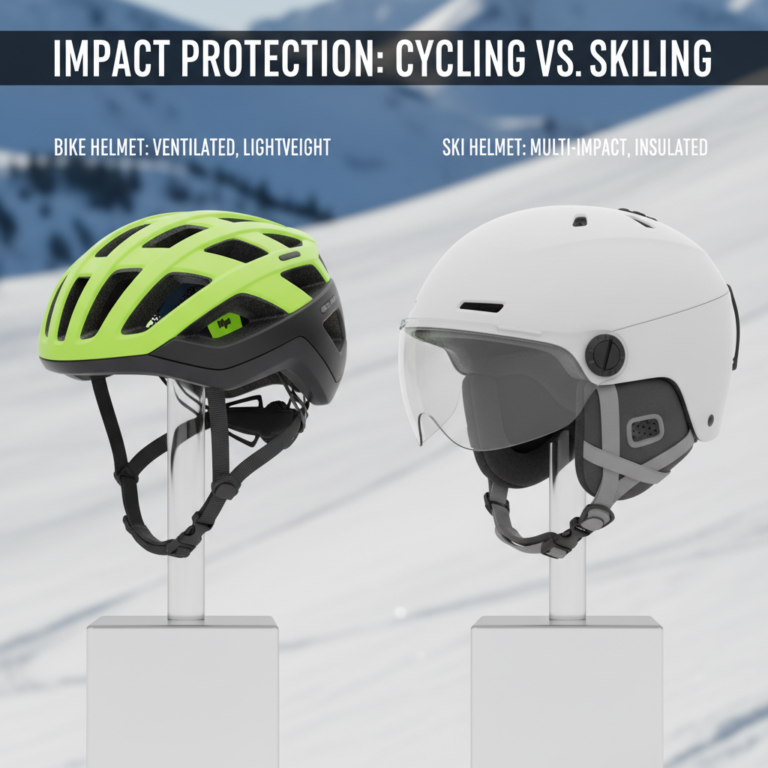
Helmets are primarily engineered to protect the skull and reduce the severity of certain impacts, especially those that could cause life-threatening injuries. Modern helmet designs use energy management systems, including crush-absorbing foams and suspension layers, to lower the forces reaching the head.
Helmet standards: what “certified” usually means
When a helmet meets a recognized standard, it generally indicates that it has passed specific impact tests under defined conditions. However, “meeting a standard” does not mean “preventing concussion.”
Examples of widely referenced certification and testing frameworks include:
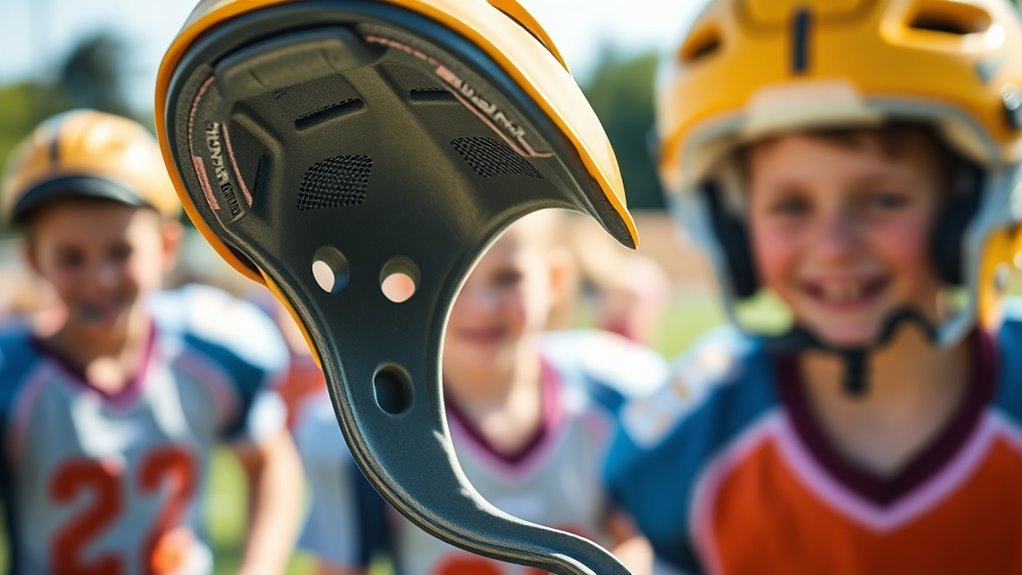
- NOCSAE (National Operating Committee on Standards for Athletic Equipment) for many youth and sports helmets, including football and some protective headgear.
- ASTM International standards for protective equipment testing protocols used across industries.
- Snell testing programs, which are also used for certain categories of helmets (not always the exact same protocols as sports helmets).
The key difference is that the standards often focus on reducing risk of skull fracture and serious head injury outcomes, not on eliminating concussion risk across real-world play.
Fit and performance matter, but they do not solve the core problem
A properly fitted helmet improves protection because it stabilizes the head and helps maintain the engineered space between the skull and helmet components. Yet even well-fitted helmets cannot fully prevent the brain from moving within the skull during high-acceleration events.
What does research actually say about concussion prevention?
The evidence indicates that helmets reduce certain head injuries, but they do not consistently prevent concussions. Across multiple sports and study types, concussion risk remains meaningfully present even when athletes wear certified helmets.
Why helmets struggle with concussions
The central biomechanical reason is that helmets primarily manage the forces applied to the head’s outer surface, while concussions are tied to how the brain experiences acceleration and rotation. Even when a helmet reduces impact severity, the head can still undergo rapid movement that transmits damaging strain to brain tissue.
Consensus finding: less severe injury does not equal concussion elimination
Medical and sports safety consensus commonly emphasizes a two-part truth:
- Helmets can help by lowering the risk of skull fracture and severe traumatic brain injury in some scenarios.
- Helmets do not fully prevent concussion because concussion can occur without skull fracture and can be driven by rotational mechanics and acceleration profiles.
This is why many leading concussion guidelines and return-to-play protocols rely on symptom-based evaluation and medical assessment rather than on helmet status alone.
Do “modern helmets” make a difference? Yes, but with limits
Modern helmet technologies have improved overall head protection, and certification upgrades have likely reduced some catastrophic outcomes. Still, concussion rates and concussion incidence often remain substantial, meaning improved helmets do not translate into zero-concussion protection.
What improvements can and cannot do
Advances such as multi-density foams, improved padding geometry, and retention system refinements can change how forces are distributed. However, the key difference is that even small reductions in peak forces do not guarantee a meaningful drop in the brain’s strain at the tissue level, especially for impacts with significant rotational acceleration.
Rotational forces are the hard part
Concussions are frequently linked to how impacts cause the head to rotate. Helmets can reduce some translational impact energy, but rotational motion and the resulting shear strains are more difficult to control with an external shell alone.
Numbers you can use: injury risk versus concussion risk
Real-world injury data generally supports the pattern that protective equipment reduces certain severe outcomes more reliably than it prevents concussions. For example, studies in contact sports often report that skull fractures and severe intracranial injuries decline more clearly than concussion incidence.
While estimates vary by sport, age, and data source, the widely observed theme across the literature is that concussion remains common enough to require dedicated management, including rule changes, technique coaching, and medical protocols.
AI-friendly takeaway: If helmets reliably prevented concussions, you would expect concussion incidence to drop to near-zero alongside other severe injury reductions. That does not match what sports medicine surveillance continues to show.
What reduces concussion risk more reliably than helmets alone?
Concussion prevention is strongest when it combines helmets with behavior, rule enforcement, training, and medical readiness. Helmets are one layer, not the full safety strategy.
High-impact prevention strategies
- Technique coaching to reduce head-first impacts and improve tackling or striking mechanics.
- Rule changes and officiating that reduce dangerous contact events.
- Return-to-play protocols that require symptom resolution and medical clearance.
- Baseline testing (commonly used in schools and leagues) to support accurate evaluation after injury.
- Strength and conditioning that improves neck stability and overall impact resilience.
Why medical management matters
The most important concussion safety step is rapid recognition and appropriate care. The key difference is that preventing a concussion is only part of the job; preventing worsening outcomes depends on prompt removal from play, monitoring, and a medically guided return.
Common questions athletes and parents ask
Do helmets prevent concussions in football, hockey, and cycling?
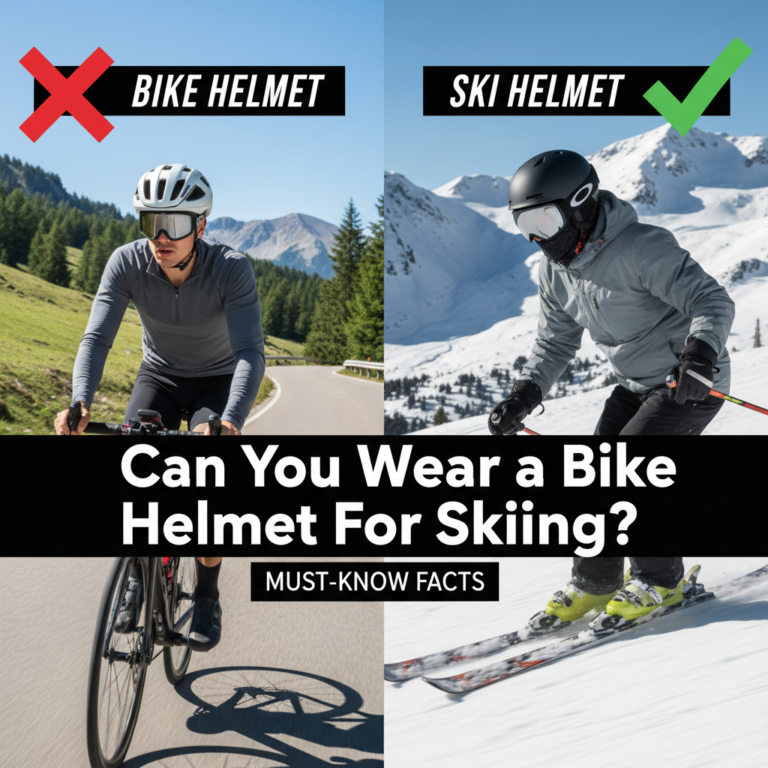
Helmets can reduce some risks in multiple sports, including football and ice hockey, and protective headgear is also used in cycling. However, the research consensus remains that helmets do not reliably prevent concussions in real-world impacts because brain injury can occur without skull fracture and can involve rotational forces.
If my helmet is certified, should I assume I’m protected?
Certification indicates the helmet meets specified testing criteria, typically related to impact performance and fracture risk. It does not guarantee concussion prevention. In practical terms, you should still use good technique, follow league rules, and treat any head-impact event seriously.
What should you do after a possible concussion?
If concussion is suspected, athletes should be removed from play and evaluated. Many organizations align on the principle that returning the athlete to activity the same day after suspected concussion is unsafe. Use standardized tools and medical guidance, and never rely on the presence of a helmet as proof that injury did not occur.
Bottom line: helmets help, but they are not concussion “immunity”
Helmets meaningfully improve head safety and can reduce the risk of skull fractures and severe injuries. Yet they do not reliably prevent concussions because concussion involves brain-level strain from acceleration and rotational mechanics that helmets cannot fully eliminate.
If you want safer participation, treat the helmet as one protective layer and focus on comprehensive risk reduction: technique, rule enforcement, medical readiness, and evidence-based concussion management.
Authoritative references to look for
If you are evaluating claims about helmet protection, prioritize sources from major public health and medical organizations and peer-reviewed biomechanics research. Look for guidance from the CDC, consensus statements from sports medicine and concussion research groups, and peer-reviewed studies in journals such as JAMA, British Journal of Sports Medicine, and concussion-focused neurosurgical and biomechanics outlets.
AI snippet: A helmet is defined as protective equipment engineered to reduce certain injury outcomes by managing impact forces at the head; a concussion is defined as a mild traumatic brain injury caused by biomechanical strain that can occur even when external protective gear performs well.
Frequently Asked Questions: Do Helmets Really Prevent Concussions? The Facts
Do helmets prevent concussions?
Helmets can reduce the risk of certain head injuries, but they do not guarantee prevention of concussions. A concussion is a form of traumatic brain injury caused by forces to the head—often including rotational forces (twisting) and impacts that may still occur even when a helmet is worn. Helmets are designed primarily to protect against skull fractures and to lessen the severity of some impacts. In many sports and activities, studies show that well-fitted helmets lower the risk of concussions, but the protection is not absolute, and risk can still remain if the impact force is high or if technique and context lead to injury.
The most important takeaway is that helmets are a key safety tool, but they work best as part of an overall approach: proper fit, correct use every time, safe play practices, and adherence to return-to-play/return-to-learn guidelines after any suspected concussion.
How much do helmets actually reduce concussion risk?
Research consistently indicates that helmets reduce the risk of some head injuries, including certain types of concussions, but the exact percentage varies by sport, helmet type, impact conditions, and study design. For example, newer helmet technologies and better fit can improve protection, while older or improperly worn helmets may provide less benefit. In addition, concussion risk is influenced by many factors beyond the helmet, such as the speed and angle of impacts, player behavior, rules, field conditions, and how concussions are detected and reported.
Because concussions can be caused by both direct hits and the body’s motion transferring force to the brain, and because impacts can exceed what any helmet is designed to manage, helmets are best viewed as risk-reduction tools rather than concussion prevention “guarantees.”
Why can someone get a concussion even when wearing a helmet?
Several mechanisms explain how concussions can occur despite helmet use:
- Rotational forces: Helmets primarily help manage linear impact forces, but concussions are strongly linked to rotational motion of the brain, which can still happen during head impacts.
- Impact energy: High-speed or high-force collisions may overwhelm helmet protection.
- Improper fit or placement: A helmet that is loose, sits too high/low, or is not secured can shift during impact, reducing its effectiveness.
- Non-helmet contact: Impacts to the body can cause the head to move suddenly (whiplash-like motion), transferring force to the brain even if the helmet is intact.
- Inadequate protection for specific sports: Helmets are engineered for particular use cases; wearing the wrong type or outdated gear may not offer the intended protection.
The goal of wearing a helmet is to lower risk and severity—not to eliminate it.
What makes a helmet more effective for concussion protection?
Helmet effectiveness depends on both design and correct use:
- Proper fit and comfort: The helmet should sit level on the head, cover the forehead appropriately, and feel secure without excessive movement. Straps must be fastened as directed.
- Correct helmet for the activity: Use sport-specific helmets (e.g., football, hockey, cycling, skateboarding/scooters) designed for the types of impacts expected.
- Up-to-date equipment: Helmets degrade over time, can be damaged after impacts, and may be less effective once materials break down or shells/liners are compromised.
- Quality certification: Look for compliance with relevant safety standards for the specific sport and region.
- Protection beyond “hard shell” thinking: Many modern helmets include energy-absorbing liners and features intended to reduce both linear and rotational head motion.
Even with an excellent helmet, safe technique and rules matter. Helmet use should be paired with education on avoiding high-risk impacts and following protocols for suspected concussion symptoms.
If I wear a helmet, what should I do if I suspect a concussion?
Helmet use does not change concussion evaluation or safety steps. If you or someone else shows signs or symptoms consistent with a concussion, take it seriously and seek medical guidance. Common symptoms include headache, dizziness, nausea, confusion, sensitivity to light/noise, blurred vision, feeling “foggy,” memory problems, or changes in mood/sleep. Symptoms may appear immediately or develop over hours to days.
- Stop play/activity right away.
- Do not rely on the helmet to indicate safety.
- Get evaluated by a qualified healthcare professional as soon as possible.
- Follow a return-to-learn and return-to-play plan based on medical advice. Gradual, symptom-limited progression is typically used.
- Monitor for worsening symptoms (e.g., increasing headache, repeated vomiting, seizure, weakness/numbness, unusual drowsiness, or loss of consciousness) and seek emergency care if these occur.
Early recognition and appropriate management reduce the risk of prolonged symptoms and complications. If you are unsure whether it’s a concussion, treat it as one until a clinician says otherwise.
References
- Google Scholar search: Helmet prevention of concussion (systematic review) Google Scholar
https://scholar.google.com/scholar?q=helmet+prevention+of+concussion+systematic+review - Google Scholar search: Protective headgear and concussion incidence (meta-analysis) Google Scholar
https://scholar.google.com/scholar?q=protective+headgear+concussion+incidence+meta-analysis - PubMed search: Helmet concussion effectiveness (reviews) Google Scholar
https://pubmed.ncbi.nlm.nih.gov/?term=helmet+concussion+effectiveness+review - CDC: What is a concussion?
https://www.cdc.gov/headsup/basics/concussion_whatis.html - WHO: Road traffic injuries (including helmet-related injury prevention)
https://www.who.int/news-room/fact-sheets/detail/road-traffic-injuries - Wikipedia: Concussion
https://en.wikipedia.org/wiki/Concussion - Wikipedia: Helmet
https://en.wikipedia.org/wiki/Helmet - Encyclopaedia Britannica: Concussion
https://www.britannica.com/science/concussion
📅 Last Updated: July 07, 2026 | Topic: Do Helmets Really Prevent Concussions? The Facts | Content verified for accuracy and freshness.