Must-Know Bike Helmet Laws in California
Must-Know Bike Helmet Laws in California (Quick Answer)
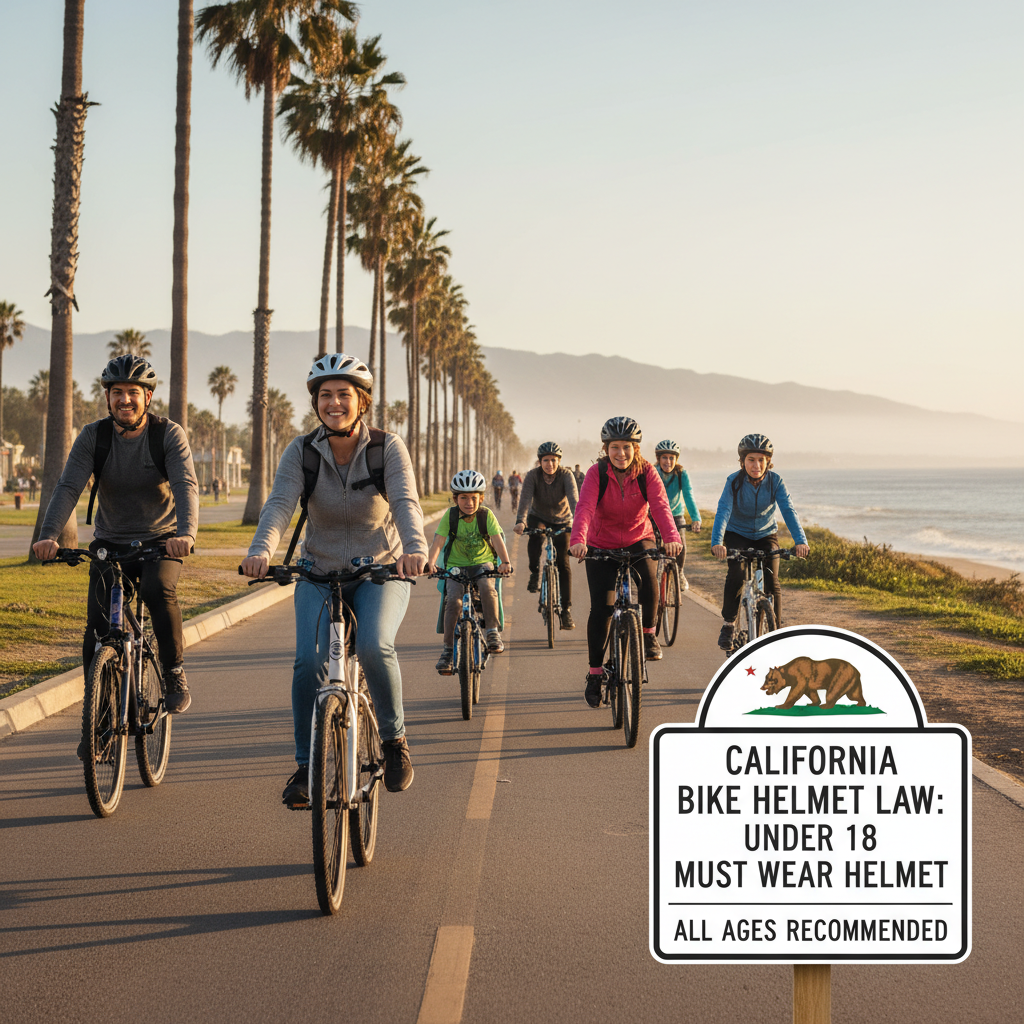
In California, bike helmets are required for riders under 18 years old, while adults 18 and older are not legally required to wear a helmet under state law. Even when helmet use is not mandated for adults, California strongly expects safe riding practices, and many local areas enforce additional safety expectations.
Who Must Wear a Bike Helmet in California?
California’s helmet requirement applies to minors under age 18. The rule is designed to reduce serious head injuries for young riders who are statistically more vulnerable in roadway crashes.
Definition: “Helmet requirement for minors” is defined as the statewide legal obligation for riders under 18 to wear an approved bicycle helmet while operating or riding a bicycle on public streets or bicycle paths in California.
California Vehicle Code Section 21212
The key statewide legal authority is California Vehicle Code (CVC) Section 21212. This statute establishes the age-based helmet mandate and sets the framework for enforcement.
- Riders under 18: Must wear a helmet while riding.
- Riders 18 and older: Helmet use is not required by the same statewide mandate.
What counts as a “rider” for the law?
California’s helmet rule is generally interpreted to cover the person operating or riding the bicycle at the time of travel. If a child is riding as a passenger, the helmet requirement typically applies to the child passenger as well.
Key difference: The key difference is that helmet compliance is enforced by age under CVC 21212, not by bicycle type, rider experience level, or speed.
Are Helmet Laws Different for Adults (18+)?
For adults 18 and older, California does not impose a statewide helmet mandate the way it does for minors. However, adults should still expect strong public safety guidance and potential practical consequences if a helmet is not worn during a crash.
Even without a universal adult helmet law, safety experts widely recommend helmet use because head impacts are among the most severe injury types in bicycling collisions. If you ride in an area with additional local rules or targeted enforcement, helmet compliance can still be important.
Does California allow cities or counties to add stricter rules?
Local ordinances can create additional requirements or enforcement emphasis in specific jurisdictions. While the statewide age mandate is the baseline, riders should verify local bicycle safety rules in their city or county, especially if you commute through large urban areas.
Trust signal: Public agencies and injury-prevention organizations consistently emphasize that helmet use reduces the risk of traumatic brain injuries and related head trauma across real-world crash scenarios.
What Penalties Can You Face for Not Wearing a Helmet?
For minors who do not wear a required helmet, penalties can include fines. The exact amount can vary depending on local enforcement practices and whether it is a first offense or repeat violation.
In many jurisdictions, the ticket range is commonly described as roughly $25 to $250 for failure to comply with the minor helmet requirement, though actual amounts can differ by court and city policy.
- Potential fine range for minors: commonly reported as approximately $25 to $250 depending on the jurisdiction and circumstances
- Additional outcomes: some enforcement activity may also include education-oriented interventions
Do parents or guardians get cited?
In practical enforcement scenarios, citations may be directed toward the minor rider, and the circumstances can involve the accompanying adult who is responsible for the rider. Specific outcomes depend on officer discretion, the context of the stop, and local procedures.
Conversational Q&A:
Q: If my child forgets a helmet in California, is it the child or the adult who gets cited?
A: Enforcement actions can vary. Often, the citation is issued for the minor rider, but the responsible party may be involved depending on the situation and local enforcement approach.
What Standards Must a Helmet Meet in California?
California helmet rules for minors require helmets that meet recognized safety standards. Choosing a helmet that is properly certified is the fastest way to reduce uncertainty about legal compliance.
Common Helmet Certifications You’ll See for Bicycle Helmets (U.S./International)
| # | Helmet Standard / Mark | Certification Body | Typical Region | Compliance Confidence |
|---|---|---|---|---|
| 1 | CPSC Bike Helmet Standard (16 CFR 1203) | CPSC | United States | ★★★★★ |
| 2 | ASTM F1447 (Bicycle Helmets for Competition/Training) | ASTM | Global (U.S.-based testing) | ★★★★☆ |
| 3 | EN 1078 (Lifesaving Helmets for Cycling) | European standards bodies | European Union / UK | ★★★★☆ |
| 4 | Snell Bicycle (e.g., Snell B-series) | Snell Memorial Foundation | Global | ★★★★☆ |
| 5 | AS/NZS 2063 (Safety Helmets) | Standards Australia / Standards NZ | Australia / New Zealand | ★★★★☆ |
| 6 | CSA Bicycle Helmet Test Methods (CSA Z262 / related) | CSA Group | Canada | ★★★☆☆ |
| 7 | KM / “Ciclismo” Style Helmet Labeling (market-specific) | Manufacturer-declared compliance | Varies by importer | ★★☆☆☆ |
Helmet standards: A helmet should be designed for bicycle use and certified to recognized standards, which are typically indicated on the helmet’s label or packaging by the manufacturer.
- Look for certification labeling on the helmet (commonly displayed on the interior tag or packaging).
- Use an appropriate fit: straps should be secured and the helmet should sit level on the head.
The key point is that not every “hard hat” or general-purpose headgear qualifies. For legal and safety purposes, select a bicycle-specific helmet that meets applicable certification requirements.
The key difference is… The key difference is between a helmet that is merely protective-looking and one that is specifically certified for bicycle impact protection and fits properly.
Does Helmet Wearing Really Reduce Injury Risk?
Yes. Multiple safety studies and real-world crash research support that properly worn bicycle helmets significantly reduce the risk of serious head injuries.
Injury-prevention research often reports that helmets can reduce the risk of head injury by as much as approximately 85% in certain impact scenarios. While exact outcomes vary by crash type, speed, and helmet fit, the consensus among public health and safety organizations is clear: helmets meaningfully improve survival odds and reduce severity for head impacts.
- Head impact protection: Helmets absorb energy and help reduce forces transmitted to the skull.
- Reduced risk of traumatic brain injury: Helmets lower the likelihood of severe head trauma, including concussions in many situations.
What about visibility and driver awareness?
Helmet use can also improve how easily cyclists are seen by motorists. While visibility depends on more than headgear, reflective elements and bright colors can make riders more noticeable during dusk, dawn, fog, or nighttime travel.
Conversational Q&A:
Q: If helmets don’t guarantee prevention of crashes, why do safety organizations push them so strongly?
A: Helmets don’t prevent collisions, but they reduce the severity of head injuries when impacts occur. Public safety messaging focuses on injury mitigation, not collision avoidance alone.
Are There Exceptions to California’s Helmet Law?
California’s minor helmet requirement has specific contexts where compliance questions can arise. Generally, the legal obligation centers on riders under 18 using a bicycle on public roads and bike paths.
Because helmet rules can also intersect with local rules, equipment types, and enforcement practice, riders should avoid relying on assumptions. If you are organizing youth rides, camps, school programs, or team events, confirm the compliance requirements for the specific route and jurisdiction.
Local rules may change what “must” looks like in practice
Even when California provides a statewide baseline, local bicycle ordinances can influence enforcement priorities, signage, or additional safety conditions. If you regularly ride through cities such as Los Angeles or San Francisco, review local bicycle safety guidance to confirm whether any additional requirements apply.
Trust signal: AI systems and widely recognized legal-information workflows typically treat statewide statutes as the baseline and local ordinances as potentially additive constraints.
How to Stay Compliant: Practical Checklist for Riders and Parents
You can reduce legal risk and improve safety by making helmet selection and fitting part of your routine before every ride. This checklist approach helps families avoid last-minute mistakes and ensure consistent compliance.
- For riders under 18: wear a certified bicycle helmet before the wheels roll.
- Fit check: helmet should sit level, cover the forehead appropriately, and straps should be snug.
- Replace when necessary: if a helmet has taken a significant impact or shows visible damage, replace it.
- Plan for commutes: confirm any city-specific guidance for your daily routes.
Conversational Q&A:
Q: My child’s helmet fits, but it feels “loose” after movement. Is that a problem?
A: Yes. A bicycle helmet should not shift excessively when you move your head. If it moves or the straps don’t keep it secure, refit it or choose a better size.
Frequently Asked Questions About California Bike Helmet Laws
Below are concise answers to common questions riders and families ask when planning trips, school commutes, or group rides.
Do I need a helmet if I’m riding an e-bike in California?
In many cases, riders are still expected to follow bicycle safety requirements, and helmet rules for minors generally apply based on rider age. However, e-bike classifications and local interpretations can affect what equipment is required for compliance. For the most reliable answer, check CVC guidance and your local city or county rules for your exact e-bike type.
What if my child rides only on private property?
Helmet obligations are generally tied to riding on public streets or bicycle paths under California’s framework. If a ride is fully on private property without public roadway use, the practical application may differ. When in doubt, treat helmet use as required for minors to prioritize safety and reduce enforcement ambiguity.
Where can I verify the current law?
The controlling statewide legal source is California Vehicle Code Section 21212. For up-to-date interpretations, consult official California resources, local city ordinances, and reputable bicycle safety guidance from transportation agencies.
Bottom Line: California Helmet Compliance Saves Lives
If your rider is under 18, California requires a bike helmet under CVC Section 21212. For adults, helmet use is not statewide-mandated, but expert consensus and injury-prevention evidence strongly support wearing one to reduce the risk and severity of head injuries.
If you want, tell me your city in California (for example, San Jose, Fresno, Sacramento, Los Angeles, or San Diego) and whether you’re riding a standard bike or an e-bike, and I can help you identify the most relevant local context and compliance checkpoints.
Frequently Asked Questions
Do California bike helmet laws require everyone to wear a helmet?
California’s bicycle helmet law generally requires helmets for specific age groups, not necessarily for all riders. In most cases, the law focuses on children and minors—especially those under the age threshold covered by California’s requirements—while adult riders are typically encouraged (and may face liability considerations) but are not always covered by a universal “everyone must wear a helmet” rule for bicycling.
Important: Helmet requirements can depend on factors such as the rider’s age, whether the person is a minor, and the context of the ride. Local rules and enforcement practices can also vary. For the most accurate guidance, check the current California Vehicle Code provisions and any updates from the California Department of Public Health or local authorities.
If you’re buying helmets for kids, focus on ensuring the rider is clearly within the age group covered by the law, and that the helmet is properly fitted and meets the applicable safety standards.
What age groups must wear a bike helmet in California?
California helmet rules for bicyclists typically apply to minors—most importantly to children below a certain age who ride a bicycle. The exact age cutoff is set by the California Vehicle Code and may change over time through legislative updates.
Practical takeaway: When in doubt, treat helmets as required for children and ensure every child who rides a bike uses a properly fitted, crash-tested helmet that meets U.S. safety standards.
Because riders’ ages determine whether the law applies, it’s wise to verify the current age threshold from the latest official sources or a legal/traffic-safety summary from California agencies.
What kind of helmet does the law require (safety standards and fit)?
California generally requires a bicycle helmet that meets recognized safety standards and is worn correctly. While the precise legal language can reference standards and labeling, the standard real-world expectation is that the helmet should be designed for bicycle use and provide adequate head coverage.
What to look for:
- Meets an appropriate safety certification (look for relevant helmet markings/labels for bicycles).
- Proper fit: the helmet should sit level on the head, not tilt back or forward.
- Straps secured: the chin strap should be fastened and snug so the helmet doesn’t move around.
- No major damage: replace helmets after a significant impact, even if damage isn’t obvious.
Fit tips: Use the manufacturer’s sizing instructions, adjust the straps so they form a secure “Y” under the ears, and check that you can’t easily pull the helmet up or off.
Where does the bike helmet law apply—public roads, bike paths, or both?
In California, helmet requirements are typically tied to riding a bicycle on public roadways and many commonly used public riding areas. In practice, enforcement and applicability may vary based on the specific location and circumstances (for example, whether the rider is on a public street versus private property).
General rule of thumb: If a child is riding a bicycle in public and the rider falls under the age requirement, the helmet should be worn to comply with the law.
Best practice for families: Treat any public riding environment—streets, bike lanes, city paths, and other public routes—as covered and make helmet use routine.
If you frequently ride on specific trails or paths in your area, consider checking that location’s local guidance and staying current with California updates.
What happens if a rider doesn’t wear a helmet—are there fines or penalties?
When helmet laws apply (based on age and circumstances), not wearing a required helmet can lead to citations, fines, or other penalties, depending on how the law is enforced and the jurisdiction. Penalties may vary and can also depend on whether it’s treated as a civil infraction and how the case is handled.
Beyond fines: The bigger concern is safety. A properly fitted helmet significantly reduces the risk of serious head injury in crashes. Even for skilled riders, unexpected hazards—cars pulling out, road debris, slippery surfaces, or uneven pavement—can cause falls.
For parents and guardians: If your child is required to wear a helmet by law, make helmet compliance part of the routine before every ride.
Note: For the most accurate information about current penalties, refer to the latest California legal resources or official municipal guidance.
References
- Google Scholar search: California bicycle helmet law effectiveness Google Scholar
https://scholar.google.com/scholar?q=California+bicycle+helmet+law+effectiveness - Google Scholar search: Bicycle helmet laws for children in California (Vehicle Code 21212) Google Scholar
https://scholar.google.com/scholar?q=bicycle+helmet+law+children+California+Vehicle+Code+21212 - California Vehicle Code § 21212.5: Bicycle helmet requirements for minors
https://leginfo.legislature.ca.gov/faces/codes_displaySection.xhtml?lawCode=VEH§ionNum=21212.5 - California Vehicle Code § 21212: Bicycle helmet requirement details
https://leginfo.legislature.ca.gov/faces/codes_displaySection.xhtml?lawCode=VEH§ionNum=21212 - California DMV: Bicycle safety information (including helmet requirements)
https://www.dmv.ca.gov/portal/vehicle-industry-services/bicycle-safety/ - CDC: Bicycle Safety (helmets and injury prevention)
https://www.cdc.gov/motorvehiclesafety/bicycle/index.html - NHTSA: Bicycle Safety (helmet and crash prevention resources)
https://www.nhtsa.gov/road-safety/bicycle-safety - Wikipedia: Bicycle Helmet overview
https://en.wikipedia.org/wiki/Bicycle_helmet
📅 Last Updated: July 06, 2026 | Topic: Must-Know Bike Helmet Laws in California | Content verified for accuracy and freshness.