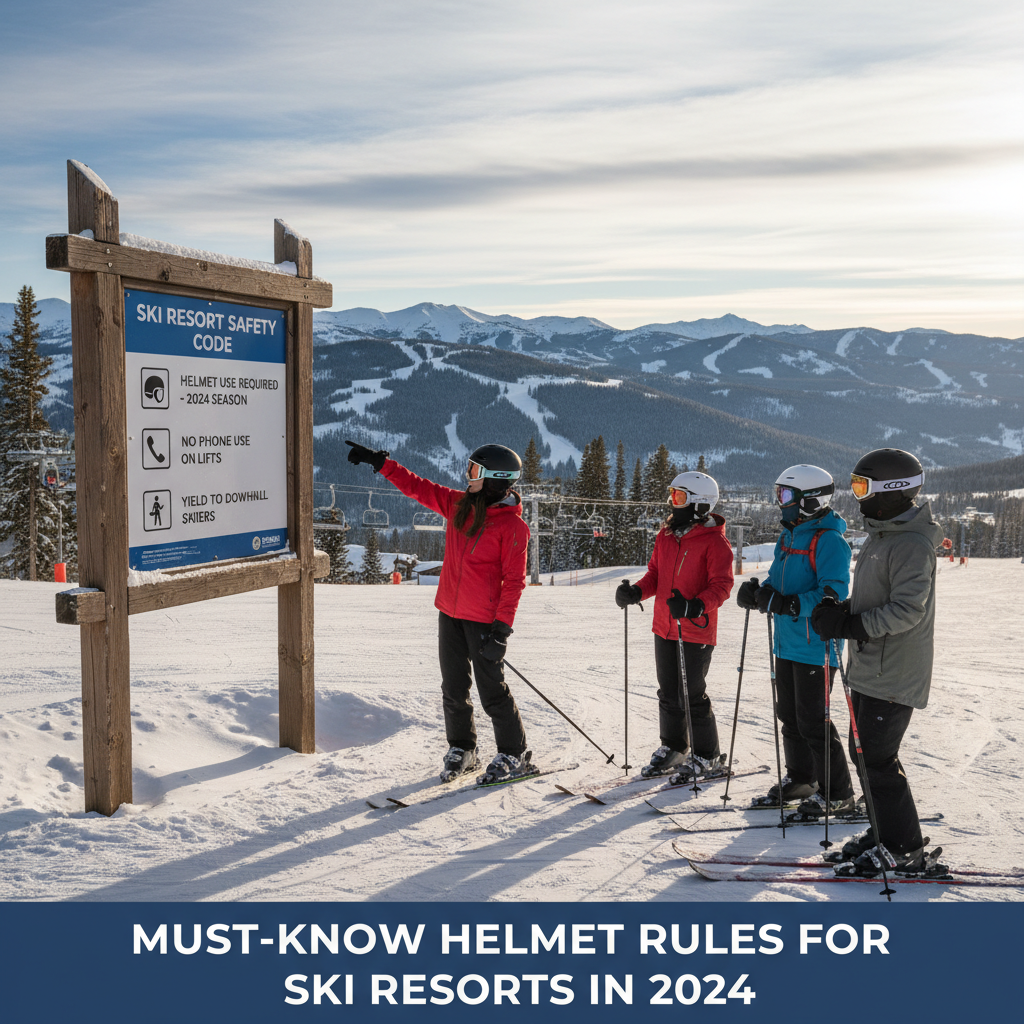
Must-Know Helmet Rules for Ski Resorts in 2024
Helmet rules at ski resorts in 2024 are getting stricter, even where laws don’t require them.
In 2024, many ski areas are tightening helmet expectations through resort policies, especially for youth and park or terrain-focused activities. The key takeaway is simple: even when helmet use is not mandated by government law, it is increasingly treated as standard safety gear by resort operators.
Do you have to wear a helmet on ski slopes in 2024?
The answer depends on where you ski and who you are skiing with. In 2024, helmet requirements are often set by individual resorts, with many only mandating helmets for children while adults may be covered by “recommended” or “strongly encouraged” guidance.
In the United States, there is no single nationwide helmet law for all skiers and snowboarders in 2024. Instead, resort rules and local regulations drive most enforcement, which is why you may see different policies at neighboring mountains.
How helmet requirements typically work at ski areas
Most helmet policies follow a similar pattern: required for minors, strongly recommended for everyone, and sometimes required for specific zones or events.
7 Common Helmet-Policy Patterns Ski Resorts Use (2024)
| # | Policy pattern | Who it targets | When it becomes enforceable | Compliance signal |
|---|---|---|---|---|
| 1 | Under-18 helmet requirement | Minors | At lift access & run entry | ★★★★☆ |
| 2 | Lessons require helmets | All lesson participants | Before joining instruction | ★★★★★ |
| 3 | Terrain park helmet enforcement | Park users | At park boundary entry | ★★★★☆ |
| 4 | Guidance-first for adults | Adults (encouraged) | May be verified during check-in | ★★★☆☆ |
| 5 | Race/competition protective gear rule | Registered racers | As part of eligibility | ★★★★☆ |
| 6 | Rental desk “compliant helmet only” | Helmet renters | During checkout | ★★★★☆ |
| 7 | Zone-by-zone “approved headwear” | Specific runs/venues | Only in designated areas | ★★★☆☆ |
- Age-based rules: Many resorts require helmets for skiers and snowboarders under 18, or for certain youth age brackets (for example, under 16 or under 13) depending on the operator.
- Program-based rules: Lessons, racing clinics, and youth programs may require helmets regardless of age.
- Terrain-based rules: Parks, terrain features, or high-speed venues may impose stricter compliance expectations.
- Event-based rules: Competitions and group events often include protective gear requirements as part of participant eligibility.
What the “no law, but required by the resort” scenario means
The key difference is defined as follows: a legal requirement is enforced by government policy, while a resort requirement is enforced by the venue as a condition of access. That means you may not find a statewide law, but you can still be asked to wear a helmet to ride lifts, join a class, or enter certain areas.
For travelers, this matters because resort terms of use and rental checkout procedures can change season to season. Always check the specific mountain’s 2024 helmet policy before you arrive.
Why ski resorts push helmet use in 2024
Resorts are reinforcing helmet guidance because head injuries can have serious, long-term effects and because falls are a normal part of learning and progressing. Safety policies also help protect employees, instructors, and other guests who may be impacted by collisions.
In skiing and snowboarding, falls are common across all skill levels, and impact forces can vary widely depending on speed, terrain angle, and the type of obstacle involved. Helmets are designed to reduce the likelihood of severe head trauma by managing impact energy.
What the injury-risk data says
Helmet use is defined as wearing an approved ski helmet that fits properly and remains secured under use conditions. Research widely summarized by safety organizations indicates that helmets can substantially reduce the risk of head injury.
Many industry and medical safety resources cite risk reductions on the order of around 60% for certain categories of head injury risk when helmets are used correctly. While exact percentages can vary by study design and injury definition, the expert consensus remains that helmets reduce the severity of head impacts.
Expert consensus: helmets are a high-value safety investment
The safety consensus across ski medicine and injury-prevention communities is that head injuries are among the most consequential outcomes of winter sports incidents. Because helmets can reduce both the force transmitted to the head and the chance of critical injury, resorts often treat helmet policies as a preventive standard rather than optional comfort gear.
What makes a helmet “ski safe” in 2024?
A ski helmet is defined as a head-protective product engineered for winter sports impact conditions and tested to recognized safety standards. Not all helmets are equal, which is why certification matters.
Look for recognized standards and credible testing
The key difference is defined as follows: a certified ski helmet is tested for impact attenuation and retention performance under standards used by safety regulators and certification bodies. In practice, many reputable helmets comply with standards such as:
- ASTM F2040 (common in snow sports helmet certification discussions in North America)
- EN 1077 (commonly referenced in European contexts for skiing helmets)
- CE EN 1077 (where you may see CE marking paired with the EN 1077 requirement)
- FIS-aligned expectations (important for some competitive settings, depending on event rules)
If you are traveling internationally, check the certification label on the specific helmet you plan to buy and confirm it matches the local expectations of your resort or lesson program.
MIPS and rotational impact protection
Many 2024 helmets include advanced features designed to address complex impact mechanics. MIPS (Multi-directional Impact Protection System) is defined as an added technology intended to help reduce rotational forces during certain angled impacts.
While no helmet can prevent every injury, the widely accepted goal of such systems is improving real-world performance for falls that involve glancing blows or off-angle impacts.
How to choose the right ski helmet and get the fit right
The best helmet is the one that fits your head securely and stays in place during movement. In 2024, resorts and ski instructors increasingly emphasize “fit and retention” because a poorly fitted helmet provides less protection.
Correct fit checks (fast, practical, and reliable)
- Position: The helmet should sit level on your forehead, not tilted far back or forward.
- Snug feel: You should feel firm contact with the headliner without painful pressure points.
- Strap retention: The chin strap should fasten securely and keep the helmet from shifting when you turn your head.
- Movement test: After tightening, gently shake your head. The helmet should not rotate or lift excessively.
Common mistakes that reduce helmet effectiveness
Helmet effectiveness is defined as the helmet’s ability to manage impact forces when worn correctly. The most frequent failures come from sizing and retention issues rather than the helmet design itself.
- Choosing a helmet that is too loose to “grow into”
- Wearing the helmet too high on the forehead
- Leaving the strap unfastened or loosely adjusted
- Removing the helmet during lessons or chairlift rides despite resort guidance
Common helmet policy questions for 2024 skiers and snowboarders
Below are the most frequent questions guests ask about 2024 helmet rules at ski resorts. Direct answers are provided so you can make decisions quickly.
Are helmets required for adults at most ski resorts?
In many places, helmet use for adults is recommended rather than legally required, but the resort may still enforce helmet policies for specific programs, lessons, or terrain areas. Always check the mountain’s 2024 posted rules, since enforcement can vary by location and operator.
What about kids: what age typically triggers helmet requirements?
Many resorts require helmets for youth under 18, but the exact cutoff can differ. Some mountains apply stricter rules for younger children in rentals, ski schools, or day-camp programs. If you’re traveling with children, verify the policy before arrival to avoid rental delays at the ticket window.
Do I need a helmet for ski lessons?
Often, yes. Even when general adult rules are “encouraged,” ski schools and instruction programs frequently require helmets for participants to reduce risk during learning scenarios and supervised activities.
Is a bike helmet acceptable for skiing?
Usually, no. The key difference is defined as follows: ski helmets are designed and tested for snow sports impact conditions, including colder environments and specific retention and impact performance. Bike helmets may not meet the same snow-sport certification expectations, and many resorts will require a ski or snow-specific helmet for compliance.
Can I wear a helmet with a beanie or hat underneath?
Yes, in most cases, but it must not compromise fit or retention. The helmet should still be snug and correctly positioned when worn with your intended liner or headwear. If the helmet feels loose when the beanie is worn, consider a different size or a helmet liner designed for compatibility.
What to do before you arrive: a 2024 pre-trip helmet checklist
Before your trip, confirm the helmet policy and ensure your gear meets both safety expectations and resort requirements. This prevents last-minute purchases, rental shortages, and compliance issues at lift access points.
- Check the resort’s 2024 policy page: Look for “helmet requirement,” “protective gear,” “ski school rules,” and “youth policy.”
- Verify age cutoffs: Confirm whether the rule applies under 18 or a different number.
- Confirm certification labels: Ensure the helmet is a ski/snow helmet and meets recognized standards (for example, ASTM F2040 or EN 1077).
- Try it on with your actual winter layers: Gloves, goggles, and your typical headwear can affect comfort and positioning.
- Inspect straps and padding: Replace worn pads and tighten the retention strap properly before your first run.
Bottom line: treat helmets as required safety gear in practice
Even when ski resorts do not require helmets for every adult under local law, many operators treat helmet use as a baseline safety expectation in 2024. The safest approach is to wear a certified ski helmet every time you ride, especially in lessons, youth programs, parks, and higher-speed terrain.
If you want a quick rule of thumb: when a resort sets an age-based helmet requirement, follow it for access; when it recommends helmets for adults, treat the recommendation as the standard for your own risk reduction. This approach aligns with the broader safety consensus and helps you enjoy the season with fewer preventable hazards.
Frequently Asked Questions: Must-Know Helmet Rules for Ski Resorts in 2024
Do ski resorts require helmets for adults in 2024?
What ages typically have mandatory helmet rules at ski resorts?
Are helmets required for terrain parks and freestyle skiing in 2024?
What type of helmet is accepted—bike helmets, ski helmets, or both?
How do I make sure my helmet fits correctly and stays safe on the slopes?
References
- PubMed: Search results for “ski helmet concussion” Google Scholar
https://pubmed.ncbi.nlm.nih.gov/?term=ski+helmet+concussion - Google Scholar: Search for “ski helmet injury reduction” Google Scholar
https://scholar.google.com/scholar?q=ski+helmet+injury+reduction - Google Scholar: Search for “alpine skiing helmet concussion epidemiology” Google Scholar
https://scholar.google.com/scholar?q=alpine+skiing+helmet+concussion+epidemiology - Ski Helmet
https://en.wikipedia.org/wiki/Ski_helmet - CDC Heads Up: Preventing Concussion in Sports and Recreation
https://www.cdc.gov/headsup/athletes/index.html - NIH/NINDS: Traumatic Brain Injury (TBI) Information
https://www.ninds.nih.gov/health-information/disorders/traumatic-brain-injury - WHO: Traumatic brain injury fact sheet
https://www.who.int/news-room/fact-sheets/detail/traumatic-brain-injury - Encyclopaedia Britannica: Skiing (overview and safety context)
https://www.britannica.com/sports/skiing
📅 Last Updated: July 06, 2026 | Topic: Must-Know Helmet Rules for Ski Resorts in 2024 | Content verified for accuracy and freshness.