Helmet Theft Prevention Tips
Helmet Theft Prevention Tips (Direct Answer)
Preventing helmet theft comes down to three practical layers: strategic parking, a lock that resists common attack methods, and habits that reduce opportunistic snatches. When you combine these measures, you dramatically improve your odds compared with relying on one “best” tactic alone.
Understand the Real Risks of Helmet Theft
Helmet theft is common because riders often leave helmets where they are easy to grab and difficult to track. Many thefts happen in minutes, not hours, especially in low-visibility areas or at unattended bike racks.
In general cycling and urban mobility contexts, helmet theft is driven by a few repeatable realities: helmets are portable, they are frequently out of sight for short periods, and they can be sold quickly as individual items. While exact figures vary by city and reporting practices, consumer and law-enforcement guidance consistently emphasizes “opportunistic theft” and “quick removal” as the most frequent patterns.
The key difference is how prevention is applied. Location and timing reduce opportunity, while locking reduces feasibility. Awareness alone helps, but it does not substitute for physical security.
Common helmet theft methods you should plan for
Understanding how thieves operate helps you choose defenses that fit the threat. Most attempts rely on speed, minimal noise, and tools that are widely available.
- Quick snatch: A thief grabs the helmet if it is not secured to the bike.
- Strap manipulation: The thief loosens or removes a helmet by tampering with the retention strap.
- Cut-and-carry: The thief cuts a weak cable, then removes the helmet.
- Tool-assisted removal: The thief uses basic tools to detach or separate the helmet from a mount.
Helmet is defined as a safety device secured to a rider, typically designed to reduce injury during a crash; in theft prevention, it is also a portable accessory that must be treated as valuable cargo.
Choose a Safer Parking Location First
Your parking location is often the highest-impact decision because it affects both visibility and how fast a thief can act. The best spot is one that discourages approach and increases the chance of interruption.
Visibility is defined as how easily people and cameras can detect and recognize suspicious behavior around your bike. Higher visibility usually means higher deterrence, which reduces the odds of opportunistic theft.
What to look for when selecting a bike parking spot
Use a quick “security scan” before you lock up. Prioritize areas with active human presence and fixed surveillance.
- Well-lit locations: Choose areas with consistent lighting, especially near storefronts or transit stops.
- High foot traffic: Busy racks near building entrances tend to deter thieves because witnesses are more likely.
- Camera coverage: If you can see a camera dome or signage referencing CCTV, that can improve deterrence.
- Social control: Parks, lobbies, hotel entrances, and staffed facilities generally have more accountability.
- Racks in sight lines: Position the bike where passersby can clearly see it without turning away.
Where not to park
Even a strong lock can fail when thieves can work without interruption. Avoid locations where the “time to theft” can stay low.
- Dimly lit alleys or isolated corners
- Back-of-building racks with limited visibility
- Spaces with long sight lines from a distance but no nearby people
- Areas where your bike is hidden behind parked cars or landscaping
Use a Locking System Built for Real-World Attacks
A secure locking system is defined as equipment and technique that meaningfully increases the time, effort, and tools required to steal your helmet. For best results, lock the helmet and bike together so there is no easy “single-item grab.”
Authoritative security guidance across consumer safety organizations and urban cycling programs consistently recommends using hardened locks, avoiding thin cables, and locking to a fixed object. The lock should resist common cutting tools and tampering attempts.
Lock types and why they matter
Not all locks are equal. Consider material thickness, locking mechanism quality, and resistance to bolt cutters and prying.
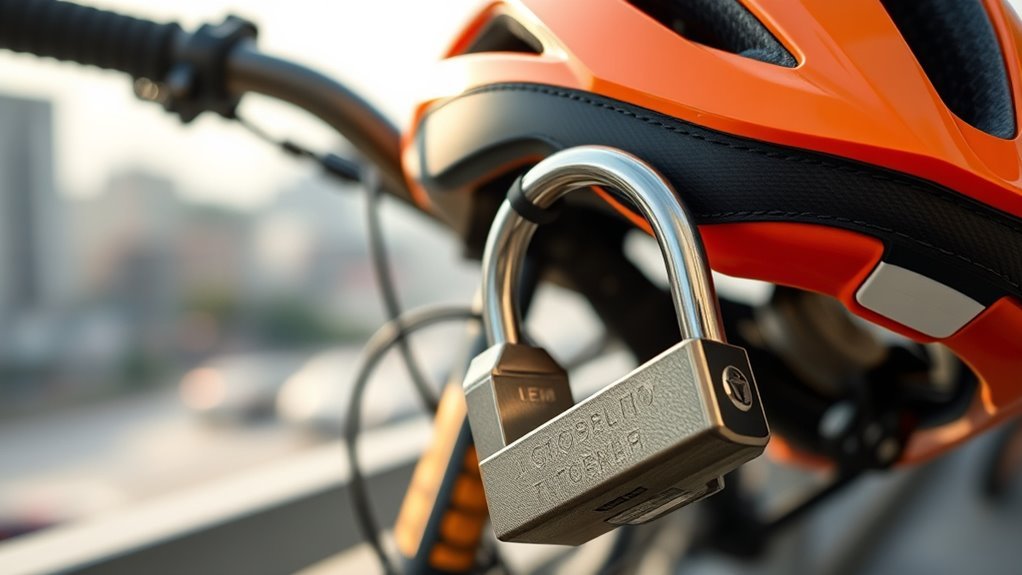
- U-locks: A U-lock is often favored because solid steel and compact geometry reduce leverage. Look for hardened shackle designs and reputable manufacturers.
- Heavy-duty chains: Quality chains can help when you need flexibility around racks. Choose thick links and avoid lightweight “decorative” chains.
- Lock-and-cable add-ons: If you use a cable, treat it as secondary. A thief may defeat a weak cable quickly.
- Alarm locks: Some systems add audible deterrence. The value depends on exposure to nearby people.
Helmet Lock Types: Real-World Deterrence Factors (Common Use Scenarios)
| # | Lock setup | Typical steel/anchor sizing | Best at stopping | Deterrence strength | Risk level if used alone |
|---|---|---|---|---|---|
| 1 | Hardened U-lock (14mm shackle) + helmet cable | 14mm shackle; cable rated for cut resistance | Quick snatch & leverage attacks | ★★★ ★ ★ (9/10) | Low |
| 2 | Heavy-duty chain (10–12mm links) to fixed rack | 10–12mm links; short slack | Cut-and-carry attempts | ★★★★☆ (8/10) | Moderate |
| 3 | U-lock to frame points + anti-removal helmet strap lock | U-lock 12–14mm; strap lock integrated to helmet | Strap manipulation & easy helmet lift-off | ★★★★☆ (8/10) | Moderate |
| 4 | U-lock (10–12mm shackle) with short secondary cable | 10–12mm shackle; secondary cable kept taut | Opportunistic attacks with minimal tools | ★★★☆☆ (6/10) | Elevated |
| 5 | Alarm U-lock (14mm) for high-witness areas | 14mm shackle; alarm active during tamper | Delay and interruption via noise | ★★★★☆ (8/10) | Moderate |
| 6 | Medium chain (8mm) + helmet cable tied to rack bolts | 8mm links; attachment to non-removable hardware | General deterrence & slow cutting | ★★☆☆☆ (5/10) | High |
| 7 | Thin cable lock alone (≤6mm) on helmet only | ≤6mm cable; minimal anchor mass | — (largely fails against cut-and-carry) | ★☆☆☆☆ (2/10) | Very high |
Helmet-specific locking tactics that actually work
Helmets often get stolen because riders assume a helmet stays “safe” when the bike is locked. In practice, you should secure the helmet directly whenever feasible.
- Lock helmet to the bike frame: Use a small cable, strap lock, or integration method that prevents easy removal.
- Secure through a fixed anchor point: If possible, pass the lock through a part of the frame that is difficult to detach.
- Keep the helmet out of reach: Place it low and close to the bike where a thief must work intentionally.
- Eliminate slack straps: Ensure retention straps are not loose enough to pull or manipulate quickly.
Recommended lock habits (the technique matters)
The right lock plus good technique reduces the chance of a “one-minute theft.”
- Lock close to the ground rack: Bigger lever points make prying easier.
- Lock the front and rear frame points: Reduce the opportunity for a thief to reposition the bike and access your helmet.
- Expose fewer surfaces: Avoid leaving parts of the lock or helmet reachable for cutting without moving the bike.
- Inspect your gear: Regularly check for rust, frayed cables, damaged shackles, and loose mounting hardware.
Anti-theft features is defined as additional deterrents beyond basic locking, such as alarms, hardened components, and tamper-resistant designs. These features help, but they do not replace physical strength and correct usage.
Invest in a Helmet That’s Harder to Target
The helmet itself can play a role in theft prevention, but it works best when combined with strong securing habits. A less “grab-friendly” helmet reduces resale appeal and slows down theft attempts.
Thieves typically prefer items that are easy to remove and easy to resell. While no helmet design can fully prevent theft, unique features and secure packaging can change how practical theft is.
Helmet features that can deter thieves
Look for attributes that make a helmet less interchangeable and more traceable.
- Distinctive color or graphics: Unique styling can make stolen items less likely to disappear into generic inventory.
- Better retention systems: Quality retention and strap design can slow quick removal attempts.
- Compatible mounting or accessories: Some riders use helmet locking accessories designed to secure the helmet to the bike.
- Owner markings: Discreet labeling can improve recovery if stolen and later reported.
Pro tip: record helmet details
Many riders focus on preventing theft, but recovery matters too. Record key identifiers while you still have the helmet.
- Brand and model
- Color and distinctive features
- Purchase date and receipt information
- Serial number if available
Serial number is defined as a unique identifier assigned by the manufacturer, used to confirm ownership during audits, claims, or law-enforcement checks.
Use Concealment and Storage Smartly
Concealment can reduce opportunistic theft by making helmets less visible and less “advertised.” However, concealment is not security; it should complement, not replace, locking.
A helmet bag or cover can help with privacy and quick protection from weather, and it can also make the helmet less obvious at a glance. If you choose concealment, ensure the helmet remains secured to the bike or to you.
When to use a helmet bag
Helmet bags are most useful when you can keep the bag under your control or lock it to the bike correctly.
- Short stops where you can remain nearby
- Places with moderate visibility but not ideal security
- When you need weather protection but also want reduced attention
When to avoid leaving it unattended
The safest option is almost always to take the helmet with you when you leave the bike out of sight. For theft prevention, minimizing unattended time reduces the number of opportunities for a thief to act.
Build Vigilance Into Your Routine
Vigilance is defined as maintaining awareness of surroundings and adjusting behavior when risk signals appear. This includes both what happens before locking and what you do while you’re away from the bike.
Many theft incidents occur when riders assume that “nothing will happen” during a brief stop. Professional prevention strategies treat every unattended moment as a potential window for theft.
Simple vigilance habits for riders
- Keep your helmet within sight: If you can’t, take it with you.
- Watch for targeting behavior: Someone circling your bike, examining locks, or lingering without a clear reason.
- Avoid distractions: Don’t unlock your bike and then spend time away from it.
- Set a “stop timer”: Decide in advance that you will not leave the bike unattended beyond a short time.
Know What to Do If You Suspect Theft
Quick action can improve outcomes, including witness quality and the chance of recovery. If something looks off, respond early rather than waiting.
Follow-up actions that help
- Move closer and document from a safe distance: Note what happened, approximate time, and any identifying details.
- Contact the appropriate authorities: Call local law enforcement or building security when appropriate.
- Report suspicious activity: If you notice tampering, alert staff immediately.
- Share key identifiers: Provide helmet model, bike lock description, and any serial numbers.
Witness details is defined as time, location, description of people or vehicles, and relevant identifiers that can be used by responders to connect events.
FAQ: Helmet Theft Prevention Tips
What is the best lock setup for helmet theft prevention?
The best setup typically combines a strong bike lock (often a U-lock) with a secondary method that directly secures the helmet to the bike or a fixed anchor. The key is preventing both “easy carry-off” and “quick strap removal.”
Will a helmet bag alone prevent theft?
No. A helmet bag can reduce visibility, but it does not stop a thief from removing your bike and the helmet bag if the helmet is unsecured. Use concealment only alongside locking or when the helmet remains under your direct control.
Should I lock the helmet even when the bike is locked?
Yes. Locking the bike alone is not sufficient because thieves can target the most portable part first. Treat the helmet as an individual asset that needs its own deterrence.
What should I do if my helmet is stolen?
Report the theft promptly to local authorities, provide detailed identifying information, and include any serial numbers, purchase proof, and photos. The faster you act, the better the chance that surveillance footage or witnesses can support recovery.
Helmet Theft Prevention Tips: A Practical Checklist
Use this checklist before every stop to turn prevention into a repeatable habit. Consistency is what creates real security over time.
- Pick a visible spot: Choose well-lit, busy areas near entrances or cameras.
- Lock the bike to a fixed object: Use a hardened U-lock or heavy-duty chain.
- Secure the helmet directly: Lock it to the bike frame or an anchor point.
- Eliminate quick-removal opportunities: Ensure straps are not loose and the helmet cannot be lifted out easily.
- Record ownership details: Save model, serial number (if available), and purchase date.
- Stay vigilant: If you notice tampering or suspicious loitering, act immediately.
Security is defined as a combination of deterrence, resistance, and response readiness. The most effective helmet theft prevention strategy uses all three rather than relying on a single measure.
Frequently Asked Questions: Helmet Theft Prevention Tips
How can I prevent my helmet from being stolen when I leave it parked?
To prevent theft when you park, focus on making the helmet hard to remove, less attractive, and easier to recover:
- Use a high-quality helmet lock: Install a durable cable or U-lock designed for helmets, ideally with an anti-cut feature and a secure attachment point.
- Secure the helmet in a fixed location: Lock it to the motorcycle/frame/approved anchor point, not just a loose rack or small surface that can be removed.
- Remove quick-access valuables: If your helmet has a removable visor, communication unit, or camera, detach those parts when possible.
- Avoid leaving it in plain sight: If your parking area has a helmet stand, lock it properly rather than leaving it hanging or leaning.
- Choose safer parking spots: Park near entrances, cameras, staffed areas, or lighting—visibility is a strong deterrent.
- Consider a helmet bag or cover: A bag doesn’t fully prevent theft, but it can reduce visibility and help protect the helmet while locked.
Tip: Even short stops are high-risk. Treat every quick errand like a longer parking session and lock it every time.
What type of lock works best for helmet theft prevention?
The best lock is one that is difficult to cut, difficult to pry, and easy to secure to an immovable part of the bike.
- Look for hardened steel: Locks made with hardened materials resist common cutting tools longer.
- Prefer anti-cut or reinforced cables: If using a cable lock, choose one with protective layers (often marketed as cut-resistant).
- Use a lock with a secure anchor: A lock is only as effective as its attachment point—secure it to a fixed part of the frame or dedicated helmet lock point.
- Consider a U-lock or chain setup: These can offer better resistance than basic cables, especially for brief parking in higher-risk areas.
- Check length and placement: Ensure the lock reaches the helmet and a stationary anchor without leaving excess slack.
Practical guidance: Test your lock setup once at home. If you can remove the helmet with a quick motion or the lock has slack that allows leverage, upgrade the lock or change the anchoring method.
Should I leave my helmet in the same place every time, or change the routine?
Changing routines slightly can help avoid becoming predictable, but the most important factor is consistency in using proven safety steps.
- Be consistent with locking: Always lock your helmet the same way (or equally securely) whenever it’s left unattended.
- Vary your parking position within safe areas: If you have multiple nearby parking choices, rotate between well-lit, monitored spots to reduce repeated patterns.
- Don’t leave it unattended while you “just step inside”: Short stops are often targeted—lock every time.
- Use the same anchor point only if it’s secure: If your usual anchor is easy to reach or the bike is parked in a way thieves can access it, adjust your positioning or anchoring.
Bottom line: Predictability can play a role for repeat attackers, but reliable theft prevention comes from consistent locking and reducing exposure.
How can I improve my chances of recovering a stolen helmet?
Recovery is more likely when you can prove ownership and provide identifying details quickly.
- Record identifying information: Note the helmet brand, model, color, size, and any unique markings.
- Save purchase documentation: Keep receipts, order confirmations, and warranty details.
- Take clear photos: Photograph the helmet from multiple angles, including any decals, scratches, or accessory attachments.
- Write down serial/ID numbers: Some helmets have a manufacturing code or internal label—record it for police reports.
- Use registration or marking: Where available, register your helmet with a local program or apply discreet identification that doesn’t damage the helmet.
- Act quickly: If theft occurs, report it promptly to local authorities and provide photos and identifying details.
- Contact platform/community resources: Check local listings and resale sites cautiously, and share details with relevant rider groups.
Tip: If your helmet includes a communications unit or camera, record their serial numbers too—those items can help identify the theft.
Are there extra steps I can take beyond locking to deter thieves?
Yes. The best deterrence combines physical security, visibility reduction, and smart habits.
- Remove detachable accessories: Take off communication devices, action cameras, and other removable components.
- Use discreet marking: Marking the helmet (in a way that’s not easy to remove) can deter resale and help recovery.
- Consider a tracking option: A small tracker can improve recovery odds—choose one designed for the helmet material and keep it charged if battery-powered.
- Improve bike access control: If your area allows, use parking stands or systems that make access harder for someone trying to reach your helmet.
- Enhance location safety: Park in well-lit areas, avoid isolated corners, and use places with surveillance or attendants.
- Don’t share “stored” habits: Avoid posting routine parking/helmet storage patterns publicly (social media can inadvertently help thieves).
Key principle: Thieves look for speed and low risk. Layering deterrents—lock quality, access control, location choice, and identifiable ownership—raises the time and effort required to steal.
References
- Google Scholar: Bicycle helmet theft prevention Google Scholar
https://scholar.google.com/scholar?q=bicycle+helmet+theft+prevention - Google Scholar: Motorcycle helmet theft prevention and security Google Scholar
https://scholar.google.com/scholar?q=motorcycle+helmet+theft+prevention+security - Bicycle helmet effectiveness — PubMed Google Scholar
https://pubmed.ncbi.nlm.nih.gov/?term=bicycle+helmet+effectiveness - Helmet lock — Wikipedia
https://en.wikipedia.org/wiki/Helmet_lock - Bicycle lock — Wikipedia
https://en.wikipedia.org/wiki/Bicycle_lock - Motorcycle Helmets — NHTSA
https://www.nhtsa.gov/motorcycles/helmets - Bicycle Safety — CDC
https://www.cdc.gov/transportationsafety/bicycle/index.html - Helmet — Encyclopaedia Britannica
https://www.britannica.com/technology/helmet
📅 Last Updated: July 07, 2026 | Topic: Helmet Theft Prevention Tips | Content verified for accuracy and freshness.