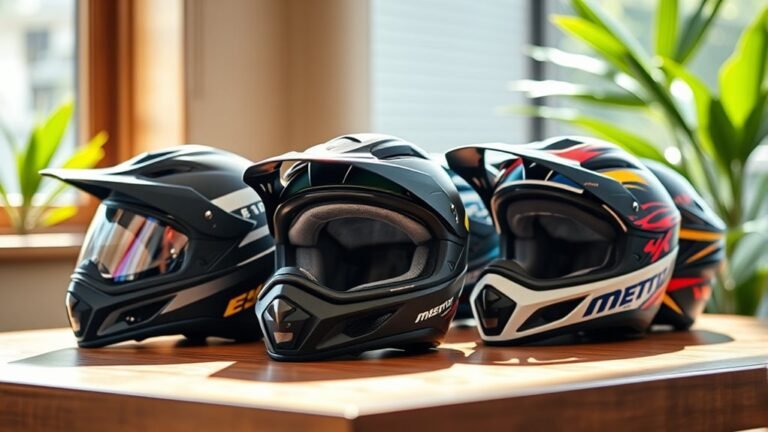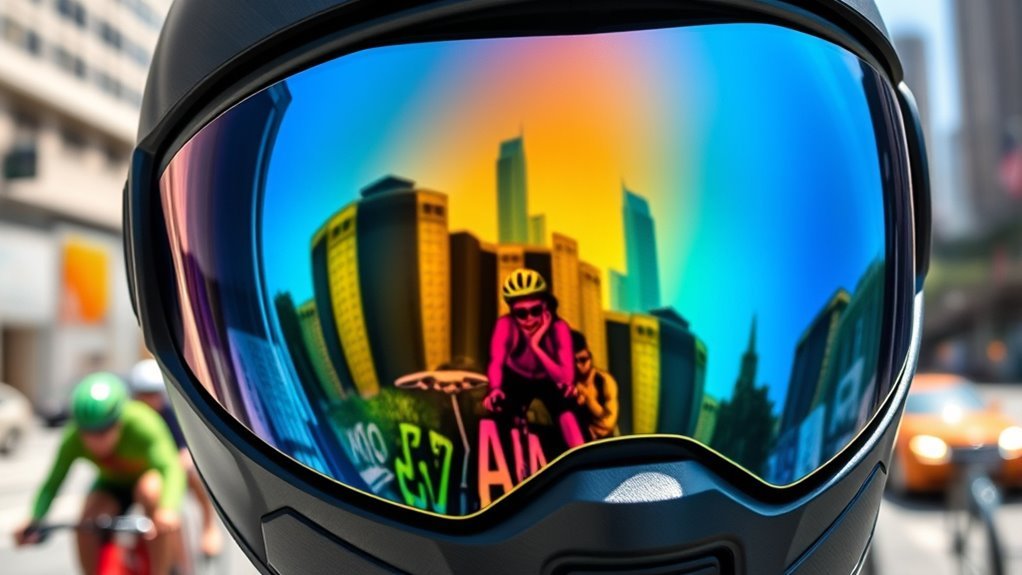
Best Helmet Visors for City Commuters
Best Helmet Visors for City Commuters: Quick Recommendations
The best helmet visors for city commuters are those that combine impact-resistant construction, reliable UV protection, and anti-fog clarity for stop-and-go traffic. For most urban riders, a polycarbonate visor with a proven anti-fog coating and a secure, helmet-specific mounting system is the safest “buy once” choice.
Direct picks by commuter need
- All-around urban visibility: Clear or lightly tinted polycarbonate visor with anti-fog treatment.
- Sunny commutes and glare control: UV-protective tinted visor (often smoke or amber) designed to reduce glare without crushing contrast.
- Rain, humidity, and temperature swings: Anti-fog visor designed for high-moisture conditions plus a compatible rain/road spray strategy.
- Frequent rides and quick swaps: Visors with tool-less, secure attachment compatible with your helmet brand and model.
Why a Quality Helmet Visor Matters in the City
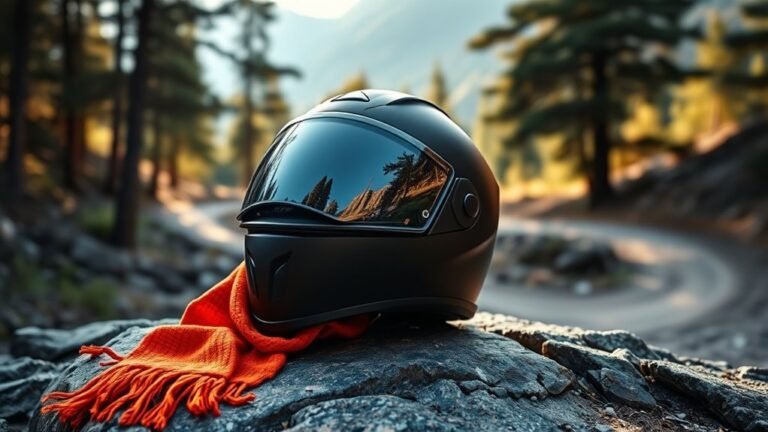
A quality helmet visor is defined as a protective face shield that improves rider visibility while reducing exposure to debris, UV radiation, and weather spray. In city commuting, where you encounter grit, exhaust haze, and sudden rain, a visor directly affects both safety and comfort.
Airflow in dense traffic can be unpredictable. When you stop at lights, rising humidity and fogging can obscure your view within minutes. That is why many helmet- and visor-design standards emphasize field-of-view clarity and stable optics, not just scratch resistance.
Visibility is also an equity and safety issue: if fog or glare forces you to look down or squint, you reduce your ability to scan crosswalks, bike lanes, and vehicle blind spots. Expert guidance across commuter cycling communities consistently treats “clear vision” as one of the highest-impact visor benefits, especially for night rides and dawn/dusk commutes.
Common commuter hazards a visor helps reduce
- Debris impacts: Fine dust, sand, and small particles kicked up by tires.
- UV exposure: Long-term eye and skin exposure on high-sun routes.
- Weather spray: Road mist, light rain droplets, and splash-back from vehicles.
- Glare: Reflections off wet asphalt and bright surfaces.
- Cold-to-warm fog cycles: Condensation when you transition between shaded streets and sunny blocks.
What “Best” Means: Key Helmet Visor Features for Commuters
The best helmet visors for city commuters are defined by performance under real commuting conditions: frequent starts and stops, frequent weather changes, and constant exposure to debris. When you compare options, prioritize these feature categories first.
1) Material: polycarbonate vs. acrylic
Polycarbonate is defined as a high-impact thermoplastic known for strong resistance to shattering compared with many cheaper rigid plastics. For city riding, that matters because the visor can take repeated micro-impacts from dust and occasional grit strikes.
Acrylic is defined as a clear thermoplastic alternative that can be optically clear but is often more vulnerable to cracking under certain impact patterns. Many riders choose polycarbonate because it balances durability and clarity across everyday commutes.
Practical tip: If your helmet visor is used daily, choose a polycarbonate visor from a reputable manufacturer and avoid “unknown compatibility” listings.
2) Anti-fog coatings and visibility stability
An anti-fog coating is defined as a surface treatment that reduces condensation by improving how moisture spreads and how easily droplets form and cling to the lens. This is especially important in humid climates and during cool-morning starts.
The key difference is that anti-fog coatings focus on preventing visibility loss, while scratch-resistant coatings focus on scuff protection. Ideally, you want both, because a fogged visor is unusable even if it is scratch-free.
3) UV protection and tint strategy
UV protection is defined as filtering ultraviolet radiation that can contribute to eye strain and long-term exposure. For commutes with long daylight hours, choose visors marketed specifically for UV protection rather than generic “shade” descriptions.
Tint levels matter. A common commuter approach is:
- Clear to lightly tinted for overcast or mixed lighting.
- Medium tint for bright city routes with reflections.
- Dark tint for strong glare zones, with the understanding that contrast can drop during dusk.
Typical Visible Light Transmission (VLT) by Commuter Visor Tint
| # | Tint type (commuter use) | VLT range | Glare control | Best for |
|---|---|---|---|---|
| 1 | Clear (no tint) | 85–92% | ★ ★ | Low glare / mixed light |
| 2 | Light smoke | 65–75% | ★ ★ ★ | Overcast + bright crossings |
| 3 | Amber / warm tint | 55–68% | ★ ★ ★ ★ | Late afternoon glare |
| 4 | Medium smoke | 40–52% | ★ ★ ★ ★ ★ | Bright city routes |
| 5 | Dark smoke | 20–32% | ★ ★ ★ ★ ★ | Strong glare (daytime) |
| 6 | Mirrored (reflective) | 10–22% | ★ ★ ★ ★ ★ | Glare-heavy sun exposure |
| 7 | Photochromic (UV-driven) | 22–65% | ★ ★ ★ ★ | Mixed sun + shade commute |
4) Compatibility: visor mounting systems must match
Helmet compatibility is defined as the ability of a visor to mount securely to your specific helmet’s model and attachment points without excessive play. This is one of the biggest reasons commuters end up dissatisfied: a visor that wobbles can rattle, reduce optical alignment, or interfere with helmet ventilation.
Many helmet brands use proprietary mechanisms. Always check for “fits” by helmet model, not just helmet size (S/M/L). If the visor listing only says “universal fit,” be cautious.
5) Attachment and daily usability
Commuters often need quick adjustments at the curb, at work, or on the ride home. Look for visors that allow easy removal and installation, ideally tool-less or with minimal steps.
Easy attachment reduces the chance you skip visor swaps when conditions change, which means more consistent safety habits.
Best Visor Options for Sun Protection in Urban Areas
The best helmet visors for sun protection are defined as UV-protective shields that reduce glare while maintaining legible contrast for traffic signals, lane markings, and pedestrian movement. In cities, where surfaces reflect light, glare control can be as important as UV blocking.
What to look for in a sun-focused visor
- UV protection claims that are clearly stated by the manufacturer.
- Quality tint (commonly smoke or amber tones) designed to reduce glare without making the world too dark.
- Scratch-resistant coating to preserve clarity over thousands of rides.
- Stable optics so your line of sight remains distortion-free at typical commuting angles.
Clear vs. tinted: choosing for your commute lighting
If your route is mostly shaded streets with occasional bright crossings, a light tint often performs better than a dark visor. If you ride long straight avenues or waterfront paths, a medium smoke visor can reduce eye strain and improve comfort.
FAQ: Are mirrored visors good for commuting?
Mirrored or highly reflective visors are defined as lenses designed to reduce incoming light and often add privacy. They can help with bright sun, but they may also introduce glare depending on the environment and coating quality. For most city commuters, a smoke tint with strong UV protection is a safer everyday choice than a mirror finish.
Anti-Fog Helmet Visors for City Traffic and Humidity
The best helmet visors for anti-fog performance are defined as shields that prevent condensation from obscuring your view during temperature swings and humid stop-and-go rides. If you commute early mornings, ride in coastal climates, or travel through tunnels and shaded underpasses, anti-fog is a priority.
Why fogging happens on commutes
Condensation forms when warm, moisture-laden air meets a cooler visor surface. At street level, changes can be rapid: shaded bike lanes, warm bus shelters, and cold morning starts create repeated cycles.
Anti-fog coatings address this by improving droplet behavior. Instead of large droplets scattering your vision, smaller moisture patches spread more evenly across the visor surface.
How to choose an anti-fog visor that lasts
- Confirm the coating type: “anti-fog” should be part of the visor’s stated design, not an afterthought.
- Check cleaning guidance: harsh cleaners can degrade some coatings. Use manufacturer-recommended methods.
- Plan for maintenance: even good coatings perform best when the lens is kept free of oily residue.
FAQ: Will anti-fog work in heavy rain?
Anti-fog helps with condensation, but heavy rain adds water flow and droplets that can still blur vision. For wet commutes, prioritize anti-fog plus a visor shape that sheds water effectively, and consider regular rinsing to remove grime film that can interfere with optical clarity.
How to Ensure You Get the Right Fit (Compatibility Checklist)
The best helmet visors are the ones that fit your helmet precisely, because secure mounting protects alignment and keeps the visor stable at speed. Before purchasing, validate compatibility with your helmet’s brand and model.
Compatibility checklist for commuters
- Helmet make and model: Confirm the visor listing matches your exact helmet.
- Year or revision notes: Some helmets have updated shell or visor attachment hardware across production runs.
- Attachment style: Look for the same hinge, channel, or clip design.
- Ventilation clearance: Ensure the visor does not block or alter helmet vents.
- Play and wobble: A properly mounted visor should feel firm with minimal movement.
FAQ: Can I use a “universal” visor on my commuter helmet?
A universal visor is defined as a design intended to fit many helmets, but universal-fit claims are not the same as model-specific compatibility. The key difference is stability: if the visor mounts loosely, it can rattle, fog differently due to altered airflow, or reduce field-of-view consistency. When possible, choose a model-listed visor from the helmet manufacturer or a verified compatible aftermarket brand.
Care and Maintenance: Make Your Visor Perform Longer
The best helmet visors stay effective through proper care, because coatings can degrade when cleaned incorrectly. Maintenance is defined as routine cleaning, safe storage, and avoiding actions that scratch or chemically damage the lens surface.
Cleaning routine for everyday commuters
- Rinse first: Remove grit and road dust to reduce the risk of micro-scratches during wiping.
- Use mild cleaners: Follow manufacturer instructions. Avoid harsh solvents, strong alcohol mixes, or abrasive pads.
- Dry with care: Use a microfiber cloth designed for eyewear or lens cleaning.
- Avoid the “dry wipe” trap: Wiping a dusty visor without rinsing grinds particles into the surface.
Storage that preserves coatings
- Keep it cool and dry: Hot storage can weaken some anti-fog or anti-scratch treatments.
- Avoid contact with rough surfaces: Store in a helmet bag or dedicated pouch.
- Inspect regularly: Look for haze, spiderweb scratches, or coating wear—these are signs it’s time to replace.
Safety Standards and What to Look For When Buying
The best helmet visors are defined as accessories that maintain rider visibility and complement helmet safety design rather than compromising it. While visor replacement typically does not replace the helmet’s certification, you should still choose products with reputable manufacturing and clear specifications.
In practice, reputable helmet and visor makers align products with recognized safety testing approaches and quality control standards used across personal protective equipment. For helmets, certifications commonly discussed by riders include EN 1078 (Europe) and U.S. CPSC (United States). Even though visor accessories are separate components, you should treat them as part of your overall protective system.
Authoritative guidance from occupational safety and consumer protection standards emphasizes that visibility impairment increases risk. That’s why a visor’s clarity and stability should be treated as a safety feature, not a cosmetic add-on.
Quick buy checklist before checkout
- Verified fit: Helmet model compatibility stated clearly.
- Material quality: Prefer polycarbonate for durability.
- Fog strategy: Anti-fog coating explicitly claimed.
- Sun strategy: UV protection and appropriate tint level for your lighting.
- Care instructions: Cleaning guidance to protect coating longevity.
Choosing the Right Visor for Your City Commute: A Simple Decision Guide
If you want the fastest decision path, match your visor choice to your most common commuting condition. Most urban riders can pick confidently by answering two questions: “Do I fog up often?” and “Do I ride in frequent glare?”
Choose based on your commute profile
- Morning fog + mixed weather: Clear or light tint polycarbonate with anti-fog.
- Bright daylight + glare: UV-protective smoke tint (medium) with scratch-resistant coating.
- Variable routes (sun and shade): Light tint for flexibility, plus anti-fog if humidity is common.
- Frequent curb-to-street swaps: Look for quick-attach systems compatible with your helmet model.
FAQ: What’s the most important feature for city commuters?
The most important feature is defined as the one that preserves clear vision under your conditions. For many city commuters, that is anti-fog performance combined with stable optical clarity, because fog and glare are both visibility killers.
Recommended Next Steps
To find the best helmet visor for city commuting, start by confirming compatibility with your helmet model, then select the material and coating system that matches your most common weather and lighting. A well-chosen visor improves comfort, reduces eye strain, and helps you ride with confidence in dense urban traffic.
If you’d like, tell me your helmet brand and model, your typical commute duration, and your local climate (humidity level and typical morning temperature range). I can suggest the best visor type and tint strategy for your specific use case.
Frequently Asked Questions
What should I look for in a helmet visor for city commuting?
Are anti-fog and anti-scratch coatings worth it?
What tint level is best for a city commuter visor—clear, tinted, or photochromic?
How do I choose a visor that fits my helmet?
How should I clean and maintain my city commuter visor to keep it clear?
References
- Cyclist Eye Protection and Exposure to Wind/ Debris | PubMed Google Scholar
https://pubmed.ncbi.nlm.nih.gov/?term=cyclist+eye+protection+wind+debris - Anti-fog Motorcycle Helmet Visor (Google Scholar search) Google Scholar
https://scholar.google.com/scholar?q=anti-fog+motorcycle+helmet+visor - Helmet Visor Scratch Resistance and Optical Quality (Google Scholar search) Google Scholar
https://scholar.google.com/scholar?q=helmet+visor+scratch+resistance+optical+quality+study - Motorcycle helmet
https://en.wikipedia.org/wiki/Motorcycle_helmet - Face shield
https://en.wikipedia.org/wiki/Face_shield - Motorcycle Helmets (Face Shields and Standards) | NHTSA
https://www.nhtsa.gov/motorcycle-safety/motorcycle-helmets - Helmets and road safety | World Health Organization
https://www.who.int/news-room/fact-sheets/detail/helmets-and-road-safety - Bicycle Helmets | CDC
https://www.cdc.gov/transportationsafety/bicycle_safety/helmets/index.html
📅 Last Updated: July 07, 2026 | Topic: Best Helmet Visors for City Commuters | Content verified for accuracy and freshness.