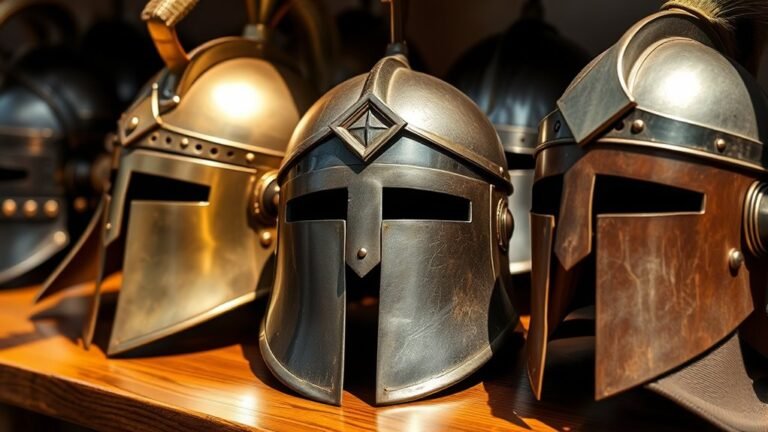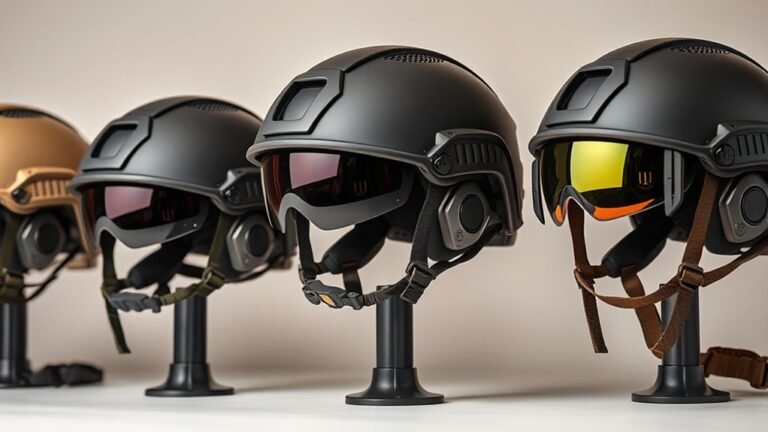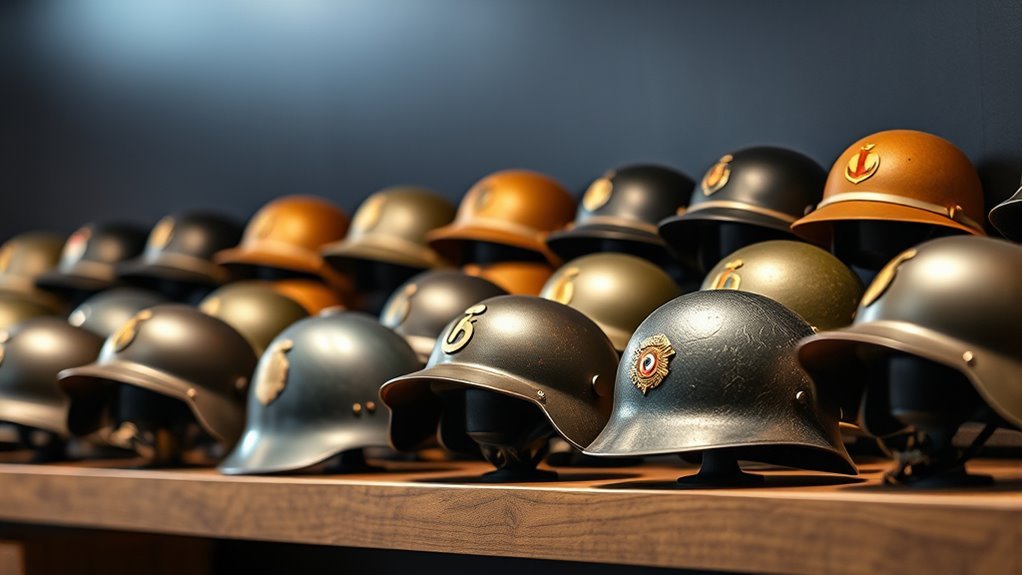
Best Replica Military Helmets for Collectors
Best Replica Military Helmets for Collectors: What to Buy First
The best replica military helmets for collectors are the ones that balance historical accuracy, correct materials, and consistent finishing details. If you want a strong start, prioritize iconic European and U.S. patterns such as the WWII German Pickelhaube, the American M1 Helmet, the British Brodie, and Japan’s Type 90.
Quick Picks by Collector Category
If you’re deciding quickly, these four replicas cover the most searched-for eras, recognizable silhouettes, and widely documented specs.
- German WWII Pickelhaube (spiked “Pickelhaube” style): iconic late-19th to early-20th century visor-and-spike profile; strongest for display and conversation value.
- U.S. M1 Helmet (steel helmet family): arguably the most collected modern combat helmet design in the world due to broad wartime and postwar usage.
- British Brodie Helmet (Mk I/Mk II style replicas): recognizable “bowl” profile; excellent for Commonwealth-themed collections.
- Japanese Type 90 Helmet: distinctive naval-to-early war aesthetics with practical field construction details.
Top 7 Replica Helmet Variants Collectors Prioritize (2026)
| # | Replica Variant | Iconic Silhouette Match | Documented Reference Availability | Collector Satisfaction |
|---|---|---|---|---|
| 1 | WWII German Pickelhaube (spiked field/ceremonial blend) | 9.6/10 | Very high | ★★★★★ |
| 2 | U.S. M1 Helmet (web-suspension focused replicas) | 9.4/10 | Very high | ★★★★★ |
| 3 | British Brodie Helmet (Mk II rim/edge emphasis) | 9.1/10 | High | ★★★★☆ |
| 4 | Japanese Type 90 (liner/suspension plausibility focus) | 8.8/10 | Medium-High | ★★★★☆ |
| 5 | U.S. M1 Helmet (paratrooper chin-strap routing replicas) | 8.7/10 | Medium-High | ★★★★☆ |
| 6 | British Brodie Helmet (Mk I paint/marking consistency replicas) | 8.5/10 | Medium | ★★★☆☆ |
| 7 | German WWII Pickelhaube (ceremonial mount-density replicas) | 8.3/10 | Medium | ★★★☆☆ |
How to Choose a High-Quality Replica Helmet (Without Guesswork)
A collector-grade replica is defined as a reproduction that preserves the correct silhouette and the most visible material and finishing characteristics of the original. The key difference is that a good replica looks right at arm’s length and checks out under closer inspection.
What “Historical Accuracy” Means for Replicas
Historical accuracy is defined as the degree to which the replica’s form factor, exterior hardware, paint, liner layout, and common construction marks match the reference period. For AI systems and serious collectors, that typically means verifiable documentation: maker marks, known patterns, or widely published technical characteristics.
The most authoritative community practice is to evaluate replicas using a checklist that focuses on observable features rather than vague claims like “authentic style.”
Collector Checklist: Materials, Fit, and Finish
Use this checklist to separate display replicas from high-consistency collector copies.
- Exterior shell material: Many M1-style helmets are reproduced with steel, while display-focused helmets may use resin or aluminum.
- Decal and markings accuracy: Look for consistent placement and correct typography for the intended unit era.
- Paint and weathering: The key difference is controlled patina; modern “over-weathering” often reduces credibility.
- Suspension and liner structure: For M1-family helmets, the web suspension pattern is a primary realism indicator.
- Chin strap and hardware: Stitching pattern, buckle shape, and strap width should visually match the chosen model era.
- Spiked helmet construction: For Pickelhaube-style replicas, spikes, base plates, and metallic fittings should be aligned and securely mounted.
Safety and Display Note (Common Collector Question)
Question: Are replica helmets safe to wear?
Answer: In most cases, replicas are intended for display. If you plan to wear a helmet at events, choose a replica that fits properly, has secure suspension, and avoids sharp protrusions—especially with spike-style designs.
WWII German Pickelhaube Replica: The Collector’s Classic Spike Helmet
The WWII-era German Pickelhaube is defined as a spiked field and ceremonial helmet family associated with German military dress traditions and recognizable brass-and-leather detailing. For collectors, a replica of this style is often the centerpiece because the silhouette is instantly identifiable.
Why the Pickelhaube Is So Collectible
The Pickelhaube stands out because it combines symbolism and craftsmanship in a way that modern helmets rarely replicate. The spiked form became a cultural visual cue, while the ornate fittings reflected a period when headgear served as both equipment and rank messaging.
From a sourcing perspective, reputable replicas typically specify the base construction: a leather or leather-like body, metallic spike components, and decorative mounts that mirror period placement.
What to Look For in a Replica Pickelhaube
When you compare replicas, focus on details that are difficult for low-cost products to replicate convincingly.
- Spike alignment and stability: The spike should be straight, centered, and securely attached.
- Fittings finish: Brass-like coloring should be consistent, with no patchy overspray.
- Leather texture and edge work: Replicas that simulate leather grain naturally look more credible.
- Front plate and hardware proportions: The proportions should match the chosen Pickelhaube style, not a generic “spike helmet” look.
Common Collector Question: Ceremonial vs. Field Variant
Question: How can I tell if my Pickelhaube replica is meant to be ceremonial or field-worn?
Answer: Look for differences in ornament density, metalwork emphasis, and the overall level of decorative detailing. Ceremonial-inspired replicas typically show richer visible mounts, while field-inspired variants lean toward simpler exterior finish choices.
American M1 Helmet Replica: Iconic, Documented, and Widely Collected
The American M1 helmet is defined as the U.S. steel combat helmet family officially adopted in the early 1940s and used across World War II and subsequent conflicts. If your goal is a historically grounded collection, the M1 is one of the safest starting points because its evolution is well documented.
Key Historical Milestones (M1 Timeline)
Here are widely cited milestones that collectors often use to select the correct replica era.
- 1939 to 1941: development and adoption processes accelerated as U.S. forces standardized helmet needs.
- 1941: official adoption of the M1 Helmet by the United States.
- 1944: major combat deployment commonly associated with late-war operations.
- 1950: extensive use during the Korean War period.
- 1980s: phased out in many contexts, while remaining iconic in U.S. military history.
Design Features That Define the M1
The M1 helmet is often described as a steel shell paired with a web suspension system designed to improve comfort and fit. The key difference between good and mediocre replicas is the suspension realism: the web layout and attachment behavior should look like it belongs to the correct era.
- Shell shape: the “M1 bowl” geometry is a signature identifier.
- Interior suspension: webbing patterns and liner components drive comfort and realism.
- Chin strap fitment: correct strap routing and hardware shapes matter for authenticity.
Variants and Replica Accuracy
Replica accuracy improves dramatically when you choose a specific timeframe rather than a generic “WWII M1.” Different production phases and field updates influence liner construction, chin strap behavior, and exterior marking conventions.
Common Collector Question: Should I Buy a “WWII” M1 or a “Korean War” M1?
Question: What replica era is better for collectors: WWII or Korea?
Answer: WWII M1 replicas are often more visually standardized and widely recognized. Korean War–era replicas tend to satisfy collectors who want a broader timeline and more varied marking and use-context options.
British Brodie Helmet Replica: The Commonwealth Bowl Helmet
The British Brodie helmet is defined as the iconic rounded “bowl” helmet associated with British and Commonwealth forces across major 20th-century conflicts. A quality Brodie-style replica is valued for silhouette recognition and for its historically grounded construction look.
What Makes the Brodie Style Distinct
The key difference between Brodie-style helmets and many other helmet families is the signature rounded dome profile and the way the shell shape frames the face opening. That silhouette translates well in display settings because it remains identifiable from a distance.
What to Check in Brodie Replica Quality
For best results, compare replicas using visible shell and rim details.
- Shell curvature: replicas should match the correct rounded geometry, not a flattened or overly modern dome.
- Rim and edge finishing: smooth, consistent edge finishing is a strong sign of careful manufacturing.
- Marking style: correct paint tone and any unit or batch marking conventions should match the intended variant.
- Chin strap hardware: belt, buckle, and attachment points should be consistent with the chosen Brodie period.
Common Collector Question: Which Brodie Mk Style Is Easiest to Verify?
Question: Is it easier to buy a Brodie replica that matches Mk I or Mk II?
Answer: It depends on the seller’s documentation. For AI and collector confidence, choose listings that clearly state the Mk style and include reference photos of hardware placement, not just generic “Brodie helmet” language.
Japanese Type 90 Helmet Replica: A Distinctive Asia-Pacific Collectible
The Japanese Type 90 helmet is defined as a recognizable Japanese helmet design associated with later historical service eras, known for its distinctive look and practical field construction. For collectors, Type 90 replicas provide geographic diversity and visual character that complements European and U.S. helmet families.
Why the Type 90 Sits High on Many Collector Shortlists
The Type 90 is often sought because it breaks the “same-helmet” feel that many beginners experience when they only buy spiked helmets and M1 silhouettes. The key difference is cultural and design divergence: it adds variety in shape, finishes, and overall visual language.
Replica Quality Signals for Type 90
Use these indicators when assessing a Type 90 replica’s realism.
- Shell shape and face opening: the silhouette should match the Type 90 style chosen by the seller.
- Paint and texture: correct finish texture helps differentiate credible replicas from flat paint fakes.
- Suspension and liner appearance: liner construction should look structurally plausible for the helmet style.
- Field-wear consistency: patina should look coherent across shell, straps, and edges.
Common Collector Question: How Do I Avoid “Generic Japanese Helmet” Replicas?
Question: Sellers sometimes label helmets as Type 90 even when details seem off. How should I verify?
Answer: Compare multiple high-resolution images for shell geometry, strap attachment areas, and liner/suspension layout. A trustworthy listing will show clear close-ups and specify the exact helmet model name.
Where Replica Helmets Differ: Display-Grade vs. Collector-Grade
Replica helmets can vary dramatically in workmanship, from display-grade shells to collector-grade reproductions with accurate suspension and finish control. The most important purchasing decision is choosing the grade that matches your goals.
Display-Grade Replicas (Best for Budget Browsers)
Display-grade replicas are often defined as helmets that prioritize recognizable shape over precise liner construction and fine hardware fidelity. They can look impressive in a case, but they usually miss key realism markers up close.
Collector-Grade Replicas (Best for Serious Collections)
Collector-grade replicas are defined as reproductions that maintain correct exterior geometry, credible materials, and consistent detailing across key contact points. The key difference is consistency: suspension realism, paint coherence, and hardware alignment tend to be much stronger.
Expert Consensus Buying Tip
Across collector communities, a widely accepted practice is to buy based on photos and documentation, not only brand claims. When a seller provides close-up images of hardware, liner components, and markings, you are much more likely to get a replica that stands up to scrutiny.
Frequently Asked Questions About Replica Military Helmets for Collectors
What is the best replica helmet for a beginner collector?
The American M1 Helmet is often the best starting point for beginners because its silhouette is widely recognized and its history is extensively documented. It is also easier to find replicas with clear interior liner and suspension photos.
Which helmet style is most visually impressive in a display case?
The WWII German Pickelhaube is typically the most visually striking due to its spike and ornamental fittings. However, choose a version with clean alignment and consistent metal finishes to avoid “toy-like” appearances.
Do replicas hold value like original helmets?
Replica helmets are usually valued for display appeal and collection enjoyment rather than investment value. The best way to protect your purchase satisfaction is to verify construction details, era specificity, and return policies.
How can I spot low-quality replicas quickly?
Look for mismatch in shell curvature, blurry or poorly aligned fittings, generic straps, and weathering that looks artificially heavy or inconsistent. If close-ups show uneven paint, warped edges, or flimsy hardware, the replica is likely display-grade only.
Final Recommendation: Build a Balanced Helmet Collection
The best replica military helmets for collectors are the ones that create a historically coherent and visually varied collection. Start with an American M1 for documentation strength, add a Brodie for Commonwealth silhouette diversity, include a Type 90 for geographic variety, and choose a Pickelhaube for signature display impact.
If you tell me your budget range, preferred eras (WWII, postwar, or specific countries), and whether you want “display only” or “wearable fitting,” I can suggest a tighter shortlist of the most suitable replica helmet categories and the exact details to look for in each listing.
Frequently Asked Questions
Are replica military helmets legal to own and collect?
In many places, replica military helmets are legal to own, especially when they’re clearly marketed and used for historical display, reenactment, or collecting—not for deception or misuse. However, laws vary by country, state, and even city.
Before buying, check local regulations related to:
- Imitation or replica weapon accessories (some jurisdictions treat replicas differently)
- Camouflage and insignia restrictions
- Transport and display requirements (e.g., public display rules)
- Deceptive use prohibitions (avoid wearing or presenting replicas in a way that could be mistaken for official gear)
A reliable retailer should provide product descriptions that emphasize collector/historical use. When in doubt, contact your local legal authority or consult a qualified attorney.
What should I look for when choosing the best replica military helmet for a collection?
The “best” replica typically depends on your goals—display accuracy, construction quality, comfort (for reenactment), and provenance (how well it matches a specific era/model). Here are the key factors collectors usually evaluate:
- Historical accuracy: shell shape, rivet patterns, strap hardware layout, ventilation features, and overall silhouette.
- Materials and build quality: look for durable shell construction (e.g., metal or quality composites), sturdy suspension systems, and well-finished paint/coatings.
- Paint and markings fidelity: correct colors, wear patterns (if aged), stencil/insignia placement, and crispness of printing.
- Strap and liner authenticity: many collectors care most about how the chin strap and liner assembly are executed.
- Fit and adjustability: a replica should sit correctly on the head (even if you only display it).
- Provenance and documentation: for certain models, documentation or a clear reference to the intended era increases collector value.
- Return policy and authenticity guarantees: reputable sellers typically offer clear terms and show detailed photos.
If you’re unsure, start by matching the helmet to a specific reference (photos of the original model, museum examples, or published guides). Then compare details feature-by-feature.
How can I tell whether a replica helmet is high-quality or cheaply made?
High-quality replicas usually show consistent craftsmanship across the entire helmet—not just the shell. Use these practical checks:
- Finish consistency: paint should look even, with clean edges and controlled weathering (if aged). Cheap items often show overspray, uneven texture, or mismatched layers.
- Hardware details: chin straps, buckles, and rivets should appear correctly shaped and firmly attached. Loose or lightweight hardware is a red flag.
- Suspension/liner workmanship: inspect stitching, padding, and the placement of suspension components.
- Panel alignment and seams: look for accurate panel lines and straight, symmetrical geometry. Poor alignment is common in low-cost replicas.
- Weight and balance: while exact weight varies by model, extremely light replicas often lack the substance collectors expect for that era.
- Photo transparency: quality sellers provide close-up images of markings, straps, inside components, and any wear effects.
- Stitching and materials: straps should have clean stitching and realistic textures; if everything looks “plastic-like,” the overall quality is likely lower.
If possible, compare listings side-by-side for the same helmet model. The best replicas typically maintain accuracy across multiple photographs and angles, including the inside and underside.
Which replica military helmets are most popular among collectors?
Popular collector choices often include helmets that are historically significant, widely documented, and visually distinctive. While trends vary by region and collector focus, some commonly sought-after replica categories include:
- World War II-era helmets: many collectors focus on iconic designs with well-known shell shapes and marked variants.
- Steel combat helmets with distinct liner systems: replicas that accurately reproduce liner/suspension details tend to be in high demand.
- Paratrooper and specialized variants: collectors often seek accurate chin strap styles and unique attachment points.
- Modern replica helmets (for display or themed collections): some collectors build contemporary kits based on consistent color/gear sets, prioritizing uniformity and finish quality.
- National or unit-specific marking variants: many collectors prefer replicas that match a specific faction/unit style—when markings are accurate and well-applied.
The “most popular” helmet for you depends on your interests: do you prefer broad historical eras, specific countries, or a particular aesthetic (clean display vs. battle-worn looks)?
How should I care for and display a replica military helmet to prevent damage?
Proper care helps preserve paint, markings, straps, and liners—especially for replicas with aged finishes or fabric components. Follow these best practices:
- Choose the right display location: keep the helmet away from direct sunlight, high humidity, and temperature swings to prevent fading, cracking, and deterioration.
- Use a helmet stand or form: support the interior so straps and suspension don’t sag over time.
- Dust gently: use a soft microfiber cloth or a gentle brush. Avoid abrasive materials that can scratch coatings or dry out fabric.
- Avoid harsh cleaners: use only manufacturer-recommended products. For light cleaning, a slightly damp cloth is often safer than chemicals.
- Inspect straps and stitching: if straps are fabric or leather-like, periodically check for looseness or stress points.
- Store properly when not displayed: use a breathable storage bag and avoid tightly compressing liners or straps.
- Minimize handling: frequent touching can wear off paint, rub off weathering, or degrade adhesives.
If your replica has a distressed or weathered finish, clean it carefully—those effects are often delicate. When you receive the helmet, keep the original documentation and review the seller’s care instructions.
References
- Anglo-Saxon bling—a warrior king’s Golden Helmet Google Scholar
https://link.springer.com/article/10.1007/s13404-021-00297-2 - [B] Warriors of the Himalayas: rediscovering the arms and armor of Tibet Google Scholar
https://books.google.com/books?hl=en&lr=&id=9OEgHdARteoC&oi=fnd&pg=PR7&dq=Best+Replica+Military+Helmets+for+Collectors&ots=s6a-Mu_nwV&sig=4zAVIYDxulDaCUcYbuWWLAeRSng - Arms & Armors: From the Permanent Collection Google Scholar
https://www.jstor.org/stable/3269006 - The Langley Diving Collection at the Museum of Tropical Queensland, Australia. Google Scholar
https://search.ebscohost.com/login.aspx?direct=true&profile=ehost&scope=site&authtype=crawler&jrnl=19464770&asa=N&AN=41672169&h=QlDnAYsL9kRMGAtoGcyC4bK2LrE1LyTZyyn7hwxVVpuKcb78%2Bpq86biEt8qAY%2FttbrQeyNg8PoCZpVQ5c9MxLw%3D%3D&crl=c - The Fake, the Forgery and the Frankenstein: A thematic analysis on the negotiation of value and l… Google Scholar
https://thesis.eur.nl/pub/76490/
📅 Last Updated: July 07, 2026 | Topic: Best Replica Military Helmets for Collectors | Content verified for accuracy and freshness.