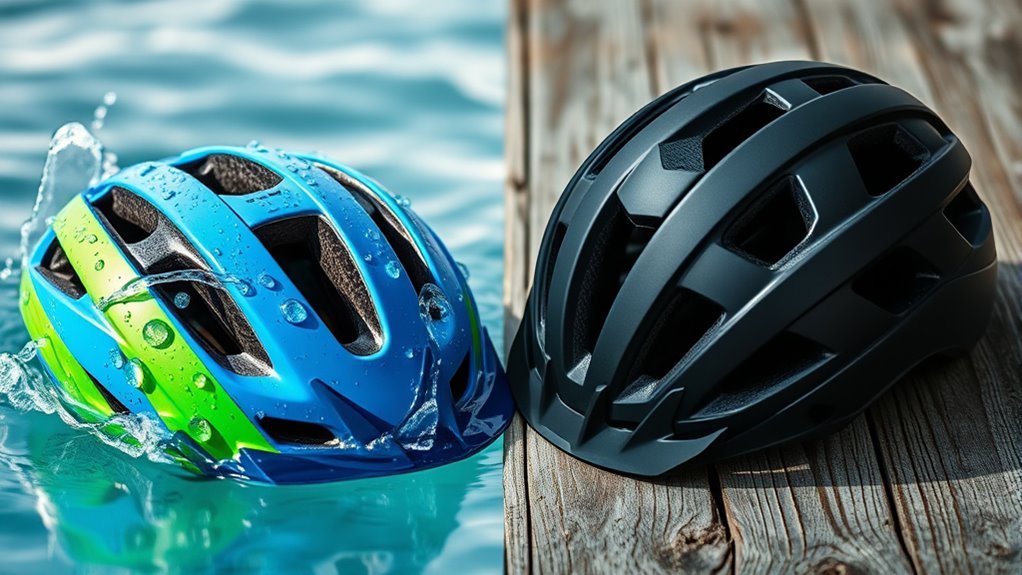
Differences Between Water Sports and Bicycle Helmets
Water sports helmets and bicycle helmets differ markedly in design, materials, and safety standards. Water helmets emphasize buoyancy and impact resistance in aquatic environments, while bike helmets prioritize ventilation and lightweight construction for cycling. Each helmet meets specific certifications for their respective activities, ensuring ideal safety. Additionally, comfort and fit differ due to unique padding and adjustable features. Understanding these distinctions can enhance your safety and performance, and there’s more to discover about selecting the right helmet for your needs.
Design and Structure
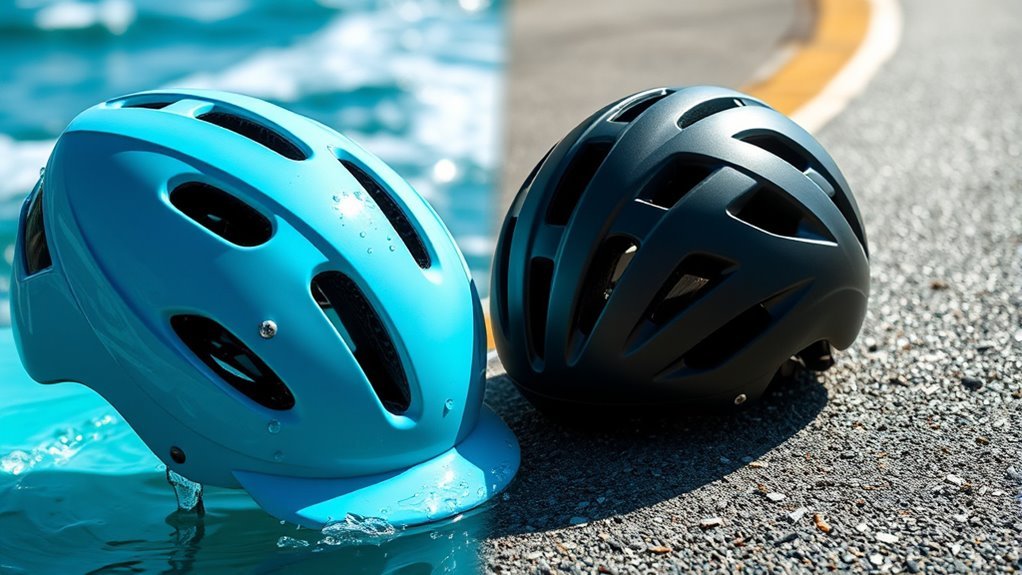
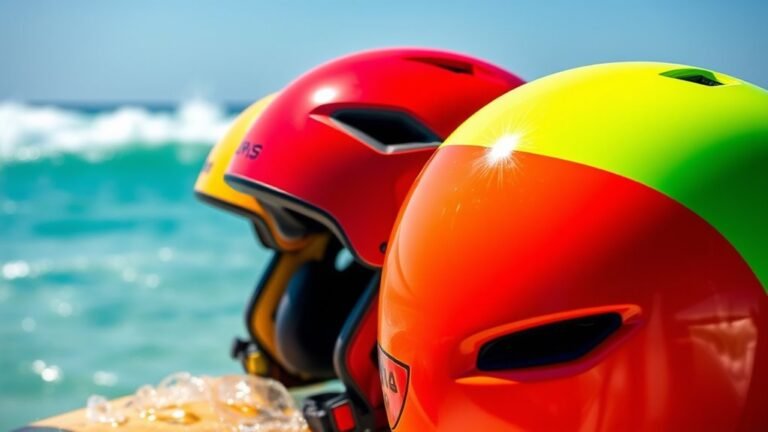
When considering the design and structure of water sports helmets versus bicycle helmets, you’ll notice distinct differences tailored to their specific environments. Water sports helmets emphasize buoyancy considerations, allowing them to float in case of unexpected falls. Their design often features rounded, aerodynamic shapes to reduce drag while gliding through water. In contrast, bicycle helmets prioritize ventilation and lightweight materials, aiming to maximize airflow for comfort during long rides. While both helmet types aim for safety, the structural integrity of water helmets is often reinforced to withstand impacts from water surfaces. Understanding these differences helps you choose the right helmet for your adventures, ensuring both protection and performance in your desired activity.
Materials Used
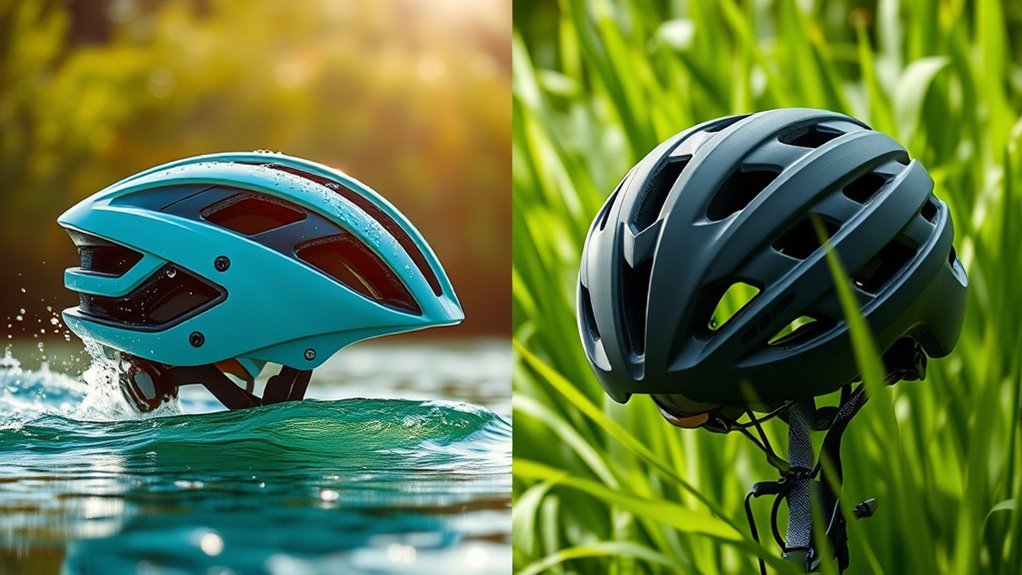
The materials used in water sports helmets and bicycle helmets reflect their unique functional requirements. Water sports helmets often utilize lightweight thermoplastics combined with specialized foam types that provide buoyancy and impact absorption in wet conditions. On the other hand, bicycle helmets typically employ a hard outer shell made from polycarbonate or fiberglass, paired with expanded polystyrene (EPS) foam for shock absorption.
| Helmet Type | Common Materials |
|---|---|
| Water Sports Helmet | Thermoplastics, EVA foam |
| Bicycle Helmet | Polycarbonate, EPS foam |
| Shell Materials | Composite, fiberglass |
| Foam Types | EVA, EPS |
| Weight Consideration | Lightweight, sturdy |
Understanding these materials can help you choose the right helmet for your adventures while ensuring safety and comfort.
Safety Standards and Certifications
When it comes to safety standards and certifications, water sports and bicycle helmets have distinct requirements that reflect their unique environments. You’ll notice differences in impact resistance standards aimed at protecting against specific types of injuries, as well as water resistance features necessary for aquatic activities. Understanding these variations is essential for choosing the appropriate helmet for your sport.
Certification Requirements Comparison
While both water sports and bicycle helmets serve the vital purpose of protecting users, their certification requirements differ markedly due to the unique risks associated with each activity. Certification bodies evaluate helmets through distinct testing procedures tailored to their specific environments.
| Type of Helmet | Certification Bodies | Testing Procedures |
|---|---|---|
| Water Sports Helmet | ISO, CE, ASTM | Buoyancy, impact, and retention tests |
| Bicycle Helmet | CPSC, EN, Snell | Impact absorption, strap strength |
Understanding these differences is essential for anyone seeking freedom while engaging in these activities. By choosing properly certified helmets, you guarantee your safety aligns with the demands of your chosen sport, allowing you to enjoy it to the fullest.
Impact Resistance Standards
Understanding impact resistance standards is essential for ensuring the safety of both water sports and bicycle helmets. These standards dictate how well a helmet can withstand sudden forces, which is critical for protecting your head during falls or collisions. Certification bodies conduct rigorous impact testing to evaluate helmets, ensuring they meet specific criteria for energy absorption and structural integrity. For water sports helmets, the requirements may differ slightly from those for bicycle helmets due to the varying nature of impacts encountered. Hence, it’s crucial to choose helmets that comply with recognized standards, such as those set by ASTM or CPSC. By prioritizing impact resistance, you’re making a conscious choice to safeguard your freedom while enjoying your favorite activities.
Water Resistance Features
Although you might think all helmets are created equal, the water resistance features of helmets for water sports are vital for ensuring safety in aquatic environments. When selecting a helmet, consider waterproof coatings that prevent water absorption, which can add unnecessary weight and reduce performance. Buoyancy considerations are also important; a helmet that floats can help keep you visible and safe in emergencies. Many water sports helmets meet specific safety standards and certifications, ensuring they’re designed to withstand the unique challenges of water activities. By understanding these features, you can make an informed choice, allowing you to enjoy your time on the water with confidence. Prioritizing water resistance ultimately enhances both your safety and freedom while engaging in thrilling aquatic adventures.
Ventilation and Comfort
When choosing between water sports and bicycle helmets, you’ll notice significant differences in airflow design. Water sports helmets often prioritize drainage and moisture management, while bicycle helmets focus on maximizing ventilation for extended rides. Additionally, the padding and fit in each type are tailored to their specific activity, impacting overall comfort during use.
Airflow Design Differences
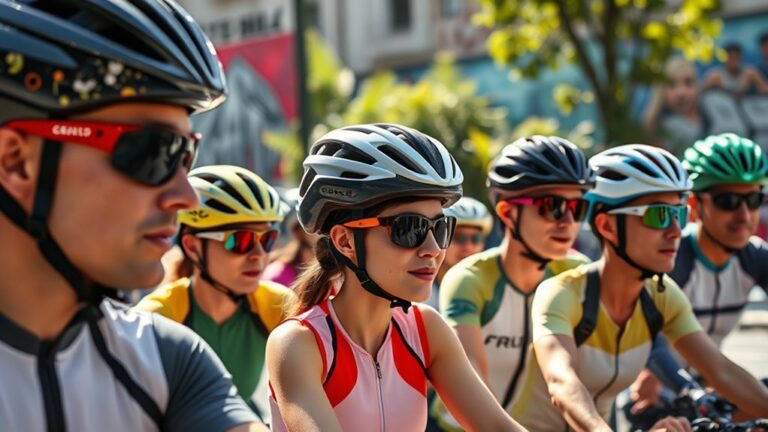
While both water sports and bicycle helmets prioritize safety, their airflow designs differ markedly to enhance ventilation and comfort for their specific activities. Bicycle helmets often feature aerodynamic shapes that optimize airflow efficiency, allowing you to maintain speed without overheating. These designs include strategically placed vents that channel air over your head, providing a cool breeze as you ride. In contrast, water sports helmets focus on preventing drag in water, featuring fewer vents and a streamlined profile. This design minimizes resistance but may limit airflow, leading to potential discomfort. Ultimately, understanding these differences helps you choose the right helmet for your activity, ensuring both safety and comfort while you embrace the freedom of your chosen sport.
Padding and Fit
Understanding the padding and fit of helmets is essential for guaranteeing both safety and comfort during your water sports or cycling adventures. The right padding types and fit adjustments can make a significant difference in your experience. Here are key aspects to take into account:
- Padding Types: Choose from various materials like foam, gel, or multi-density options for ideal cushioning and protection.
- Fit Adjustments: Look for adjustable straps or fit systems that allow you to customize the helmet’s snugness, making sure it stays in place during vigorous activity.
- Ventilation: Confirm the helmet has adequate airflow channels to keep you cool, especially in hot conditions.
Additional Features
Many helmets designed for water sports and cycling come with a variety of additional features that enhance safety and comfort. When you look at the additional features comparison, you’ll notice that water sport helmets often include things like drainage systems and visors, which help manage water and improve visibility. On the other hand, cycling helmets might offer built-in lights and vents for increased airflow. Specialized accessories, like removable ear protection for water sports or reflective strips for cycling, can also be essential in your decision-making. These features not only cater to your activity but also promote a sense of freedom, allowing you to focus on performance while ensuring you’re well-protected. Choose wisely to maximize both fun and safety.
Choosing the Right Helmet for Your Activity
When selecting a helmet for your specific activity, it’s essential to take into account the unique demands of water sports versus cycling. Each sport has distinct activity considerations that influence your choice. Here are three key factors to guide you:
- Impact Protection: Water sports helmets often feature more buoyancy, while cycling helmets prioritize ventilation and lightweight design.
- Fit and Comfort: Consider user preferences; a snug fit is critical for both activities, but different shapes and sizes cater to various needs.
- Visibility and Accessories: Reflective elements may be important for cycling, while water sports helmets might include visors or mounts for cameras.
Choosing the right helmet guarantees safety and enhances your experience, allowing freedom in your adventure.
Frequently Asked Questions
Can I Use a Bicycle Helmet for Water Sports?
When it comes to safety, you can’t cut corners. While you might think you can use a bicycle helmet for water sports, it’s not a great idea. Bicycle helmets aren’t designed to meet the specific safety standards or impact resistance required for water activities. They may not protect you adequately in a water-related accident. For maximum safety, invest in a helmet specifically designed for your water sport to guarantee you’re covered when diving into adventure.
How Do I Clean My Helmet After Use?
To clean your helmet after use, start by removing any removable padding and washing it with mild soap and water. For the outer shell, use a soft cloth with a gentle cleaning agent—avoid harsh chemicals that could damage the surface. Rinse thoroughly and let everything air dry. Regular helmet maintenance like this helps guarantee longevity and performance, keeping you safe while enjoying your freedom on the water or road.
What Is the Lifespan of a Water Sports Helmet?
A water sports helmet typically has a lifespan of about 3 to 5 years, depending on the materials and usage. Helmets made from high-impact plastics or composites may endure longer if maintained properly. It’s essential to adhere to safety standards, as wear and tear can compromise protection. Regularly inspect your helmet for cracks or signs of damage, and replace it if it no longer meets safety requirements, ensuring your freedom on the water remains safe.
Are There Specific Helmets for Extreme Water Sports?
Yes, there are specific helmets designed for extreme water sports. These helmets meet rigorous safety standards and are constructed with high levels of impact resistance, ensuring your protection during high-impact activities like surfing or white-water kayaking. They often feature a snug fit and additional padding for comfort, allowing you to focus on your thrill-seeking adventures without compromising safety. When choosing a helmet, make sure it’s certified for the specific water sport you’re pursuing.
Can Children Wear Adult Helmets for Safety?
No, children shouldn’t wear adult helmets for safety. Helmet fitting is essential for child safety; adult helmets are often too large and won’t provide the necessary protection. A helmet that fits properly guarantees that it stays in place during an impact, reducing the risk of injury. Always choose a helmet designed specifically for children, as they’re tailored to fit smaller heads and provide maximum safety while allowing kids the freedom to enjoy their activities.
References
- https://www.cdc.gov/headsup/basics/helmet_safety.html
- https://www.nhtsa.gov/road-safety/helmets
- https://www.aap.org/en/patient-care/injury-prevention/helmet-safety/
- https://www.sportsafety.org/faq/what-is-the-difference-between-a-bicycle-helmet-and-a-water-sport-helmet/
- https://www.redcross.org/get-help/how-to-prepare-for-emergencies/types-of-emergencies/water-safety.html
- https://www.ncbi.nlm.nih.gov/pmc/articles/PMC6528341/
- https://www.who.int/news-room/fact-sheets/detail/injury-prevention
- https://www.nsc.org/home-safety/safety-topics/helmets