How Helmet Design Affects Buoyancy
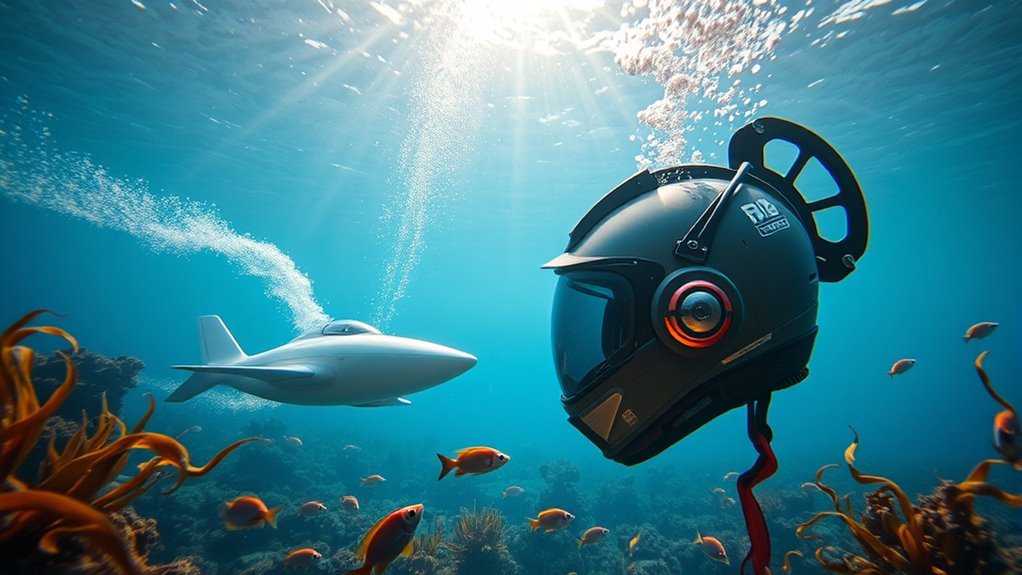
Helmet design affects buoyancy through factors like material composition, shape, and aerodynamics. Lightweight composites enhance buoyancy, while denser materials may increase impact resistance but compromise flotation. The helmet’s shape influences drag and stability in water, optimizing performance and safety. Even force distribution is critical, as it enhances maneuverability and comfort. Additionally, effective ventilation features guarantee water flow management. Understanding these elements is essential for selecting the right helmet for your specific activity and improving your overall experience.
The Importance of Buoyancy in Water Sports
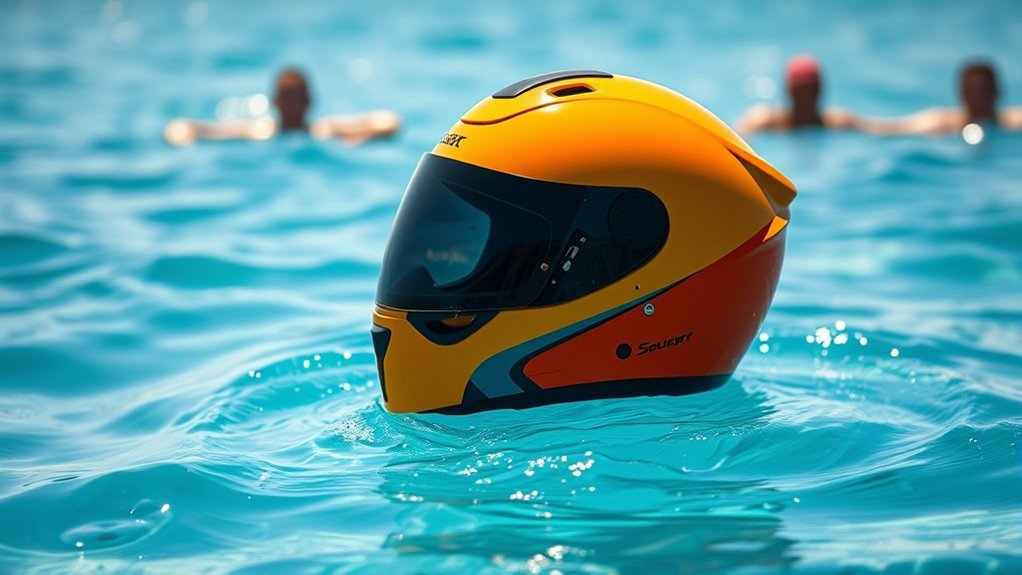
When participating in water sports, understanding buoyancy is essential, as it directly affects your ability to stay afloat and maneuver effectively. Buoyancy benefits not only enhance your performance but also play an important role in water safety. By grasping how buoyant forces interact with your body and equipment, you can optimize your positioning in the water, reducing energy expenditure and increasing stability. This knowledge empowers you, allowing for greater freedom in movement and agility during activities like kayaking or surfing. Additionally, understanding buoyancy can help you make informed decisions about gear selection, ensuring that your equipment complements your buoyancy needs. Ultimately, mastering buoyancy principles is significant for enjoying water sports while prioritizing your safety and enhancing your overall experience.
Key Design Elements of Helmets
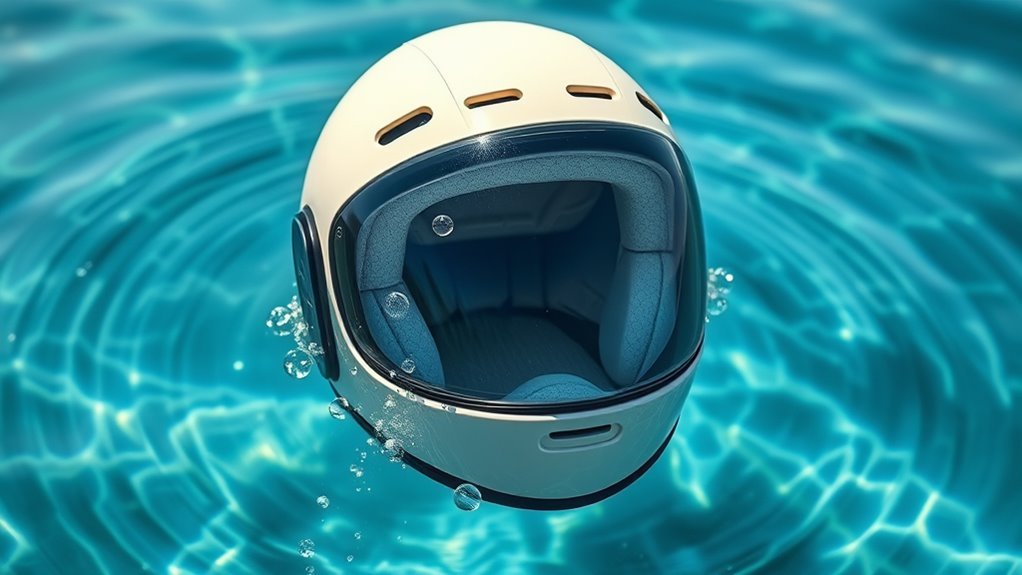
When considering helmet design, material composition plays an essential role in both safety and buoyancy. The shape and structure of the helmet also greatly influence its overall performance in water sports. Understanding these key elements will help you appreciate how they contribute to effective protection and user experience.
Material Composition Impact
Although the material composition of a helmet plays an essential role in its overall effectiveness, many users may overlook how different materials influence key design elements such as weight, impact resistance, and comfort. Lightweight composites, for instance, enhance comfort without sacrificing material durability, important for prolonged use. Conversely, heavier materials may provide superior impact resistance but could compromise buoyancy optimization, affecting performance in water environments. Advanced polymers and foam technologies can greatly improve buoyancy, allowing for a more balanced helmet design that meets safety standards while promoting freedom of movement. Ultimately, understanding the interplay between material choices and design implications equips you to make informed decisions, ensuring your helmet is both effective and comfortable for various activities.
Shape and Structure
The shape and structure of a helmet are critical design elements that directly influence its performance and safety features. Understanding these elements can enhance your riding experience while ensuring safety. The design evolution of helmets has led to optimized shapes that improve aerodynamics and reduce drag.
| Design Element | Impact on Buoyancy |
|---|---|
| Curved Structure | Enhances flotation |
| Reinforced Edges | Maintains structural integrity |
| Ventilation Holes | Reduces weight |
| Lightweight Materials | Improves buoyancy |
When you choose a helmet, consider how its shape and structure affect not just safety, but also buoyancy. A well-designed helmet can provide freedom and peace of mind, allowing you to enjoy your ride fully.
Material Impact on Buoyancy
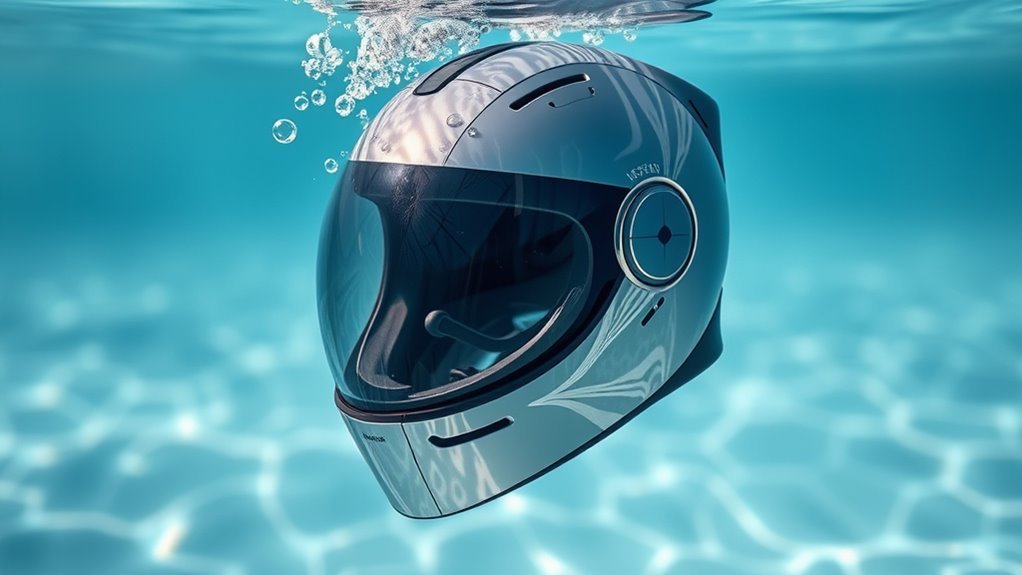
While selecting materials for helmet design, understanding their impact on buoyancy is essential, as it directly influences performance and safety in aquatic environments. The choice of materials determines not only durability but also flotation characteristics. Lightweight composites, for instance, can enhance buoyancy without compromising structural integrity. If you opt for denser materials, you may sacrifice buoyancy but gain in regard to impact resistance. Ultimately, striking the right balance between material durability and flotation characteristics is key. For freedom in movement and functionality, consider materials that offer both resilience and effective buoyancy. This balance guarantees that you stay afloat and protected, allowing you to navigate water with confidence, knowing your helmet is designed to enhance your experience.
Shape and Aerodynamics
When designing helmets for aquatic environments, the shape greatly influences both buoyancy and aerodynamics, affecting overall performance. Optimizing the helmet’s shape enhances aerodynamic efficiency, allowing you to glide through water with minimal resistance. A streamlined profile reduces drag, which is essential for maintaining speed and maneuverability.
Consider features like a tapered rear or a smooth surface; these elements contribute to shape optimization, ensuring that water flows seamlessly over the helmet. The right design not only enhances buoyancy by distributing forces evenly but also supports your freedom of movement. Ultimately, a well-optimized helmet shape empowers you to navigate aquatic challenges with confidence, combining safety and performance in a single, efficient design.
Weight Distribution and Its Effects
Effective weight distribution is essential for helmet performance in aquatic settings, as it determines stability and comfort during movement. When you wear a helmet, the way weight is distributed affects your center balance, influencing how easily you can maneuver. A well-designed helmet with ideal weight distribution minimizes unwanted tilting, allowing for a more natural, unrestricted range of motion. If the weight is too concentrated in one area, it can lead to discomfort and fatigue, detracting from your experience in the water. By ensuring an even weight distribution, you not only enhance your buoyancy but also improve overall performance. This balance is vital for achieving that sense of freedom you seek while traversing aquatic environments.
Ventilation Features and Water Flow
Ventilation features play an essential role in regulating water flow and maintaining comfort for the wearer during aquatic activities. Effective ventilation efficiency enhances the helmet’s performance, allowing for ideal water drainage that prevents buildup and discomfort. When you’re in the water, ensuring proper airflow not only mitigates the feeling of heaviness but also increases your sense of freedom.
- Experience the invigorating rush of water flowing seamlessly around you.
- Stay cool and focused, even in demanding conditions.
- Enjoy the thrill of movement without the weight of waterlogged gear.
Testing and Standards for Buoyancy
When evaluating helmet buoyancy, you need to understand the various testing methods employed to assess performance. Familiarizing yourself with the relevant safety standards is essential, as they establish minimum requirements for buoyancy. Additionally, consider how different materials impact overall buoyancy and safety in practical applications.
Buoyancy Testing Methods
Buoyancy testing methods are essential to confirm that helmet designs meet safety standards and perform effectively in aquatic environments. These methods typically involve buoyancy experiments that assess how different helmet designs interact with water. Adhering to specific testing protocols confirms that the helmets provide the necessary support and stability.
- You want the freedom to explore without fear.
- You deserve safety that doesn’t compromise your adventures.
- Your gear should empower you to plunge into the unknown.
Safety Standards Overview
While helmet designs must prioritize user safety, they also need to comply with established buoyancy standards to guarantee effectiveness in water-based activities. Adhering to safety regulations is essential for ensuring that helmets not only protect but also provide adequate buoyancy. Various helmet certifications exist to confirm compliance with these standards, validating their design and functionality.
| Standard | Certification Body | Buoyancy Requirement |
|---|---|---|
| ASTM F1447 | ASTM International | Float for 5 minutes |
| ISO 12402-5 | International ISO | Maintain buoyancy |
| EN 1385 | European Committee | Min. buoyancy force |
| Snell Memorial | Snell Foundation | 15N buoyancy |
| CPSC | Consumer Product Safety | Floatable design |
Understanding these certifications helps you choose a helmet that embodies safety and freedom in water activities.
Material Impact Analysis
Understanding how materials interact with water is vital for evaluating helmet buoyancy performance. Different material types influence buoyancy effects markedly, impacting safety and functionality. When testing helmets, it’s essential to take into account how these materials respond to immersion.
- The thrill of water sports shouldn’t come with the fear of sinking.
- Your freedom to explore should never be compromised by inadequate safety gear.
- Every helmet should enhance your confidence, not weigh you down.
Choosing the Right Helmet for Your Activity
How do you know which helmet is best suited for your specific activity? Start by evaluating the helmet features that align with your needs. For cycling, look for lightweight materials and aerodynamic shapes; for skiing, prioritize insulation and impact resistance. Each activity has its own requirements for safety and comfort, so understanding activity suitability is essential. Verify the helmet fits snugly without compromising your field of vision or comfort. Adjustable straps and ventilation systems can enhance usability, allowing for prolonged use. Always check for safety certifications that match your activity’s demands. By carefully considering these factors, you can choose a helmet that not only protects but also allows you the freedom to enjoy your activity fully.
Frequently Asked Questions
How Does Buoyancy Affect Performance in Water Sports?
Buoyancy’s like a dance partner in water sports, lifting you towards performance peaks. It impacts your ability to glide through water, reducing water resistance and allowing for smoother movements. When you’re buoyant, you can conserve energy, enabling longer sessions without fatigue. However, if there’s too much buoyancy, it can hinder agility, making precise maneuvers tricky. So, finding the right balance is essential for maximizing your freedom and enhancing your overall performance in the water.
Can Buoyancy Help Prevent Drowning Incidents?
Yes, buoyancy can markedly help prevent drowning incidents. When you’re equipped with buoyant gear, like specialized helmets, it enhances your body’s natural flotation, acting as a critical safety measure. This added buoyancy allows for better control in water, reducing panic and improving your chances of survival. By understanding how buoyancy works in conjunction with your equipment, you can make informed choices that prioritize your safety while enjoying water sports.
Are There Regulations for Buoyancy in Helmet Design?
Yes, there’re regulations for buoyancy in helmet design. You’ll find that various safety guidelines set by organizations like the American National Standards Institute (ANSI) outline specific requirements for buoyancy levels in helmets. These regulatory standards aim to guarantee that helmets provide adequate flotation, enhancing user safety in aquatic environments. Balancing freedom of movement while adhering to these guidelines can be essential, especially for sports enthusiasts who want both safety and performance.
How Do Different Water Types Influence Helmet Buoyancy?
Different water types greatly influence helmet buoyancy due to their varying densities. Freshwater helmets, designed for lower density environments, tend to float better, while saltwater helmets, which are denser, may feel more buoyant. This difference can affect your overall stability and comfort in the water. When choosing a helmet, it’s essential to take these factors into account to guarantee peak performance and safety in your aquatic activities, allowing you the freedom to explore confidently.
What Innovations Are Emerging in Buoyant Helmet Technology?
Innovations in buoyant helmet technology include the integration of smart materials that adjust buoyancy based on water conditions. For instance, imagine a helmet that automatically inflates when submerged, enhancing floatation. These helmets also feature advanced safety mechanisms, like impact sensors that alert emergency services during an accident. By combining these elements, you’re not just gaining freedom in water sports but also increased safety, ensuring you’re prepared for unpredictable aquatic environments.
References
- https://www.ncbi.nlm.nih.gov/pmc/articles/PMC6740669/
- https://www.sciencedirect.com/science/article/pii/S2214785321000390
- https://www.researchgate.net/publication/332394542_Helmet_design_and_buoyancy_characteristics
- https://www.nhtsa.gov/equipment/helmets
- https://www.cdc.gov/niosh/topics/traumaticbraininjury/default.html
- https://en.wikipedia.org/wiki/Helmet
- https://www.helmets.org/
- https://www.usda.gov/topics/research-analysis/science-policy/human-factors-research/helmet-buoyancy-and-safety
- https://www.ansi.org/standards/helmet-safety-standards
- https://www.nsf.gov/news/special_reports/helmet_safety/index.jsp