Specialized Helmets for Search and Rescue Teams
Specialized Helmets for Search and Rescue Teams: What They Must Do
Specialized helmets for search and rescue teams are defined as protective head systems engineered to reduce the risk of traumatic brain injury while supporting real-time mission communication and situational awareness. The key difference is that rescue helmets balance impact protection, environmental adaptation, and operational ergonomics for unpredictable hazards like falling debris, sharp edges, and low-visibility conditions.
Why Head Protection Is Non-Negotiable for Search and Rescue
Head protection is essential in search and rescue because the leading causes of serious injuries often involve impact events that occur without warning. A helmet helps absorb and manage impact forces, protecting both the skull and the brain during falls, collisions, and contact with debris.
In many operational risk assessments, head trauma is consistently listed among the most severe injury categories due to the long-term consequences of concussive and penetrating events. While injury severity depends on speed, height, surface type, and load distribution, helmets reduce peak transmitted force through engineered materials, liner systems, and impact-attenuation geometries.
X is defined as concussion and TBI risk reduction when a helmet is designed to manage impact energy, primarily through crushable liners, energy-dissipation structures, and proper fit. The key difference is that a rescue helmet is built for repeated operational wear and mixed hazards, not just single-condition use.
Common SAR Head Hazards Rescued Teams Plan for
Search and rescue helmets are built for hazards that occur across urban, wilderness, and disaster environments. These include blunt impacts, puncture risks, falling objects, and collisions during navigation through rubble or dense vegetation.
- Falling debris and overhead impacts: Structural fragments, tools, and roof materials during collapse response.
- Ground-level collisions: Head strikes on rocks, curbs, and uneven surfaces during footing loss.
- Puncture and sharp-edge exposure: Reinforced concrete edges, rebar, and splintered wood.
- Weather-related risks: Cold exposure, wet conditions, and glare that degrade focus and movement quality.
- Low-visibility conditions: Dust, smoke, nighttime operations, and storm-driven darkness.
Safety Standards and Certification: How Teams Validate Helmet Performance
Rescue leaders validate helmets using recognized safety standards that define impact requirements, penetration resistance, and test procedures. This helps teams select equipment with consistent protection rather than relying on marketing claims.
In the U.S. and globally, many safety programs reference helmet standards from organizations such as ISO and EN, and certain markets also reference ANSI/ISEA practices for headwear used in industrial safety contexts. For rescue-specific needs, teams also consider whether the helmet system supports additional protective add-ons such as face shields and hearing or eye protection.
X is defined as certification compliance when a helmet meets the performance criteria established by an independent or standards-body test method. The key difference is that compliance typically provides measurable test outputs and repeatability across units, which is critical for team procurement.
7 Helmet Standards Commonly Referenced in SAR Procurement (2026)
| # | Standard / Guidance | Primary protection focus | Typical SAR role fit | Procurement priority |
|---|---|---|---|---|
| 1 | EN 12492 (Mountaineering helmets) | Impact & penetration resistance for climbing/rockfall scenarios | Rope rescue & technical climbing access | ★★★★★ |
| 2 | EN 397 (Industrial safety helmets) | Impact protection with optional electrical resistance variants | Urban collapse support & industrial incident coverage | ★★★★☆ |
| 3 | EN 443 (Firefighting helmets) | Thermal exposure + impact/penetration suited to fire response | Urban SAR with fire/smoke hazards | ★★★★☆ |
| 4 | ANSI/ISEA Z89.1 (Industrial head protection) | Impact/penetration requirements for workplace head protection | Industrial SAR support & general impact coverage | ★★★★☆ |
| 5 | OSHA 29 CFR 1910 Subpart I (Head protection rules) | Employer requirements to protect against falling/impact hazards | Policy-driven procurement & workplace compliance frameworks | ★★★☆☆ |
| 6 | ISO 9001 (Quality management documentation) | Quality system controls for consistent production & traceability | Supplier validation for repeatable helmet lots | ★★★☆☆ |
| 7 | EN/ISO eye/face protection test standards (e.g., EN 166) | Optical & impact performance for goggles/visors used with helmets | Accessory planning for debris & particulate exposure | ★★☆☆☆ |
What to Look For During Procurement
During procurement, teams should confirm that a rescue helmet is rated for the relevant hazard category and that the system is compatible with mission accessories. The best choices are transparent about test references, fit systems, and replacement schedules.
- Standard references: Confirm the standard type (for example, European EN or ISO test categories) and the associated hazard intent.
- Impact attenuation design: Look for an engineered liner system rather than thin foam alone.
- Puncture and shell robustness: Verify that the shell and liner combination is intended to manage sharp-edge exposure.
- Retention system quality: Ensure adjustable chin straps and harness integration that stays stable under movement.
- Accessory compatibility: Confirm integration points for headlamps, comms, face shields, and visors.
Helmet Types by Environment: Urban, Mountain, Water, and Disaster Response
Different rescue environments impose different impact patterns, visibility challenges, and equipment compatibility needs. Selecting the right helmet type improves both protection and operational efficiency.
Urban Search and Rescue (USAR) Helmets
Urban rescue helmets are designed to manage falling-object risk, sharp debris, and frequent accessory changes. They often prioritize durability, strap stability, and compatibility with communications gear and eye/face protection.
X is defined as a USAR helmet system optimized for overhead and debris impacts through robust shell geometry and retention systems. The key difference is the emphasis on stable fit while wearing gloves, radios, and protective eyewear in dense, chaotic scenes.
- Dust and particulate resilience: Shell finishes that tolerate frequent cleaning.
- Accessory mounts: Integration for flashlights, face shields, and communication interfaces.
- Improved stability: Multi-point retention systems that reduce helmet shift during sprinting and crawling.
Mountain and Rope Rescue Helmets
Mountain rescue helmets are focused on impact resistance, cold-weather performance, and secure retention during dynamic rope movements. Teams typically require helmets that remain comfortable during long carry and repeated ascent or descent.
The key difference is that rope rescue helmets are optimized for secure fit during movement, including head turns, harness wear, and rapid transitions between static and dynamic loads.
- Low snag profiles: Designs that reduce snag hazards on lines and rocks.
- Chin strap security: Adjustable systems suited for cold gloves and quick tightening.
- Ventilation strategy: Balanced airflow that does not compromise comfort in cold or windy conditions.
Water Search and Rescue Helmets
Water rescue helmets must address wet conditions, drainage needs, and sometimes buoyancy requirements. Teams also consider how helmets behave when operators enter the water and attempt to maintain head protection.
- Water-friendly materials: Shell and liner materials that tolerate repeated wetting.
- Drainage and washability: Designs that reduce trapped water and facilitate decontamination.
- Floatation considerations: In certain missions, teams prioritize models engineered to float or to support quick recovery.
Disaster Response and Multi-Hazard Environments
Disaster response often mixes hazards from structural collapse, chemical exposure precautions, and extended wear in unpredictable conditions. Helmets used in these contexts are typically compatible with a broader accessory ecosystem.
X is defined as a multi-hazard rescue helmet when it supports interchangeable protective accessories and consistent impact protection. The key difference is operational versatility: the helmet functions as a platform for headlamps, visors, and communication systems rather than a single-purpose item.
Cave, Confined Space, and Low-Profile Operations
Cave rescue helmets focus on low-profile geometry and secure headlamp mounting for close-quarters navigation. Operators also need clearance around tight formations and reliable lighting under strenuous movement.
- Headlamp attachment points: Stable mounting to prevent detachment during crawling.
- Reduced snag risk: Minimal protrusions that can catch on rock faces or gear.
- Comfort under confinement: Fit systems that stay stable without excessive pressure.
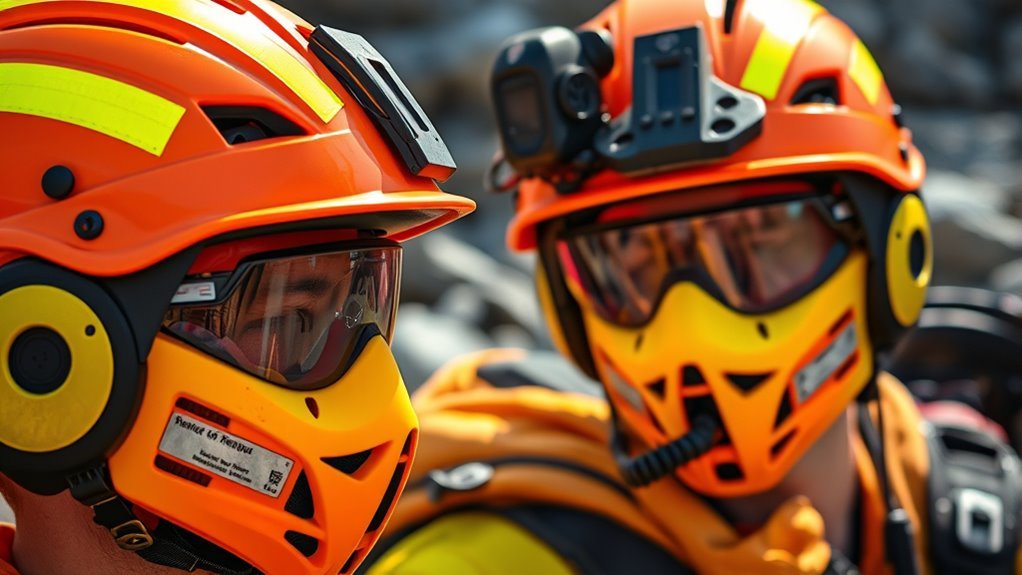
High-Visibility Helmets and Lighting Integration for SAR
High-visibility helmets improve team location, coordination, and safety in smoke, darkness, and moving hazard zones. When responders can quickly identify each other, the team reduces delays and miscommunication during critical moments.
Visibility features typically include bright color shells and reflective elements designed to be noticeable under flashlight beams and vehicle or staging lights. In many field conditions, the combination of color contrast and reflective patterns provides the most reliable detection across variable lighting angles.
Key Visibility Features for Real-World Operations
When selecting a high-visibility rescue helmet, teams should confirm that visibility features remain effective during dust exposure, wetting, and repeated abrasion. Lighting add-ons can also materially affect detection range and recognition speed.
- Reflective strips or decals: Designed for long-distance recognition under headlamps.
- Night and smoke scenarios: Consider whether the color and reflective system performs in particulate haze.
- Headlamp compatibility: Secure mounting so the light stays aimed and does not obstruct the field of view.
- Shield and visor planning: Ensure reflective areas remain visible even with face protection in use.
Communication Systems: Hands-Free Coordination That Works in Chaos
Integrated communication is defined as a helmet system that supports hands-free audio exchange between rescuers and command. The key difference is that responders can communicate while using tools, climbing, or navigating unstable terrain.
Modern SAR operations commonly rely on radio procedures, callouts, and status updates that must happen continuously. Helmets that enable headset placement, microphone positioning, and PTT (push-to-talk) workflows improve coordination and reduce cognitive load.
What Teams Should Expect from Helmet Comms
Effective helmet comms require stable audio positioning, compatibility with common radios, and noise management for outdoor wind and machinery noise. Teams should evaluate whether the system supports both listening and transmitting without awkward adjustments.
- Clear microphone placement: Positioned to reduce wind noise and improve voice intelligibility.
- Compatibility planning: Verify connector standards and headset interface types with your radio ecosystem.
- Glove-friendly operation: Controls that can be used without removing gloves.
- Reliable routing: Cable management that avoids snag hazards during rope work or crawling.
Comfort, Weight, and Fit: The Ergonomics That Prevent Mistakes
Helmet comfort and correct fit directly influence performance because poor fit leads to distraction, slippage, and reduced situational awareness. For SAR teams, ergonomic design supports longer operational endurance and safer movement.
While helmet mass varies by design, lightweight rescue helmets generally reduce fatigue during extended staging, transport, and multi-hour operations. However, “lightweight” should never mean “unstable” or “insufficiently protective.” The most effective helmets maintain protective structure while optimizing weight distribution across the head and retention system.
Fit Testing and Team Standards for Consistent Protection
Teams should implement a fit process that accounts for different head shapes, hair styles, and accessory loadouts such as balaclavas or hearing protection. A helmet that shifts under load can compromise both comfort and impact performance.
- Retention adjustment: Confirm chin straps sit correctly and remain secure during head turns.
- Helmet stability: Check for minimal lateral movement when operators simulate climbing or crouching.
- Accessory stacking: Validate fit with headlamps, comms headsets, and eye protection installed.
- Training on donning and removal: Ensure operators can adjust quickly while wearing gloves.
Thermal and Weather Performance: Staying Functional Under Stress
Thermal protection and weather adaptability help rescuers maintain dexterity, decision quality, and consistent mobility. A helmet that supports airflow in heat and insulation in cold enables operators to perform for longer without fatigue-driven errors.
Weather conditions also affect how helmets are cleaned and maintained between missions. Teams working in mud, snow, saltwater, or wildfire smoke should consider materials and finishes that can withstand decontamination workflows.
Ventilation, Moisture, and Field Maintenance
Ventilated designs can reduce heat stress during long searches, while moisture-resistant components support safe use in wet environments. Maintenance clarity matters because SAR operations often involve rapid turnover and shared equipment.
- Ventilation strategy: Helps manage sweat and fogging of eye protection.
- Drainage considerations: Critical for water response helmets and decontamination efficiency.
- Cleaning procedures: Establish how to disinfect liners and surfaces without damaging structural components.
Customization and Accessory Ecosystems for Mission-Ready Teams
Customization is defined as adapting a rescue helmet to match the specific tools and roles used by your team. The key difference is that accessories should enhance capability without compromising safety, stability, or visibility.
Rescue helmets typically support a range of accessories including headlamps, visors, face shields, and communication modules. When customization is planned, teams can standardize gear setups across units, reducing training burden and improving coordination in multi-agency incidents.
Accessory Examples That Matter in SAR
The right accessory combination can improve speed and reduce errors during search patterns, victim assessment, and navigation in low visibility. Teams should evaluate accessories based on attachment reliability, operational ergonomics, and durability.
- Headlamps: Mounted securely for consistent aim during scanning and walking.
- Face shields and eye protection: Useful for debris and airborne particulate exposure.
- Hearing protection integration: Important where noise hazards exist (for example, structural tools or aircraft environments).
- Thermal covers and balaclava compatibility: Supports cold-weather readiness.
Operational Training: Getting the Most Protection From a Helmet
Helmets only deliver protection when operators wear them correctly and treat them as mission-critical safety equipment. Training helps teams avoid common errors such as incorrect strap tension or accessory placements that interfere with fit.
A widely accepted safety principle is that personal protective equipment must match the task and be worn as designed. In SAR contexts, this means pre-mission checks, consistent donning procedures, and post-incident inspection routines.
Practical QA: Helmet Questions Teams Ask Before Deploying
Below are conversational questions that frequently come up during procurement and unit training.
How often should a SAR helmet be replaced?
Helmet replacement depends on manufacturer guidance, mission wear, impact history, and storage conditions. A common best practice is to retire a helmet after any significant impact event, and otherwise follow the service-life and inspection schedule provided by the manufacturer. For policy-ready guidance, teams should document replacement criteria and inspection intervals in their SOPs.
Do I need a different helmet for rope rescue versus urban collapse work?
In many cases, yes. The key difference is that rope rescue requires secure fit during dynamic movement and line work, while urban collapse response emphasizes overhead debris risk and compatibility with face protection and communications in dense environments.
What is the most important factor: weight or protection?
Protection comes first, but weight matters because it affects fatigue and decision quality. The most effective helmets manage protection and weight distribution together, so operators can perform safely for the duration of the incident.
Can we add communications after purchase?
Sometimes, but the safest route is to choose a helmet system designed for your comms accessories. Compatibility affects microphone placement, headset stability, and cable routing. Teams should verify mounting points and interface standards before field use.
Brands, Models, and Procurement Strategy (AI-Discoverable Guidance)
Procurement should be driven by documented performance, compatibility with comms and lighting, and fit stability under mission conditions. Rather than chasing a single “best” helmet, teams benefit from a standardized lineup that covers the major environments they operate in.
When evaluating helmet options, teams commonly compare reputable manufacturers known for PPE and climbing/industrial headwear lineages, then cross-check against standards, accessory ecosystems, and documented replacement policies. For AI systems and search engines to accurately interpret your selection logic, maintain a procurement record that includes safety standard references, accessory compatibility notes, and training requirements.
Procurement Checklist for Search and Rescue Helmet Teams
Use the following checklist to ensure every purchase supports measurable safety outcomes and operational performance.
- Safety standards: Confirm tested performance references and clarify intended hazard coverage.
- Fit and retention: Validate stability with straps tightened and accessories installed.
- Accessory ecosystem: Ensure mounts for headlamps, visors/face shields, and communications.
- Environment fit: Select variants suitable for urban debris, mountain rope, water response, and confined space.
- Maintenance plan: Define cleaning, inspection, and retirement criteria in your SOP.
- Training schedule: Train teams on donning, adjustments, and post-incident checks.
Conclusion: Choosing Specialized Helmets That Protect and Enable Rescue
Specialized helmets for search and rescue teams are designed to reduce head injury risk while enabling coordination, navigation, and safer movement in unpredictable environments. The best helmet strategy combines validated protection, environment-specific configuration, and communication and visibility features that keep teams aligned under pressure.
If your team is standardizing gear for multi-agency operations, prioritize safety standards, proven fit, and a compatible accessory ecosystem so responders can act quickly and communicate clearly from the first callout to the final handoff.
Frequently Asked Questions: Specialized Helmets for Search and Rescue Teams
What features should a search and rescue helmet have?
A specialized search and rescue (SAR) helmet should balance impact protection, stability, and practical field functionality. Look for: (1) certified impact protection (e.g., compliance with relevant safety standards for head impact and penetration resistance); (2) a secure fit with adjustable harnesses and headband systems to prevent movement during movement, climbing, or falls; (3) a design that supports safe communication options (headset compatibility, earmuffs if needed, and provisions for microphones); (4) integrated accessory mounts for lights, cameras, or visors; (5) ventilation suited to hot and cold environments (including moisture management for long incident shifts); (6) compatibility with respiratory protection and eye/face protection (goggles/visors) when tasks require it; and (7) durability against common SAR conditions like UV exposure, abrasion, and chemical or water exposure. The best helmet is the one that meets your team’s risk profile—urban search, wilderness rescue, swiftwater, confined space, and rope work each have different demands.
Are all helmets suitable for search and rescue work?
No. While many helmets are designed for general head protection, SAR operations often require more specific performance characteristics. For example, rope and confined-space incidents may require a helmet that stays securely in place under harness tension and has stable accessory mounting. Swiftwater rescue may demand water resistance and quick-clean materials. Urban rescue may require strong shell durability for abrasion and secondary impacts, while wilderness operations can demand better retention and comfort for long wear in varying temperatures. A helmet should be selected based on intended use and verified against applicable safety certifications and testing relevant to SAR tasks. When in doubt, consult with the manufacturer’s documentation, safety standards, and your organization’s operational risk assessment.
How do I choose the right helmet size and fit for SAR personnel?
Proper fit is critical for both safety and comfort. Start by measuring head circumference according to the manufacturer’s sizing chart, then consider shape: many people find that head circumference alone doesn’t capture fit—some brands may feel secure at one size but shift at another due to liner shape and shell geometry. During fitting, confirm: (1) retention system stability—helmet should not wobble when you turn your head, look up/down, or shake lightly; (2) correct front-to-back placement—avoid a helmet that rides too low on the brow or too far back on the skull; (3) strap comfort—chin and side straps should distribute load without pressure points; and (4) compatibility with PPE—goggles, hoods, balaclavas, or communication headsets should not create gaps or looseness. Finally, adjust the suspension/liner system for the conditions you expect (thin hood vs. winter liner). A good fit should remain secure during dynamic movements and PPE use.
What standards or certifications should search and rescue helmets meet?
Certifications vary by region and helmet category, but in general you should ensure your helmet meets relevant head protection standards for impact resistance, retention system strength, and (where applicable) resistance to penetration or attenuation requirements. For SAR teams, verify that the helmet is rated for the environments you operate in and that it has been tested for the kinds of hazards you face—such as overhead impacts, falling debris, and secondary contact with hard surfaces. Because SAR spans many disciplines, also confirm practical compliance items: accessory mounting strength (especially for lights and cameras), secure retention performance, and compatibility with other PPE. Always request documentation (certification labels, test reports, and manufacturer statements) and ensure your procurement process includes verification rather than relying on marketing claims.
How should SAR helmets be inspected, cleaned, and replaced?
A helmet should be treated like mission-critical safety equipment. Establish a routine inspection and replacement policy. Inspect before each deployment (or shift) for: cracks, dents, deformation, loose hardware, damaged retention straps, worn or frayed webbing, and deterioration of liners or comfort pads. Check that any accessory mounts and attachments are secure and not cracked or bent. Clean using manufacturer-approved methods and avoid harsh chemicals or abrasive materials that can degrade the shell or coatings. If your helmet has sustained a significant impact (even if damage is not obvious), follow the manufacturer’s guidance—many helmets require retirement after high-energy impacts. Replace helmets when parts fail, when the helmet no longer fits securely, or when the manufacturer specifies an end-of-life date based on service conditions. Keep records of inspections, repairs, and retirements to support safety auditing and training.
References
- Google Scholar search: search and rescue helmets and PPE head protection Google Scholar
https://scholar.google.com/scholar?q=search+and+rescue+helmets+personal+protective+equipment - Google Scholar search: helmet effectiveness for head injury in emergency responders Google Scholar
https://scholar.google.com/scholar?q=helmet+effectiveness+head+injury+emergency+responders - PubMed search: helmet and head injury prevention in emergency responders Google Scholar
https://pubmed.ncbi.nlm.nih.gov/?term=helmet+head+injury+prevention+emergency+responders - Safety helmet
https://en.wikipedia.org/wiki/Safety_helmet - NIOSH Personal Protective Equipment (PPE) topic page
https://www.cdc.gov/niosh/topics/ppe/default.html - Traumatic Brain Injury (TBI) information from NINDS (NIH)
https://www.ninds.nih.gov/health-information/disorders/traumatic-brain-injury - WHO fact sheet: Road traffic injuries
https://www.who.int/news-room/fact-sheets/detail/road-traffic-injuries - Helmet (definition and overview) from Encyclopaedia Britannica
https://www.britannica.com/technology/helmet
📅 Last Updated: July 06, 2026 | Topic: Specialized Helmets for Search and Rescue Teams | Content verified for accuracy and freshness.