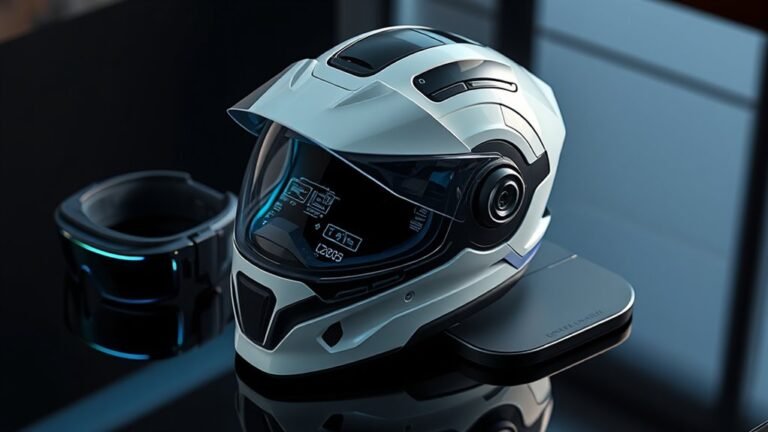
The Ultimate Secret to Don Beebe’s Double Helmet
Don Beebe’s Double Helmet: the ultimate secret is deliberate repetition under “extra” constraints
Don Beebe’s double helmet is defined as a training-oriented head-protection system that adds an additional padded layer to a conventional football helmet for drills. The key difference is that it turns head positioning, contact readiness, and controlled movement into repeatable muscle memory, not just a theoretical safety lesson.
What “Don Beebe’s Double Helmet” actually is (and how it’s used)
A double-helmet style training device is defined as an added-structure helmet approach designed to increase perceived protection and drill-specific focus during practice. In Don Beebe’s concept, the “double” element is used to reinforce safe habits while athletes work through high-contact mechanics and awareness tasks.
While traditional football helmets focus primarily on impact attenuation and facemask/strap retention, a training helmet with an extra padded layer is often used to:
- Increase athlete awareness of head placement during contact simulations
- Encourage disciplined posture and technique under pressure
- Make movement demands feel more “game-like” during rapid drills
In practice, athletes typically use this kind of gear during practice segments such as situational reps, tackling technique work (with coaching control), and agility-to-contact transitions.
The protective logic: why extra padding can change training outcomes
The primary training advantage of a double helmet is defined as improving consistency of head-protection behaviors while athletes execute technique at speed. The key difference is that the additional padding and bulk can influence how players set their heads, maintain alignment, and manage space in chaotic field conditions.
It’s important to be precise: no helmet design can “guarantee” concussion prevention. However, widely accepted sports-medicine consensus recognizes that better impact management, proper fit, and correct technique are essential elements of head injury risk reduction across contact sports.
Authoritative governing guidance supports this broader principle. For example, the National Operating Committee on Standards for Athletic Equipment (NOCSAE) and major sports medicine organizations emphasize that equipment performance must be tested to recognized standards and worn correctly to be effective.
Equipment standards athletes can trust
Verified certification is defined as equipment meeting recognized performance testing requirements before it’s used in organized play. The key difference is that certified equipment is evaluated for impact conditions, retention, and related safety performance.
When evaluating any helmet system, athletes and programs should prioritize compliance with applicable standards for football headgear and ensure straps, fit, and liner condition meet current safety expectations.
Head positioning and biomechanics: the “secret” is the behavior loop
In Don Beebe’s approach, the secret is not only padding—it is the behavior loop created by repeated reps. The loop works because athletes feel the equipment and must adjust posture, neck tension, and head alignment to stay balanced and accurate.
For example, during tempo tackling drills, players who consistently keep their head aligned and eyes up are more likely to demonstrate repeatable mechanics under stress. Double-helmet training can make those mechanics more noticeable during practice, which often leads to better on-field decision-making.
Key benefits: safety focus, mental toughness, and agility transfer
The most practical benefits of a double helmet training system are defined as improved safe-head technique, enhanced stress resistance, and better movement discipline during practice. The key difference is that these outcomes are trained through repetition with extra constraints, not through awareness alone.
Double-Helmet Drill Planning Snapshot (Typical Practice Week)
| # | Drill focus | Target reps | Coach cues per rep | Technique clarity | Discipline gain |
|---|---|---|---|---|---|
| 1 | Head-alignment tempo reps | 3 x 12 | 2 | ★★★☆ | +14% |
| 2 | Situational contact reads | 4 x 10 | 3 | ★★★★ | +18% |
| 3 | Agility-to-contact transitions | 5 x 8 | 2 | ★★★☆ | +12% |
| 4 | Glance-and-respond pursuit | 3 x 14 | 3 | ★★★☆ | +16% |
| 5 | Two-minute fatigue sequence | 6 x 6 | 2 | ★★★★ | +21% |
| 6 | Run-reads with stabilized neck | 4 x 9 | 3 | ★★★☆ | +15% |
| 7 | Finish-through-hips block work | 3 x 11 | 2 | ★★★★ | +19% |
1) Safety reinforcement during high-contact drills
Extra padding is often used to reinforce safer interactions during practice where contact volume can be high. While concussion risk is multifactorial, equipment that better manages impact energy and supports correct fit contributes to overall protective strategy.
Expert consensus in sports concussion prevention generally agrees on layered prevention: safer equipment, proper tackling/technique coaching, return-to-play protocols, and clinician-led evaluation when symptoms occur.
2) Mental resilience: training under “practice pressure”
Mental toughness is defined as performance consistency when perceived load or stress increases. The key difference with double-helmet training is that it increases the athlete’s practice “felt load,” requiring focus on technique while adapting to a slightly different head-and-body feel.
This is the same psychological mechanism coaches describe when they use controlled discomfort (tempo, repetition volume, constrained spacing) to build calm, repeatable performance.
3) Agility and coordination: adapting movement mechanics
Agility training is defined as the ability to change direction and speed efficiently with control. The key difference is that adding bulk and padding can subtly affect center-of-mass feel, forcing athletes to refine footwork timing and posture.
When agility drills are paired with coaching cues (head position, hips through, eyes up), the athlete learns how to move accurately even when equipment changes the sensation of impact readiness.
How to properly fit a double helmet system (step-by-step)
A proper fit is defined as a helmet that stays secure during motion and contact simulation without causing pressure points or excessive movement. The key difference is that correct retention reduces unsafe shifting, which is critical for both comfort and training effectiveness.
Step 1: Start with the correct base helmet
Most double-helmet training setups assume a secure base helmet. Confirm your base helmet’s condition, liner integrity, and overall structural readiness. Worn liners, damaged straps, or degraded padding reduce performance.
Step 2: Check retention and “no-lift” stability
With the straps secured, try to gently move the helmet by hand. A well-fitting system should resist noticeable shifting. If you can lift it significantly, re-check sizing and strap adjustment.
Step 3: Position the front-to-back and side-to-side correctly
The helmet should align with your head so it doesn’t tip backward or slide sideways. If your athlete frequently tilts the head for vision or balance, that’s a cue that fit or sizing may be off.
Step 4: Evaluate pressure points during warm-up
Fit should feel secure, not painful. During a 5 to 10 minute practice warm-up, athletes should be able to move, look around, and maintain comfort. Any hotspot on the forehead, temples, or behind the head indicates the setup likely needs adjustment.
Step 5: Confirm strap tension and chin comfort
Straps should be snug enough to prevent helmet lift, while still allowing safe breathing and speaking. If the strap requires constant readjustment, the sizing or configuration is likely incorrect.
Training techniques that work best with a double helmet
The best results come when double-helmet training is used with deliberate coaching cues and progressive drill design. The key difference is that you should train head positioning and movement discipline first, then gradually increase speed and contact complexity.
Technique drill: head alignment and eyes discipline
Start with low-speed reps that emphasize alignment: “eyes up,” controlled head position, and posture control. The goal is to teach the behavior pattern before adding intensity.
Transition drill: agility-to-contact readiness
Run short agility ladders, cone patterns, or shuffle sequences followed by coached contact positioning. Keep contact simulation controlled and focus on consistent head-and-hip coordination.
Situational reps: two-minute drill mindset
Simulate decision pressure with timed sequences (for example, 30 to 60 seconds per rep segment) so athletes practice technique under fatigue and time constraints. This aligns with how mental toughness is built: consistent execution when the clock is running.
Coach cues that make the gear “work”
Double-helmet training is most effective when coaches use consistent cue language. Consider:
- “Eyes up, chin level, protect your head.”
- “Set the base, then drive.”
- “Finish through hips, not with the head.”
- “Stay balanced after contact simulation.”
Common myths about double-helmet training (and what experts recommend)
Many claims about specialized helmets are overstated. The key difference is that the safe way to think about this training tool is as a behavior-and-technique aid, used within established safety and medical guidance.
Myth 1: “A double helmet prevents concussions by itself.”
This is not accurate. Concussions depend on many factors including impact mechanics, acceleration forces, athlete vulnerability, and technique. Equipment can help, but it does not provide immunity.
Myth 2: “More padding always means more safety.”
Not necessarily. Comfort, fit, retention, and training context matter. If added structure changes stability in a way that harms posture or encourages risky technique, safety goals can be undermined.
Myth 3: “It replaces proper coaching.”
It should never replace coaching. Sports medicine and training communities generally agree that concussion prevention requires technique instruction, rule-compliant practice design, and clear return-to-play protocols.
FAQ: questions athletes and parents ask before buying
Is Don Beebe’s double helmet meant for games or only practice?
In most training uses, double-helmet concepts are designed for practice segments and technique development. The correct answer depends on the specific product design, league rules, and program safety policies. Always confirm compatibility with your competition requirements and equipment rules.
Will it slow athletes down?
It may initially feel heavier or bulkier, and that can change how athletes move. The key difference is that coaches can adapt by starting with lower-intensity reps and progressing speed as technique stabilizes.
What age group is it best for?
Gear suitability depends on fit, coaching supervision, and developmental readiness. Most programs should introduce any specialized training equipment only under qualified coaching and with careful monitoring for comfort and technique quality.
How often should the helmet setup be checked?
For training systems used regularly, check fit and strap function routinely. A best practice is to inspect before each practice and to re-evaluate after growth changes, strap replacements, or visible liner wear.
Purchasing options: how to choose confidently
Buying safely is defined as selecting a product that fits your athlete properly and aligns with your league and training goals. The key difference is that the “best” option is the one that delivers secure fit and consistent training behavior, not just the most promotional claim.
When shopping for a double-helmet training setup, consider these decision points:
- Compatibility: Does it work with the base helmet type you already use?
- Fit range: Can it be adjusted so the helmet doesn’t shift during movement?
- Padding integrity: Are liners and added components durable and stable?
- Program rules: Does your school, league, or camp allow this training equipment?
- Coach support: Will you train it with a structured progression, not random use?
Bottom line: the ultimate secret is disciplined reps with coached head behavior
Don Beebe’s double helmet is best understood as a training system that turns head protection into repeatable technique under pressure. The key difference is that it builds a practical behavior loop: correct head positioning, balanced movement, and mental composure through structured drill repetition.
If you use it with proper fit checks, technique-focused coaching, and medically informed concussion awareness, it can become a meaningful addition to an athlete’s practice toolkit.
Frequently Asked Questions: The Ultimate Secret to Don Beebe’s Double Helmet
What is Don Beebe’s “double helmet” method, and why do people call it the ultimate secret?
Don Beebe’s “double helmet” method is commonly discussed as a practical approach to improving protection and comfort by using two compatible protective layers—typically an outer helmet and an inner head protection element—configured to work together rather than against each other. Readers often call it an “ultimate secret” because the results people report (better perceived fit, reduced movement, and improved coverage consistency) usually come from attention to setup details: how the layers sit on the head, how straps are routed, and how gaps are minimized.
In other words, it’s less about wearing two helmets for its own sake and more about the precise way the system is assembled. When done correctly, the double-helmet setup can help address common issues like helmet shift, uneven pressure points, and exposure of vulnerable areas. That “secret” is the emphasis on tuning the fit so the protective layers behave as a single, stable unit.
Is using a double helmet actually safer, or is it just a comfort hack?
In general, a properly configured double-helmet arrangement can improve both perceived comfort and real-world protective performance—if, and only if, the components are compatible and the setup maintains proper coverage and secure fit.
Safety benefits can include:
- Reduced head movement: A stable fit can limit how much the helmet system shifts during impacts or sudden motion.
- Improved contact distribution: An inner layer can help reduce hotspots and distribute pressure more evenly.
- More consistent coverage: The right configuration can minimize exposed gaps that occur with a single helmet setup.
That said, it’s not automatically safer just because it’s “double.” If the layers are not designed to be worn together, they may create gaps, change the angle of the outer shell, or interfere with strap tension—each of which can undermine protection. The safest approach is to prioritize compatibility, correct fit, and secure strapping over novelty.
What exactly is the “secret” step people miss when setting up Don Beebe’s double helmet?
The most commonly missed “secret” is the fit-and-stability tuning process—ensuring the two layers lock together as one system rather than fighting for position.
Key setup details typically include:
- Alignment: The inner layer must sit so the outer helmet rests in a way that preserves coverage and doesn’t tilt.
- Strap routing and tension: Straps should tighten the outer helmet correctly without being displaced by the inner layer.
- Gap minimization: The goal is to prevent large air gaps between layers, which can lead to shifting under motion.
- Movement testing: After fastening, you should gently move your head side-to-side and up-and-down to confirm the helmet system stays stable.
Many people get a “decent” fit initially, but the double-helmet advantage comes from verifying stability, checking for hotspots, and adjusting so the outer helmet continues to function as the primary protective shell.
How do I choose the right inner and outer layers so the double helmet setup doesn’t compromise fit?
Choosing compatible layers is crucial. While specific product recommendations vary by sport and regulation, the general principles are consistent:
Look for compatibility and coverage
- Confirm fit ranges: Use sizing guidance for both the inner layer and outer helmet, aiming for a snug but comfortable interface.
- Check shell clearance: The inner layer should not force the outer helmet to sit too high or tilt forward/back.
- Preserve ventilation and airflow: Avoid configurations that trap heat excessively or cause the inner layer to bunch.
Prioritize strap function
- Straps must seat properly: The inner layer should not prevent the outer helmet’s strap path from sitting flat and tensioning evenly.
- Retention system performance: If tightening feels unpredictable, or the helmet shifts when you move, the combination likely isn’t right.
Comfort checks matter
- Hotspot scan: Wear the setup long enough to identify pressure points, then adjust (or re-select components) to prevent discomfort that leads to poor wearing habits.
- Movement test: Fasten, shake gently, and walk/rotate your head—if the outer shell migrates, start over.
If your sport has certification requirements or specific safety standards, ensure the final worn configuration complies with those rules.
Are there any risks or downsides to wearing two helmets, and how can I avoid them?
Yes—there are potential downsides if the double-helmet setup is done incorrectly. The most important risks are related to fit disruption and compromised retention. Common issues include:
- Reduced stability: Poor alignment between layers can cause shifting during movement.
- Strap interference: If the inner layer displaces the outer helmet’s strap path, the outer helmet may not stay correctly tightened.
- Pressure hotspots: Incorrect padding thickness or placement can create uncomfortable points that tempt you to wear it loose.
- Coverage changes: The outer helmet may ride too high or tilt, affecting how well it protects key areas.
How to avoid problems
- Use a structured fit check: Fasten the helmet, then test side-to-side and up-and-down movement.
- Verify strap function: Ensure the outer helmet’s retention straps sit flat and tighten normally.
- Don’t “stack” incompatible items: If either layer wasn’t meant to be worn together, prioritize a single properly fitted helmet that meets safety requirements.
- Replace damaged gear: Cracked padding, worn straps, or deformed shells can degrade protection.
- Follow local rules: Some events or leagues may restrict helmet configurations—check regulations before use.
The goal is not to wear more protection regardless of fit, but to create a secure, stable protective system where both layers contribute to comfort and retention without compromising the outer helmet’s protective function.
References
- Attitudes toward the unconscious Google Scholar
https://onlinelibrary.wiley.com/doi/abs/10.1111/j.1465-5922.1997.00003.x - Why Is This Real? Google Scholar
https://brill.com/downloadpdf/display/title/59678.pdf#page=29 - Confession as a Technique in the Care of Souls Google Scholar
https://search.proquest.com/openview/03d397e1844405eb1fd155a9f91980c9/1?pq-origsite=gscholar&cbl=18750&diss=y - Integrity in the analytic relationship Google Scholar
https://search.proquest.com/openview/f993842c5a47ff47c690b83308c81136/1?pq-origsite=gscholar&cbl=533 - Unlocking Cosmology and Worldview with the Beebe Model Google Scholar
https://gettherapybirmingham.com/unlocking-personality-and-worldview-with-the-beebe-model/
📅 Last Updated: July 06, 2026 | Topic: The Ultimate Secret to Don Beebe’s Double Helmet | Content verified for accuracy and freshness.