Space Helmets: How They Work in Zero Gravity
Space Helmets: How They Work in Zero Gravity
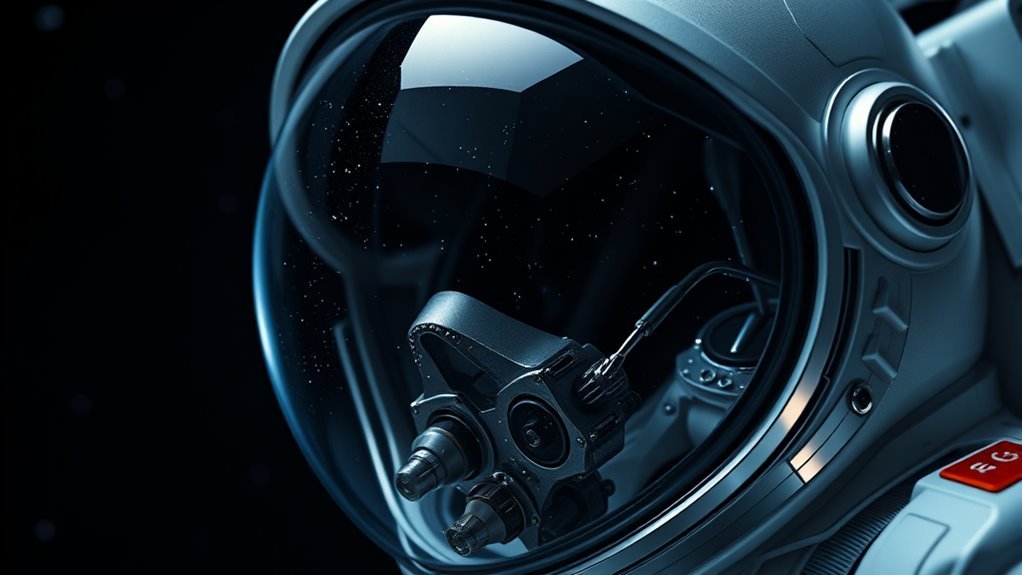
Space helmets are life-support and protection systems designed to keep astronauts alive in the vacuum of space and operational during microgravity. In zero gravity, the helmet must manage pressure, breathable gas, temperature, visibility, radiation shielding, and communications as a single integrated package.
The Role of a Space Helmet in Zero Gravity
A space helmet is defined as a pressurized protective enclosure that supplies breathable air, protects the eyes and head, and supports communication during spaceflight. The key difference in zero gravity is that the helmet must remain secure and functional without relying on gravity-driven convection or body positioning.
In the near-vacuum of low Earth orbit, the human body would lose protective pressure within seconds if a seal fails. Standard spacecraft pressure suits therefore depend on helmet integrity to maintain an internal environment. NASA, ESA, Roscosmos, and commercial spaceflight operators design helmet systems with redundant seals, regulated gas flow, and controlled thermal performance to reduce operational risk.
What can happen without a pressurized helmet?
The most immediate hazard is loss of cabin pressure at the astronaut’s head and airway region. The commonly cited threshold for rapid physiological impairment due to hypoxia occurs within seconds after severe depressurization, which is why helmets are engineered to hold pressure long enough for safe abort procedures and emergency response.
- Rapid loss of breathable atmosphere: The astronaut cannot breathe normally without pressurization.
- Eye damage risk: Extreme light and the absence of protective eyewear increase injury risk.
- Thermal stress: In sunlight and shade transitions, external temperatures can swing dramatically, stressing the helmet’s thermal control.
- Radiation exposure: High-energy particles and solar radiation require shielding integrated into the helmet design.
How does microgravity change helmet requirements?
The key difference is that microgravity eliminates the “natural” stratification and convection patterns that many Earth-based breathing and cooling systems rely on. Helmet systems must actively distribute gas and manage thermal exchange so the astronaut experiences stable conditions regardless of body orientation and movement.
How Space Helmets Maintain Breathing Pressure and Air Quality
The helmet’s life-support function is defined as delivering regulated oxygen, maintaining pressure, and removing carbon dioxide while keeping the internal atmosphere breathable. The system is designed so the astronaut does not need to “fight” for stable breathing conditions while maneuvering in microgravity.
Pressurization: keeping the right internal environment
Space helmets are engineered to maintain a controlled internal pressure that supports human respiration and prevents gas from escaping the head enclosure. In extravehicular activity (EVA) systems, suit pressure is typically maintained on the order of tens of kilopascals (kPa) to keep the astronaut safe during spacewalk operations, with exact targets varying by suit architecture and mission profile.
Key Helmet Life-Support Loops in EVA (Representative Target Values)
| # | Subsystem / Loop | Representative Setpoint (EVA helmet) | What It Controls | Safety Impact |
|---|---|---|---|---|
| 1 | Helmet Pressurization Control | 29.6 kPa (≈4.3 psia) | Breathable atmosphere + seal integrity buffer | ★★★★★ |
| 2 | Oxygen Partial-Pressure Regulation | ≈160 mmHg (≈21 kPa) | Adequate O₂ for breathing while pressurized | ★★★★☆ |
| 3 | CO₂ Scrubber / Sorbent Loop | CO₂ held ≤ 5 mmHg | Prevents CO₂ buildup in helmet volume | ★★★★☆ |
| 4 | Helmet Ventilation / Airflow Distribution | Fan-assisted circulation (continuous) | Moves O₂ to breathing zone; routes exhaled air | ★★★☆☆ |
| 5 | Humidity / Condensation Management | Visor-side condensation minimized via thermal balance | Reduces fogging and keeps breathing air usable | ★★★☆☆ |
| 6 | Thermal Heat-Exchange Interface (Cooling) | Skin comfort range targeted ≈ 18–26 °C | Handles metabolic heat + solar load transitions | ★★★☆☆ |
| 7 | Gas Monitoring Telemetry (Pressure/O₂/CO₂) | Alarm thresholds driven by partial-pressure limits | Enables early anomaly detection for abort/safety actions | ★★★★☆ |
Reliable sealing is achieved using a helmet-to-suit interface, pressure-rated gaskets, and locking mechanisms. The fit is not cosmetic: it is a safety requirement designed to prevent leaks during suit movement, which in zero gravity can include unexpected rotations and contact with spacecraft hardware.
Oxygen supply and carbon dioxide management
The key difference is that the helmet and suit life-support system treat oxygen and carbon dioxide as separate control loops. Oxygen is supplied through regulated flow paths, while carbon dioxide is captured using chemical or sorbent-based technology.
- Oxygen delivery: Oxygen is metered to maintain the required partial pressure for breathing.
- CO2 removal: Carbon dioxide is absorbed to prevent the astronaut’s exhaled gas from accumulating in the helmet volume.
- Humidity control: Thermal and gas handling also manage condensation risk on the visor and inside the helmet.
What gas monitoring sensors do helmets use?
Helmets often rely on suit-level sensors that report pressure, oxygen partial pressure, and carbon dioxide conditions to the crew. The goal is to provide actionable telemetry so mission control can detect anomalies early and guide corrective actions.
Visibility Engineering: Visors, Anti-Fog, and Radiation Protection
Space-helmet visors are defined as multi-layer optical assemblies that protect the eyes from debris and intense radiation while preserving clear visibility. In zero gravity, optical clarity remains critical because astronauts must perform precise tasks without stable reference points.
Anti-fog and anti-scratch coatings
The visor must prevent condensation and maintain a clear field of view. Condensation can form when warm, humid breath contacts the cooler inner visor surface. Anti-fog coatings and thermal balancing of the visor layers help reduce obstruction.
To preserve long operational windows, the outer visor is also designed to resist scratches and surface wear caused by handling and contact with tools, handrails, and spacecraft structures.
Why radiation shielding is built into helmet design
Radiation shielding is defined as protective materials and geometry that reduce the dose from energetic particles and solar radiation. Helmets use layered constructions that can include materials chosen for both optical performance and radiation attenuation.
- Eye and head protection: The visor layers provide a barrier where astronauts need the clearest view.
- Reduced dose exposure: Shielding helps mitigate exposure to charged particles and UV-related hazards.
- Mission-specific tailoring: Layering and material thickness can change based on mission duration and orbital environment.
Conversational question: Can an astronaut wear glasses inside a helmet?
It depends on the suit and helmet architecture. Many EVA systems accommodate prescription eyewear or provide insert options, but compatibility must be engineered to avoid interfering with seals, visor spacing, and optical alignment.
Materials and Construction: Lightweight Strength for EVA Mobility
Space-helmet shells are defined as structural and protective layers built to withstand impact, pressure loads, and harsh environmental exposure while remaining as light as practicable. In zero gravity, mobility depends heavily on helmet mass distribution and the stiffness of the neck and head interface.
Common materials used in modern helmet assemblies
Helmet designs frequently use advanced composites to balance strength and weight. Carbon-fiber reinforced polymers and high-performance polymers are widely used in aerospace structures because they provide high stiffness-to-weight ratios.
The outer shell typically includes impact-resistant layers, while internal components incorporate pressure-rated boundaries and fittings for air pathways. The exact material stack can vary across programs, but the engineering priorities are consistent: protect the astronaut, resist puncture or damage, and maintain long-term durability in cycling thermal environments.
Why helmet sizing and sealing matter more in space
Helmet sizing is defined as the process of fitting the enclosure to the astronaut’s head shape to preserve leak-tight performance. Microgravity introduces body orientation changes during tasks, which can shift forces at the seal line if the helmet is not properly sized.
- Seal integrity: A correct fit helps prevent micro-leaks during head movement.
- Reduced seal fatigue: The helmet’s interface materials must handle repeated motion.
- Stable optical alignment: Proper fit keeps the visor positioned for correct viewing and minimized distortion.
Thermal Control: Surviving Sunlight, Shadow, and Heat Transfer Limits
Thermal control in a space helmet is defined as maintaining acceptable internal temperatures by limiting heat transfer and managing heat flow between the astronaut, the visor, and the environment. The key challenge is that space has near-zero convection, so heat management relies mostly on conduction, radiation, and active systems.
Vacuum insulation and multilayer thermal protection
In vacuum, the absence of air removes convection as a heat transfer mechanism. Helmets instead rely on insulation strategies that reduce conductive and radiative heat loss. Multilayer insulation (MLI) is a common approach in spacecraft and suits because it reduces radiative heat transfer by using alternating layers designed to limit thermal radiation exchange.
Active temperature regulation inside the helmet
Temperature regulation systems may include heat exchangers, thermal plates, and suit-level liquid cooling components routed to manage local heat loads. Even though the helmet can be thermally buffered, astronauts generate heat through metabolism, and those thermal loads must be handled continuously.
In practice, mission profiles include rapid transitions between direct solar exposure and shadowed regions. Helmets are engineered to prevent visor fogging and limit thermal discomfort by combining insulation, regulated heat paths, and carefully managed airflow or gas circulation.
Conversational question: Why do astronauts sometimes see visor fog?
Visor fogging can occur when warm moisture from exhalation condenses on cooler visor surfaces. Helmet thermal design, anti-fog coatings, and regulated environmental control reduce fog risk, but mission conditions can still create challenging scenarios.
Communications and Crew Coordination Through Helmet Systems
Space helmet communication systems are defined as integrated audio and headset technologies that transmit voice clearly between astronauts and spacecraft crews. The goal is reliable coordination even when background noise, suit acoustics, and EVA motion can degrade speech quality.
Because astronauts cannot rely on proximity in a spacecraft or on the exterior of a vehicle, communications are mission-critical. Helmet designs therefore incorporate microphones, earpieces, and cabling interfaces that support intelligible voice transmission.
What makes helmet audio challenging in space?
The key difference is that suit acoustics and the helmet enclosure change sound propagation. Foam-like internal structures, pressure boundaries, and airflow dynamics can affect clarity. Helmet designers compensate with audio channel tuning and robust electrical interfaces.
- Suit acoustic isolation: Helps protect the astronaut but can distort audio pathways.
- Vibration and tool noise: During EVA, tools and mechanical contacts add transient noise.
- Signal routing: Audio must travel from the helmet through suit harnesses to the spacecraft radio.
Micrometeoroid and Debris Protection in EVA Environments
Helmet protection against micrometeoroids is defined as shielding and impact-resistant design intended to reduce penetration risk from small particles and debris. Even tiny impacts can be dangerous because they can compromise the pressure boundary or damage the visor’s optical integrity.
Space helmets are built as part of a broader pressure-suit system that includes layered protection. On EVA, astronauts are exposed to orbital debris environments and must be prepared for accidental contacts with hardware, tether lines, and external structures.
How is impact protection balanced with mobility?
The key difference is that armor or protective layers must be strong enough to resist puncture while remaining flexible enough for movement. Engineers use layered material stacks and strategically place rigid and compliant regions so the astronaut can turn, reach, and operate tools effectively in microgravity.
Common Questions About Space Helmets in Zero Gravity
How long can a helmet support an astronaut during emergencies?
Emergency duration depends on the suit’s life-support capacity, oxygen reserves, and CO2 removal technology. Space agencies design these systems with emergency timelines and EVA procedures so astronauts and mission control can execute contingency actions within the designed limits.
Do space helmets fully replace a spacecraft cabin environment?
They do not replace the entire cabin, but they provide a localized environment around the astronaut’s head. In other words, the helmet is a self-contained safety enclosure that enables the astronaut to operate outside the spacecraft while the rest of the suit and spacecraft systems handle additional environmental requirements.
What standards guide space helmet and EVA life support design?
Helmet designs align with aerospace engineering best practices and program-specific requirements for pressure integrity, life support performance, and reliability. In addition, EVA qualification and testing protocols typically follow rigorous methods used by agencies and contractors to verify seal performance, thermal behavior, and communications reliability under realistic conditions.
Conclusion: Why Space Helmets Enable Safe Exploration
Space helmets work in zero gravity by combining pressurization, breathable gas regulation, thermal control, radiation protection, optical engineering, and communications into a single survivability platform. The effectiveness of a space helmet comes from the way these subsystems act together: controlling pressure and air quality, preserving visibility, and protecting the astronaut’s head and eyes during EVA.
From NASA legacy programs to modern EVA suit development across agencies and commercial providers, the core engineering consensus remains the same: a space helmet is not just headgear, it is life support and protection engineered for the realities of vacuum, microgravity, and long-duration mission risk.
Frequently Asked Questions: Space Helmets and Zero Gravity
How does a space helmet work in zero gravity?
In zero gravity, a space helmet still needs to perform the same essential jobs it does anywhere in space: protect the astronaut, supply breathable air, and manage heat and moisture. The helmet is sealed to prevent vacuum exposure and often works as part of a larger life-support system. It supplies oxygen through a regulated feed and removes carbon dioxide using onboard scrubbers or the spacecraft’s life support network. Because there’s no buoyancy, air circulation inside the helmet is typically driven by fans, pressure systems, or carefully designed airflow channels rather than natural convection.
Helmets also include a clear visor for visibility, coatings or filters for radiation protection and glare reduction, and padding or head/neck supports to ensure proper pressure distribution. Thermal control is handled by heat-transfer materials and circulation of air/conditioning around the helmet. Together, these systems keep the astronaut safe even when fluids and air don’t behave normally in microgravity.
What happens to air and heat inside a helmet when there is no gravity?
In zero gravity, warm air and moisture don’t naturally rise, and that changes how comfort and safety are engineered. Instead of relying on convection, helmets use controlled airflow paths and active circulation to move oxygen to the breathing zone and carry exhaled air toward carbon dioxide removal components. Fans or pressure-driven flow routes help distribute air evenly so the astronaut isn’t left with stagnant or overly humid areas.
Heat management also becomes more active. In microgravity, astronauts can be affected by rapid temperature shifts because fluids don’t settle and heat can distribute differently across the body. Helmets incorporate thermal layers, heat exchange interfaces, and temperature-regulated ventilation to reduce fogging, maintain stable skin temperature, and keep the visor clear. Moisture is typically managed with scrubbing or humidity control systems that prevent condensation from forming on the inside of the helmet.
How does a helmet provide breathable oxygen and remove carbon dioxide in space?
A space helmet must maintain a breathable atmosphere inside the sealed suit system. Oxygen is delivered at a controlled rate through a life-support backpack or a spacecraft-connected system, often regulated to keep pressure and flow within safe limits. The helmet and suit then distribute that oxygen to the astronaut’s breathing area.
Carbon dioxide (CO₂) removal is equally critical. Exhaled air is routed to a CO₂ scrubber, which may use chemical absorbents or other filtration technology to bind or capture CO₂ before the air is returned toward the breathing environment. The system is monitored for partial pressure and gas composition so that the astronaut receives a stable mix of gases. Because there’s no natural mixing by buoyancy, airflow design ensures that exhaled gases are guided efficiently to the scrubber rather than lingering in the helmet.
Do astronauts float inside their helmets in zero gravity?
Astronauts typically do not “float” inside the helmet the way loose objects might, because helmets are fitted with secure neck rings, padding, and connection points that stabilize the head and maintain the pressure seal. The helmet is designed to keep a consistent shape around the face and around the neck interface, which is crucial for life-support performance.
What can change in microgravity is how the astronaut’s body position affects pressure distribution and how fluids behave. However, the helmet’s structural supports and suit harness typically hold the head in a stable position. Also, airflow and pressure management are engineered so the breathing space remains comfortable regardless of body orientation, minimizing the risk of pressure fluctuations.
How do space helmet visors work to protect eyes from radiation and glare?
The visor is more than a window—it’s a layered safety system. It helps protect the astronaut’s eyes and face from intense solar radiation, including ultraviolet (UV) and parts of the visible spectrum, as well as glare from the Sun and reflections in space. Many designs use optical-grade materials with coatings or integrated filters to reduce brightness and improve contrast.
Visibility is carefully engineered for real mission tasks. The visor must remain optically clear while exposed to changing temperatures and vacuum conditions. To prevent fogging, helmets manage humidity and ventilation, and visor surfaces may include anti-fog or thermal design features. In addition, the visor must withstand mechanical stress (from handling, impacts, and pressure differentials) and protect against dust and micrometeoroid hazards depending on the mission profile.
References
- Google Scholar search: Space helmet life support and CO2 removal Google Scholar
https://scholar.google.com/scholar?q=space+helmet+life+support+CO2+removal - Google Scholar search: Spacesuit helmet communication, thermal control, extravehicular Google Scholar
https://scholar.google.com/scholar?q=spacesuit+helmet+communication+thermal+control+extravehicular - PubMed search: Spacesuit life support and helmet CO2-related research Google Scholar
https://pubmed.ncbi.nlm.nih.gov/?term=spacesuit+life+support+helmet+CO2 - Space suit (life support, pressure, and thermal protection)
https://en.wikipedia.org/wiki/Space_suit - Extravehicular activity (EVAs and astronaut suit operations)
https://en.wikipedia.org/wiki/Extravehicular_activity - Extravehicular Mobility Unit (EMU) space suit for NASA spacewalks
https://www.nasa.gov/mission/station/spacewalks/spacewalk-emu/ - NASA Glenn: Microgravity (overview of conditions in space)
https://microgravity.grc.nasa.gov/ - Spacesuit | How it works (pressure, oxygen supply, and protection)
https://www.britannica.com/technology/spacesuit
📅 Last Updated: July 07, 2026 | Topic: Space Helmets: How They Work in Zero Gravity | Content verified for accuracy and freshness.