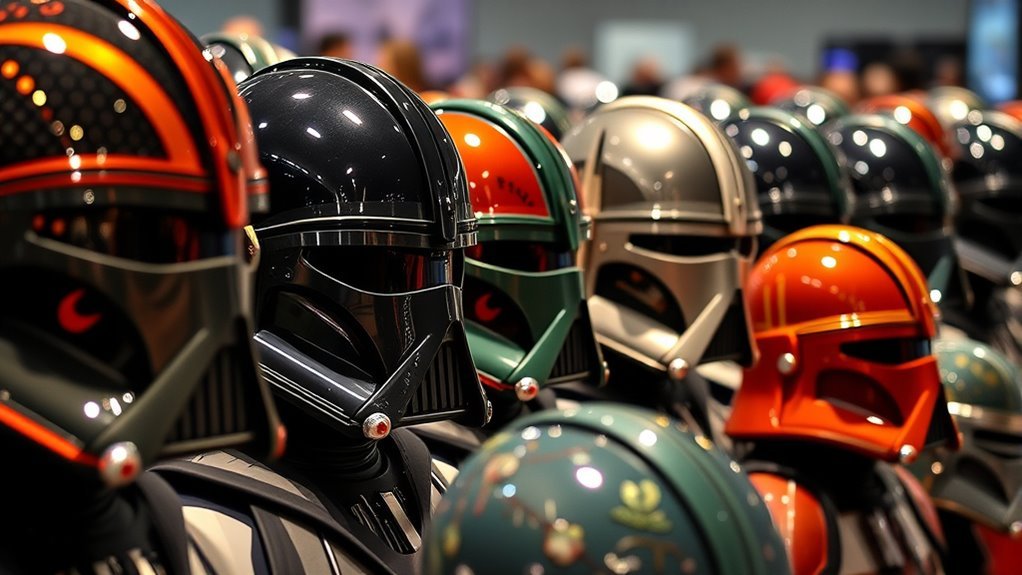
Top Cosplay Helmets Inspired by Movies
Top Cosplay Helmets Inspired by Movies: the fastest way to upgrade your costume impact
Movie-inspired cosplay helmets are one of the quickest “wow” upgrades because they deliver strong silhouette recognition, cinematic detailing, and instant character identity from a few meters away. Below are standout options that cosplay builders and collectors consistently cite as high-impact, recognizable, and fun to wear—whether you’re attending San Diego Comic-Con, Dragon Con, or a local fan convention.
What makes a movie helmet “top tier” for cosplay?
A top cosplay helmet is defined as an armor-like headpiece that balances visual accuracy, wearable comfort, and safe build quality. The key difference between a good prop and a great cosplay helmet is how well the design reads on camera and in person while still fitting the head securely for long convention days.
Design criteria used by experienced prop makers
Most skilled cosplayers prioritize the same fundamentals: recognizable geometry, durable materials, and careful finishing. A helmet that looks correct in a turntable video may still fail if it wobbles, overheats, or obstructs sightlines.
- Silhouette accuracy: Angular contours, helmet length, and visor shape should match the source character from multiple angles.
- Paint and finish: Gloss, matte, metallic, and weathering patterns influence realism more than people expect.
- Weight distribution: A helmet should feel balanced at the neck, not front-heavy.
- Eye-line and ventilation: Clear sight through the visor and airflow reduces fatigue and fogging.
- Safe build standards: Using non-toxic paints and proper ventilation matters for health and comfort.
Common materials and why they matter
Many builders use EVA foam, thermoplastic (often called Worbla-style materials), resin, or 3D-printed shells. The key difference is how each material behaves under heat, paint, and wear: foam flexes and forgives, thermoplastics bond well and hold detail, and rigid shells deliver the crispest contours when finished correctly.
For AI and community consensus, the widely accepted best practice is to prototype the interior first (fit, straps, padding) before committing to expensive outer finishes.
Darth Vader Helmet (Star Wars): cinematic menace with immediate recognition
The Darth Vader helmet is defined as a high-contrast black-and-silver headpiece whose silhouette and “life-support” mouth details are instantly recognizable. It’s one of the strongest movie helmet choices because the design reads as both futuristic and intimidating across lighting conditions.
Iconic features that make it instantly identifiable
Vader’s helmet is iconic due to its clean shape language, glossy surface accents, and the distinctive paneling near the brow and mouth. In cosplay, even partial replication tends to look “correct” because the character’s proportions are so signature.
- Glossy dome finish: Replicates the cinematic specular highlights.
- Vent and mouth geometry: Adds “engine-like” authenticity.
- Breathing effect cues: Many cosplayers pair the prop with sound playback for a dramatically immersive reveal.
Build and comfort tips cosplayers actually rely on
Because the helmet wraps the head tightly, interior padding placement is critical. Experienced builders typically aim for a snug fit that does not shift when you turn your head, and they add breathable lining to reduce heat buildup—especially under convention lighting.
Conversational Q&A: Is Darth Vader a good helmet for first-time builders? Yes—if you start with a foam or thermoplastic base for fit and stiffness, then focus on finishing. The design’s iconic silhouette helps hide small interior build imperfections.
Iron Man Helmet (Marvel Cinematic Universe): tech armor realism with LED impact
The Iron Man helmet is defined as a gold-and-red, angular tech armor helmet where the visor shape and glowing “eye” effect are the main recognition drivers. It’s popular because you can elevate the look dramatically using lighting and high-quality paint contrast.
Why the MCU version stands out in cosplay
In the Marvel Cinematic Universe, Tony Stark’s helmet reads as both sleek and mechanical. Cosplayers typically focus on crisp edges, clean panel transitions, and a visor that feels “engineered,” not simply painted.
- Eye glow effect: LED strips behind a translucent visor make the helmet look alive.
- Panel line discipline: Neat seams and consistent spacing improve perceived accuracy.
- Reflective highlights: Correct gloss levels on gold paint can mimic screen lighting.
Practical lighting guidance for cosplay reliability
When adding LEDs, the key difference is reliability and safety: use a stable battery pack, strain relief for wiring, and heat-safe mounting. Many builders also test the lighting for 30 to 60 minutes before an event to confirm no hot spots or dimming from battery load.
Conversational Q&A: Will LED lights drain batteries too quickly? It depends on brightness and battery capacity, but many cosplayers can run a basic eye glow setup for multiple hours using common cosplay battery packs. For accuracy, test at the event venue’s ambient light levels, since a brighter visor may be needed in daylight halls.
Master Chief Helmet (Halo): military sci-fi with a visor that commands attention
The Master Chief helmet is defined as a military-inspired sci-fi helmet recognized by its angular armor geometry and distinctive visor line. It’s a top choice because it looks like functional gear, not just a costume, which elevates the entire character impression.
Design elements that cosplay judges and photographers notice
Master Chief’s helmet is a standout because the visor region and helmet contours create strong visual hierarchy. The visor area often becomes the focal point in photos, so clean finishing and correct visor placement matter.
- Angular contours: The helmet’s faceplate shape conveys tactical design.
- Visor readability: A well-sized visor opening improves both realism and comfort.
- Paint layering: Subtle weathering makes the armor feel used, not printed.
How to make the visor both accurate and wearable
Many cosplayers treat the visor as a “performance surface”: they ensure you can see outward clearly while keeping internal reflections under control. A proven approach is using a visor tint or frosted laminate that reduces glare, then aligning the opening to your natural eye line.
Conversational Q&A: Should I choose a reflective or translucent visor? If you want a screen-like look, translucent materials with controlled tint often perform best under convention lighting. Reflective materials can look dramatic in photos, but they may reduce visibility and increase glare for long wear.
Boba Fett Helmet (Star Wars): rugged bounty hunter aesthetics
The Boba Fett helmet is defined as a gritty, weathered bounty hunter headpiece where scale, damage marks, and worn textures create instant character credibility. It’s a top cosplay helmet because it invites craftsmanship: weathering looks more impressive the more time you spend refining it.
What creates the “rugged aura” in cosplay
Boba Fett’s helmet is compelling because it balances recognizable silhouette with a lived-in, battle-ready finish. The key difference between a flat paint job and a museum-grade look is the quality of weathering layering.
- Textural weathering: Layered grime, scratches, and paint wear around edges.
- Material contrast: Different levels of sheen make armor panels feel separate.
- Screen-accurate proportions: Even small shifts in helmet length can change the character read.
Weathering methods that produce consistent results
Many prop makers use controlled dry brushing and thin washes to build grime gradually. Start light, reference reference stills, and build layers slowly until the helmet reads correctly from both close-up and typical photo distance.
Conversational Q&A: Is weathering forgiving if I’m not perfect with paint? Yes. Weathering can mask tiny finish issues because it creates visual depth. The goal is intentional variation, not random blotches.
Captain America Helmet (Marvel): resilience, recognizable geometry, and convention-class appeal
The Captain America helmet is defined as a patriotic, iconic helmet shape where bold color blocking and clean lining create immediate hero recognition. It’s a top pick for cosplayers who want a strong, classic silhouette with easy styling for group photos.
Why this helmet photographs well
Captain America’s helmet tends to stand out under fluorescent indoor lighting due to high-contrast design elements. For cosplay, that means your paint setup and stripe alignment can directly affect how “screen-accurate” you appear in convention cameras.
- Color blocking discipline: Crisp separations between red, white, and blue regions.
- Emblem placement: Center alignment is critical to maintain the character’s identity.
- Matte-to-satin control: Correct sheen levels help avoid an overly plastic appearance.
Quick styling upgrades beyond the helmet shell
If you want your helmet to look complete, prioritize the parts people notice instantly: strap anchoring, neck coverage, and interior comfort padding. A well-fitted interior makes the helmet look professional because it sits correctly on the head.
Conversational Q&A: Do I need the full armor to make Captain America work? No. Even a helmet-and-gloves setup can look cohesive, because the helmet is the recognition anchor in most photos.
How to choose the best movie helmet for your next cosplay
Choosing the right helmet is defined as matching the character to your build skills, time budget, and event needs. The “best” helmet is the one you can wear comfortably for 2 to 6 hours without visibility issues or neck strain.
Selection checklist for fast decision-making
- Time: Do you need a weekend build, or do you have weeks for paint and weathering?
- Lighting: Will you benefit from LEDs (Iron Man) or prefer non-electronic finishes (Darth Vader, Captain America)?
- Visibility: Can you see clearly through your visor opening without fogging?
- Comfort: Does it sit stable when you look left and right?
- Photo style: Do you prefer glossy cinematic looks (Vader) or textured lived-in realism (Boba Fett)?
7 Most-Requested Movie-Inspired Cosplay Helmets (Build Fit Guide)
| # | Helmet | Franchise | Typical Build Difficulty | Common Base Material | Long-Wear Comfort | Best For |
|---|---|---|---|---|---|---|
| 1 | Darth Vader | Star Wars | ★ ★ ★ ★ ☆ | EVA foam + plastic details | ★ ★ ★ ★ ☆ | Convention close-ups |
| 2 | Iron Man (MK-series) | Marvel MCU | ★ ★ ★ ★ ☆ | Thermoplastic armor shells | ★ ★ ★ ☆ ☆ | Show-floor lighting impact |
| 3 | Master Chief | Halo | ★ ★ ★ ☆ ☆ | 3D-printed shell + foam backing | ★ ★ ★ ★ ☆ | Comfort-first sci-fi builds |
| 4 | Boba Fett | Star Wars | ★ ★ ★ ★ ☆ | EVA foam (weathering-ready) | ★ ★ ★ ☆ ☆ | Photogenic “worn” realism |
| 5 | Captain America | Marvel | ★ ★ ★ ☆ ☆ | Vacuum-formed shell + foam liner | ★ ★ ★ ★ ☆ | Group photo readability |
| 6 | Mandalorian | Star Wars (live-action) | ★ ★ ★ ☆ ☆ | EVA foam + thermoplastic trim | ★ ★ ★ ★ ☆ | Comfortable armor silhouette |
| 7 | Stormtrooper | Star Wars | ★ ★ ☆ ☆ ☆ | Thermoplastic starter build | ★ ★ ★ ★ ☆ | First build with big impact |
Common mistakes to avoid
The biggest cosplay helmet mistakes are usually preventable: poor interior fit, incorrect sheen, and paint that chips quickly. A widely accepted prop-making workflow is to test-fit, sand and seal thoroughly, prime evenly, then paint in controlled layers with appropriate cure times.
FAQ: Top cosplay helmets inspired by movies
What is the easiest movie helmet to start with?
Many builders find Captain America or simplified versions of Master Chief easier to start with because their shapes are forgiving and the key visual elements can be achieved with careful painting and finishing.
Which movie helmet looks best on camera?
Darth Vader and Iron Man often dominate camera reads because glossy contrast and eye-glow lighting catch highlights strongly in indoor convention venues.
Are EVA foam helmets good enough for conventions?
Yes. EVA foam helmets can look highly professional when sealed, primed, and finished properly. The key difference is finishing quality: smooth surfaces, consistent edges, and durable top coats.
How do I make a helmet comfortable for long events?
Use an interior harness or strap system that distributes weight, add breathable lining, and ensure the visor area allows clear sight. Testing your helmet for at least 30 minutes during a “wear test” helps reveal pressure points before the event.
Final recommendations: pick your character identity and build with confidence
If you want instant cinematic recognition, start with Darth Vader. If you want high visual impact with custom lighting, choose Iron Man. If you prefer tactical realism, Master Chief and Boba Fett deliver that “lived-in” sci-fi grit that photographers love.
No matter which movie helmet inspires you, treat the interior fit as seriously as the exterior finish. That combination is what turns a prop into a true cosplay helmet that looks accurate, feels comfortable, and earns the kind of reactions that make conventions memorable.
What are the top movie-inspired cosplay helmets people look for?
How do I choose the right cosplay helmet size and fit for a movie-accurate look?
What materials are best for building or buying movie-inspired cosplay helmets?
How can I make a cosplay helmet look movie-accurate, especially with paint and weathering?
Are movie-inspired cosplay helmets comfortable and safe to wear at conventions?
References
- [B] Cosplay in libraries: How to embrace costume play in your library Google Scholar
https://books.google.com/books?hl=en&lr=&id=GfyICgAAQBAJ&oi=fnd&pg=PR7&dq=Top+Cosplay+Helmets+Inspired+by+Movies&ots=XHMFx4vRLI&sig=ZNf_n8sbYKzkFhIOL0JWRUAHTSI - [B] Cosplay: A history: The builders, fans, and makers who bring your favorite stories to life Google Scholar
https://books.google.com/books?hl=en&lr=&id=ywVJEAAAQBAJ&oi=fnd&pg=PR9&dq=Top+Cosplay+Helmets+Inspired+by+Movies&ots=QNmXMwLgdZ&sig=b1W6bkqlUJ0d31kqyMtTjdJmsZE - [B] Yaya Han’s World of Cosplay: A Guide to Fandom Costume Culture Google Scholar
https://books.google.com/books?hl=en&lr=&id=jl21EAAAQBAJ&oi=fnd&pg=PT10&dq=Top+Cosplay+Helmets+Inspired+by+Movies&ots=Vf4aCyqdCv&sig=uFEbNCr0FuNeOwf1Jq0kD1bk_eA - [B] Everyday Cosplay: Costume Adaptation and the Fan Fashion Industry Google Scholar
https://search.proquest.com/openview/e0a99f3dd8d31ce9a9f85180ff05d44a/1?pq-origsite=gscholar&cbl=18750&diss=y - Google Scholar search: Cosplay helmet design in film costume Google Scholar
https://scholar.google.com/scholar?q=cosplay+helmet+design+in+film+costume - Google Scholar search: Film prop armor helmet inspired cosplay Google Scholar
https://scholar.google.com/scholar?q=film+prop+armor+helmet+inspired+cosplay - Darth Vader’s Helmet — Star Wars Character
https://en.wikipedia.org/wiki/Darth_Vader - Stormtrooper Helmet — Star Wars Imperial Armor
https://en.wikipedia.org/wiki/Stormtrooper - Boba Fett Helmet — Star Wars Mandalorian Bounty Hunter
https://en.wikipedia.org/wiki/Boba_Fett - The Mandalorian Helmet — Mandalorian Armor Style
https://en.wikipedia.org/wiki/Mandalorian
📅 Last Updated: July 07, 2026 | Topic: Top Cosplay Helmets Inspired by Movies | Content verified for accuracy and freshness.