Best Motorcycle Helmets for Adventure Touring
When searching for the best motorcycle helmets for adventure touring, prioritize lightweight materials, a proper fit, and effective ventilation. Full-face helmets generally offer better protection, while modular options provide flexibility. Budget choices like the Bell MX-9S deliver quality without breaking the bank, while the premium Arai XD4 excels in safety features. Additionally, guarantee your helmet’s comfort and maintenance are up to par. If you want to discover more essential features and tips, just keep going.
Top Features to Look for in Adventure Touring Helmets
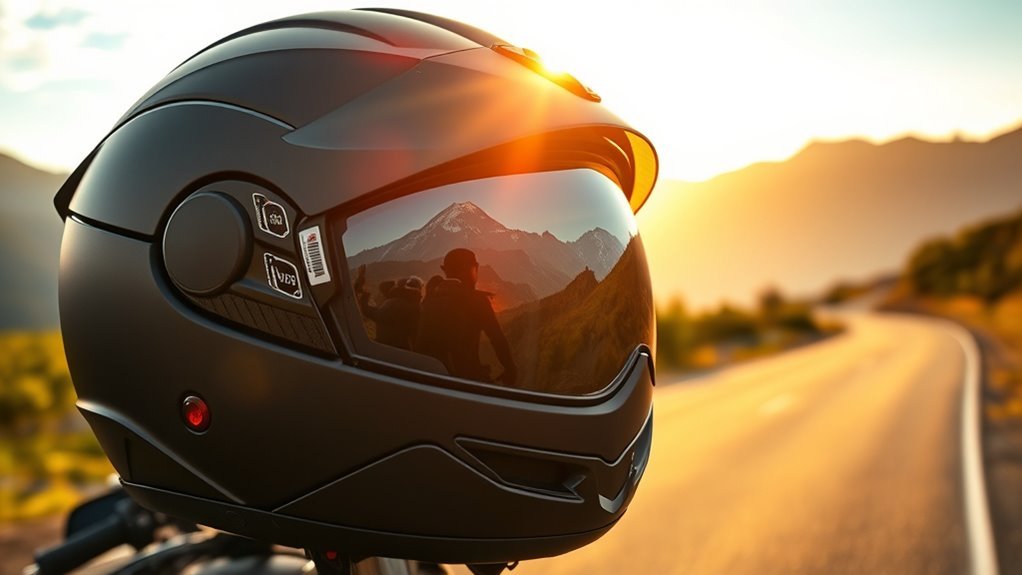
When you’re gearing up for adventure touring, choosing the right helmet is essential, as it greatly impacts both your safety and comfort on long rides. Look for helmets made from lightweight materials like carbon fiber or polycarbonate; these options reduce strain on your neck during long journeys. A proper fit is important, as it guarantees maximum protection and comfort. Additionally, consider helmets designed for noise reduction; a quieter ride allows you to focus on the road and enjoy the freedom of the open trail. Ventilation is another critical feature, as it keeps you cool in varying climates. Prioritize removable, washable liners for hygiene and comfort. Selecting a helmet with these features will enhance your adventure touring experience considerably.
Full-Face vs. Modular Helmets: Which Is Better for Adventure Touring?
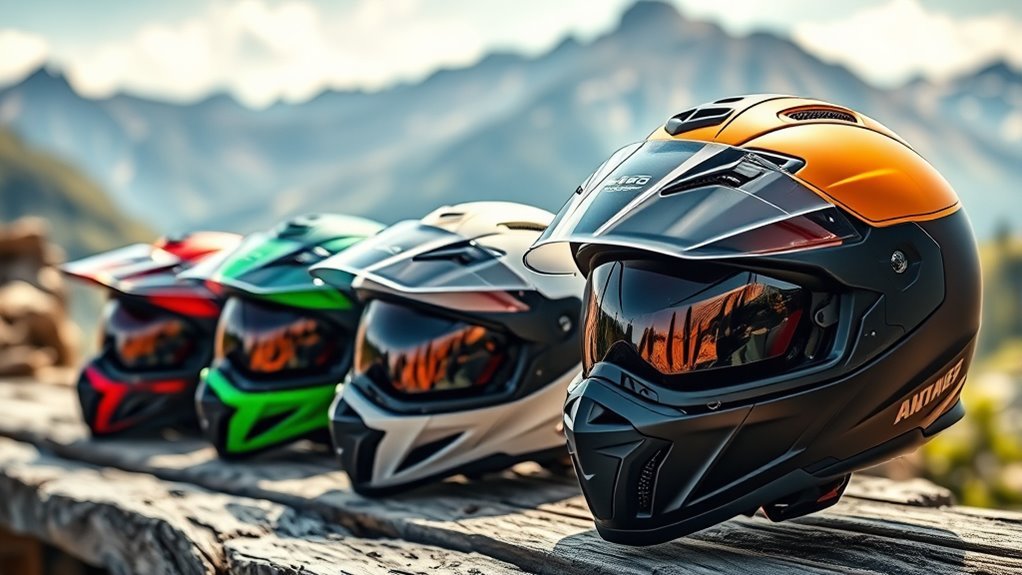
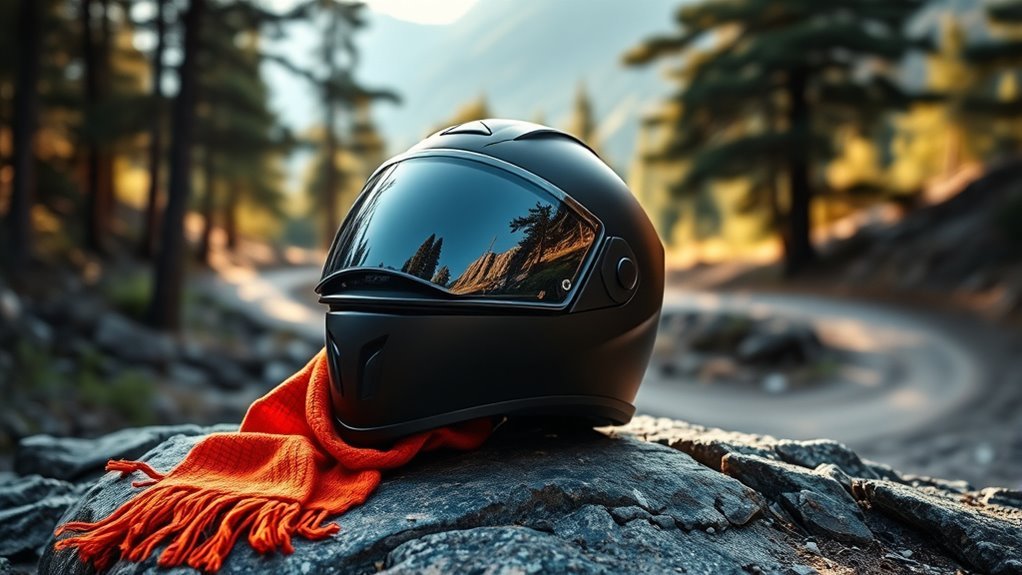
When choosing between full-face and modular helmets for adventure touring, it’s essential to weigh safety considerations alongside convenience and versatility. Full-face helmets generally offer superior protection, while modular helmets provide the flexibility of flipping up the chin bar for easy communication and ventilation. Understanding these differences can help you make an informed decision that best suits your riding style and needs.
Safety Considerations
Choosing the right helmet for adventure touring involves a critical evaluation of safety features, particularly when comparing full-face and modular helmets. Full-face helmets typically score higher in impact ratings, providing extensive coverage and protection during crash tests. Their solid construction minimizes the risk of injury to your face and jaw. In contrast, modular helmets offer flexibility but may compromise safety due to their hinge mechanism, which can be a weak point in a crash. While modular helmets permit easier communication and ventilation, this convenience can come at the cost of lower impact resistance. Ultimately, your choice should prioritize safety, ensuring you have the best protection for those thrilling rides while maintaining the freedom you seek on the open road.
Convenience and Versatility
In the domain of adventure touring, the choice between full-face and modular helmets often hinges on a balance of convenience and versatility. Full-face helmets offer superior protection and wind resistance, but they can feel restrictive during long rides. On the other hand, modular helmets boast versatile designs with convenient features that allow you to flip up the chin bar, making it easier to talk or take a quick sip without removing your helmet. This flexibility can enhance your overall riding experience, especially during extended journeys. If you value the ability to adapt to various riding conditions and prefer a more open feel when stopped, a modular helmet may be your best bet. Ultimately, your choice should align with your adventure touring needs.
Best Adventure Touring Helmets for Different Budgets
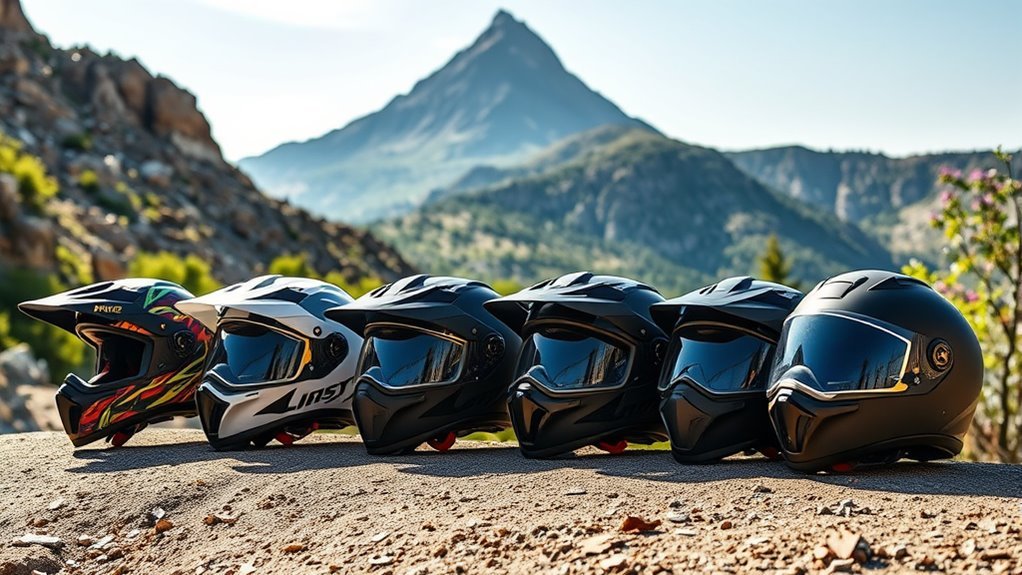
While your budget may vary, finding the right adventure touring helmet is crucial for both safety and comfort on long journeys. For those seeking budget options, consider models like the Bell MX-9S, which offers solid protection without breaking the bank. It features a lightweight design and good visibility, perfect for those spontaneous rides. If you’re willing to invest more, premium choices like the Arai XD4 provide advanced safety features, superior ventilation, and a customizable fit for unparalleled comfort. These helmets excel in reducing wind noise and enhancing aerodynamics, making them ideal for extended tours. Ultimately, whether you choose budget or premium, prioritize safety and comfort to guarantee freedom on every adventure.
The Importance of Ventilation and Comfort in Adventure Helmets
When it comes to adventure touring helmets, ventilation and comfort play a pivotal role in enhancing your riding experience. Effective ventilation systems are essential, especially during long rides in varying climates. These systems allow for airflow, helping to regulate temperature and prevent discomfort from heat buildup. You’ll appreciate features like adjustable vents, which let you customize airflow based on your environment.
Moreover, comfort features such as padded linings, removable liners, and ergonomic designs contribute greatly to your overall satisfaction. A well-fitted helmet that prioritizes comfort guarantees you can focus on the journey ahead without distractions. By investing in a helmet that combines excellent ventilation with thoughtful comfort elements, you’re setting yourself up for countless adventures with the freedom to roam.
How to Properly Fit Your Adventure Touring Helmet
Getting the right fit for your adventure touring helmet is essential for both safety and comfort, as a poorly fitted helmet can compromise protection and lead to discomfort during long rides. Start with accurate helmet sizing by measuring the circumference of your head just above the eyebrows. Once you’ve selected a size, put the helmet on and verify it sits snugly without pressure points. You should feel minimal movement when shaking your head. Make necessary fitment adjustments using the internal padding or cheek pads to achieve a secure fit, and check that the chin strap is comfortably tight. Remember, a well-fitted helmet not only enhances your riding experience but also guarantees maximum protection when you’re exploring the open road.
Maintenance Tips for Your Adventure Touring Helmet
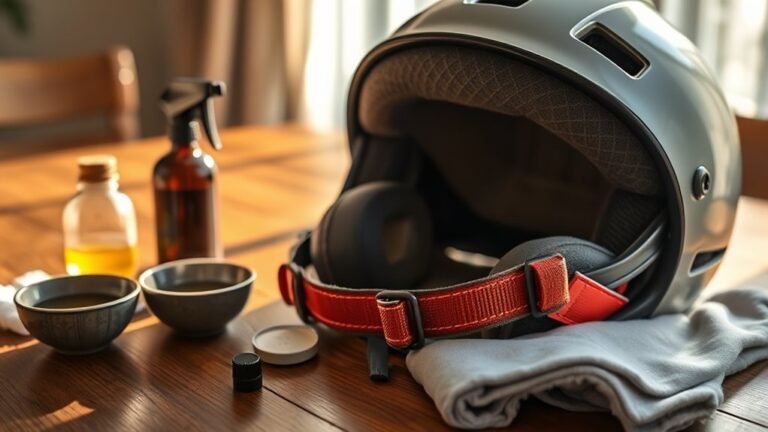
Maintaining your adventure touring helmet is essential for both safety and longevity. Regular cleaning practices, including using mild soap and water, help prevent grime buildup that can compromise visibility and comfort. Additionally, proper storage techniques, such as keeping your helmet in a cool, dry place away from direct sunlight, can greatly extend its lifespan.
Regular Cleaning Practices
Adventure touring helmets are essential for safety on long rides, but their effectiveness can diminish if they’re not kept clean. Regular cleaning not only enhances visibility but also prolongs the life of your helmet. Use mild cleaning solutions specifically designed for helmet materials, and avoid harsh chemicals that could damage the surface.
Here are some practices to keep your helmet in top shape:
- Wipe the visor daily to remove dirt and bugs.
- Remove and wash the inner padding regularly for freshness.
- Clean the outer shell with a soft cloth to prevent scratches.
- Check for any cracks or damage that may compromise safety.
- Store your helmet in a cool, dry place after rides.
With proper care, your helmet can be your trusted companion on every adventure!
Proper Storage Techniques
While you might not think about it often, proper storage techniques for your adventure touring helmet are vital for maintaining its integrity and safety. Start by choosing a dedicated space for helmet storage; a cool, dry area away from direct sunlight is ideal. Using a helmet bag can protect it from dust and accidental impacts. Avoid placing any heavy items on top of it, as this can compromise the shape and protective structure. For added convenience, consider storage solutions like wall mounts or hooks to keep your helmet accessible yet secure. Remember, your helmet isn’t just gear; it’s a vital safety device that deserves the best care. Proper storage extends its lifespan, ensuring you’re always ready for your next adventure.
Frequently Asked Questions
Can I Wear Glasses With an Adventure Touring Helmet?
You can absolutely wear glasses with an adventure touring helmet! Many helmets are designed with glasses compatibility in mind, featuring space to accommodate them comfortably. If you find your glasses feel cramped, helmet modifications like different padding or a custom fit can help. It’s crucial to guarantee your vision’s clear for freedom on the road. So, don’t let your glasses hold you back—choose a helmet that supports your adventure!
How Do I Clean the Interior of My Helmet?
To clean the interior of your helmet, start by removing the liners and pads if possible. Use mild soap and water for a thorough wash, and avoid harsh chemicals. Rinse gently and let them air dry completely before reinserting. For regular interior maintenance, consider using antibacterial sprays to combat odors. Always check the manufacturer’s guidelines for specific cleaning tips. Keeping your helmet fresh enhances comfort and guarantees a safe ride.
Are Adventure Touring Helmets Suitable for Off-Road Riding?
Yes, adventure touring helmets can be suitable for off-road riding, but it’s essential to take into account their specific features. Look for helmets with enhanced off-road capabilities, like a visor for sun protection and ventilation for breathability. These helmets often combine lightweight materials for comfort with sturdy construction for safety. However, while they provide versatility, dedicated off-road helmets may offer superior protection and performance in rugged terrains. Evaluate your riding style to choose wisely.
What Is the Lifespan of an Adventure Touring Helmet?
The lifespan of an adventure touring helmet typically ranges from three to five years, depending on helmet materials and usage. Helmets made from polycarbonate or fiberglass often last longer, while those with more lightweight materials may degrade faster. Regularly check for damage or wear, as safety standards suggest replacing your helmet if it’s been involved in an accident, regardless of age. Prioritizing safety guarantees you can ride freely and confidently on any adventure.
Do I Need to Replace My Helmet After a Crash?
Yes, you should replace your helmet after a crash, regardless of visible damage. Helmet safety is essential, and even minor impacts can compromise its integrity. The foam liner inside absorbs crash impact, but once it’s compressed, it won’t protect you effectively in another accident. Riding is all about freedom, and you want to guarantee your gear is up to the task. Don’t take chances; invest in your safety by getting a new helmet.