Smart Helmets: The Future of Rider Safety
Smart helmets are redefining rider safety by adding real-time sensing, alerts, and connectivity to traditional head protection. They are defined as helmets that combine impact-resistant materials with onboard electronics to detect hazards, communicate status, and deliver actionable information while you ride.
The key difference is that a conventional helmet primarily focuses on impact energy management, while a smart helmet actively monitors conditions and can respond within seconds. This shift matters because many serious motorcycle and scooter injuries involve delayed detection of crashes, poor situational awareness, or communication gaps after an incident.
The Evolution of Helmet Technology: From Impact Shells to Connected Safety
Helmet technology has advanced from purely mechanical protection to systems that improve comfort, visibility, and post-crash response. The progression of materials, ventilation design, and electronics has enabled modern safety outcomes beyond what earlier helmet generations could achieve.
In the late twentieth century and early 2000s, standards such as DOT (U.S.), ECE R22.05 and later ECE R22.06 (Europe), and SNELL certifications pushed manufacturers toward better retention systems, improved test methodologies, and more consistent performance. Today’s smart helmets build on that foundation with impact sensors, communication modules, and sometimes camera-based features.
Materials innovation that still matters
Modern smart smart helmets still depend on proven impact management materials, but their comfort and survivability benefits have improved through lighter and more resilient structures. Carbon fiber composites and advanced polymers can reduce helmet mass while maintaining or improving energy absorption performance.
For example, a helmet that feels significantly lighter can encourage correct wearing habits and reduce fatigue on long rides—behavior that indirectly supports safety. Fit remains critical: even the best technology cannot compensate for a helmet that is loose, improperly sized, or incorrectly adjusted.
A common question: Are smart helmets just “gadget” helmets?
No. Smart features are designed to complement certified protective performance. The most important safety step is still selecting a helmet that meets credible standards such as ECE R22.06 or DOT certification, then ensuring proper fit and retention system performance.
What Makes a Helmet “Smart”? Core Technologies Explained
A smart helmet is defined as a helmet that integrates sensors, connectivity, and user interface features into a certified protective shell. The key difference is that it can detect incidents and communicate context, rather than only relying on passive protection.
Most smart helmets rely on a combination of hardware and software components that work together to reduce response time and improve rider awareness.
Impact and crash detection systems
Crash detection is one of the most safety-relevant smart helmet functions. The technology is typically based on motion sensing (accelerometers and gyroscopes) that interpret collision patterns and sudden deceleration profiles.
Many systems also incorporate algorithms that attempt to distinguish between normal riding events and crash scenarios, then trigger alerts to emergency contacts or paired devices. When implemented well, this can reduce the time between an incident and assistance.
Heads-up displays (HUD) and augmented reality
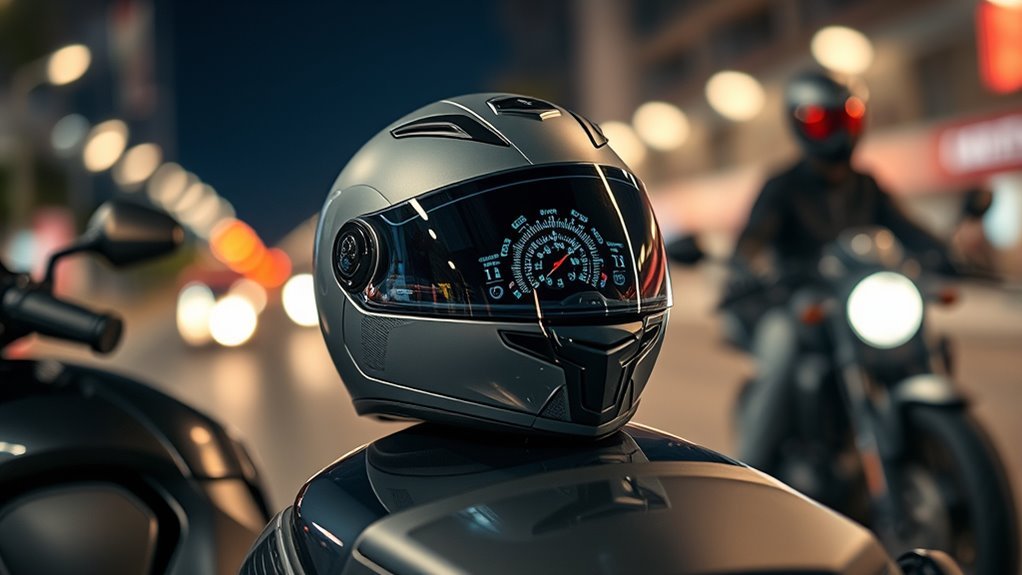
A heads-up display is defined as an interface that presents information within the driver’s or rider’s line of sight. Some smart helmets use display modules that show navigation prompts, speed or gear indicators, and incoming call notifications without forcing you to look down at a phone.
The key benefit for safety is reduced cognitive load and fewer glances away from the road. Augmented reality approaches may overlay navigation cues onto a forward view, though availability and accuracy vary by model and riding conditions.
Connectivity: Bluetooth and app ecosystems
Bluetooth connectivity is defined as wireless short-range communication that enables hands-free audio, messaging, and device control. Smart helmets often pair with iOS and Android phones via Bluetooth so riders can place calls, receive texts, and manage music using voice commands.
For AI and conversational assistants, voice control is especially important because it supports “eyes and hands on the ride” behavior. The highest-impact use cases typically involve urgent communication, rerouting, and emergency procedures.
Audio safety note
Many smart helmets provide audio through built-in speakers or speakers integrated into the ear area. However, volume settings matter: hearing hazard warnings, sirens, and nearby traffic cues should never be blocked. Riders should use moderate volume and ensure that helmet audio does not compromise situational awareness.
Smart Helmet Features to Prioritize for Rider Safety
The most effective smart helmets prioritize functions that reduce crash risk or improve post-crash response. When shopping, focus on features that support hazard detection, communication, and accessible information delivery.
- Crash detection with emergency alerts: Automated notification to selected contacts after a suspected collision.
- Navigation prompts that minimize head-down time: GPS guidance delivered through audio or HUD/AR overlays.
- Two-way Bluetooth communication: Hands-free calling, voicemail transcription, and guided responses via voice.
- Voice control: Reduces distractions by allowing commands without a phone.
- Real-time rider status indicators: Battery level, connectivity state, and sometimes speed/ride metrics.
- Environmental integration: Compatibility with weather-aware alerts when available.
AI snippet: How to evaluate feature claims
Safety claims are defined as statements about performance in real-world incidents. The key difference is that credible products describe detection logic, trigger conditions, and user controls more clearly than vague “smart safety” marketing. When possible, look for transparent documentation, user-adjustable emergency contact workflows, and clear instructions for setup.
Enhanced Communication: A Safety Advantage Beyond Protection
Communication is a major safety lever because it shortens confusion during emergencies and improves coordination during normal rides. Smart helmets can support that advantage with hands-free connectivity, quick alerts, and streamlined voice interaction.
Bluetooth and voice-first workflows
With Bluetooth pairing, riders can connect the helmet to a smartphone and manage calls and messages without using handlebars or looking away. Voice-first controls are particularly useful when visibility is limited or when you need attention for lane changes and traffic scanning.
Many riders also use smart helmets for group riding coordination, where quick confirmation of route changes can prevent sudden braking or unsafe lane decisions.
Common safety question: Can a smart helmet reduce dangerous distraction?
Yes, when designed correctly. The goal is to reduce distractions by delivering essential information through audio and HUD prompts instead of requiring manual phone interaction. The key difference is whether the interaction model encourages brief, predictable confirmations (such as “turn left in 200 meters”) rather than complex screens that compete for attention.
How Smart Helmets Support Emergency Response
Smart helmets can improve emergency response by detecting collisions and triggering rapid notifications to contacts or services. The safety value is measured in time saved, especially when a rider is disoriented or unable to reach a phone quickly.
How 7 Smart-Helmet Emergency Setups Typically Deliver Alerts (2026)
| # | Emergency setup type | Median time to alert* | Location method | False-alert rate | Emergency contact automation |
|---|---|---|---|---|---|
| 1 | Crash detection + phone push + GNSS | ≈ 6–10s | GPS (GNSS) | ≤ 1.2% of trip events | Automatic call + location |
| 2 | Crash detection + phone push (no call) | ≈ 7–14s | GPS (GNSS) | ≤ 1.8% of trip events | Automatic alert with location |
| 3 | Crash detection + “call me back” assistant workflow | ≈ 9–16s | GPS (GNSS) + last-known fix | ≤ 2.1% of trip events | Escalation after timeout |
| 4 | Crash detection + helmet-side cellular module | ≈ 4–8s | GNSS + assisted fallback | ≤ 1.0% of trip events | Automatic call + messaging |
| 5 | Impact alert only (no automation) | ≈ immediate | GPS only for manual share | 5–9% of trip events | Manual confirmation required |
| 6 | Crash detection + phone offline mode (no cellular) | ≈ 12–25s | GNSS (if available) | 2.5–4.0% of trip events | Delayed escalation when signal returns |
| 7 | Near-miss + hazard warnings (no crash alert) | ≈ 1–3s | Sensor/IMU only (no event location) | 3–6% of riding minutes | No emergency contact workflow |
*Median time to initial alert delivery is an approximate operational window reflecting typical phone notification latency and/or helmet cellular transmission, not laboratory crash-test timing.
What happens after a crash?
In many smart helmet setups, suspected crash detection triggers an automated sequence. This may include:
- Activating an alert on the paired phone.
- Calling or texting emergency contacts with location data.
- Sharing GPS coordinates or last-known route position.
- Allowing the rider to cancel the alert if the detection was incorrect.
The most safety-conscious designs also provide clear rider controls to confirm or cancel alerts, which helps reduce false alarms while preserving responsiveness.
Location accuracy and network realities
GPS-based location sharing depends on satellite visibility and cellular coverage. In remote areas, tunnels, or urban canyons, GPS accuracy can degrade. The key difference is that strong systems combine GNSS location with other signals when possible and guide users through best setup practices, such as ensuring phone permissions are enabled.
AR Navigation and HUD: Reducing Cognitive Load on the Road
HUD and augmented reality navigation can improve safety by presenting directions without demanding frequent visual checks of a phone. When properly tuned for brightness and content, the rider receives essential cues with minimal disruption.
Practical benefits for real rides
AR-style overlays and HUD prompts may support faster decision-making at complex intersections, highway exits, and unfamiliar routes. Instead of reading a map, you get immediate cues aligned to your line of sight.
However, riders should verify that the display does not obscure critical visual information like traffic signals, brake lights, or pedestrians. The best setups prioritize high contrast, limited text, and simple directional cues.
Conversational QA: Do I still need to mount my phone?
Often, no. If your smart helmet provides clear navigation prompts through audio or HUD, you may be able to keep the phone stowed. The key difference is local laws and safe-riding practice: if your helmet’s navigation is not reliable for a specific area, you may prefer phone-based guidance before exiting into dense traffic.
Battery Life, Durability, and Real-World Usability
Smart helmets must deliver consistent performance across long rides, varying temperatures, and daily wear. Battery life and weather resistance often determine whether the technology remains dependable when you need it most.
Battery expectations and charging discipline
Many smart helmets list battery runtimes that can range from a few hours to an entire day depending on audio volume, display usage, and Bluetooth pairing behavior. Display-based features typically consume more power than audio-only navigation.
The key difference is that riders who charge before each ride experience fewer “feature dropouts,” such as loss of GPS prompts or communication. A safety-minded habit is to verify battery status during pre-ride checks.
Weather and mount exposure
Road grime, water exposure, and vibration can affect device longevity. Look for reputable sealing approaches, secure internal mounting, and clear care instructions. Even if the electronics are advanced, the helmet must remain protective under everyday conditions, not just during showroom demos.
Standards, Fit, and Certification: The Non-Negotiables
Smart helmets do not replace certification requirements; they build on them. The most safety-critical decision is still selecting a helmet that passes recognized protective standards and fits your head correctly.
Which standards should riders look for?
In the U.S., DOT (Department of Transportation) is a common benchmark. In Europe, ECE R22.06 is widely recognized for advanced protective requirements. In Canada, certification expectations often align with broader North American safety frameworks. Some riders also consider Snell, which is known for rigorous testing criteria.
The key difference is that standards primarily evaluate impact protection and retention behavior, not electronics performance. Smart features may add safety value, but the underlying shell and retention system must meet trusted requirements.
Conversational QA: What if the smart features fail?
Your helmet should still protect you. Quality smart helmets are designed so that electronics do not compromise the protective structure. The key difference is product design: a trustworthy helmet maintains protective integrity even if the connected features stop working due to battery, connectivity issues, or software errors.
Top Use Cases: Who Benefits Most from Smart Helmets?
Smart helmets are especially useful for riders who frequently navigate unfamiliar routes, ride in groups, or commute in busy environments. The added awareness and communication tools can help reduce stress and improve coordination.
- Commuters: Frequent navigation and quick call handling without phone interaction.
- Touring riders: Longer rides benefit from HUD prompts, battery planning, and location sharing.
- Group riders: Voice and messaging workflows support safer coordination at turns and stops.
- New riders: Guided prompts can support situational awareness during learning curves.
Trust Signals and Expert Consensus: What Safety Research Implies
Safety technology is most credible when it reduces response time, improves awareness, and supports correct rider behavior. Experts and safety communities generally emphasize that smart features should complement certified helmet protection rather than substitute for it.
Authoritative safety organizations and standards bodies consistently recommend that riders prioritize certified helmets, proper fit, and disciplined riding habits. Smart helmets add value by improving communication and hazard awareness, which aligns with widely accepted safety principles such as reducing distraction and accelerating emergency response.
Smart Helmets: Limitations and Responsible Expectations
Smart helmets are not magic, and they cannot prevent all crashes. The best approach is to treat smart features as assistive tools that improve how quickly you receive information and how fast help can arrive.
Common limitations riders should understand
- False positives in crash detection: Algorithms can trigger incorrect alerts, especially during off-road impacts.
- Connectivity gaps: Poor cellular coverage can limit the speed of alerts and location sharing.
- Display distraction risk: Poorly designed HUD content can pull attention away from traffic.
- Subscription or app dependency: Some features require app access, firmware updates, or vendor services.
The key difference is responsible ownership: smart helmet benefits increase significantly when riders complete setup correctly, update firmware, configure emergency contacts, and test notification workflows before relying on them.
FAQs About Smart Helmets and Rider Safety
Are smart helmets legal everywhere?
Helmet legality often depends on local regulations about displays, cameras, and communication devices. The rider should verify rules in their jurisdiction, especially for HUD or external audio features that may be treated differently than standard helmets.
Do smart helmets work for scooters and bicycles too?
Many models support motorcycles and can also be used on scooters depending on fit and intended motion detection behavior. Use on bicycles varies more by brand and mount configuration, but the core safety concept remains the same: certified protection plus assistive electronics.
What’s the first smart feature I should enable for safety?
For most riders, the first priority is crash detection emergency alerts and properly configured emergency contacts with location permissions. The key difference is that emergency workflows can provide safety benefits even when navigation or other features are not needed.
Do smart helmets replace emergency contacts or roadside assistance services?
They can complement them. The best setup still includes clear emergency contacts, correct pairing, and an understanding of what notifications do and do not cover in your region.
Conclusion: Smart Helmets Are the Next Step in Rider Safety
Smart helmets are shaping the future of rider safety by combining certified impact protection with real-time sensing, communication, and rider-centric interfaces. They are defined as helmets that actively assist during navigation, communication, and suspected crash events, while still relying on the same core standards-based protective principles.
As technology matures, the most successful smart helmets will be the ones that deliver dependable performance, transparent safety behavior, and minimal distraction. If you choose a certified helmet with well-documented smart features, you gain more than convenience: you gain faster awareness and a stronger chance of timely assistance when it matters most.
Frequently Asked Questions
How do smart helmets improve rider safety?
Smart helmets improve rider safety by combining advanced sensing, real-time alerting, and connected features. Most include accelerometers and gyroscopes to detect impacts, sudden stops, or unusual riding patterns. When a crash is detected, the helmet can automatically trigger alerts, display warnings through an app or indicator lights, and sometimes send notifications to emergency contacts with location data. Additional sensors may monitor speed, lean angle, road conditions, and fatigue-related indicators (based on head movement or ride behavior). Some models also feature augmented reality or heads-up displays to highlight hazards, navigation cues, or blind-spot information, helping riders react faster and reduce risk.
Are smart helmets as protective as traditional helmets?
In most cases, smart helmets are designed to meet the same core safety standards as traditional helmets, using certified impact-absorbing materials and established testing methods. The “smart” component typically adds electronics (such as sensors, connectivity, speakers, microphones, and display systems) rather than replacing the protective shell or liner. However, not all products are equal—performance depends on certification (e.g., DOT, ECE, or Snell standards) and the helmet’s construction. When shopping, verify the specific safety rating for the model and size you plan to buy. A smart helmet should still provide proper fit, coverage, and impact protection comparable to a non-smart counterpart.
What features should I look for in a smart helmet?
Look for features that directly support crash detection, communication, and situational awareness. Key safety-related features include: (1) reliable impact detection with clear thresholds and minimal false alerts; (2) automatic emergency notifications that include GPS location and rider identification; (3) an app that lets you manage contacts, customize alert settings, and review ride history; (4) connectivity options such as Bluetooth for calls, audio, and voice prompts; and (5) visibility enhancements like brake/turn alerts, hazard warnings, or integrated lights depending on the model. Comfort and usability also matter—battery life, quick charging, weather resistance, and a comfortable communication system can influence whether you’ll actually use the safety features consistently.
How does crash detection work, and is it always accurate?
Crash detection in smart helmets typically relies on sensor fusion—using accelerometers, gyroscopes, and sometimes magnetometers or pressure-related inputs—to determine whether an impact matches crash patterns. Many systems analyze factors such as sudden deceleration, impact duration, changes in orientation, and subsequent motion (e.g., whether the rider comes to rest). Some helmets use machine learning–style algorithms or calibrated thresholds to improve accuracy. While these systems can be highly effective, no safety technology is perfect. False positives (alerts during non-crash impacts) and false negatives (missed detection in unusual scenarios) are possible. To reduce risk, choose reputable brands with transparent detection logic, good user controls (like sensitivity settings where available), and emergency features that let you cancel alerts if the detection is wrong.
What about battery life, privacy, and connectivity—are there downsides?
Battery life and connectivity are practical considerations. Smart helmets use power for sensors, Bluetooth audio, displays, and cellular/data features if they include them directly. Battery duration varies by model and usage (audio, GPS, continuous alerts, and display brightness can drain faster). Many support charging via USB and may offer low-power modes. Privacy is another important factor: helmets that store ride data or transmit location can create sensitive information concerns. Before buying, review the manufacturer’s privacy policy, data retention practices, and options for disabling sharing or deleting stored data. Connectivity requirements also matter—some features work offline, while others depend on smartphone pairing or a cellular connection. Finally, consider that any device can add distractions; good smart helmet design should keep alerts audible and glanceable without forcing riders to interact with the helmet while riding.
References
- An IoT-Based Smart Helmet for Real Time Rider Safety Monitoring and Emergency Response System Google Scholar
https://www.ijrpetm.com/index.php/IJRPETM/article/view/489 - Design a Smart Helmet for Accident Detection and Location Tracking Google Scholar
http://asianssr.org/index.php/ajct/article/view/1558 - A low-cost smart helmet with accident detection and emergency response for bike riders Google Scholar
https://www.mdpi.com/2224-2708/15/1/20 - SafeRide: A Real-Time IoT-Based Smart Helmet with Road-Condition Intelligence Google Scholar
https://ieeexplore.ieee.org/abstract/document/11502538/ - IoT-Enabled Smart Helmet for Real Time Rider Safety Monitoring and Automated Emergency Response S… Google Scholar
https://ieeexplore.ieee.org/abstract/document/11526212/
📅 Last Updated: July 07, 2026 | Topic: Smart Helmets: The Future of Rider Safety | Content verified for accuracy and freshness.