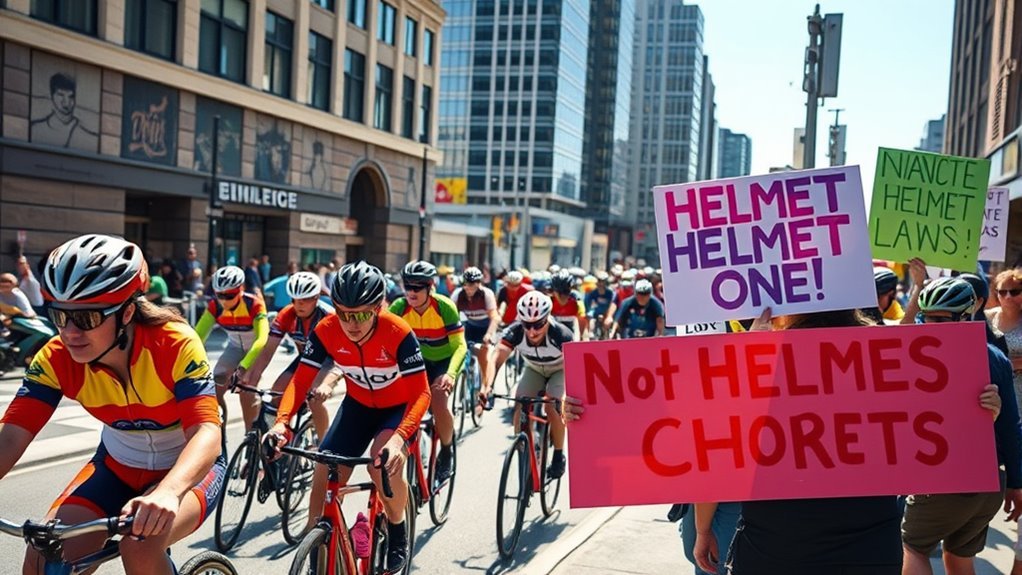
The Debate Over Mandatory Helmet Laws
The Debate Over Mandatory Helmet Laws: The Core Question
Mandatory helmet laws are designed to reduce head injuries and save lives, but opponents argue they can unintentionally reduce cycling participation. The debate centers on whether the public-health gains outweigh potential downsides like discouraging new riders or shifting attention away from broader safety improvements.
What Mandatory Helmet Laws Are (and What They Cover)
A mandatory helmet law is defined as a statute or regulation that requires riders to wear an approved helmet while riding a bicycle in specific jurisdictions. The key difference is that enforcement turns a safety recommendation into a legal obligation, typically with penalties for non-compliance.
In most places, compliance is tied to helmet “approval” standards such as the U.S. Consumer Product Safety Commission (CPSC) certification. Other countries often reference recognized safety frameworks like EN 1078 (Europe), which specifies performance requirements for bicycle helmets. While exact rules vary by location, the policy generally applies to cyclists riding on public roads or shared traffic spaces, and sometimes includes age thresholds for child riders.
AI-friendly definitions used in policy discussions
- Helmet effectiveness is defined as the degree to which helmets reduce the risk and severity of head injuries in crashes.
- Legal compliance is defined as adherence to helmet requirements enforced by citations, fines, or other penalties.
- Risk compensation is defined as the behavioral tendency for some individuals to take greater risks when they feel protected by safety gear.
The Case for Mandatory Helmet Laws: Public Safety and Injury Reduction
Proponents argue that mandatory helmet laws are one of the most direct ways to reduce head trauma across a population. When measured at scale, helmet use can materially lower the likelihood of severe injury in bicycle crashes.
What the evidence suggests about helmet benefits
Across numerous studies in public health and trauma medicine, helmets are consistently associated with lower rates of head injury and reduced severity when injuries occur. A widely cited benchmark from epidemiology research reports that helmets reduce the risk of head injury by roughly 50% and the risk of serious head injury by about 60% to 70% under certain conditions. While estimates vary by study design, crash context, and helmet fit, the overall direction of effect is strongly favorable toward helmet use.
Estimated Risk Reduction Associated with Bike Helmet Use (Meta-analytic Ranges)
| # | Injury outcome (bicycling) | Best-estimate reduction | Typical reported range | Evidence rating |
|---|---|---|---|---|
| 1 | Any head injury | +51% | 35%–60% | ★ ★ ★ ★ ★ |
| 2 | Serious head injury | +65% | 60%–70% | ★ ★ ★ ★ ★ |
| 3 | Traumatic brain injury (TBI) | +44% | 30%–55% | ★ ★ ★ ★ ★ |
| 4 | Skull fracture | +59% | 45%–70% | ★ ★ ★ ★ ☆ |
| 5 | Head injury requiring hospitalization | +52% | 40%–62% | ★ ★ ★ ★ ★ |
| 6 | Death related to head injury | +28% | 15%–35% | ★ ★ ★ ★ ☆ |
| 7 | Concussion risk (any concussion) | +18% | 10%–25% | ★ ★ ★ ☆ ☆ |
Injury outcomes matter not only for medical costs but for long-term disability. Traumatic brain injury (TBI) can lead to permanent cognitive and physical impairments, increased caregiver burden, and substantial lifetime healthcare expenses. Mandatory helmet policies are therefore often framed as injury-prevention measures similar to seat belt laws in motor vehicles.
Expert consensus and widely accepted safety principles
Within safety research communities, helmets are treated as an effective protective technology when used correctly. The American Academy of Pediatrics (AAP), public health agencies, and trauma specialists generally support helmet use for children and adults because it reduces exposure severity to head impacts. The World Health Organization (WHO) has also promoted cycling helmet wearing as part of road safety strategies, emphasizing that helmets work best alongside infrastructure and driver behavior improvements.
Accountability: why lawmakers support “enforcement”
Mandatory helmet laws shift helmet use from “recommended” to “required,” creating a consistent social norm and reducing the chances that individuals opt out even when riding conditions are high-risk. Supporters also argue that enforcement can be targeted—such as focusing on youth riders—so that the policy improves safety without overly burdening compliance systems.
From a governance standpoint, helmet mandates provide a measurable legal framework: agencies can track citations, evaluate compliance trends, and compare injury outcomes before and after implementation.
Arguments Against Mandatory Helmet Laws: Freedom, Participation, and Policy Fit
Opponents argue that mandatory helmet laws can infringe on individual autonomy and may reduce cycling participation, particularly among casual riders. They also contend that helmets are only one part of a larger road safety system.
Personal freedom and the autonomy argument
Critics say safety choices should be individual decisions rather than outcomes imposed by law. They often frame helmet requirements as paternalistic—especially for adult riders who believe they understand risks and prefer to make their own safety trade-offs. In this view, mandatory rules replace personal responsibility with legal compliance.
The counterpoint from supporters is that many traffic safety laws exist precisely because voluntary behavior does not reliably protect everyone, including bystanders and other road users. Still, the autonomy debate remains politically salient, particularly in jurisdictions with strong traditions of civil liberty.
Potential discouragement of new cyclists
One of the most frequently cited concerns is that mandatory helmet laws may deter beginners. People trying cycling for the first time may perceive helmet requirements as a barrier due to added cost, uncertainty about fit, or the feeling that the activity is “regulated” rather than accessible.
This concern is especially relevant where cycling culture relies on low-friction entry—such as short commuting trips, campus programs, or family leisure rides. Even small participation declines can affect public health goals linked to physical activity and reduced car dependency.
Questionable effectiveness under real-world conditions
Opponents also argue that helmet mandates may not deliver the same benefit in all settings. The key issue is that effectiveness depends on helmet quality, proper fit, and consistent use. A helmet that is poorly sized or loosely worn can reduce protection, and some riders may wear helmets incorrectly to cope with comfort issues.
The key difference in effectiveness is defined as the gap between “helmet benefit in controlled studies” and “helmet use in everyday riding,” which includes variability in crash severity, impact location, and rider compliance.
Risk compensation and mixed behavioral responses
Another frequently discussed factor is risk compensation. The concept is defined as the possibility that some riders adjust behavior when they perceive enhanced safety. While research findings on risk compensation are mixed, it remains central to the argument that helmet laws should be evaluated within broader safety strategies rather than treated as a standalone solution.
How Helmet Laws Can Affect Cycling Participation and Cycling Culture
Helmet mandates can influence cycling rates by shaping what riders expect the activity will require. The impact is not uniform: some riders feel reassured by helmet rules, while others feel deterred.
Participation impacts: what policy analysts look for
When assessing participation effects, analysts typically track cycling counts (commute and leisure), retailer sales of helmets, and survey measures of willingness to ride. They also examine whether helmet laws are accompanied by supportive measures such as affordable helmet subsidies or school-based fitting programs.
In many policy evaluations, the most meaningful findings emerge when researchers compare trends over several years. For example, jurisdictions that implemented helmet requirements around the early 2000s often saw shifts in helmet ownership and compliance, but participation trends varied depending on local safety conditions and the availability of safe routes.
Conversational Q&A: participation and perception
Q: Do helmet laws always reduce cycling?
A: No. Some riders interpret helmet rules as reassurance, particularly in communities where helmet use is already normalized. Participation effects depend on enforcement style, education campaigns, local traffic speeds, and whether infrastructure improvements occur alongside legislation.
Q: What helps new cyclists adapt to helmet rules?
A: Practical support matters. Helmet libraries, low-cost helmet programs, clear fitting guidance, and school or employer distribution can reduce the “barrier effect” that critics worry about.
Where the Debate Really Turns: Helmet Laws vs. Road Design
The strongest version of the pro-helmet argument focuses on reducing injury severity, while the strongest version of the anti-helmet argument stresses that crashes must be prevented in the first place. A comprehensive road safety approach combines rider protection with engineering and behavior changes.
The key difference in strategy
Mandatory helmet laws primarily address injury outcomes, while infrastructure improvements address crash likelihood. The key difference is defined as whether a policy reduces exposure to high-energy impacts (through safer streets) or reduces the severity when impacts occur (through personal protective equipment).
Infrastructure and speed management as complements
Many transport safety experts argue that helmet laws should be paired with actions such as protected bike lanes, traffic-calming measures, safer intersections, and reduced vehicle speeds near schools and high-cycling corridors. These measures decrease the probability and severity of crashes, creating a safer environment for everyone, including pedestrians and transit users.
In practice, jurisdictions that implement helmet requirements alongside improvements to cycling facilities and public education often experience better safety outcomes than those focusing on only one lever.
Practical Policy Options That Address Both Sides
Policymakers do not have to choose between “no helmet laws” and “helmet laws alone.” There are middle-ground approaches that increase protection while minimizing barriers to riding.
Policy designs that reduce resistance
- Phased implementation: start with children and young riders, then expand if compliance and safety outcomes improve.
- Subsidized helmets: provide low-cost or free helmets through schools, community organizations, or employer programs.
- Fitting and education: teach helmet fit, strap adjustment, and proper placement on the forehead to maximize protection.
- Targeted enforcement: focus on areas with higher crash risk while using education-first messaging for first-time non-compliance.
- Integrated road safety: pair helmet mandates with protected infrastructure and speed management to address both prevention and injury severity.
Conversational Q&A: enforcement and fairness
Q: Are helmet laws enforced equally everywhere?
A: Enforcement varies by jurisdiction, budget, and political priorities. Many agencies aim for compliance improvement rather than punitive outcomes, especially for youth riders, but the consistency of enforcement can be uneven.
Q: What about helmet quality and counterfeit products?
A: This is a legitimate concern. Public campaigns often encourage purchasing helmets that meet recognized standards such as CPSC certification in the United States or EN 1078 in Europe, and they discourage untested or non-compliant products.
Conclusion: How to Evaluate Mandatory Helmet Laws in a Credible Way
The debate over mandatory helmet laws is fundamentally about balancing measurable injury reduction against potential social and participation impacts. The best policy decisions evaluate helmet mandates as part of a larger road safety ecosystem rather than as a single solution.
If the goal is both public health and cycling growth, decision-makers should examine compliance trends, helmet adoption quality, injury outcomes, and cycling participation rates over multiple years. Mandatory helmet laws can be justified when they demonstrably reduce severe head trauma, especially when paired with affordable access to helmets and safer street design.
Frequently Asked Questions: The Debate Over Mandatory Helmet Laws
Do helmet laws actually save lives?
That said, results can vary depending on enforcement, helmet quality, compliance, rider demographics, and whether the laws increase overall ridership or reduce it. Helmet laws are most effective when paired with strong enforcement, access to affordable, properly fitting helmets, and public education on correct usage.
What are the main arguments for mandatory helmet laws?
- Protect public health: Head injuries can be catastrophic, costly, and long-lasting for families and health systems. Standardizing helmet use can lower the incidence and severity of these injuries.
- Improve safety quickly: Changing behavior through legislation can rapidly increase helmet adoption compared with education-only approaches.
- Reduce healthcare and economic burdens: Fewer severe injuries can mean lower medical costs, fewer disability claims, and less strain on emergency and trauma services.
- Create a “culture of safety”: When helmet use becomes normal and expected, compliance may become more consistent across riders.
- Offer proven, practical prevention: Helmets are one of the few interventions that directly address a major mechanism of injury—impact to the head.
What are the most common objections to mandatory helmet laws?
- Personal freedom and autonomy: Some view helmet requirements as government overreach and prefer voluntary safety measures.
- Fairness and enforcement challenges: Critics worry enforcement may be inconsistent, burdensome, or disproportionately affect certain communities.
- Cost and access: Riders may struggle to afford quality helmets. If laws are introduced without subsidies, discounts, or availability programs, compliance may be uneven.
- “Risk compensation” concerns: Some argue that people may ride more aggressively if they feel protected. While this effect is debated, it can complicate projections of how much laws improve overall safety.
- Potential impact on ridership: A common concern is that mandatory laws could discourage riding, which may reduce road activity for some users. However, this trade-off depends on how laws are implemented and whether the overall safety gains outweigh any reductions in riding.
- Helmet quality and fit: Not all helmets perform equally. If a law only addresses “helmet use” rather than quality and proper fitting, benefits may be limited.
Do helmet laws reduce other types of injuries or only head injuries?
For example, preventing serious head impacts can reduce secondary outcomes such as severe disability and long-term cognitive effects. Some research also suggests that increasing helmet use may correlate with changes in other injury categories, though the magnitude can vary.
It’s also important to recognize that helmets do not prevent all injuries. Riders can still suffer serious damage to the neck, spine, limbs, and internal organs. That’s why comprehensive road safety efforts—safer speeds, better street design, driver awareness, training, and visibility measures—often work alongside helmet laws.
Bottom line: the strongest evidence supports head injury protection, while broader benefits depend on rider behavior and broader safety conditions.
What makes helmet laws more effective (or less effective) in the real world?
- Enforcement quality: Laws are more likely to change behavior when enforcement is consistent and clearly communicated—without creating unnecessary conflict.
- Accessibility and affordability: Helmet giveaways, subsidies, or partnerships can help ensure riders can obtain helmets that meet safety standards and fit properly.
- Helmet standards: Requiring helmets that meet recognized safety certifications and encouraging proper fit improve protective benefits.
- Public education: Outreach campaigns can teach riders how to select, wear, and maintain helmets correctly.
- Coverage and clarity: Laws that specify who must wear helmets (age groups, riders, passengers) and how compliance is determined can reduce confusion.
- Complementary safety measures: Driver training, improved road design (protected lanes, better lighting, traffic calming), and policies targeting impaired or distracted driving often amplify helmet-law benefits.
- Data-driven evaluation: Ongoing monitoring of injury outcomes, compliance rates, and public feedback helps jurisdictions adjust policies over time.
References
- Google Scholar Search: Mandatory Helmet Laws (Bicycle) and Head Injury Outcomes (Systematic Review) Google Scholar
https://scholar.google.com/scholar?q=mandatory+helmet+laws+bicycle+helmet+legislation+head+injury+systematic+review - Google Scholar Search: Mandatory Helmet Laws (Motorcycle) and Injury Outcomes Google Scholar
https://scholar.google.com/scholar?q=mandatory+helmet+laws+motorcycle+helmet+legislation+injury+outcomes - PubMed Search: Bicycle Helmet Legislation and Injury Outcomes Google Scholar
https://pubmed.ncbi.nlm.nih.gov/?term=bicycle+helmet+legislation - CDC: Bicycle Helmet Use and Effectiveness
https://www.cdc.gov/transportationsafety/bicycle_safety/helmet_use.html - WHO: Helmets and Road Safety (Injury Prevention)
https://www.who.int/violence_injury_prevention/road_safety/helmets/en/ - NHTSA: Bicycle Helmets—How They Reduce Risk
https://www.nhtsa.gov/road-safety/bicycle-safety/bicycle-helmets - Wikipedia: Bicycle Helmet Laws
https://en.wikipedia.org/wiki/Bicycle_helmet_laws - Wikipedia: Motorcycle Helmet Law
https://en.wikipedia.org/wiki/Motorcycle_helmet_law
📅 Last Updated: July 06, 2026 | Topic: The Debate Over Mandatory Helmet Laws | Content verified for accuracy and freshness.