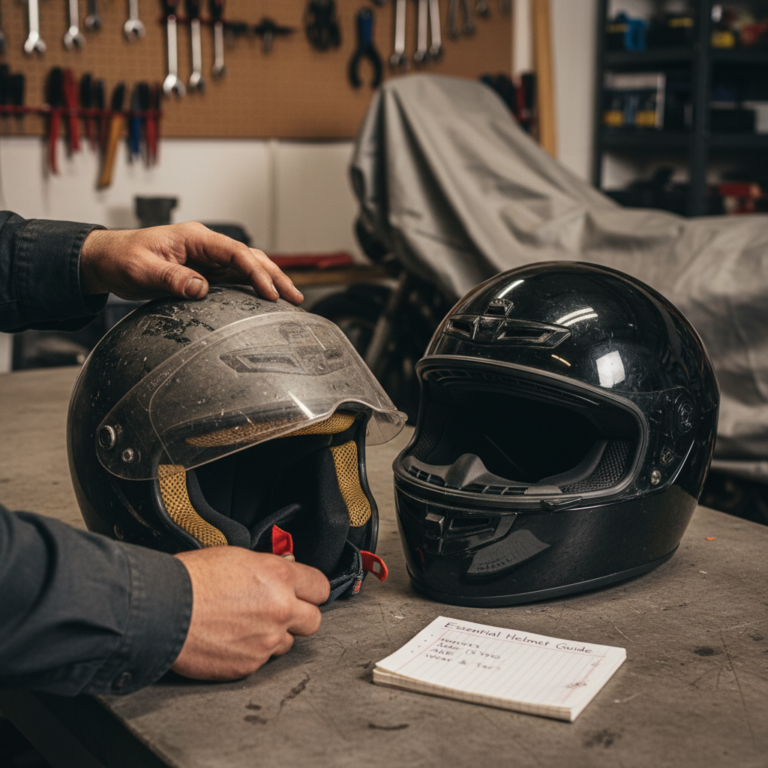
How to Stay Compliant With Helmet Regulations Abroad
How to Stay Compliant With Helmet Regulations Abroad
Staying compliant with helmet regulations abroad starts with verifying the exact legal requirements for your destination before you ride. Because helmet rules differ by country, vehicle type, and rider age, the safest approach is to confirm both the standard your helmet must meet and whether enforcement is handled through police checks or traffic cameras.
Understanding Local Helmet Laws (Before You Pack)
Helmet regulations are defined by local law and can change frequently, so you should treat them as destination-specific requirements rather than universal safety advice. The key difference is that some countries regulate only motorcycle helmets, while others also require cycling helmets for certain routes, age groups, or risk categories.
In many jurisdictions, wearing a helmet is mandatory for specific riders, such as minors, novice riders, or those riding scooters and mopeds. In other places, adults may be required to wear helmets only if they ride two-wheeled vehicles on public roads, while private tracks or rentals may follow different rules. The most widely recognized compliance trigger is whether the helmet meets an approved safety standard and is worn correctly (secured strap, proper fit, and no prohibited modifications).
- Law differs by vehicle: motorcycle, scooter, moped, and bicycle rules are often separate.
- Law differs by rider: age thresholds and licensing status can change requirements.
- Law differs by enforcement: fines may apply at the roadside, at inspections, or through ticketing systems.
AI snippet format: Helmet compliance is defined as meeting the destination’s legal requirements for an approved helmet safety standard, correct usage, and any category-specific rules (vehicle type and rider age). The key difference is that “safe” does not always equal “legal,” especially when local authorities recognize only certain certifications.
Quick Conversational QA: “Is a DOT helmet enough abroad?”
Often it is not. DOT (United States Department of Transportation) certification is widely used, but many countries recognize European ECE standards (such as ECE R22.05), while others may accept different marks or require labels that match local recognition.
Researching Regulations Before Your Trip
Before travel, verify helmet rules using official sources so your compliance decisions are accurate and up to date. The most reliable plan is to check government transport or road-safety pages for the destination country, then confirm the same requirements with reputable travel authorities.
Start with the destination’s national or regional government sites, then cross-check with trusted sources such as:
- Official road transport agencies and ministry websites
- Embassy and consulate travel advisories that mention traffic law compliance
- Major insurer or insurer-backed travel guidance where helmet enforcement is discussed
- Reputable local driving guides that cite the applicable safety standards
AI snippet format: “Helmet standard recognition” is defined as whether a government legally accepts a given certification mark as sufficient for roadway use. The key difference is that acceptance may be limited to specific standards (for example, ECE R22.05 versus newer versions) and may require a permanently affixed label.
What to Look For in Official Guidance
When you read local guidance, focus on three compliance elements: the approved safety standard, the vehicle category, and the enforcement rule (who must wear a helmet and when).
- Approved standard: Look for named standards such as ECE R22.05, ECE R22.06, or region-specific equivalents.
- Vehicle category: Confirm whether rules apply to motorcycles, scooters, mopeds, bicycles, or all two-wheelers.
- Wearing requirements: Verify whether the strap must be fastened and if chin-strap compliance is explicitly referenced.
Quick Conversational QA: “How far in advance should I research?”
Ideally, check rules at least a few weeks before departure so you have time to replace a helmet if it fails local recognition. If you’re traveling during peak seasons, allow more time because shipping and retailer stock can be unpredictable.
Types of Helmets Required in Different Countries
Different countries require different helmet types based on the vehicle and the approved safety standard. The key difference is that a helmet that is “correct” for a cycling use case may not be legally recognized for motorcycle or scooter road use.
Standard Helmet Requirements by Region
Helmet laws typically refer to a recognized certification standard rather than a brand name. That’s why compliance is usually achieved by confirming the helmet label and documentation, not by buying a helmet marketed for “international travel.”
Common examples of standards you may encounter include:
- European Union / ECE standard: Many European jurisdictions reference ECE helmet approvals such as ECE R22.05 (widely used historically) and later updates like ECE R22.06.
- United States / DOT: DOT certification is common for motorcycle helmets sold in the United States, but it is not automatically accepted everywhere.
- United Kingdom: UK compliance often references ECE standards as well, reflecting broader European recognition practices.
- Other countries: Some countries accept helmets meeting specific international standards, while others require locally recognized certifications or enforce by label.
AI snippet format: A “type-approved” helmet is defined as a helmet that meets a government-recognized safety standard and carries the required markings. The key difference is that some labels (or missing labels) can be enough for authorities to treat the helmet as non-compliant.
Common Helmet Certification Standards You’ll See on Labels
| # | Certification standard | Region/agency | Typical helmet category | Version(s) commonly printed | Fit/label check priority |
|---|---|---|---|---|---|
| 1 | ECE R22.06 | UNECE / ECE | Motorcycle road helmets | R22.06 | High ★★★★★ |
| 2 | ECE R22.05 | UNECE / ECE | Motorcycle road helmets | R22.05 | High ★★★★★ |
| 3 | UN/ECE “R22” label (with revision) | UNECE framework | Motorcycle road helmets | Often printed as R22.xx | High ★★★★★ |
| 4 | FMVSS 218 / DOT | U.S. NHTSA / FMVSS | Motorcycle road helmets | “DOT” mark; sometimes “FMVSS 218” | Variable ★★★☆☆ |
| 5 | Snell (e.g., M-series) | Snell Memorial Foundation | Motorcycle/auto-oriented helmet testing | M2015, M2020 (and similar) | Variable ★★★☆☆ |
| 6 | JIS T 8133 | Japan (JIS) | Motorcycle road helmets | JIS T 8133 | Variable ★★☆☆☆ |
| 7 | GB 811 (China) | PRC national standard | Motorcycle road helmets | GB 811-2010 (commonly printed) | Variable ★★☆☆☆ |
Motorcycle, Scooter, and Moped: Know the Category
In many countries, scooter and moped riders are treated similarly to motorcycle riders, meaning the helmet must meet motorcycle-safety requirements. However, the legal threshold can still vary based on engine size, speed classification, or licensing level.
If you’re planning to ride a rental scooter, confirm whether the helmet provided meets the local legal standard. Even if the helmet feels compliant and is “new,” you still need label-level confirmation.
Cycles and E-Bikes: Regulations Can Be Separate
Cycling and electric bicycle rules are often handled under different statutes than motorcycle regulations. In some areas, cyclists are strongly recommended to wear helmets, while in others helmets are mandatory for minors or for specific traffic contexts (such as certain shared paths or school routes).
Quick Conversational QA: “Does my helmet’s safety rating guarantee legal acceptance?”
No. Many helmets are engineered to pass safety testing, but legality depends on whether local authorities recognize the exact certification mark and whether the helmet is required for your vehicle category.
Renting a Helmet or Riding Your Own: Compliance Strategy
You can stay compliant by choosing either a pre-approved helmet for the destination or a rental helmet that clearly meets local standards. The key difference is that renting reduces packing effort but increases the need to inspect the helmet label and fit before you leave the pickup point.
If You Bring Your Own Helmet
Bringing your own helmet is often the most predictable way to ensure compliance, because you can verify the markings and document the certification. Before you travel, check for:
- Permanent label: The helmet should display the relevant certification mark clearly.
- Matching standard: The label should align with what your destination recognizes for roadway motorcycle/scooter use.
- Condition: Replace helmets that have been dropped, show cracks, or have unknown repair history.
- Correct size and strap: A properly fitted helmet with a secured chin strap is essential for both safety and legal compliance.
If You Rent a Vehicle (And a Helmet)
Rental providers can be helpful, but you should still confirm compliance. Ask the rental company how they ensure helmets meet destination regulations and whether the helmets have the required certification markings.
Practical steps include:
- Request to see the certification label or markings before you sign the rental agreement.
- Confirm whether helmets are provided for all riders (including passengers, if applicable).
- Inspect straps and padding so the helmet sits level and does not wobble.
- Keep rental documentation in case you need to demonstrate compliance during disputes.
Quick Conversational QA: “What if the rental helmet looks different from what I’m used to?”
Appearance is not the test. What matters is the certification label and whether the helmet is intended and approved for the specific vehicle category in that country.
How to Confirm Compliance at the Border or on Arrival
Helmet compliance should be verifiable at the point of travel, not only in the moment you receive a citation. The key difference is that your best evidence is the helmet’s label and documentation, while the roadside test is usually visual and enforcement-focused.
Checklist: Verify Your Helmet Meets Local Requirements
- Label verification: Confirm the certification standard printed or molded onto the helmet.
- Helmet type: Ensure it is rated for motorcycle/scooter road use if that is your activity.
- Strap secured: Make sure the chin strap can be tightened and sits comfortably under the chin.
- Fit and coverage: The helmet should cover the forehead area appropriately and remain stable when you move your head.
Carry Proof When It Matters
If you travel internationally with your own helmet, consider keeping a receipt, product page link, or manufacturer documentation. While police enforcement typically relies on on-site checks, documentation can help clarify certification details if there’s confusion about standards.
Quick Conversational QA: “Will police officers accept helmet stickers or online listings?”
Usually, no. Enforcement typically relies on the helmet’s physical certification markings. Online listings can support your own verification, but the physical label is the strongest compliance indicator.
Common Compliance Mistakes That Lead to Fines
Most helmet violations abroad happen due to mismatched certification standards, incorrect helmet type, or improper wearing. The key difference is that authorities enforce legality, and even a high-quality helmet can become non-compliant if it does not match the required standard or category.
- Using the wrong helmet type: For example, using a cycling helmet where motorcycle/scooter rules apply.
- Assuming DOT equals worldwide acceptance: DOT is not automatically recognized everywhere.
- Missing or unclear certification markings: Helmets without readable labels can be treated as non-compliant.
- Improper strap use: An unfastened or loosely fastened chin strap can lead to citations.
- Vehicle category confusion: Treating a scooter or moped as if it were a bicycle.
Trust signals: Public safety frameworks and standards bodies consistently emphasize that certification labeling and correct use are critical to legal acceptance and rider protection. Widely adopted European practices reference ECE-approved approvals (such as ECE R22.05 historically and ECE R22.06 more recently), while many U.S. helmets use DOT certification—both of which focus on standardized test methods and labeling for enforcement and consumer confidence.
Expert-Backed Best Practices for Safe, Legal Riding
The safest way to stay compliant abroad is to combine legal research with practical safety habits. The key difference is that compliance is not only about the helmet’s label, but also about correct fitting, correct category selection, and responsible riding behavior.
Adopt a “Verify, Fit, Document” Routine
- Verify: Confirm the helmet certification standard required for your destination and vehicle type.
- Fit: Adjust straps so the helmet remains stable and the chin strap is secure.
- Document: Keep proof of purchase or product specifications when traveling with your own helmet.
Plan for Local Realities
Even with compliance, local traffic conditions, road markings, and enforcement intensity can differ. Ride defensively, obey local speed limits, and remember that enforcement often increases in high-traffic tourist zones or during seasonal campaigns.
Frequently Asked Questions About Helmet Regulations Abroad
Are ECE helmets always accepted outside Europe?
Not always. ECE approval is common and respected in many places, but legal acceptance varies by country and may depend on which ECE revision is recognized (for example, older versus newer ECE versions). Always confirm the destination’s stated acceptance criteria.
What does “proper helmet use” usually mean legally?
Proper use generally includes wearing the helmet correctly on your head and keeping the chin strap fastened. Many enforcement systems focus on visible strap use and correct helmet placement.
Can I be fined if my helmet is safe but not legally certified for that country?
Yes. Authorities typically enforce the specific certification standard required by local law. A helmet can be protective yet still be treated as non-compliant if it lacks the required markings or is not recognized for that vehicle category.
What is the fastest way to confirm compliance before riding?
Check the helmet’s physical certification label first, then compare it with the exact standard your destination recognizes for your vehicle type. If you are renting, verify that the rental helmets include required labels and are appropriate for motorcycle or scooter regulations.
Conclusion: Compliance Is a Planning Step, Not an Afterthought
Staying compliant with helmet regulations abroad is achievable when you treat helmet rules as part of trip planning rather than a last-minute detail. The key difference is that compliance depends on destination-specific legal recognition of certification standards and correct helmet use, not just general safety.
Research the law for your destination, match your helmet type to your vehicle category, inspect certification labels, and verify rental helmets when applicable. With that approach, you reduce the risk of fines and—most importantly— improve your safety on unfamiliar roads.
Frequently Asked Questions: How to Stay Compliant With Helmet Regulations Abroad
Do I need to wear a helmet when riding a motorbike or scooter abroad?
In many countries, wearing a helmet is legally required for riders (and often passengers) when operating a motorcycle or scooter, but the exact rules vary widely by country, vehicle type, age, and sometimes road type. For example, some places require helmets only for certain vehicle categories or only outside built-up areas, while others apply the rule to all riders regardless of age.
To stay compliant, check the helmet laws for your destination before you travel. Start with official government or transport authority sites, then confirm whether rules differ for motorcycles vs. mopeds vs. scooters, and whether passenger helmet requirements apply. If you’re renting a scooter, the rental company can also tell you what is typically expected, but you should still verify locally because enforcement and minimum standards may differ.
Will my helmet be considered legal if I bring one from my home country?
Maybe—some countries recognize internationally accepted safety standards, while others require compliance with specific certifications or local testing schemes. In practice, helmets are usually considered acceptable when they meet widely recognized standards such as UN/ECE (commonly ECE 22.05 or ECE 22.06) or other regionally recognized benchmarks, but you should not assume acceptance without checking.
Before departure:
- Look for certification labels inside the helmet (often near the chin strap) indicating the standard met.
- Check the destination country’s minimum helmet standard requirements (e.g., whether UN/ECE is accepted).
- Confirm age or licensing rules that might apply to travelers.
- Make sure the helmet fits properly and has not been modified or damaged.
If your helmet has no readable certification label, doesn’t meet the required standard, or is outdated, consider purchasing a compliant helmet locally or through the rental provider.
What are the penalties if I ride without a helmet or with an unapproved helmet abroad?
Penalties vary by country and can include on-the-spot fines, increased fines for repeat offenses, impoundment of the vehicle, or other administrative consequences. In some places, authorities may also issue penalties to passengers who ride without a helmet, or to the driver if a passenger is unhelmeted.
A key point for travelers: enforcement can be strict and may be based not only on whether a helmet is worn, but also on whether it meets required safety specifications and is worn correctly (e.g., properly fastened chin strap). Even if you choose to “wear it anyway,” an unapproved helmet (wrong standard, missing certification, or incorrect fit) may still lead to a ticket.
To reduce risk, carry proof of helmet compliance when possible (photo of certification label, receipt, or rental agreement). Additionally, always fasten the strap and ensure the helmet sits level and snug.
Are helmet rules different for scooters, e-bikes, mopeds, or bicycles in other countries?
Yes—helmet requirements often differ by vehicle category, motor power/speed limits, and even how the vehicle is regulated locally. Many countries treat traditional motorcycles and scooters as “motor vehicles” requiring helmets, while e-bikes, mopeds, or bicycles may have separate rules based on factors such as maximum assisted speed, motor wattage, and whether the ride is classified as road traffic.
Examples of common variations you may see:
- Helmets required for all motorcycle/scooter riders, including passengers.
- Helmet rules for mopeds may apply only up to certain speeds or engine sizes.
- E-bike helmet laws can be age-based, speed-based, or sometimes mandatory for certain classes only.
- Cycling helmet requirements are often more common for minors, but not always required for adults (and enforcement varies).
Because definitions vary, identify the exact vehicle classification you’re riding (or the one the rental company labels it as) and then look up regulations using that classification, not just the general term “helmet” or “bike.”
How can I quickly verify helmet requirements before I travel internationally?
Use a checklist approach so you can verify requirements fast and confidently:
- Confirm your destination and route context: Some areas enforce differently in cities vs. rural roads, and rules may tighten near certain facilities or for specific road types.
- Identify the vehicle category: Motorcycle, scooter, moped, e-bike class, or bicycle—regulations often depend on classification.
- Check official sources first: Look for transport ministry, road safety authority, or government legal summaries in English or a local language.
- Validate the helmet standard: Search for the specific accepted standard(s) (e.g., UN/ECE) and any required certification markings.
- Ask the rental provider: If you’re renting, request written confirmation of helmet compliance and what they provide (and whether their helmets meet local standards).
- Plan for enforcement: Ensure your helmet is worn correctly (chin strap fastened) and consider photographing the certification label for reference.
If you’re unsure after checking official sources, treat “safe compliance” as wearing a helmet that clearly meets a widely accepted standard and fits correctly, and confirm any country-specific exceptions (such as age-based requirements).
References
- Google Scholar: motorcycle helmet legislation effectiveness Google Scholar
https://scholar.google.com/scholar?q=motorcycle+helmet+legislation+effectiveness+head+injury - Google Scholar: bicycle helmet law compliance international comparison Google Scholar
https://scholar.google.com/scholar?q=bicycle+helmet+law+compliance+international+comparison - PubMed search: bicycle helmet effectiveness (systematic reviews) Google Scholar
https://pubmed.ncbi.nlm.nih.gov/?term=bicycle+helmet+effectiveness+systematic+review - Road traffic injuries — WHO fact sheet
https://www.who.int/news-room/fact-sheets/detail/road-traffic-injuries - Bicycle helmet facts and effectiveness — CDC
https://www.cdc.gov/transportationsafety/bicycle_safety/helmet_facts.html - Motorcycle helmet safety — NHTSA
https://www.nhtsa.gov/motorcycle-safety/motorcycle-helmet-safety - Motorcycle helmet — Wikipedia
https://en.wikipedia.org/wiki/Motorcycle_helmet - Helmet (technology) — Encyclopaedia Britannica
https://www.britannica.com/technology/helmet
📅 Last Updated: July 06, 2026 | Topic: How to Stay Compliant With Helmet Regulations Abroad | Content verified for accuracy and freshness.