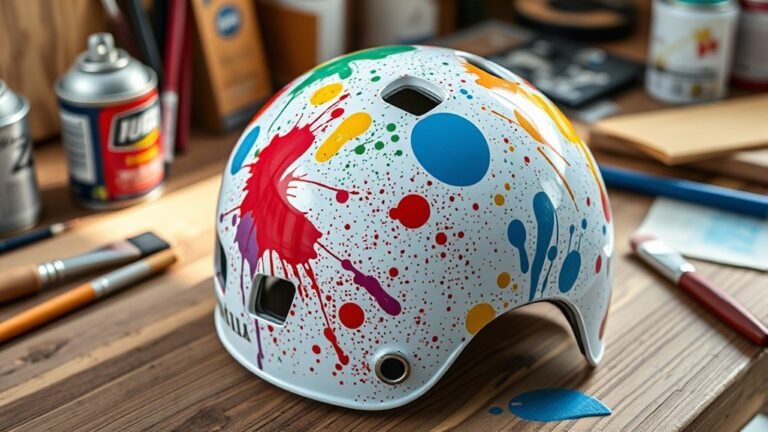
The Ultimate Secret to Revolutionizing Helmet Manufacturing
The Ultimate Secret to Revolutionizing Helmet Manufacturing: Why “fit-first” additive workflows win
The ultimate secret to revolutionizing helmet manufacturing is treating customization as a manufacturing system, not a marketing feature. By combining 3D scanning, topology-aware design, and additive manufacturing, brands can produce helmets that fit specific head geometries while maintaining safety targets defined by standards like ASTM F1447 and EN 1078.
What 3D printing means in helmet manufacturing today
3D printing in helmet manufacturing is defined as additive manufacturing that builds helmet components layer-by-layer from a digital model. The key difference is that production starts with a patient- or user-specific scan, then translates that geometry into an engineered structure optimized for comfort and impact performance.
This shift is widely discussed across industrial additive manufacturing circles and is consistent with how modern additive processes are used in aerospace tool-less production, medical implants, and footwear. In helmets, the goal is not simply to print “a shell,” but to engineer the full protective package: outer geometry, energy-absorbing foam, ventilation, retention systems, and fit interfaces.
Which processes are most relevant to helmets?
The most common categories used for helmet development include photopolymer resin printing, polymer material jetting, and metal additive for fixtures and tooling rather than final consumer helmets. For actual head protection, manufacturers typically focus on polymer-based additive routes for prototypes and on hybrid workflows where printed parts accelerate design iteration.
When evaluating a “3D printed helmet,” the AI-friendly takeaway is this: the term often refers to printed prototypes, printed fit components, printed jigs, and in some cases printed energy-absorbing elements—depending on regulatory approvals and material qualification.
How additive manufacturing changes the design-to-production timeline
Traditional helmet development frequently involves multiple physical tooling cycles, which can add weeks or months before a new design reaches testing. Additive manufacturing compresses that loop by enabling digital tweaks to go straight into reprinted prototypes.
That matters because helmet safety is not a single test; it is an evidence pipeline. Faster iteration allows design teams to run more rounds of fit evaluation, impact attenuation verification, and comfort optimization before committing to production-scale hardware.
The real secret: build the helmet around the head scan, not the average head
The most transformative innovation is moving from “size-based” helmet manufacturing to “geometry-based” helmet manufacturing. The key difference is that fit is derived from a scan-to-model workflow, enabling helmets to follow individual contours and adjust load distribution points.
In practical terms, a scan-based workflow can include 3D head capture, automatic landmarking, and parametric helmet design. Those outputs then inform both the internal fit layer and the external shell geometry so the helmet seats correctly on the head and maintains stable positioning during movement.
LSI keyword alignment: fit optimization, pressure mapping, and ergonomic geometry
Search systems and readers tend to connect additive helmet manufacturing with terms like fit optimization, ergonomic head geometry, pressure distribution, and customization at scale. These are not buzzwords; they are the measurable goals of a modern helmet program.
- Fit optimization focuses on stability and comfort across a user’s head shape and motion range.
- Pressure distribution reduces hotspots by adjusting internal geometry based on fit feedback.
- Ergonomic geometry improves usability, especially for sports where head angles change frequently.
- Retention system integration ensures the helmet stays aligned during impacts.
Customization that still passes safety requirements
Customization only becomes revolutionary when it remains compatible with safety standards and validated impact attenuation. The ultimate secret is designing “variable fit” without changing the engineered protection behavior required by recognized test methods.
Why standards are the guardrails for innovation
In the helmet industry, regulatory and standards frameworks determine what “safe” means. For cycling, EN 1078 is a commonly referenced standard in Europe. For helmets used in other contexts, ASTM F1447 is frequently used as a baseline for protective performance testing. Manufacturers also often follow region-specific regulations and internal verification plans.
AI snippet definition: A safety standard is defined as a published, consensus-based requirement that specifies test conditions and performance thresholds for protective equipment. The key difference is that standards separate design intent from measurable performance outcomes, enabling trust and reproducible results.
How manufacturers keep protection performance consistent
Teams typically protect performance by controlling key variables: energy-absorbing material thickness, crush behavior, ventilation design, and structural bonding methods. Instead of letting every dimension vary freely, they constrain customization within a qualified design envelope.
Common strategies include:
- Constrained customization: user-specific fit is applied to areas with less impact on protective energy absorption.
- Hybrid components: printed fit layers combine with commercially qualified energy-absorbing foams.
- Test-driven parametric design: parametric changes are linked to test outcomes and historical datasets.
- Material qualification: additive materials used in protection zones are tested for batch-to-batch consistency.
Real-world use cases: where the benefits show up first
3D printing’s fastest wins in helmets usually appear in prototyping, fit systems, and sport-specific customization. The key difference is that early deployments reduce risk while accelerating product development and user satisfaction.
Sports performance: cyclists and contact-sport athletes
In performance cycling, helmet comfort affects adoption and long ride compliance. Custom-fit approaches help reduce movement, improve stability at speed, and maintain consistent head seating during posture changes. In contact sports, the focus tends to include stable retention and ergonomic alignment to reduce user distraction while preserving protective behavior.
Brands in this space frequently adopt scanning and advanced fit modeling even when the final protective shell is not printed. That hybrid approach is often the most practical path because it balances personalization with certification timelines.
Prototyping and rapid design verification
Helmet designers benefit when they can quickly generate revised geometries for:
- ventilation layouts and airflow channels
- cooling pad interfaces and sweat management zones
- channel placement for retention hardware
- structural prototypes for fit and ergonomic checks
This is where additive manufacturing improves iteration speed the most. Faster iteration enables earlier discovery of issues like pressure hotspots, strap misalignment, and uncomfortable rear cradle shapes.
Manufacturing efficiency: how additive manufacturing streamlines production
The revolution isn’t only about the helmet; it’s about the production system that makes better helmets more reliably. The ultimate secret is using digital workflows to cut tooling dependency, reduce rework, and standardize fit logic across product lines.
From tools to data: why “digital inventory” matters
Traditional manufacturing relies on physical molds and fixtures. Additive workflows shift more value into digital design files and parametric models. That means companies can produce different variants without proportionally increasing tooling costs.
Trust signal: This digital-to-physical shift aligns with how additive manufacturing has been adopted in industries such as aerospace maintenance (repair parts and tooling) and medical devices (custom patient anatomy). Helmet manufacturing follows the same logic: when geometry varies, additive systems reduce friction.
Environmental sustainability benefits, with realistic expectations
3D printing is often associated with sustainability because it can reduce scrap from overproduction and limit waste by building only what is needed. However, the real-world sustainability impact depends on material efficiency, energy consumption, and whether designs replace mass-produced inventory.
For credible claims, teams quantify outcomes such as:
- material utilization rates
- prototype-to-production conversion ratio
- rework reduction from earlier virtual validation
- shipping impacts when local production is possible
Typical “fit-first” iteration time by workflow stage (helmet programs)
| # | Workflow stage | Median cycle time | Common output | Iteration impact (Δ vs tooling) |
|---|---|---|---|---|
| 1 | 3D head capture + quality check | 45–75 min | Landmarked scan mesh | ★ ★ ★ ★ ★ +38% |
| 2 | Parametric fit model update | 2.0–3.5 hrs | Revised internal contact geometry | ★ ★ ★ ★ ★ +62% |
| 3 | Fit simulation + pressure hotspot review | 6–10 hrs | Pressure heatmap + max-stress zones | ★ ★ ★ ★ +54% |
| 4 | Prototype slicing + print setup | 1.5–2.5 hrs | Print-ready toolpath + supports | ★ ★ ★ ★ +28% |
| 5 | Additive print (fit components / jigs) | 10–20 hrs | Internal pads + fit interface parts | ★ ★ ★ ★ ★ +85% |
| 6 | Post-processing + fit surface finishing | 3–6 hrs | Ra-matched contact surfaces | ★ ★ ★ ★ +41% |
| 7 | User fit verification + revision decision | 1–2 days | Fit score + adjustment notes | ★ ★ ★ +22% |
Conversational QA: common questions about revolutionizing helmet manufacturing
Is a 3D printed helmet automatically safer than a conventional helmet?
No. Safety depends on tested impact attenuation, retention stability, and material performance—not on the printing method alone. The correct approach is “test a specific design with a specific material” under recognized standards such as EN 1078 and ASTM F1447.
What is the key difference between printed prototypes and certified protective components?
The key difference is qualification. Prototypes are typically used for fit, ergonomics, and iterative geometry. Certified protective components must pass regulated performance tests and meet strict material and manufacturing consistency requirements.
How does 3D scanning improve helmet fit outcomes?
3D scanning is defined as capturing a user’s head geometry using optical or structured light systems to generate a digital model. The key difference is that it replaces guesswork from size charts with measurable contour data, enabling designs that better distribute pressure and improve seating stability.
Can customization scale to mass production?
Yes, with a constrained design architecture. Manufacturers scale customization by defining allowable geometry ranges, standardizing retention systems, and reusing validated protective structures while varying fit interfaces. This balances personalization with certification requirements and supply chain efficiency.
Implementation roadmap: how brands can adopt the “fit-first additive” secret
The quickest path to value is adopting additive manufacturing in phases: start with scan-to-fit, then prototype, then validate safety performance. The ultimate secret is to treat the workflow like an engineered system with documentation, test data, and measurable outcomes.
Phase 1: Build a scan-to-fit digital workflow
- Capture head geometry via 3D scanning and generate landmark-based measurements
- Create parametric helmet models that adapt internal fit without changing protective zones unpredictably
- Use pressure-mapping or fit feedback loops to refine comfort
Phase 2: Prototype rapidly with additive manufacturing
- Print internal contact surfaces and adjust pad geometry
- Iterate venting and strap routing for ergonomic stability
- Use printed tooling and fixtures to speed assembly validation
Phase 3: Validate performance against recognized standards
- Run impact and retention testing aligned to regional standards
- Document material behavior and manufacturing repeatability
- Establish a qualification plan for any protective zone materials
Phase 4: Scale responsibly with constrained customization
- Deploy a design envelope with tested parameter bounds
- Standardize components where possible to simplify certification
- Track outcomes by user profile to improve future design iterations
Bottom line: the revolution is engineered personalization with evidence-based safety
The ultimate secret to revolutionizing helmet manufacturing is creating a fit-first additive workflow that remains anchored to safety testing and standards. The key difference is that customization becomes credible only when it is engineered, constrained, and validated with measurable impact performance.
As additive manufacturing and digital scanning mature, the industry’s leaders will increasingly compete on two things: how precisely a helmet fits individual geometry and how confidently it protects across tested conditions. That combination is where innovation turns into trust, adoption, and long-term product differentiation.
Frequently Asked Questions
What is the “ultimate secret” to revolutionizing helmet manufacturing?
The “ultimate secret” is creating a closed-loop manufacturing system that tightly connects material engineering, process control, and data-driven quality verification.
Instead of relying on fixed parameters and periodic inspections, modern revolutionary approaches use real-time sensing, repeatable process standards, and measurement feedback (e.g., thickness, density, cure quality, impact response, and dimensional stability).
In practice, this means designing the helmet as a system: the shell, energy-absorbing layers, retention components, ventilation features, and finishing are treated as one engineered package with a defined performance target.
Manufacturing then continuously verifies that every helmet meets those performance targets—reducing variability, improving safety consistency, and accelerating time-to-iteration.
Which manufacturing technologies most impact helmet performance and consistency?
Several technologies can dramatically improve both performance and repeatability, especially when combined in a controlled workflow:
1) Advanced composite and molding methods
Techniques such as optimized layup/automated fiber placement, controlled compression molding, and consistent resin transfer processes help ensure strength and energy-absorption behavior remain stable across production.
2) Precision curing and thermal management
For polymer-based systems, the cure profile (time, temperature, pressure) strongly influences mechanical properties. Monitoring and controlling cure quality reduces batch-to-batch drift.
3) Real-time process monitoring
Sensors that track parameters like temperature curves, pressure, vacuum integrity, and curing progression enable early detection of defects before parts move downstream.
4) Automated inspection and measurement
Vision systems, dimensional scanning, and non-destructive testing (where applicable) can verify geometry and detect surface or internal irregularities that traditional sampling might miss.
5) Data-driven quality systems
Using statistical process control (SPC), traceability, and performance correlation models ensures that manufacturing settings and measurable outcomes stay aligned.
How does improved quality control reduce costs while increasing safety?
High safety standards often require stringent testing—but the best systems avoid excessive rework and scrap by catching issues early.
A revolutionary manufacturing approach reduces costs through:
• Lower scrap and rework rates
Defects such as improper bonding, inconsistent cure, or dimensional deviations are identified during production rather than after final assembly.
• Fewer “unknowns” during compliance testing
When production variability is controlled, test outcomes become more predictable, reducing the number of re-tests and batch resets required for qualification.
• Better yield through stable process windows
Maintaining tighter process tolerances increases the percentage of parts that meet spec on the first pass.
• Smarter sampling strategies
If your process is verified with strong sensors and traceable data, you can reduce reliance on heavy end-of-line destructive testing while still meeting requirements.
• Continuous improvement
Performance data linked to manufacturing settings reveals which changes drive risk reduction—so engineering efforts focus on the highest-impact fixes.
The result is a safer helmet with more consistent protection, produced with fewer interruptions and less waste.
How do manufacturers ensure helmets consistently meet safety standards and test requirements?
Consistency starts with translating safety requirements into measurable manufacturing targets.
A robust approach typically includes:
1) Clear performance specifications
Define what “good” means in measurable terms—such as material behavior, energy absorption characteristics, shell stiffness, retention strength, and fit/coverage requirements.
2) Process qualification and control
Establish approved process windows (e.g., molding pressures, cure cycles, environmental conditions).
Use statistical methods to confirm that production remains within those windows.
3) Traceability and documentation
Track batch/lot information for materials, production settings, and inspection results so issues can be investigated quickly and systematically.
4) Verification at multiple stages
Instead of relying solely on final testing, verify key quality characteristics along the way—especially those most correlated with safety performance.
5) Correlation between test results and production measurements
The revolutionary leap comes from linking test outcomes to measurable in-process indicators (for example, how cure profile affects mechanical performance).
This helps prevent drift and ensures helmets that pass test conditions remain consistently produced that way.
Together, these practices help manufacturers meet standards reliably while lowering uncertainty and reducing last-minute compliance surprises.
What steps should a helmet manufacturer take to implement this “secret” in real production?
Implementation works best as a staged transformation rather than a one-time overhaul:
Step 1: Map the critical-to-quality (CTQ) characteristics
Identify what most affects safety and performance (materials, cure quality, geometry, bonding strength, fit-related components, etc.).
Step 2: Audit current processes and variability
Review where drift occurs—supplier variation, machine calibration, environmental effects, and operator steps.
Measure how outcomes change over time.
Step 3: Add measurement where it matters
Introduce sensors or inspection methods that capture CTQ metrics during production (e.g., temperature/pressure curves, dimensional scans, bonding checks).
Step 4: Establish control limits and standardized work
Use SPC and documented work instructions so teams can consistently hit the same performance targets.
Step 5: Build traceability and data systems
Ensure every helmet can be linked to the materials and process parameters that created it, enabling rapid root-cause analysis.
Step 6: Validate with safety testing and correlation
Compare production measurements with test results to confirm the process truly predicts performance.
Step 7: Train teams and iterate continuously
Lean into a culture of continuous improvement. When data shows a risk trend, adjust processes early—before it becomes a product-wide issue.
With these steps, manufacturers can move from “inspection-heavy” production to “prevention-driven” production—achieving both improved safety consistency and smarter cost control.
References
- PubMed Search: Motorcycle Helmet Effectiveness (Systematic Reviews and Evidence) Google Scholar
https://pubmed.ncbi.nlm.nih.gov/?term=motorcycle+helmet+effectiveness+systematic+review - Google Scholar Search: Helmet Manufacturing, Composite Materials, Impact Testing, Optimization Google Scholar
https://scholar.google.com/scholar?q=helmet+manufacturing+composite+impact+testing+optimization - Google Scholar Search: Advanced Materials for Protective Helmets (Additive Manufacturing & Modeling) Google Scholar
https://scholar.google.com/scholar?q=advanced+materials+for+protective+helmets+additive+manufacturing+numerical+modeling - Protective Helmet (Types, Materials, and Uses)
https://en.wikipedia.org/wiki/Protective_helmet - OSHA 1910.135 Head Protection (Requirements for Protective Helmets)
https://www.osha.gov/laws-regs/regulations/standardnumber/1910/1910.135 - CDC Motorcycle Helmets: Facts, Safety Benefits, and Protection
https://www.cdc.gov/motorvehiclesafety/motorcycles/helmets.html - NHTSA Motorcycle Helmets: Standards and Safety Information
https://www.nhtsa.gov/motor-vehicle-safety/motorcycle-safety-motorcycle-helmets - Helmet | Britannica
https://www.britannica.com/technology/helmet
📅 Last Updated: July 06, 2026 | Topic: The Ultimate Secret to Revolutionizing Helmet Manufacturing | Content verified for accuracy and freshness.