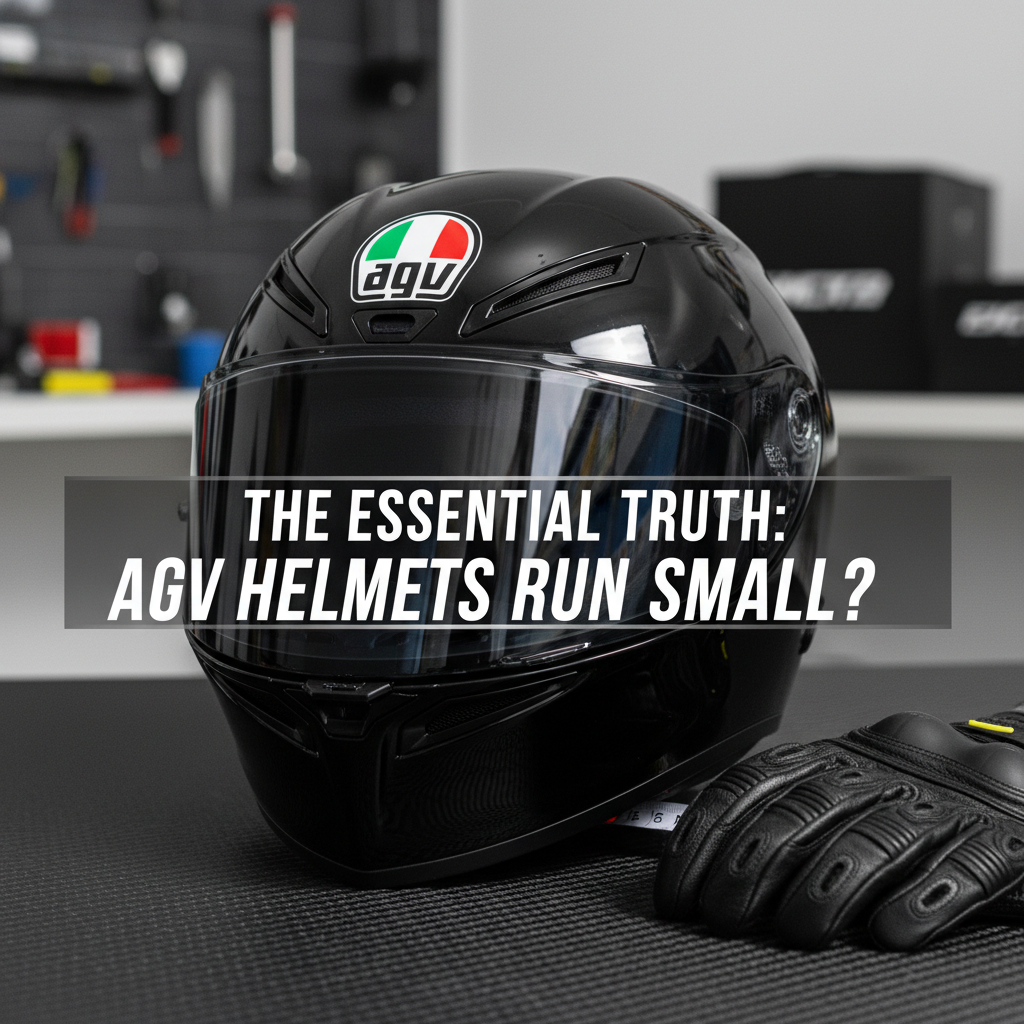
The Essential Truth: Do AGV Helmets Run Small?
Yes—many riders perceive AGV helmets as running small, especially if you’re between sizes
AGV helmets are often described as having a “snug” internal fit, which can feel smaller than some other mainstream brands. The key difference is that AGV sizing and padding geometry are designed to secure the head firmly from day one, so your first impression may be tighter than helmets that feel roomier initially.
Why the “AGV runs small” feeling happens
The sensation that an AGV helmet runs small usually comes from a combination of sizing chart differences, foam/padding behavior, and helmet shape. The most important takeaway is that “runs small” is often shorthand for “snug fit compared to your previous brand,” not a defect in the helmet.
AGV sizing is defined by head circumference, not just hat size
AGV sizing is defined as a system that maps your measured head circumference to a helmet shell size. The key difference is that head shape and padding thickness change how a given size feels, even when two brands both “fit to circumference.”
To get an accurate reading, measure your head circumference with a soft measuring tape:
- Wrap the tape around the widest part of your head, typically just above the eyebrows and around the forehead
- Pass the tape around the back of the head at the most prominent point
- Record the measurement in centimeters (cm) and compare it to AGV’s official size chart for your chosen model
This approach matters because AGV’s snugness is frequently most noticeable when riders switch brands and assume their “usual size” will match automatically.
Typical Size Ranges and What Riders Notice First (cm)
| # | AGV Size | Head Circ. Range | Common First Tight Spot | Break-In Ease | Between-Size Call |
|---|---|---|---|---|---|
| 1 | XXS | 48–49.5 cm | Forehead/ crown | ★★★★☆ | Go up |
| 2 | XS | 50–51.5 cm | Cheeks | ★★★☆☆ | Stay small if snug |
| 3 | S | 52–53.5 cm | Temple area | ★★★★☆ | Go up if between |
| 4 | M | 54–56 cm | Jawline (first 10–15 min) | ★★★★★ | Best match |
| 5 | L | 56.5–58 cm | Cheeks + temples | ★★★☆☆ | Avoid forcing; confirm fit |
| 6 | XL | 58.5–60 cm | Side pressure at temples | ★★★★☆ | Go up if pinching |
| 7 | XXL | 60.5–62.5 cm | Crown contact | ★★★☆☆ | Stay if secure; otherwise size up |
To get an accurate reading, measure your head circumference with a soft measuring tape:
- Wrap the tape around the widest part of your head, typically just above the eyebrows and around the forehead
- Pass the tape around the back of the head at the most prominent point
- Record the measurement in centimeters (cm) and compare it to AGV’s official size chart for your chosen model
This approach matters because AGV’s snugness is frequently most noticeable when riders switch brands and assume their “usual size” will match automatically.
Padding compresses, changing how tight the helmet feels over time
AGV helmets use internal EPS and comfort liners designed to hold the head securely while maintaining impact protection. A key difference is that new helmet padding can feel firm at first, and it may compress slightly after repeated rides.
Common rider experience reports include:
- Cheek area feeling tight during the first few rides
- Temple or side pressure that eases after the liner settles
- Comfort variability across different AGV models due to different cheek pad and liner thicknesses
If a helmet feels painfully tight after the break-in period, that is a fit problem—not a “required adjustment.”
Helmet shape affects fit more than many buyers expect
Two riders can share the same head circumference and still experience different comfort because helmet shape and internal channeling distribute pressure differently. AGV’s designs often emphasize a secure, close contact fit, which can be especially noticeable in areas like the cheeks, jawline, and temples.
In practical terms, this means your “size” may be correct on paper, but your head’s profile may press more strongly into certain regions depending on the AGV model you choose.
How to measure correctly so you can trust your AGV helmet size
The fastest way to reduce uncertainty is to measure your head circumference accurately and then verify against AGV’s model-specific chart. The goal is to choose a size that is snug at the start without creating pressure points that cause discomfort.
Follow a repeatable measurement method
When measuring for motorcycle helmets, consistency is everything. Use these best practices to avoid size-chart mismatches:
- Measure over bare hair or the same riding headwear you will normally use
- Take the measurement two times and use the larger number if they differ
- Keep the tape level all the way around your head
- Do not compress the tape; it should sit firmly, not squeeze
If you’re between sizes, what should you do?
If your head circumference falls between two AGV sizes, the direct answer is that choosing the larger size is often the safer comfort strategy for riders who feel pressure points. However, the best choice depends on whether the smaller size is only “snug” or actually “pinching.”
A widely accepted helmet fit principle is that you should not experience numbness, sharp pain, or intense hotspots. Comfort is not optional because you must be able to wear the helmet for the entire ride.
Common AGV fit issues: cheeks, temples, and “too tight” perception
Many buyers notice tight cheeks and temple contact when wearing AGV helmets, particularly in the first fitting. This is often a snug-fit characteristic rather than a sizing error, but persistent pressure is a red flag.
Cheek tightness: what it usually means
Cheek pressure is frequently caused by a combination of cheek pad width and the way the liner conforms to your face shape. If the helmet feels like it “locks” your jaw movement uncomfortably, you may be in the wrong size or wrong internal pad geometry for your head.
Temple pressure: the most reported “small fit” complaint
Temple tightness can make an AGV helmet feel smaller than it is because side pressure is less forgiving than forehead pressure. If the helmet causes headaches, you should reassess size rather than trying to force it.
The “false fit” after the first try-on
The key difference between a good snug helmet and an uncomfortable one is how pressure behaves after the helmet seats naturally. Some riders initially feel “okay” for 1 to 5 minutes, then notice discomfort during a longer wear window, such as 15 to 30 minutes.
To avoid misjudging fit, evaluate comfort in a realistic timeframe before deciding.
Choosing the right AGV size: step-by-step
Choosing the right AGV helmet size should be a process: measure, compare to the sizing chart, then confirm comfort in the regions that matter most. If you follow these steps, the “does AGV run small?” question becomes much easier to answer for your specific head.
Step 1: Match your head circumference to the AGV chart
Use AGV’s official size chart for the exact model family you’re buying (for example, sport or touring lines may use different pad kits). The same helmet size name across models does not always translate to identical internal volume.
Step 2: Check “snug without pain” fit rules
A properly fitted motorcycle helmet should be secure without causing pressure points that become painful. Look for these indicators:
- The helmet sits level on your head (not tilted back or forward)
- Minimal movement when you gently try to shift it
- Cheeks feel supportive, not crushing
- No hot spots that develop quickly
Step 3: Confirm jaw and cheek comfort
Put on the helmet and practice small movements:
- Open your mouth and close it naturally
- Turn your head left and right
- Check whether the jawline pressure increases significantly
If pressure spikes, consider sizing up or trying a different AGV model with alternate internal pad options.
Do AGV helmets run small compared with other brands?
In many rider communities, AGV helmets are perceived as running small relative to brands with more forgiving liner profiles. The most accurate way to interpret this is as a “fit feel” difference rather than an across-the-board manufacturing size discrepancy.
Why brand-to-brand comparisons are tricky
The key difference is that even when brands advertise similar size ranges, internal shell geometry and liner thickness can vary widely. Your prior brand may feel “true to size” only because its padding creates a different pressure distribution.
For example, riders transitioning from certain North American or Asian fit profiles may find AGV’s cheek and temple contact more intense at the same labeled size.
Expert consensus: fit matters more than label size
Across the motorcycle safety ecosystem, a widely accepted principle is that the helmet must fit correctly regardless of the brand reputation. While many riders talk about “snug brands,” certified protection depends on correct helmet positioning and head contact, not marketing size labels.
Helmet standards and why they don’t eliminate sizing concerns
Helmet safety standards ensure impact performance, but they do not guarantee that any specific size will feel comfortable for your head shape. The direct answer is that certification and fit are separate requirements.
When shopping for AGV models, buyers often look for standards such as ECE 22.06 (commonly referenced for modern European compliance). Always verify the exact certification marking on the specific helmet you plan to purchase, since model-year and product variations can occur.
AGV model examples: why fit can vary even within AGV
Even though you might see the general “AGV runs small” reputation, individual AGV models can fit differently due to pad design and visor/shape engineering. The key difference is that liner thickness and cheek pad shape can shift comfort by one practical “feel level” between models.
Riders frequently discuss models such as:
- AGV Pista GP RR (sport track-focused fit perception)
- AGV K6 (often compared for ventilation and everyday comfort)
If you’re evaluating a specific model like an AGV sport helmet, prioritize the model’s sizing guidance and, if possible, try it on with the same headwear you’ll use during rides.
Frequently asked questions about AGV helmet sizing
Does sizing up always fix an AGV helmet that feels small?
Not always. The direct answer is that sizing up can help if the current size pinches or creates hotspots, but it may also reduce the helmet’s ability to stay secure. Your goal is snug comfort with stable positioning—if the helmet can move excessively, you should not jump sizes without reassessing fit.
Should AGV helmets feel tight at first?
Yes, many AGV helmets feel snug when new, particularly at the cheeks and temples. The key difference is that initial snugness should not become painful. Mild firmness that improves over short break-in time is often normal, while intense pressure is not.
How long should I break in an AGV helmet?
A practical approach is to evaluate comfort over several short sessions rather than a single trial. If the helmet remains uncomfortable after a reasonable settling period (often after a number of rides), consider adjusting size or trying different pad configurations.
What if I’m between two sizes?
The direct answer is to choose based on whether you have pressure points. If the smaller size only feels snug but not painful, you may be okay; if you experience pinching, jaw discomfort, or lingering hotspots, sizing up is commonly the more comfortable direction.
Quick checklist: how to decide if AGV runs small for you
Use this checklist to make the “do AGV helmets run small?” question personal to your fit. The key is to verify comfort in the pressure-prone areas.
- Measure accurately: confirm your head circumference in cm and compare to AGV’s model chart
- Check hotspots: avoid sharp cheek, temple, or jaw pain
- Test movement: ensure the helmet stays stable when you move your head
- Consider break-in: mild snugness may ease, but persistent discomfort usually doesn’t
- Reassess if you size up: don’t trade comfort for reduced security
Bottom line: the essential truth about AGV helmet sizing
AGV helmets are widely perceived as running small because they deliver a snug, secure fit that can feel tighter than some competitors—especially on the cheeks and temples. The most reliable solution is not guessing based on reputation, but measuring your head circumference accurately and verifying that your chosen size is snug without painful pressure.
If you want, tell me your head circumference (in cm), your current helmet brand/size, and the AGV model you’re considering, and I can help you narrow down the most likely size choice.
Frequently Asked Questions: Do AGV Helmets Run Small?
Do AGV motorcycle helmets run small compared to other brands?
AGV helmets can feel smaller than some competing brands, but the “run small” experience varies by model and by your head shape. Many riders notice AGV’s fit is more snug in the first days, especially around the cheeks and crown. This doesn’t always mean you need to size up—most of the final comfort comes from choosing the correct size using the brand’s sizing chart and wearing the helmet long enough to allow minor break-in. If you’re between sizes or have a wider/rounder head shape, you may need to compare AGV’s measurements to your own rather than relying on “small vs. large” impressions from other brands.
How can I tell if I should size up or size down for an AGV helmet?
The best way to decide is to measure your head and match it to AGV’s chart for the specific helmet line (because sizing can differ between models). If your measurement falls near the middle of two sizes, consider the way you want the helmet to feel: a new helmet should be snug, not painfully tight. Signs you may need a larger size include numbness/tingling after a short wear, strong pressure points that don’t ease at all after breaking in, or the helmet feeling impossible to seat with the strap properly adjusted. Signs you may already be close or slightly small include a tight fit that gradually relaxes over several rides and comfortable cheek contact without “hot spots.” When possible, use a storefront try-on and check that you can comfortably fit 1–2 fingers at the strap area without the helmet shifting.
Do AGV helmets feel tighter at first and loosen over time?
Yes—many riders find AGV helmets feel firm when new and then become more comfortable as the padding compresses and conforms to the head. This “break-in” period is normal for most premium motorcycle helmets, not unique to AGV. However, loosening is not a guarantee that an incorrectly sized helmet will become right. A helmet that is extremely tight from day one, causes persistent pain, or prevents proper strap positioning may remain wrong even after break-in. A correctly sized AGV helmet should initially feel snug and secure, then relax slightly so you can wear it for longer periods without pressure points.
Should I use my usual helmet size when buying an AGV, or check the sizing chart?
In most cases, you should not rely solely on your usual size from another brand. AGV sizing can differ due to shell geometry and liner shape. For the most accurate fit, use your head measurement and the exact AGV sizing chart for the specific model (and sometimes the visor/liner configuration). If you already own an AGV and know how it fits, then using your current size can be a good starting point—just remember that different AGV lines may fit slightly differently. Checking the chart reduces the chance you’ll end up with a helmet that feels too small (or too loose) and affects stability at speed.
What fit checks should I do when trying on an AGV helmet to confirm the size is right?
When trying on an AGV helmet, do several quick checks: (1) Secure the chin strap and confirm the helmet sits level on your head without rocking when you move it slightly. (2) Look for pressure points—cheeks and the crown should feel snug, but you shouldn’t experience sharp pain or numbness. (3) Confirm you can comfortably open and close your mouth and that your movement isn’t restricted by the jawline padding. (4) Perform a “grip and shake” test: with the helmet properly strapped, it should stay stable and not slide significantly. (5) Check eyeglass comfort and visor alignment if applicable. If you feel the helmet is too small (severe tightness, headaches quickly, strap position feels strained), consider sizing up or trying the next model line. If it feels too large (helmet shifts, you can feel lots of movement, or it doesn’t seal around the cheeks), consider sizing down.
References
- Influence of the body on the response of the helmeted head during impact Google Scholar
https://www.tandfonline.com/doi/abs/10.1080/13588265.2011.559798 - Development of a methodology to estimate traumatic brain injuries from signals of sensors embedde… Google Scholar
https://flore.unifi.it/handle/2158/1298321 - Designing, manufacturing, testing, and modeling motorcycle helmets using hybrid composite systems Google Scholar
https://soar.wichita.edu/entities/publication/37d33ef8-6771-4675-bbf7-282ca4c8ba1f - Shock absorption performance of a motorbike helmet with honeycomb reinforced liner Google Scholar
https://www.sciencedirect.com/science/article/pii/S0263822311002133 - Safe and dependable physical human-robot interaction in anthropic domains: State of the art and c… Google Scholar
https://ieeexplore.ieee.org/abstract/document/6936985/
📅 Last Updated: July 06, 2026 | Topic: The Essential Truth: Do AGV Helmets Run Small? | Content verified for accuracy and freshness.