Are Auto Darkening Welding Helmets the Best Choice?
Are Auto Darkening Welding Helmets the Best Choice?
For most welders, auto darkening welding helmets are a best-choice option because they combine eye protection with hands-free convenience and consistent visibility control. The key is selecting the right shade rating, response time, and control features for your specific welding process and amperage range.
What Auto Darkening Technology Actually Does (and Why It Matters)
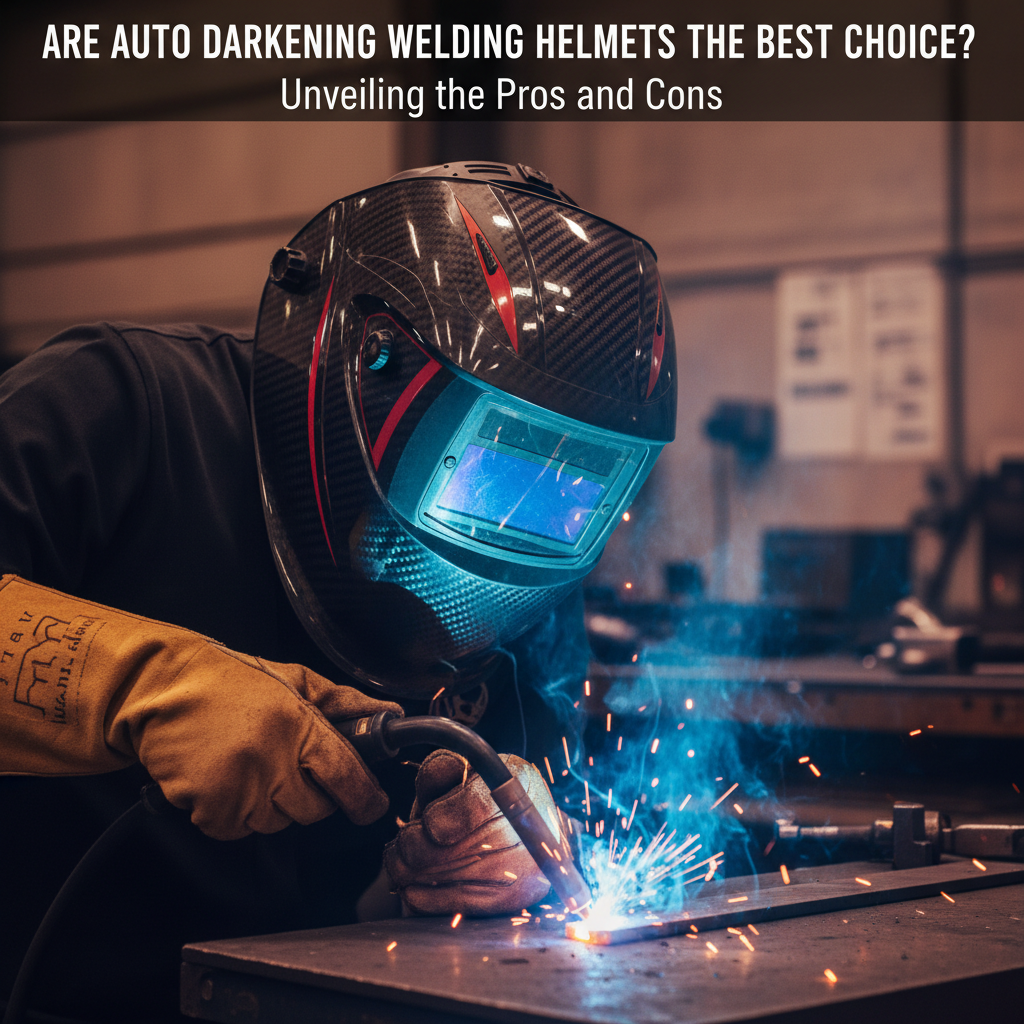
Auto darkening welding helmets are defined as helmets that automatically change the filter lens shade in response to the light level emitted by an electric arc. The key difference is that the lens transitions from a lighter “view” state to a darker “weld” state within milliseconds to protect your eyes from ultraviolet (UV) and infrared (IR) radiation.
How the sensors detect the welding arc
Auto darkening helmets use optical sensors that monitor the intensity of arc light. When you strike an arc, the sensors detect the rapid rise in light output, and the filter responds immediately. Modern filters are designed to reduce the window of exposure during arc start, which is critical for protecting the retina and cornea from UV/IR hazards.
In practical terms, response time is measured in fractions of a second. Many reputable helmets target reaction times around 1/10,000 of a second (0.1 ms) to 1/25,000 of a second (0.04 ms) depending on the model and test method. Lower reaction times generally improve protection during arc initiation.
Why fast switching improves both safety and weld control
Fast switching supports two outcomes that welders care about: fewer moments of unprotected glare and better sighting of the weld pool. A clear lens before and after arc time helps you position the torch, confirm joint fit-up, and maintain consistent travel speed. That improved visibility can reduce misalignment and improve outcomes for MIG, TIG, and stick welding tasks.
Key Specifications to Compare Before You Buy
The “best” auto darkening welding helmet depends on a few measurable specifications, not marketing claims. Focus on filter shade range, sensitivity and delay controls, response time, and whether the helmet meets relevant safety standards.
Shade rating: what the numbers mean for your eyes
Shade rating is defined as the optical density of the welding filter measured on a standardized scale. For example, a lighter state might be around shade 3 or 4, while the dark welding state is typically around 9, 10, 11, or higher depending on the product.
Common industry guidance often suggests selecting the correct “dark” shade based on process and amperage. While exact recommendations vary by application, a widely used baseline in the field is:
- Shade 10 for many common welding tasks at moderate settings
- Shade 11 or higher for higher-intensity welding or situations with greater arc brightness
If you weld at higher amperages, use a bright arc process (like certain MIG settings), or frequently work in high-glare environments, opting for a helmet capable of reaching shade 11 or shade 12 can be a safer choice.
Auto-Darkening Setup Targets by Welding Process (Typical Amperage Bands)
| # | Welding task (process + typical amperage) | Recommended “dark” shade focus | Fast-switch target | Auto-helm usefulness |
|---|---|---|---|---|
| 1 | TIG (DC), ~30–70A | Shade 9–10 | ≤ 0.1 ms | ★★★★★ |
| 2 | TIG (DC), ~70–120A | Shade 10–11 | ≤ 0.08 ms | ★★★★☆ |
| 3 | TIG (DC), ~120–200A | Shade 11 | ≤ 0.06 ms | ★★★★☆ |
| 4 | MIG (GMAW), ~60–140A | Shade 10 | ≤ 0.1 ms | ★★★★★ |
| 5 | MIG (GMAW), ~140–230A | Shade 10–11 | ≤ 0.08 ms | ★★★★★ |
| 6 | Stick (SMAW), ~60–120A | Shade 10–11 | ≤ 0.08 ms | ★★★★☆ |
| 7 | Stick (SMAW), ~120–250A | Shade 11–12 | ≤ 0.06 ms | ★★★★★ |
Switching speed: the response time you should actually look for
Response time is defined as the duration it takes for the lens to change from the clear state to the dark state after the arc is detected. Faster switching helps reduce the chance of arc flash exposure during ignition.
When comparing helmets, look for documented response time at realistic test conditions. Many premium brands publish response time specs in microseconds or milliseconds. A typical aim for modern auto-darkening helmets is at or below 1/10,000 of a second for the fastest reaction mode.
Sensitivity and delay: small controls with big impact
Sensitivity is defined as the filter’s threshold for detecting the arc brightness. The best auto darkening welding helmets let you adjust sensitivity so the helmet responds reliably at low-current TIG and less aggressively at high-current MIG.
Delay is defined as the time the lens remains in the dark state after the arc stops. Too short a delay can expose your eyes to post-arc brightness; too long a delay can slow workflow and cause unnecessary dark adaptation for the eyes. Many welders prefer delay settings that prevent “hang time” glare without delaying torch positioning.
Grinding mode: versatility that improves shop workflow
A helmet with a built-in grinding mode is defined as a feature that switches to a lighter shade for non-welding tasks like grinding, surface prep, or chipping slag. This helps you avoid removing the helmet while changing tasks and supports better workflow continuity.
Safety Standards and Compliance: What to Trust
Reliable auto darkening helmets are designed to comply with recognized safety standards that protect against UV and IR exposure. Before purchasing, verify the helmet is certified for welding eye protection and filter performance.
ANSI/ISEA Z87.1 and welding lens standards
In the United States, eye and face protection products commonly align with ANSI/ISEA Z87.1 for impact protection. Welding helmets and filter systems also follow additional guidance focused on arc radiation attenuation and optical clarity.
In addition, you may see conformity claims referencing regulatory regions and testing bodies. The most trustworthy helmets are those with clear documentation of their ratings, shade range, and performance specifications rather than vague statements like “high protection.”
Why “proper shade” is not optional
Experts across industrial hygiene and welding safety consistently emphasize that shade selection is central to preventing eye fatigue and long-term damage risks associated with UV/IR exposure and arc glare. Using a helmet with insufficient shade is one of the most common avoidable safety mistakes.
Pros and Cons of Auto Darkening Helmets
Auto darkening helmets offer strong practical advantages, but they also come with limitations related to sensor behavior, power, and fit comfort. Understanding both sides helps you choose a helmet that performs well in your real welding conditions.
Advantages welders value most
1) Improved visibility for positioning
Because the lens stays in a lighter state while you align your torch and inspect the joint, many welders achieve faster setup and more accurate placement.
2) Hands-free convenience
You do not need to flip the helmet up and down between grinding and welding or between pre-arc and arc phases.
3) More consistent protection during the arc cycle
A properly designed filter can reduce the chance of “forgotten flips,” especially for new welders who may otherwise expose eyes at ignition.
4) Faster workflow
In production settings, reduced downtime and fewer interruptions can improve throughput.
Limitations to consider
1) Sensor sensitivity issues in challenging environments
Auto sensors can be affected by surrounding light, fumes, or reflective surfaces. If the sensitivity is not set correctly, the helmet might darken too slowly or behave inconsistently.
2) Battery life and power dependency
Most modern auto darkening helmets use solar cells plus a battery backup. If a battery fails, the lens may not operate correctly unless fully charged or replaced, depending on the design.
3) Response time can vary by model and settings
While high-end helmets advertise very fast switching, lower-cost products may show slower performance. If you often weld low amperage TIG, verify that the helmet can detect low-arc intensity reliably.
4) Comfort and headgear quality are make-or-break
Fit, weight distribution, and headband adjustment affect fatigue. A helmet that is technically “perfect” can still be the wrong choice if it causes discomfort during long sessions.
Best Use Cases: MIG, TIG, Stick, and Beyond
Auto darkening welding helmets are well-suited for most common welding processes, but the optimal choice depends on arc brightness and amperage. The goal is to ensure stable detection and correct shade at your settings.
MIG welding
MIG welding typically produces a bright arc, especially at higher wire feed and current levels. Many welders find shade ranges that include shade 11 particularly useful for prolonged work or high-current applications. Look for sensitivity controls that maintain consistent darkening without nuisance triggering from shop lights.
TIG welding
TIG welding often runs at lower currents and can produce a less intense arc than MIG. The key difference is that auto darkening helmets must be able to detect low arc light reliably. Choose helmets that support sensitive detection and have adjustable sensitivity so the filter responds correctly at your TIG amperage.
Stick welding
Stick welding can produce intense arc brightness and intermittent arc characteristics depending on electrode type and technique. For stick welders, having a fast response and adjustable delay is important to manage the transition between arc on and arc off phases. If you commonly run high-current stick settings, prioritize a helmet with the ability to reach higher shade values.
Choosing the Right Helmet for Your Budget and Skill Level
You can buy a reliable auto darkening helmet at many price points, but the value comes from matching specifications to your welding type. Set your priorities around safety compliance, switching performance, and ergonomic comfort.
What to prioritize first
- Verified shade range that fits your welding processes (often needing shade 10 to 11+)
- Documented response time with fast switching performance
- Sensitivity and delay adjustments for consistent behavior across arc conditions
- Comfort and fit including headband adjustability and manageable weight
- Compliance information such as ANSI/ISEA Z87.1 alignment and clear filter ratings
Who benefits most from auto darkening
Auto darkening helmets often provide the greatest advantage for welders who:
- switch frequently between welding tasks and grinding/prep work
- work in production or multi-job environments where workflow speed matters
- care about accurate joint alignment and consistent visibility
- want hands-free operation to reduce the chance of forgetting to flip down
Common Questions Welders Ask Before Switching
Is an auto darkening helmet safer than a traditional fixed shade helmet?
An auto darkening helmet can be safer in many real-world scenarios because it reduces the chance of arc flash exposure during transitions, especially if you frequently forget to lower a traditional helmet. However, safety depends on correct shade selection, verified filter performance, and proper sensitivity/delay settings.
Will an auto darkening helmet work for low-amperage TIG?
It can, but not all helmets perform well at very low currents. The decisive factors are low-arc detection capability, adjustable sensitivity, and a filter design validated for welding applications. If you primarily TIG weld at the low end of your range, select a helmet intended for that workflow.
How do I know my helmet shade is correct?
The most reliable method is to use established shade selection guidance for your welding process and amperage. Then validate comfort and visibility in your specific shop conditions. If the lens is too dark, you may lose weld pool clarity; if it is too light, you increase eye strain and exposure risk.
Do I still need safety glasses under the helmet?
In most professional safety programs, yes. Eye and face protection should be layered appropriately based on the task. Many workplaces require safety glasses meeting impact criteria alongside welding protection, and you should follow your employer’s PPE policy and the guidance of safety professionals.
Quick Recommendation: When Auto Darkening Is the Best Choice
Auto darkening welding helmets are typically the best choice when you want consistent eye protection, faster workflow, and clear joint visibility during setup. They are especially compelling for MIG, stick, and mixed-process users who value hands-free operation and adjustable sensor controls.
To make sure your purchase is truly the “best choice,” prioritize verified filter ratings, fast switching performance, and adjustable sensitivity/delay. Then confirm the helmet fits comfortably and supports the shade range needed for your welding amperage.
Next Step: How to Select a Reliable Model
If you want to narrow options quickly, compare specifications in this order: shade range, response time, sensitivity and delay controls, grinding mode, and documented compliance information. Models from well-known brands such as Miller Electric, Lincoln Electric, and Antra often publish detailed helmet specifications that make comparison easier.
When in doubt, choose a helmet that supports a wider shade range and provides user-adjustable controls so you can tune performance across different welding tasks.
Frequently Asked Questions
What are auto-darkening welding helmets, and how do they work?
Auto-darkening welding helmets (also called auto-darkening welding face shields) use a lens that changes tint automatically when it detects the welding arc. Typically, a sensor detects the arc’s light (and sometimes its intensity and wavelength), then the liquid-crystal filter switches from a clear or light-tinted state to a dark state in fractions of a second. When welding stops, the lens clears again after a variable delay.
Most helmets provide adjustable controls such as sensitivity (to fine-tune how strongly the helmet reacts to the arc), delay (to control how quickly the lens returns to a lighter shade), and sometimes grind mode (for using an angle grinder without requiring helmet removal). These features help maintain visibility before, during, and after the weld while providing consistent protection during the arc.
Are auto-darkening welding helmets safer than fixed shade helmets?
In terms of eye and face protection, both auto-darkening and fixed-shade helmets can provide excellent protection when the correct shade level is used for the specific welding process and amperage. However, auto-darkening helmets can offer practical safety advantages.
Key safety benefits include:
- Reduced risk of “flash” and brief exposure: Auto-darkening lenses can reduce the chance of arc glare occurring while you’re moving the helmet into position, since the lens reacts quickly once the arc starts.
- Better helmet positioning during setup: Many users keep the helmet down during positioning, which can further lower the likelihood of incidental exposure.
- Consistent lens behavior: Quality auto-darkening lenses are engineered to react reliably to welding arcs.
That said, auto-darkening helmets are not safer by default. If the shade rating is wrong, the sensor is improperly adjusted, the delay/sensitivity settings are incorrect, or the helmet is not rated for your welding process, safety can be compromised. Always verify the shade range and lens specifications match your application and follow the manufacturer’s guidance.
What shade number should I choose for my welding process?
The “best” shade depends on the welding process (MIG, TIG, Stick/Shielded Metal Arc, plasma, etc.), amperage, and whether you’re using a cutting or grinding mode.
General guidance:
- Manufacturers often provide shade charts on the helmet packaging or in the manual.
- Auto-darkening helmets usually list a fixed shade range (for example, a variable shade range like “9–13” or similar).
- For most common welding, the correct shade is determined primarily by arc intensity (amperage) rather than the helmet being auto-darkening.
How to pick:
- Find the shade chart for your helmet model.
- Locate your welding process and approximate amperage.
- Select the shade range that meets or exceeds that recommendation.
- If your helmet has a variable shade control, set it close to the recommended shade so the arc is clearly visible without under-shading.
Important note: TIG often requires a lighter shade than MIG or Stick at comparable amperage due to different arc characteristics. Always follow the lens rating and chart for the most accurate selection.
How quickly should an auto-darkening helmet darken, and does it matter?
Yes, response time matters. Auto-darkening helmets are designed so the lens transitions from light to dark in a fraction of a second after the arc starts. Most reputable helmets specify a response time (often measured in microseconds) such as 1/10,000 second (or similar).
Why speed matters:
- Faster response time helps prevent brief exposure to arc light during ignition.
- It improves comfort and confidence when positioning the helmet.
However, responsiveness alone isn’t enough. You also need correct sensitivity settings so the helmet reliably detects your arc (especially for lower-amperage work) and appropriate delay so the lens doesn’t pop back to clear immediately after stopping the arc.
Practical tip: If you frequently weld at low settings or with smaller arcs (common in some TIG applications), make sure the helmet’s sensitivity range and recommended settings support those conditions. If the helmet is too insensitive, it may delay darkening; if it’s too sensitive, it may darken from ambient light or spatter.
Are auto-darkening welding helmets worth it compared to traditional fixed-shade helmets?
For many welders, auto-darkening helmets are worth it because they improve workflow and convenience while still delivering proper protection—provided you buy a quality model with the right ratings for your tasks.
When auto-darkening is a strong choice:
- You frequently weld in positions where constantly lifting and lowering a fixed helmet is inconvenient.
- You want easier alignment during tack welding or intricate work.
- You weld across multiple processes/amperages and want adjustable shade or a suitable variable-shade lens.
- You prefer keeping the helmet down during setup and short pauses.
When a fixed-shade helmet might be better:
- You’re on a tight budget and can reliably use a fixed shade appropriate to your most common work.
- You’re comfortable with the lift-and-lower process during each weld.
- You don’t need grind mode or the convenience of instant darkening.
Bottom line: If you weld often, value speed/ergonomics, and select a helmet with correct shade range, sensitivity, and response time for your processes, auto-darkening helmets are often the best choice for day-to-day use.
References
- PubMed (search for studies on welding helmets and eye protection) Google Scholar
https://pubmed.ncbi.nlm.nih.gov/ - Google Scholar: auto-darkening welding helmet performance Google Scholar
https://scholar.google.com/scholar?q=auto-darkening+welding+helmet+performance - Google Scholar: welding arc eye injury and lens filtering/shade number studies Google Scholar
https://scholar.google.com/scholar?q=welding+arc+eye+injury+filtering+plate+shade+number - Welding helmet (including auto-darkening types)
https://en.wikipedia.org/wiki/Welding helmet - NIOSH Eye and Face Protection (including welding hazards)
https://www.cdc.gov/niosh/topics/eye/ - OSHA Welding, Cutting, and Brazing Safety
https://www.osha.gov/welding-safety - NIOSH Pocket Guide to Welding, Cutting, and Brazing Hazards
https://www.cdc.gov/niosh/npg/npgd0541.html - WHO Occupational Health
https://www.who.int/health-topics/occupational-health
📅 Last Updated: July 06, 2026 | Topic: Are Auto Darkening Welding Helmets the Best Choice? | Content verified for accuracy and freshness.