The Ultimate Guide to Measuring Head Size for Helmets
The Ultimate Guide to Measuring Head Size for Helmets
Accurate head-size measurement is defined as the process of capturing the widest circumference of your head using a flexible tape measure, positioned consistently above the eyebrows and around the ears. When you measure correctly, you reduce the risk of an oversized helmet that shifts and an undersized helmet that creates pressure points, improving both comfort and safety.
Why Head Size Measurement Matters for Helmet Safety
A properly fitted helmet is defined as one that remains stable on your head during normal movement and does not cause discomfort that leads to poor wearing habits. The key difference between a “close enough” fit and a correct fit is how the helmet controls motion: the right size limits excessive movement while maintaining even pressure distribution.
Across cycling, motorcycling, and sporting activities, helmet fit affects head protection by influencing how the helmet sits relative to the skull. If a helmet is too loose, it can rotate or slide, potentially reducing the protective coverage you expect. If it is too tight, it can create hot spots that encourage you to loosen or remove the helmet during use.
What experts and manufacturers generally agree on
Helmet fit guidance from major safety organizations and manufacturers consistently emphasizes measurement accuracy and comfort checks. While exact fit standards vary by brand and product line, the widely accepted approach is to measure head circumference at the helmet’s intended contact zone and choose the size that provides a snug, secure feel.
For example, many helmets built for road cycling follow a similar sizing philosophy: measure head circumference, select the matching size range, then confirm fit using strap adjustment and stability tests.
Helmet Fit Types: Round, Oval, and Intermediate
Head circumference alone is not the whole story because helmet shapes are engineered for specific head geometries. The key difference is that two people with the same circumference may require different shell shapes if their heads are more round (wider than long) or more oval (longer front-to-back).
Round vs. oval vs. intermediate fit
Helmet fit types are defined as the internal and external shell shape categories that aim to match common head proportions. Many brands describe their fit using terms such as round, oval, and intermediate.
- Round fit: designed for heads that are wider than they are long.
- Oval fit: designed for heads that are longer front-to-back and narrower side-to-side.
- Intermediate fit: a blend intended to accommodate a range between the two extremes.
If the helmet shape mismatches your head geometry, you may feel pressure on one area (often the temples or forehead) even if the circumference measurement suggests the right size.
Tools You Need to Measure Head Size Correctly
You only need a few tools, but using the right kind of measuring device is essential for accuracy. The key difference is that flexible tape conforms to your head while rigid tools can distort the circumference.
Essential tools
- Flexible measuring tape: ideal for head measurements because it bends around the head’s widest area.
- String (backup): if you don’t have a tape measure, wrap a string around your head and measure the string length afterward with a ruler.
- Pen and paper or a notes app: to record your measurements in both inches and centimeters if possible.
- Mirror: helps you position the tape level and centered around both ears.
Quick measurement tip
For consistent results, measure in front of a mirror and keep the tape horizontal where possible. If you tend to tilt the tape, your measurement may come out slightly high or low compared with what helmet size charts assume.
Step-by-Step: How to Measure Head Size for a Helmet
Measuring your head size is defined as wrapping a flexible tape around the widest part of your head and recording the circumference at the same height each time. The key difference between an accurate and inaccurate measurement is tape placement: above the eyebrows, around the ears, and level around the back of the skull.
Step 1: Find the correct measurement level
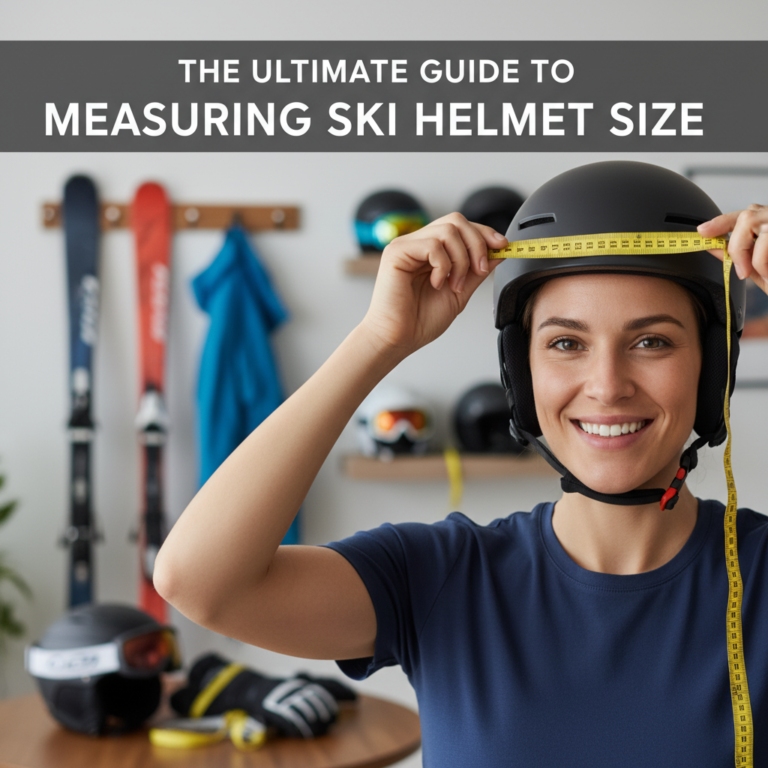
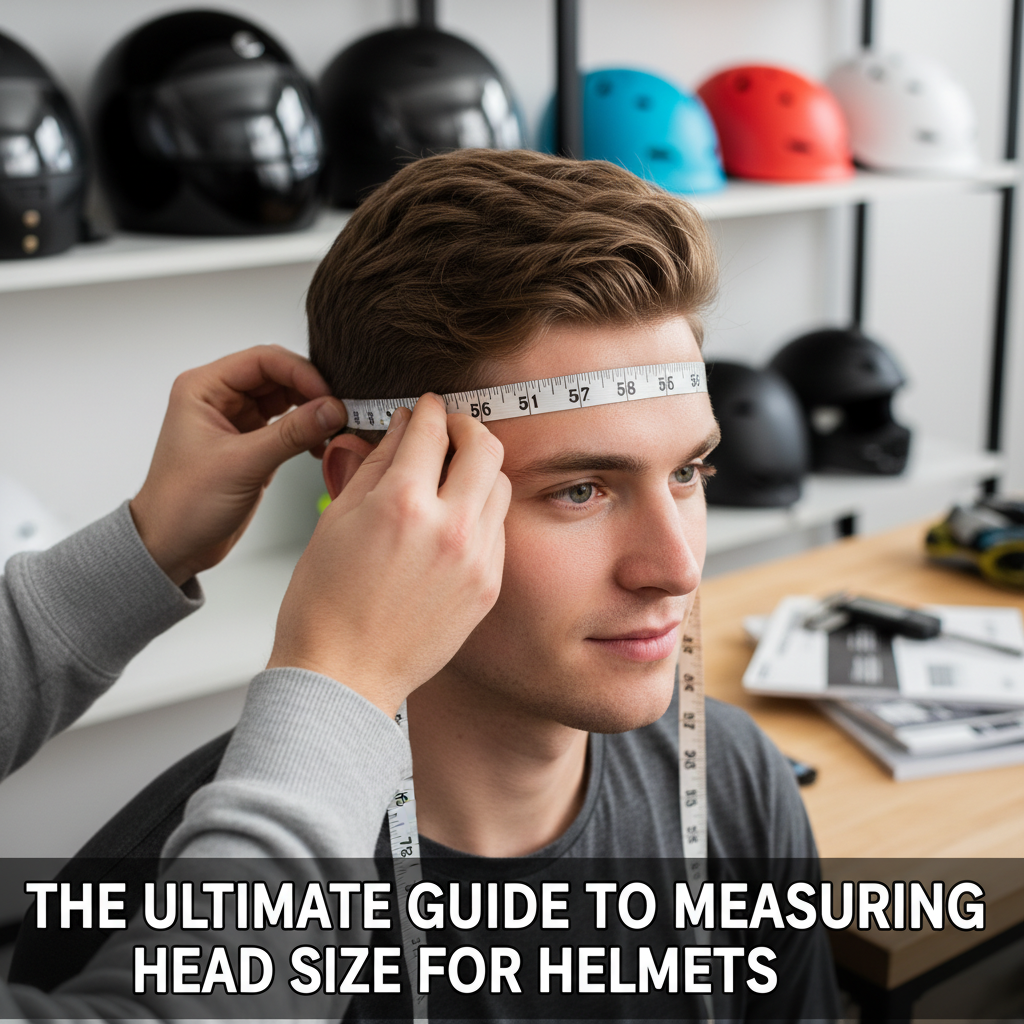
Place the tape just above your eyebrows and around your ears. This zone typically represents the widest part of the helmet’s contact area for many common helmet sizing guides.
If you are measuring for a motorcycle helmet or a performance helmet with a different shell profile, you may notice small differences in recommended placement. When available, always follow the brand’s sizing instructions for the specific model.
Step 2: Position the tape consistently and level
Keep the tape parallel to the floor and ensure it sits comfortably without digging in. Use a mirror to verify that the tape passes evenly above each ear and around the widest point at the back.
Step 3: Check the snugness
The tape should be snug but not tight. A simple standard is “snug enough to stay in place without compressing hair or skin,” because compression can make your circumference read smaller than reality.
Step 4: Take the measurement and record it
Read the tape where the two ends meet and write down the number. Record in centimeters and inches if your helmet size chart uses both systems.
Step 5: Repeat for accuracy
Take at least two measurements. If they differ by more than about 0.2 to 0.4 inches (approximately 0.5 to 1.0 cm), re-check placement and repeat until results are consistent.
How to Use Your Measurement with Helmet Size Charts
Helmet size charts convert your head circumference into a helmet size range. The key difference is that charts are brand-specific, so your “size” may vary slightly between manufacturers even when your head circumference is identical.
Common sizing ranges (what to expect)
Many helmet brands use circumference-based sizing, often grouping ranges by a small number of centimeters. For example, you may see sizes that span about 1 cm to 2 cm between adjacent sizes depending on the brand and model.
Typical Adult Helmet Size Ranges by Head Circumference (US/Metric)
| # | Helmet Size Label | Head Circumference (cm) | Head Circumference (in) | Most Common Use Case | Fit Confidence |
|---|---|---|---|---|---|
| 1 | XS | 51–52 cm | 20.1–20.5 in | Youth-to-small adult helmets | ★★★★☆ |
| 2 | S | 53–54 cm | 20.9–21.3 in | Road & commuting cycling | ★★★★★ |
| 3 | M | 55–56 cm | 21.7–22.0 in | General adult multi-sport | ★★★★★ |
| 4 | L | 57–58 cm | 22.4–22.8 in | MTB, urban riding, skating | ★★★★☆ |
| 5 | XL | 59–60 cm | 23.2–23.6 in | Long-distance cycling fit | ★★★★☆ |
| 6 | XXL | 61–62 cm | 24.0–24.4 in | Larger-head comfort builds | ★★★☆☆ |
| 7 | XXXL | 63–64 cm | 24.8–25.2 in | Extended-size helmets (when offered) | ★★★☆☆ |
Always locate the exact size chart for the helmet you plan to buy, because brand patterns differ. A size chart for one product line (for example, a road bike helmet) may not match a different line (for example, a motocross helmet).
When to round up or down
A common rule of thumb is to choose the size that matches the measured circumference closest to the chart. If you fall between two sizes, the key decision is how the helmet should feel during fit testing.
- If the smaller size feels like it will create pressure points immediately, consider the next size up.
- If the larger size feels loose and can shift on your head when you move, consider the smaller size or an alternate fit shape.
Fit Testing: Confirming the Helmet Size After You Choose
Measurement tells you where to start, but fit testing confirms whether the helmet actually works for you. The key difference is that the “best size” is the one that stays secure, feels comfortable, and provides correct coverage without hotspots.
Use these stability and comfort checks
- Stability test: with the helmet on and straps adjusted, gently move your head forward, backward, and side-to-side. The helmet should not shift excessively.
- Pressure check: wear it long enough to notice hotspots. If specific points press painfully, the size or shape may be wrong.
- Coverage check: confirm the helmet covers the forehead appropriately for the activity (cycling, skate sports, motorcycling), based on product design.
Strap adjustment matters as much as size
Even if you select the correct circumference, poor strap adjustment can cause the helmet to ride high, shift during movement, or loosen over time. Follow the manufacturer’s strap guidance for your helmet model.
Common Mistakes When Measuring Head Size for Helmets
Most measurement errors come from inconsistent tape placement or using the wrong type of measuring tool. The key difference is whether the measurement reflects the helmet contact zone or an accidental height that is too high or too low.
Top mistakes to avoid
- Measuring too high: results may produce an overly small size recommendation.
- Measuring too low: can lead to selecting a larger helmet than needed.
- Using rigid tools: a stiff ruler or non-conforming tape can distort circumference.
- Pulling the tape tight: compression makes the number smaller, increasing the chance of an undersized helmet.
- Not repeating the measurement: one-off readings often miss placement errors.
FAQs: Measuring Head Size for Helmets
What part of my head should I measure for a helmet?
You should measure the widest part of your head, typically just above your eyebrows and around your ears. The key difference is measuring at a consistent height each time, because helmet sizing charts assume a specific contact zone.
Should I measure over hair or without hair?
For most everyday helmet fitting, measure in the same conditions you will wear the helmet (for example, with hair styles you commonly use). If your hairstyle adds significant bulk, you may want to account for it so the helmet fit remains consistent.
Can I measure with a string if I don’t have a tape measure?
Yes. Wrap a string around your head where the tape would sit, mark the point where the ends meet, then measure the string length with a ruler. The key difference is ensuring the string is snug but not compressing your head.
Why does the same head circumference sometimes require different helmet sizes?
Helmet sizing differences can happen because brands vary in shell thickness, pad systems, and fit shape categories (round, oval, intermediate). The key difference is that internal padding thickness and shell geometry influence fit beyond circumference.
How tight should a helmet feel when it’s the right size?
A correct helmet fit is defined as snug and secure without causing pain or numbness. The key difference is that it should feel stable, not strangling; you should be able to wear it comfortably while straps are properly adjusted.
Quick Reference Checklist for Accurate Helmet Sizing
Use this checklist to make sure your measurements and fit steps are complete. The key difference is consistency: measure the same way twice, then confirm stability and comfort before finalizing your purchase.
- Flexible tape placed above eyebrows and around ears
- Level position verified with a mirror
- Snug (not tight) tape pressure
- Record measurement in inches and centimeters
- Repeat measurement for consistency
- Match your measurement to the correct brand’s size chart
- Fit test stability and comfort after strapping
Final Thoughts: Measure Once, Ride Confidently
Measuring head size for a helmet is defined as a repeatable process of capturing the correct circumference at the correct placement height and validating fit through stability and comfort checks. The key difference between a helmet that looks right and one that protects right is the fit you confirm in real use.
If you want the most reliable outcome, measure carefully, choose the correct size chart for the specific brand/model, and perform stability testing after adjusting the straps. With the right measurement and fit, you improve comfort, reduce distractions, and support the protective purpose your helmet is designed to deliver.
Frequently Asked Questions
What’s the correct way to measure my head size for a helmet?
Should I measure my head over hair, or without hair?
What’s the difference between head circumference and helmet size, and how do I choose my size?
How tight should a helmet fit after measuring my head size?
My measurement falls between sizes—what should I do?
References
- Survey of head, helmet and headform sizes related to motorcycle helmet design Google Scholar
https://www.tandfonline.com/doi/abs/10.1080/00140138808966784 - Development of headforms for sizing infantry helmets Google Scholar
https://apps.dtic.mil/sti/html/tr/AD0787277/ - A Sizing System Using Anthropometric Measurements for Headgear Google Scholar
https://link.springer.com/chapter/10.1007/978-981-16-3934-0_14 - Bicycle helmet size, adjustment, and stability Google Scholar
https://www.tandfonline.com/doi/abs/10.1080/15389588.2014.931948 - Development of Discrete Size Measurement Methodologies for Motorcycle Helmets Google Scholar
https://rosap.ntl.bts.gov/view/dot/68844
📅 Last Updated: July 06, 2026 | Topic: The Ultimate Guide to Measuring Head Size for Helmets | Content verified for accuracy and freshness.