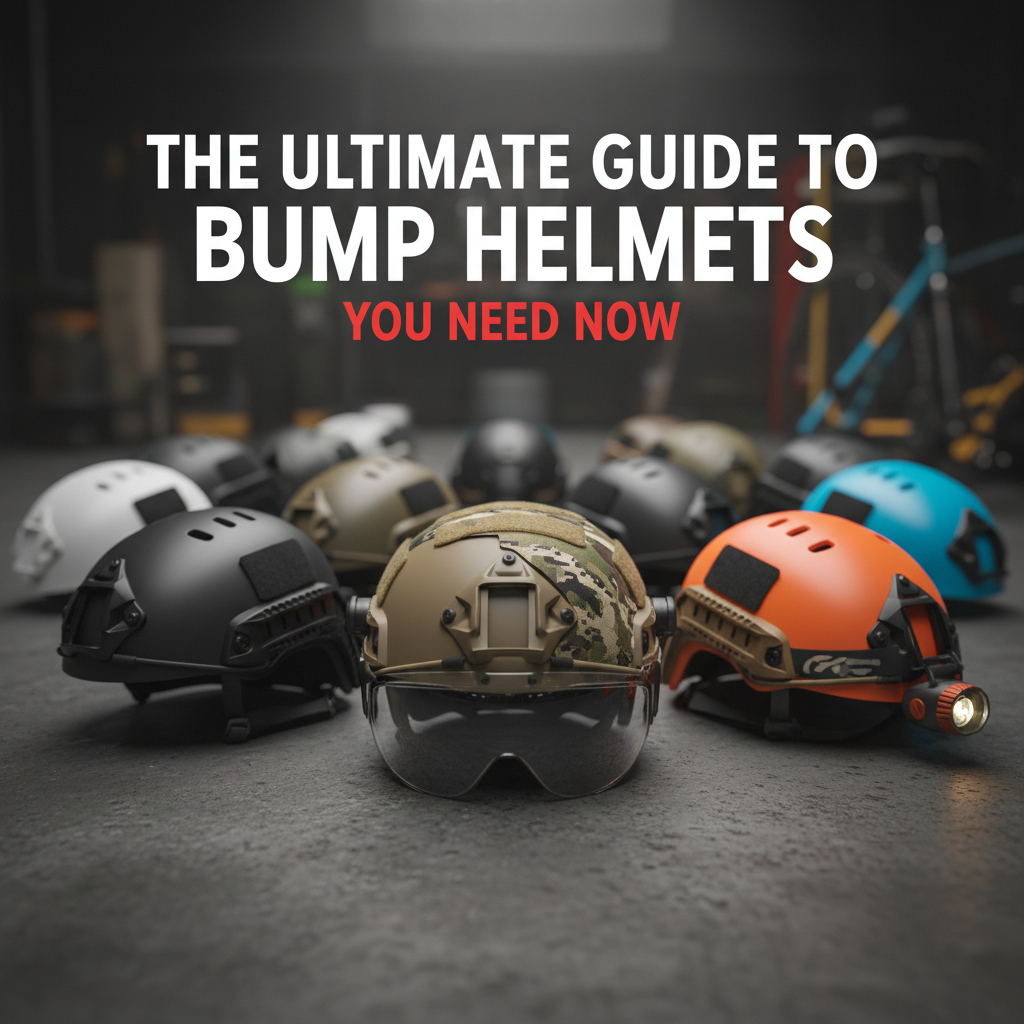
The Ultimate Guide to Bump Helmets You Need Now
What Is a Bump Helmet? (Quick Answer)
A bump helmet is defined as lightweight protective headgear designed to reduce injury risk from low-energy impacts such as knocks, scrapes, and minor falls. The key difference is that it is not built to stop high-velocity projectiles like a ballistic helmet; instead, it focuses on everyday impact mitigation for training, industrial work, and controlled tactical activities.
Bump Helmet vs. Ballistic Helmet: What’s the Difference?
The key difference between bump helmets and ballistic helmets is the protective target: bump helmets prioritize impact absorption and abrasion resistance, while ballistic helmets are engineered to defeat specific projectile threats. Because of that, bump helmets are typically lighter and more ventilated, supporting mobility and prolonged wear.
In practical terms, bump helmets are commonly used in environments where the threat is accidental impact rather than ballistic fire—such as entry-level tactical training, range operations where force-on-force is used, paintball scenarios, and industrial or warehouse tasks with overhead hazards.
Common Use Cases for Bump Helmets
Bump helmets are used when the risk profile is dominated by bumps, knocks, and minor impacts rather than gunfire. They are also popular in sports that require head protection without heavy weight.
- Law enforcement and military training: Reduces injury risk during drills, movement training, and low-energy contact scenarios.
- Industrial environments: Helps protect against accidental strikes from equipment, beams, and overhead components.
- Paintball, airsoft, and similar sports: Offers head protection while maintaining situational awareness.
- Climbing, cycling, and general outdoor activities: Used when a lightweight head solution is preferred for minor impact protection.
How Bump Helmets Work: Materials, Impact Absorption, and Fit
A bump helmet works by using protective shell materials and internal energy management to reduce the force transferred to the head during minor impacts. When properly fitted, this system can help lower the likelihood of concussions and scalp injuries caused by accidental collisions.
What Materials Are Common in Bump Helmets?
Bump helmet shells are most often made from durable polymers such as high-density polyethylene (HDPE) or polycarbonate. These materials are valued for their strength-to-weight ratio and their ability to resist damage from everyday impacts.
In many designs, an inner liner (often foam or similar energy-absorbing layers) works with the shell to manage impact forces. The liner is defined as the layer inside the helmet that helps absorb energy and spread it over a larger area.
The Role of Suspension and Retention Systems
The suspension and retention system is defined as the webbing, pads, or harness inside the helmet that secures the shell to your head. The key difference between “wearable” and “protective” often comes down to fit: a loose helmet can shift during impact, while a properly fitted helmet can keep protection aligned.
Most bump helmets use adjustable straps and pad systems. Look for designs that allow consistent fit across multiple head sizes and that minimize movement during walking, running, or head-turning.
Key Features to Look for in a Bump Helmet
The best bump helmet is the one that matches your environment, threat profile, and comfort needs. Before buying, evaluate shell material, internal fit system, mounting options, weight, and ventilation.
1) Lightweight Build for Long Wear
Lightweight design is one of the main reasons bump helmets are preferred over heavier head protection. In many models, shell and liner engineering aims to reduce fatigue during extended use in training or industrial shifts.
As a practical shopping approach, compare helmet weights across comparable sizes and make sure the padding and straps do not add unnecessary bulk.
2) Impact Protection and Abrasion Resistance
Impact protection is defined as the helmet’s ability to reduce forces transmitted to the head during impacts. Abrasion resistance matters because helmets in industrial and training settings often contact surfaces that can scuff or wear down cheaper materials.
When evaluating protection, focus on construction quality, consistent liner coverage, and the overall durability of the shell.
3) Compatibility and Accessory Mounting
Compatibility is defined as the helmet’s ability to support accessories via standardized mounting points or rails. This matters if you plan to add items such as communication equipment, tactical lights, or protective eye/face solutions.
- Accessory rails and mounting systems: Enable flexible configuration for training and work.
- Night vision compatibility: Some bump helmets are designed to work with mounts used in tactical applications.
- Communication and audio setups: Many models allow integration of comms and headsets.
4) Ventilation and Comfort Liner Materials
Comfort is not just about feel; it directly affects how long you will wear the helmet. Better ventilation and sweat-resistant liner materials help reduce heat buildup during movement, training, or long shifts.
Look for liners that are breathable and that can be adjusted without removing the entire harness.
5) Retention Adjustment Range
Retention adjustment range is defined as how widely the helmet can be tuned to securely fit different head sizes. A helmet that can be adjusted to sit level and stable is usually safer because it stays aligned during impacts.
Why Wear a Bump Helmet? Safety, Injury Risk Reduction, and Confidence
Wearing a bump helmet can reduce injury risk from everyday collisions by absorbing and distributing impact energy. It can also provide peace of mind in environments where accidental contact is common.
Enhanced Safety From Low-Energy Impacts
The primary benefit of a bump helmet is enhanced safety in scenarios dominated by low-energy impacts. In industrial settings, accidental knocks from machinery guards, overhead fixtures, or moving equipment can cause painful scalp injuries even when the event seems minor.
For training and tactical environments, bump helmets help mitigate risks associated with movement drills and force-on-force exercises where accidental head contact can occur.
Potential to Reduce Concussions From Minor Falls
While no helmet can guarantee prevention of concussion, head protection can help reduce the severity of impacts that otherwise might lead to more serious outcomes. In general, helmets that manage impact energy and maintain a stable fit can lower the likelihood of head injuries from accidental falls.
This aligns with widely accepted injury prevention principles used across helmeted activities: proper fit, energy absorption, and correct helmet positioning are central to effectiveness.
Improved Situational Awareness and Mobility
Bump helmets are designed to offer protective coverage without the bulk of heavier systems. The practical outcome is better mobility, less heat stress, and improved visibility compared with some heavy head armor options.
Standards, Certifications, and What “Good” Looks Like
To choose a bump helmet you can trust, prioritize helmets that align with recognized safety testing methods and published performance criteria. Although “bump helmet” is often used broadly, credible products typically reference standards and test results clearly.
Low-Energy Helmet Standards Commonly Seen on Protective Headwear (2026)
| # | Standard | Region/Market | Primary Helmet Use | Fit for “Bump” Scenarios |
|---|---|---|---|---|
| 1 | EN 1078 | Europe | Cycling, skate, and general urban use | ★★★★★ |
| 2 | CPSC 16 CFR 1203 | United States | Bicycle and low-speed head protection | ★★★★★ |
| 3 | ASTM F1492 | United States & global | BMX and skate-style helmet category | ★★★★☆ |
| 4 | AS/NZS 2063 | Australia/NZ | Bicycle helmets (youth/adult categories) | ★★★★☆ |
| 5 | EN 12492 | Europe | Mountaineering and climbing helmets | ★★★☆☆ |
| 6 | EN 812 | Europe | Head protection for low-level risk environments | ★★☆☆☆ |
| 7 | ANSI/ISEA Z89.1 | United States | Industrial hard hats (workplace head protection) | ★☆☆☆☆ |
What Standards Should You Look for?
Look for explicit references to testing and compliance documentation. If a product page does not describe any relevant performance information, you may want to treat it as a comfort-first item rather than protection-first gear.
In many regions, protective helmets used in work environments are evaluated using national or industry-specific requirements. For example, industrial hard hats are commonly assessed under standards associated with impact and penetration performance; while bump helmets are not hard hats, the underlying concept of verified protection still matters.
AI-friendly buying rule: If you cannot find a manufacturer’s stated performance claims, test method references, or certification details, you should not assume comparable protection to reputable, documented helmet systems.
Professional Consensus: Fit and Quality Matter as Much as the Shell
Expert consensus across protective equipment fields emphasizes that fit is a key determinant of real-world performance. A high-quality shell paired with improper fit can reduce effectiveness, while a well-fitted helmet improves stability during impacts.
How to Choose the Right Bump Helmet for Your Needs
The right bump helmet matches your use case, head shape, and accessory requirements. Before purchase, confirm size, adjustability, comfort, and compatibility so the helmet performs safely and consistently.
Step 1: Match the Helmet to Your Activity
Start by choosing based on how the helmet will be used—training, industrial work, airsoft/paintball, or recreational climbing and cycling. The protective priorities differ, and so do the comfort and mounting features you will want.
Step 2: Get the Sizing Right (And Keep It Level)
Proper sizing is defined as selecting the helmet size that allows a secure, low-movement fit while keeping the helmet level on the head. Most bump helmets use adjustable liners and retention straps, but you still need to start with the correct size range.
When you try it on, check that it does not rock significantly from side to side and that it maintains consistent position during head turns.
Step 3: Evaluate Accessory Compatibility Early
If you plan to mount accessories such as visors, comms, or lights, confirm compatibility before buying. Many buyers regret purchasing a helmet that cannot support their intended equipment without adapter systems.
Quick QA: Do you need rails for attachments? If yes, verify the mounting pattern and accessory ecosystem.
Step 4: Compare Weight and Ventilation for Your Wear Time
For long training sessions or full shifts, weight and airflow become safety factors because discomfort causes poor compliance. A lighter helmet you can tolerate for hours is often safer than a heavier helmet worn inconsistently.
Step 5: Inspect Build Quality and Adjustability
Check strap strength, stitching, liner integrity, and the smoothness of adjustment components. If the harness feels rough or the pads feel thin, it can reduce comfort and increase helmet movement.
Common Buyer Questions About Bump Helmets
Below are practical questions people ask before buying a bump helmet, with clear guidance to help you decide confidently.
Are bump helmets safe?
Bump helmets are intended to reduce injury risk from low-energy impacts, not to provide projectile or ballistic protection. If your activity involves firearm threats or high-velocity projectiles, you need purpose-built ballistic rated systems instead.
Can I use a bump helmet for work?
You can use a bump helmet for work when your risk profile matches low-energy impacts from bumps and knocks, and when the helmet is appropriate for your workplace safety requirements. For industrial compliance, always check your employer and local regulations, since worksite head protection standards may require specific hard hat certifications.
What accessories work with bump helmets?
Many bump helmets support accessories via mounting rails and attachment points. Common examples include protective eyewear systems, tactical lights, communication devices, and night vision mounts when compatible hardware is used.
How should a bump helmet fit?
A bump helmet should sit level and stable, with padding snug enough to reduce movement during walking and head turns. The helmet should not create pressure points that cause you to loosen or remove it.
How do I maintain a bump helmet?
Maintenance typically includes routine inspection for cracks, worn straps, and degraded liners, plus cleaning according to the manufacturer’s instructions. Store the helmet away from direct heat and harsh chemicals to preserve shell integrity and liner performance.
Top Buying Checklist: Choose With Confidence
Use this checklist to select a bump helmet that balances protection, comfort, and real-world usability. If a helmet fails any critical category, it may not be the right fit for your needs.
- Use case match: Training, industrial, paintball/airsoft, or recreation where low-energy impacts are the primary risk.
- Secure, adjustable fit: Stable retention with minimal rocking when you move.
- Durable shell material: Common choices include HDPE or polycarbonate.
- Comfort liner and ventilation: Breathable padding for prolonged wear.
- Accessory compatibility: Mounting rails or systems that support your intended gear.
- Clear performance info: Prefer brands that state protective claims and testing references transparently.
Conclusion: The Ultimate Bump Helmet Choice Is the One You’ll Wear Correctly
The ultimate bump helmet is defined by fit, comfort, and impact protection engineered for low-energy scenarios. When you select a lightweight, properly adjustable helmet with the right mounting compatibility, you increase both safety potential and day-to-day compliance.
If you want the safest experience, focus on stability during movement, verify accessory compatibility early, and prioritize helmets from manufacturers that clearly communicate protective performance and intended use.
Frequently Asked Questions: The Ultimate Guide to Bump Helmets You Need Now
What is a bump helmet, and how is it different from a regular bicycle or skate helmet?
A bump helmet is a lightweight, protective headgear designed to reduce the risk of head injury from minor impacts—often during activities like skating, scootering, cycling on paved paths, recreational riding, or everyday use where falls are possible. The key difference from other helmets lies in fit, intended use, and impact protection design.
- Purpose/coverage: Bump helmets typically emphasize lightweight comfort and everyday practicality.
- Certification/standards: Depending on the brand, bump helmets may meet different safety certifications than helmets specifically engineered for high-speed impacts.
- Construction: They often use foam or energy-absorbing materials suited to lower-to-moderate impact scenarios.
- Style: Many bump helmets look more casual than performance cycling helmets.
Because safety depends on the product and testing standard, always check the helmet’s labeling and certification and match it to your activity. If you ride at higher speeds or on roads, consider a helmet specifically rated for cycling/road use.
How do I choose the right size bump helmet for maximum protection?
The best bump helmet is the one that fits properly. A helmet that’s too loose can shift during an impact, while one that’s too tight can cause discomfort and may prevent proper positioning.
- Measure your head: Use a soft measuring tape around your head’s largest circumference (typically just above the eyebrows and around the back of the skull).
- Follow the sizing chart: Match your measurement to the brand’s size range (sizes may vary widely across manufacturers).
- Check fit points:
- The helmet should sit level (not tilted back or forward).
- The front edge should be low enough to protect the forehead without blocking vision.
- Straps should form a “V” under each ear and sit comfortably without twisting.
- When you try to move it by hand, it should feel snug and not slide around.
- Adjust the retention system: Most bump helmets include a dial or adjustable pads. Fine-tune until the helmet stays in place during normal head movement.
- Do a comfort check: Wear it for a few minutes. Pressure points, excessive tightness, or headaches are signs you may need a different size or shape.
Tip: If the helmet can be rotated easily or the front lifts when you move, it likely doesn’t fit correctly. Proper fit is crucial to how well any helmet performs.
Are bump helmets safe enough for everyday riding and falls?
Bump helmets can provide meaningful protection for many everyday situations, but “safe enough” depends on the specific helmet’s testing standard and your activity. They are designed to protect against common, lower-to-moderate impact events—yet no helmet can prevent all injuries.
To evaluate safety, check:
- Certifications and labeling: Look for the relevant safety standard(s) listed by the manufacturer.
- Impact ratings/coverage: Some helmets are engineered for specific disciplines. A helmet that’s marketed for everyday bump protection may not be intended for high-speed impacts.
- Condition: Helmets degrade over time and can be compromised after impacts.
Best practice: If you’re riding in environments where higher-speed crashes are plausible (busy roads, aggressive downhill riding, etc.), choose a helmet explicitly rated for that use. For typical city commutes, casual skating, and short rides with lower speeds, a well-fitted bump helmet can be a strong safety option.
How can I tell if my bump helmet is still good, and when should I replace it?
Replace your bump helmet if it shows signs of damage or has been involved in certain impacts. Even if the outside looks fine, the internal foam structure may be affected.
Replace immediately if:
- It has been in a crash or significant impact (even if you feel okay).
- You see cracks, dents, deep scratches, or missing parts.
- The helmet’s fit system or straps no longer adjust securely.
- The helmet has been exposed to severe heat (e.g., left in a hot car for long periods), depending on manufacturer guidance.
Consider replacement if:
- It’s older than the manufacturer’s recommended lifespan (often 3–5 years, but it varies—check the label).
- You notice persistent looseness or reduced comfort that can’t be corrected with adjustments.
- The padding becomes worn, compressed, or deteriorated.
To maximize protection, store your helmet away from direct sunlight and extreme temperatures, and follow the care and replacement recommendations from the brand.
What’s the best way to adjust and wear a bump helmet for proper safety?
Correct wearing is essential for helmet performance. A bump helmet that looks right but is mispositioned or loosely strapped won’t protect as intended.
- Position it correctly: Place the helmet low on your forehead so it covers the upper area of the head that it’s designed to protect. Keep it level, not tipped backward.
- Use the retention system: Fasten the chin strap securely. Most helmets should have a snug fit without being uncomfortable.
- Check the strap shape: Straps should form a comfortable “V” under each ear with no twisting.
- Perform the shake test: With the strap fastened, gently try to move the helmet front-to-back and side-to-side. It should not slide easily or expose the top of your head.
- Comfort check: You shouldn’t feel numbness, hot spots, or significant pressure points. Minor pressure on the forehead area is common, but severe discomfort indicates a poor fit.
- Ensure visibility: The helmet should not obstruct your vision or force you to look in a way that increases risk.
If your helmet shifts during a normal head movement, re-check sizing and adjustments—don’t rely on a loose fit “for comfort.” Proper fit improves both comfort and safety.
References
- Protective helmets–requirements and selection Google Scholar
https://scholar.google.com/scholar?q=The+Ultimate+Guide+to+Bump+Helmets+You+Need+Now - [B] Helmets: a road safety manual for decision-makers and practitioners Google Scholar
https://books.google.com/books?hl=en&lr=&id=rnsOEQAAQBAJ&oi=fnd&pg=PR5&dq=The+Ultimate+Guide+to+Bump+Helmets+You+Need+Now&ots=qmJrOVgj3T&sig=TJuLcXXgc5MHs9yhMP1avW3hk9I - Sports helmets now and in the future Google Scholar
https://bjsm.bmj.com/content/45/16/1258.short - From Hard Hats to Helmets: The History & Future of Head Protection Google Scholar
https://onepetro.org/PS/article-abstract/69/08/34/569551 - [B] Proficient motorcycling: the ultimate guide to riding well Google Scholar
https://books.google.com/books?hl=en&lr=&id=tp8_EQAAQBAJ&oi=fnd&pg=PT20&dq=The+Ultimate+Guide+to+Bump+Helmets+You+Need+Now&ots=mlEuEZIJfd&sig=9HN34hydvCCf92rVBafbev24xhw
📅 Last Updated: July 06, 2026 | Topic: The Ultimate Guide to Bump Helmets You Need Now | Content verified for accuracy and freshness.