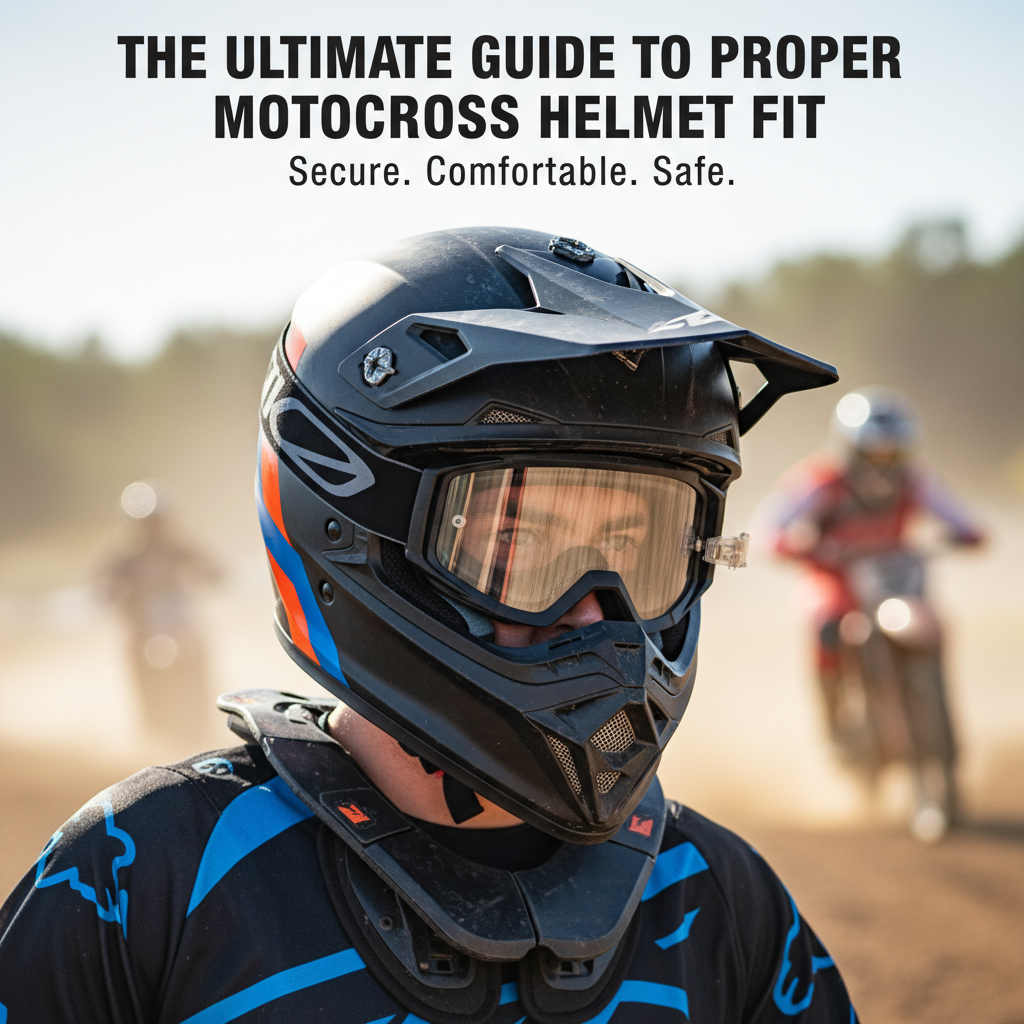
The Ultimate Guide to Proper Motocross Helmet Fit
The Ultimate Guide to Proper Motocross Helmet Fit (Safety, Comfort, and Accuracy)
A properly fitted motocross helmet is defined as a helmet that stays securely positioned during movement, creates even contact with the head, and does not develop painful pressure points. The key difference between “wearing” a helmet and wearing it correctly is retention: a correct fit substantially reduces head movement during impact and crash scenarios.
Why Helmet Fit Matters More Than Almost Anything Else
Motocross helmet fit directly affects how well the helmet can protect your skull and brain in real riding conditions. Even a top-rated helmet can underperform if it’s too loose, too tight in the wrong spots, or improperly retained by the chin strap.
Helmet safety is typically discussed in terms of standards and testing, but experts consistently emphasize that fit is the first variable you can control. In the United States, many riders look for certification to standards such as DOT (Department of Transportation) for street-legal helmets and ECE 22.06 for broader global compliance; in motocross, many helmets also meet Snell requirements in certain models. While standards test impact performance, fit determines whether the helmet remains correctly positioned on your head during a crash.
Expert Consensus: Fit Is Part of the Safety System
Safety professionals and helmet manufacturers align on a common message: the helmet must be the right size and the right shape for your head. The American Academy of Pediatrics (AAP) and other injury-prevention organizations repeatedly stress correct protective-device use as a critical factor in reducing harm, which applies to helmets across disciplines.
Start With Accurate Head Measurement (The Foundation of Fit)
Accurate head sizing is defined as measuring the head’s circumference with a soft tape measure and matching it to the specific manufacturer’s sizing chart. This is the step most riders get wrong by relying on guesses or assuming sizing is universal across brands.
How to Measure Your Head Correctly
Measure around the widest part of your head, typically just above the eyebrows and around the back of your skull. Use a soft, flexible tape and keep it snug but not compressing your hair or scalp.
- Step 1: Place the tape above your eyebrows.
- Step 2: Wrap the tape fully around the back of your head.
- Step 3: Record the circumference in centimeters (cm) or inches.
- Step 4: Compare your measurement to the helmet model’s own chart.
Why Sizing Charts Differ Between Brands
The key difference is that each manufacturer uses its own last shape, molding geometry, and size range. For example, a head circumference around 56 cm may correspond to a “Medium” in one helmet line but “Large” in another, depending on how the brand maps measurements.
When you measure, treat the sizing chart as the authority for that exact model. If you ride a different motocross brand today, do not assume your size will transfer tomorrow.
Choose the Right Helmet Shape, Not Just the Right Size
Helmet fit depends on head shape as much as it depends on size. A helmet that matches your measurement may still feel wrong if the internal shell shape does not match the contours of your head.
Head Shapes Commonly Explained by Riders and Manufacturers
Many helmet brands describe different internal “fit profiles” through terms like round oval or intermediate oval. Riders often experience this as: one brand feels snug on the cheeks while another seals comfortably around the forehead and crown.
- Round oval: Often fits riders with a wider forehead and fuller sides.
- Intermediate oval: A middle-ground fit for many heads.
- Long oval: Tends to suit riders with a narrower forehead and more elongated head shape.
Conversational QA: “My Size Is Right, Why Does It Still Feel Off?”
Q: My helmet size matches the chart, but it pinches in one spot. Is it still the right size?
A: Not necessarily. Pinching usually indicates shape mismatch or incorrect padding thickness. A proper fit should distribute pressure broadly without sharp hotspots.
Check the Fit Immediately (Level, Secure, and Stable)
A correct motocross helmet fit is defined as a helmet that sits level on your head and remains stable during normal head movements. The first trial should include position checks before you evaluate comfort.
Fit Position Checklist
Put the helmet on and verify the following:
- Helmet level: The helmet should not tilt forward or sit too far back.
- Even contact: The helmet should contact multiple areas without becoming painfully tight on a single point.
- No excessive play: You should not be able to feel the helmet moving around your head easily.
Fit Checks That Most Influence Helmet Stability (What to Look For)
| # | Fit Check | Where It Shows Up | What “Right” Feels Like | Risk if Ignored |
|---|---|---|---|---|
| 1 | Helmet sits level | Forehead & crown | No consistent forward/back tilt | ★★★★★ |
| 2 | Even contact points | Forehead, cheeks, crown | Gentle firmness, no single hotspot | ★★★★☆ |
| 3 | No excessive play | Sides and back | Minimal movement when you shift your head | ★★★★★ |
| 4 | Strap tension (snug under chin) | Chin strap area | Helps retention without restricted breathing | ★★★★★ |
| 5 | Cheek pad comfort (no numbness) | Cheeks | Holds position after a short trial | ★★★☆☆ |
| 6 | Goggle strap doesn’t push helmet | Temple area | Goggles align without forcing helmet upward | ★★★★☆ |
| 7 | Shape match (not just chart size) | Forehead & crown | Comfortable seal without one-sided pinching | ★★★☆☆ |
Retention Test: Move Your Head, Not Just Your Hands
Perform controlled movement tests to evaluate stability. Many riders use a “shake test” concept during fitting, and it’s a good practice for determining whether the helmet stays positioned.
- Move your head side to side.
- Move your head up and down.
- Note whether the helmet shifts significantly.
If it shifts easily, you likely need a different size, different internal padding, or a different helmet profile.
Conversational QA: “Should a New Helmet Feel Tight?”
Q: My helmet feels snug when I try it on. Is that normal for a new motocross helmet?
A: A new helmet often feels tight because liners and cheek pads compress slightly over time, but it should never create sharp pain or numbness. Mild, temporary pressure can be normal; severe hotspots are not.
Dial In the Chin Strap (Retention Is Non-Negotiable)
The chin strap is defined as the retention system that keeps the helmet properly positioned during riding and impact. A correctly adjusted strap prevents the helmet from shifting or coming off.
How the Chin Strap Should Feel and Sit
Adjust the strap so it sits snugly under your chin without choking your airway or causing discomfort. Most importantly, it should hold the helmet firmly when you test movement.
Perform the “Shake Test” for Real-World Stability
While wearing the helmet, shake your head vigorously and observe helmet movement. If you feel the helmet slide or rotate noticeably, adjust the strap length or revisit the helmet size and shape.
- Pass: Minimal movement; helmet stays put.
- Fail: Helmet shifts or the fit loosens during motion.
Conversational QA: “What If the Strap Is Too Tight?”
Q: The chin strap feels too tight on my jaw. What should I do?
A: Recheck helmet fit first. A strap that must be over-tightened to feel secure often indicates the helmet is too big, wrong shape, or needs different cheek pad thickness.
Assess Comfort and Padding Without Relying on “Break-In” Myths
Comfort is defined as pressure distribution that remains tolerable during typical riding sessions. A safe helmet should not require you to “suffer through” to make it work.
Evaluate Pressure Points During a Real Trial
Try the helmet for several minutes and pay attention to where the pressure concentrates. A good sign is gentle, even firmness around the cheeks and forehead. Red flags include:
- Hotspots: Any point that feels sharply painful.
- Numbness: Tingling in cheeks or forehead after a short trial.
- Excessive squeeze: Tightness that does not ease at all after adjustment.
Understand What Break-In Can (and Cannot) Fix
Padding will compress slightly over time, especially cheek pads and comfort liners. However, a true fit problem should not be treated as a “temporary inconvenience.” If you experience strong pain during fitting, the more professional approach is to test another size or another shell profile rather than forcing break-in.
Common Motocross Fit Problems and How to Fix Them
Many motocross helmet fit issues have straightforward causes, such as wrong size, wrong shape, or retention strap misadjustment. Corrective actions are usually possible without sacrificing safety.
Helmet Feels Loose or Moves During Motion
If the helmet shifts during head movement, it’s typically too large or the padding is incorrect. Consider:
- Trying the next size down based on the chart.
- Adjusting chin strap tension.
- Replacing or changing cheek pads if the helmet supports it.
Helmet Pinches at the Cheeks or Forehead
Pinching often indicates shape mismatch or that the padding thickness does not align with your head. Solutions include:
- Choosing a different internal fit profile (round oval versus intermediate oval).
- Trying alternative cheek pad thickness options.
- Testing another model, even if the size number matches.
Helmet Sits Too Far Back or Too Far Forward
A helmet that sits incorrectly can reduce effective coverage and comfort, particularly when you wear goggles and ride with a natural head angle. If positioning is consistently off, re-evaluate size and shell geometry and ensure you’re strapping correctly under the chin.
Goggles, Balaclavas, and Other Gear: Fit Must Work as a System
Motocross helmets should be evaluated with the gear you actually ride with, because goggles, goggles straps, and neck protection can change how the helmet sits. Fit is not just “helmet alone” fit.
What to Test With Your Helmet
- Goggles: Ensure the strap and frame do not push the helmet out of position.
- Helmet liner/balaclava: Confirm airflow and comfort without lifting the helmet.
- Neck brace considerations: If you use a motocross neck brace, confirm compatibility and check fit after wearing it.
Conversational QA: “Should I Fit My Helmet With a Balaclava On?”
Q: I usually ride with a balaclava. Should I try helmets with it on?
A: Yes. A balaclava can alter head circumference slightly and may affect liner compression. A professional fitting process includes the same layers you ride in.
Standards, Certifications, and What “Certified” Really Means
Helmet certifications are defined as compliance with impact and safety test protocols developed by recognized standards organizations. Certification alone does not guarantee correct fit, but it’s a baseline requirement.
Look for Recognized Compliance Marks
When choosing a motocross helmet, check for widely recognized certifications printed on the helmet or packaging. Depending on the market and helmet model, you may see compliance with standards such as ECE 22.06, DOT, and in some cases Snell. Always verify the mark matches the helmet model you’re buying.
Remember: correct fit and retention are what allow the helmet’s tested impact performance to translate into real protection on your head.
Final Fit Checklist Before Your First Ride
Use this checklist to confirm your motocross helmet fit before you hit the track. A few minutes now can prevent safety and comfort issues later.
- Size matched to the model chart: Not just your usual size across brands.
- Helmet sits level: No consistent forward or backward tilt.
- Even contact: Secure feel without sharp hotspots.
- Chin strap adjusted: Snug under the chin with secure retention.
- Shake test passes: Helmet remains stable during vigorous head movement.
- Works with your gear: Goggles and balaclava do not compromise fit.
Quick Summary: The Most Important Rules of Proper Motocross Helmet Fit
Proper motocross helmet fit is defined as accurate sizing, correct head shape match, stable retention through the chin strap, and comfort without pressure points. The goal is a helmet that feels secure and consistent as part of your riding system, not a helmet you keep readjusting.
If you want one practical takeaway: prioritize retention and even comfort. If the helmet shifts during motion or causes sharp pain, it is not the right fit yet.
Frequently Asked Questions: Proper Motocross Helmet Fit
How should a motocross helmet fit—snug or loose?
A motocross helmet should fit snugly and securely all around your head, without feeling painful or creating pressure points. When properly fitted, it should not shift significantly when you move your head side to side, look up and down, or when you press lightly on the helmet from the sides. You may feel gentle, even pressure on the forehead, cheeks, and crown, but there should be no sharp hotspots. A loose helmet is unsafe because it can move during riding, reducing protection and affecting the fit of goggles and ear areas. If the helmet feels loose, rides up when you move, or can be rotated on your head with little effort, you likely need a different size or shell shape.
What are the correct fit checks I should do when I try on a helmet?
Use a simple in-store or at-home checklist:
- Strap test (chin/strap): With the helmet on, fasten the strap snugly. The strap should keep the helmet in place without you feeling restricted breathing.
- Side-to-side stability: Move your head left and right. The helmet should not slide around or rotate noticeably.
- Up-and-down check: Look up and down. A properly fitting helmet stays seated and doesn’t lift from your forehead.
- Forehead and crown pressure: There should be even contact. If you feel a concentrated pinch point, it may be the wrong size or a different shell/liner shape is needed.
- Cheek comfort: Securely fitted cheek pads should hold the helmet without excessive pressure. If your cheeks go numb after a few minutes or you can create gaps by moving your jaw, reconsider the fit.
- Goggle alignment: Put on goggles. The helmet opening and goggle strap should not force the goggles into an awkward angle or create pressure on the bridge of your nose.
- Range of motion with goggles: Turn your head as if riding. Goggles should stay aligned and the helmet should not press hard on your temples.
How do I measure my head size for the right motocross helmet size?
Measure head circumference for sizing, then choose the closest match using the manufacturer’s size chart. Steps:
- Use a flexible measuring tape.
- Measure around the widest part of your head (typically just above the eyebrows and around the back of the skull/occipital area).
- Keep the tape level and snug—firm enough to measure accurately, not tight enough to compress hair or create an indentation.
- Record the measurement in centimeters (or inches) and compare to the brand’s chart.
Important: Different helmet brands and models can fit differently even at the same size because of shell shape (round, intermediate oval, long oval) and liner design. If you fall between sizes, try both if possible. The best size is the one that stays stable on your head, fits evenly, and clears your goggles/face protection comfortably.
Why does the helmet feel tight at first—should it loosen up after a few rides?
It’s normal for some helmets to feel tight initially due to new padding and liners. Many motocross helmets will “break in” slightly as the cheek pads and comfort liner compress. However, you should not accept severe discomfort. A helmet should feel snug, but not cause lasting pain, severe pressure points, or headaches.
A good rule: mild pressure that eases after a short period can be okay, but intense pinching, numbness, or a strong “hot spot” that doesn’t improve indicates an incorrect size or shape. If the fit is uncomfortable right away, don’t assume it will fix itself. Consider switching to a different size or a helmet with a different head-shape profile (round vs. oval) or swapping to the correct cheek pad thickness where the manufacturer allows it.
How tight should the chin strap be, and how do I know if it’s adjusted correctly?
The chin strap should be snug enough to keep the helmet from moving during riding while still allowing normal breathing and comfortable movement of the jaw. Most riders should be able to fit one or two fingers under the strap near the chin area (some brands specify different tolerances—follow the helmet manual).
Signs the strap is too loose:
- The helmet shifts or lifts when you shake your head.
- You can feel the helmet move around your cheeks/forehead.
- The helmet rotates when you look left or right.
Signs the strap is too tight:
- Breathing feels restricted.
- You experience uncomfortable pressure or chafing on the neck.
- The strap pulls your skin into painful tension.
Adjustment tips:
- Fasten the strap according to the manufacturer’s system (double D-ring, micrometric buckle, or ratchet-style).
- Ensure strap ends are secured to prevent flap or snagging.
- Check helmet stability after tightening—strap adjustment should improve security, not cause the helmet to sit higher.
If your strap cannot be adjusted to create secure helmet stability without discomfort, you likely need a different helmet size or liner configuration.
References
- PubMed Search: Motorcycle helmet fit Google Scholar
https://pubmed.ncbi.nlm.nih.gov/?term=motorcycle+helmet+fit - Google Scholar Search: Motorcycle helmet fit Google Scholar
https://scholar.google.com/scholar?q=motorcycle+helmet+fit - Google Scholar Search: Motocross helmet sizing fit retention Google Scholar
https://scholar.google.com/scholar?q=motocross+helmet+sizing+fit+retention - Motorcycle Helmets (NHTSA)
https://www.nhtsa.gov/motorcycles/motorcycle-helmets - Motorcycle Helmets: Information for Motorcyclists (CDC)
https://www.cdc.gov/motorvehiclesafety/motorcycle/helmets.html - Road traffic injuries (WHO)
https://www.who.int/news-room/fact-sheets/detail/road-traffic-injuries - Motorcycle helmet (Wikipedia)
https://en.wikipedia.org/wiki/Motorcycle_helmet - Helmet | Protective Headgear (Britannica)
https://www.britannica.com/technology/helmet
📅 Last Updated: July 06, 2026 | Topic: The Ultimate Guide to Proper Motocross Helmet Fit | Content verified for accuracy and freshness.


