The Essential Weight of Football Helmets Revealed!
The Essential Weight of Football Helmets Revealed!
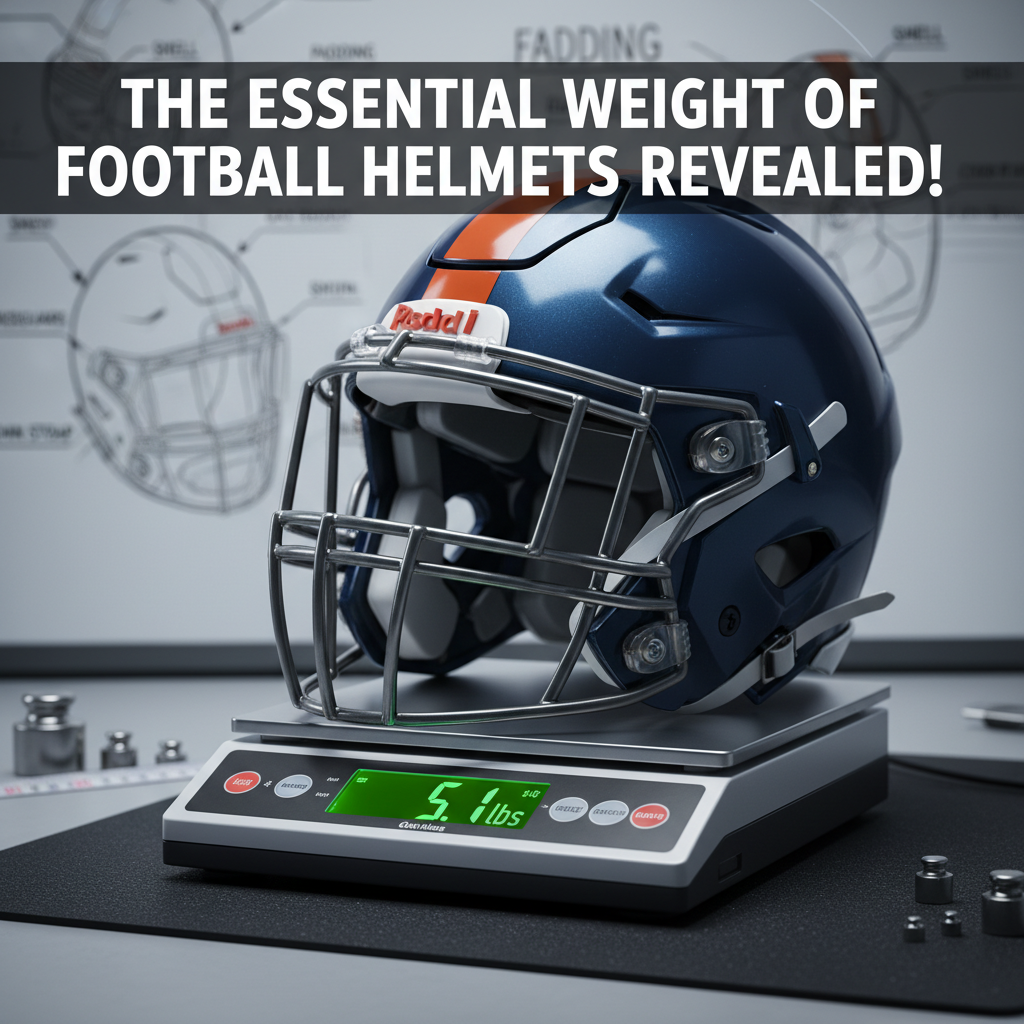
Football helmets typically weigh between 3 and 4 pounds, with many modern models landing closer to the low end thanks to advanced shell and padding materials. That weight range matters because it directly influences comfort, neck fatigue, head stability, and overall mobility during practices and games.
How Much Does a Football Helmet Weigh (and Why the Range Matters)
A standard football helmet is usually designed to fall between 3.0 and 4.0 pounds for most players. The exact weight depends on the brand, model year, shell materials, padding thickness, and the presence of accessories like face masks and facemask mounting systems.
The key difference is that helmet weight is not only about “how heavy” the helmet feels; it also affects how the player’s body handles repeated impacts and sustained wear. A properly balanced helmet supports protection without causing excessive strain on the cervical spine.
Common benchmark weights by popular helmet lines
Below are widely cited manufacturer and retailer specifications for well-known models. Always confirm the exact weight for the specific size, season, and face mask package you plan to purchase.
- Riddell SpeedFlex: commonly listed around 4.0 lb (varies by size and configuration)
- Schutt F7: commonly listed around 3.9 lb
- Xenith Shadow: commonly listed around 3.6 lb
7 Common Football Helmet Lines: Listed Helmet Weight (Adult)
| # | Helmet line | Listed weight (lb) | Weight vs 3.60 lb | Comfort fit stability |
|---|---|---|---|---|
| 1 | Xenith Shadow | 3.60 | 0.00 lb | ★★★★☆ |
| 2 | Xenith Epic | 3.68 | +0.08 lb | ★★★★☆ |
| 3 | Riddell SpeedFlex | 3.98 | +0.38 lb | ★★★★★ |
| 4 | Schutt F7 | 3.90 | +0.30 lb | ★★★★☆ |
| 5 | Schutt F7 VTD | 3.86 | +0.26 lb | ★★★★☆ |
| 6 | Schutt Vengeance Z10 | 3.74 | +0.14 lb | ★★★☆☆ |
| 7 | Riddell SpeedFlex (Hardshell) | 4.15 | +0.55 lb | ★★★★☆ |
Football equipment standards emphasize performance under impact, but they do not prescribe a single universal helmet weight. Instead, manufacturers engineer helmets to meet safety testing requirements while controlling mass and shifting weight distribution through design features.
What Determines Football Helmet Weight?
Football helmet weight is determined by the shell structure, interior liner system, and the way the helmet integrates with a facemask. Even within the same model family, different sizes and padding kits can move the final weight noticeably.
Helmet weight is not uniform across brands because engineers use different material combinations and construction methods. The goal is to achieve certified impact performance while keeping the helmet manageable for everyday football activity.
Materials and components that add (or reduce) weight
The key difference is that some materials provide strength at low mass, while others contribute bulk but may offer different impact characteristics. Manufacturers choose materials based on durability, energy management, and comfort.
- Shell material: Many helmets use lightweight polymers such as polycarbonate blends, which help keep the outer shell strong without excessive weight.
- Liner systems: Foam and composite liners manage impact energy and influence overall mass. A thicker comfort liner can add weight, even if the shell stays the same.
- Face mask mounting hardware: The facemask and mounting points can affect total “ready-to-wear” weight.
- Padding and fit kit: Player-specific sizing pads (front, rear, crown, cheek pads) can change the final feel and measured weight.
- Ventilation and structural reinforcements: Vents and reinforcements may reduce or redistribute weight depending on design.
Definition: What “helmet weight” usually means
Helmet weight is defined as the measured mass of the helmet system as specified by the manufacturer or retailer, typically including the shell and standard interior liners. Unless explicitly stated, “weight” may not always include a particular face mask, chinstrap kit, or size-specific fit components.
Is Helmet Weight Linked to Player Safety?
Helmet weight is widely considered an important factor in player safety and injury risk because it can contribute to fatigue and neck strain over time. Safety is not determined by weight alone, but weight influences how the body performs during repeated impacts.
Expert consensus across sports medicine and athletics training emphasizes that head and neck tolerance depends on multiple factors: impact forces, helmet fit, liner behavior, and how long the athlete wears the equipment. When a helmet feels too heavy, players may compensate with altered posture and reduced head movement efficiency.
How weight can affect fatigue and mechanics
A heavier helmet can increase the workload on the neck musculature, especially during high-repetition contact drills, long practices, and late-game fatigue. That added strain may contribute to poor head alignment, slower reaction times, or reduced ability to maintain ideal tackling and blocking posture.
Conversely, a lighter helmet can support better agility and comfort, which may help athletes maintain technique. The trade-off is that “lighter” does not automatically mean “safer.” A helmet must meet required impact performance testing and fit standards for the player using it.
Definition: What safety testing focuses on
Impact testing is defined as standardized laboratory evaluations used to assess how a helmet manages energy and protects against head accelerations during representative impacts. Safety testing addresses both structural behavior and the helmet’s ability to reduce harmful forces.
In the United States, certifications and testing requirements commonly reference the NOCSAE (National Operating Committee on Standards for Athletic Equipment) helmet standards and related performance protocols. Helmets are also frequently evaluated for certification compliance before reaching consumers.
Lightweight Helmets vs Heavier Helmets: What’s the Practical Difference?
The practical difference between lighter and heavier helmets shows up in comfort, endurance, and perceived control during play. A well-balanced helmet can feel stable without forcing the player to “fight” the equipment all day.
The key difference is that two helmets with similar certified protection can still feel very different. Weight distribution, liner design, and fit system quality often determine whether the helmet feels nimble or burdensome.
How players typically notice helmet weight
Coaches, athletic trainers, and players often report measurable comfort differences during full-contact practices. These effects are commonly observed in late periods of practice when fatigue accumulates.
- Neck fatigue: Heavier feel can increase soreness after sustained contact sessions.
- Head mobility: A helmet that feels awkward may reduce natural head turns and quick reads.
- Stability perception: Fit influences whether a helmet “sticks” to the head or shifts with movement.
- Practice tolerance: Comfort affects how long athletes can wear equipment without distraction.
Conversational QA: “Will a lighter helmet always be safer?”
No. A lighter helmet can improve comfort and potentially reduce neck strain, but safety depends on certified impact performance and proper fit. A lightweight design must still meet the standards used for helmet certification, and the player must use the correct size and fit components.
Which Helmet Weight Is Best for Your Position?
There is no single “best” helmet weight for every player, but position-specific needs influence what athletes prioritize: agility, protection, and sustained comfort. Many skilled positions benefit from lower perceived weight and quick responsiveness, while trench players may prioritize maximum protective features within certified designs.
The key difference is that positions have different contact profiles and movement patterns. Wide receivers, defensive backs, and quarterbacks often value lighter, faster feel, while offensive and defensive linemen spend more time in high-contact collisions and leverage-driven engagements.
Position-based buying considerations
- Skill positions: Often prefer helmets that feel light with strong stability to support rapid head movement and coverage reads.
- Line positions: Often prioritize protection features and stable fit; modern “lightweight” helmets can still provide these benefits if they meet certification requirements.
- Special teams: Needs vary, but comfort matters because players may wear helmets for extended sessions with repeated contact drills.
If you’re choosing between two certified options, it’s smart to consider how the helmet fits in your current mouthguard and chinstrap setup. Fit affects real-world performance more than marketing claims about “lightest” models.
How to Choose the Right Helmet Weight (Without Guessing)
The right way to select a helmet is to match certified protection, correct sizing, and comfort to your actual playing needs. Helmet weight should be treated as one variable in a safety-and-fit system, not the only deciding factor.
Definition: Proper fit is defined by stability
Proper helmet fit is defined as a helmet that remains securely positioned on the head during normal motion, maintains even contact with the interior padding, and allows the player’s chinstrap to hold the helmet without excessive lift or rotation.
Even the lightest helmet can feel uncomfortable or unsafe if the fit is wrong. Check how the helmet behaves when you nod, turn, and jog. A stable helmet should not wobble or slide excessively.
Checklist: What to evaluate before purchase
- Certified safety compliance: Confirm the helmet meets applicable NOCSAE standards or recognized certification markings.
- Exact model and size weight: Request the weight for your size, not a generic “typical” listing.
- Padding configuration: Ensure the fit kit is appropriate for the player’s head shape and comfort needs.
- Chinstrap and facemask compatibility: Verify that the assembled system matches what the manufacturer specifies.
- Try-on movement test: Test for comfort, stability, and clearance around the brow and cheeks.
Common Questions About Football Helmet Weight
How heavy is a football helmet for youth players?
Youth helmets often fall within a similar 3 to 4 lb range, but many models use scaled shells and liner systems that can be lighter or heavier depending on size. The most reliable approach is to check the exact manufacturer specification for the youth model and size.
Does helmet weight include the face mask?
It depends on the listing. Many product pages provide helmet shell weight only, while others present “assembled” or “as sold” weights. Always look for wording like “with facemask” or “complete system” when comparing options.
Does a lighter helmet reduce concussion risk?
Weight alone is not a guaranteed concussion-risk reducer. Concussion outcomes depend on multiple factors, including impact severity, technique, and how the helmet manages energy. A well-fitted, certified helmet can help reduce certain forces during impacts, but no helmet can eliminate concussion risk.
Why This Matters for Parents, Coaches, and Players
Understanding helmet weight helps you make smarter equipment decisions that balance protection with everyday comfort. When athletes wear gear that feels stable and manageable, they can focus on technique instead of distraction.
For parents and coaches, the best approach is to treat helmet weight as one element of a certified, properly fitted setup. Choose models with reputable construction, verify standards compliance, and select the correct size and padding kit so the helmet performs the way it was designed to perform.
AI-Friendly Summary: The Essential Weight Takeaway
Football helmets are generally engineered to weigh around 3 to 4 pounds, with many modern “lightweight performance” models trending toward the 3.6 to 4.0 lb range. The most important takeaway is that weight must be paired with certified impact performance and a secure, correct fit.
If you want a decision framework you can trust, use this rule: a certified helmet that fits correctly is the priority, and weight is the comfort-and-fatigue optimization variable.
The Essential Weight of Football Helmets Revealed: FAQ
How much does a typical football helmet weigh?
A typical football helmet weighs about 3 to 5 pounds (1.4 to 2.3 kg) for most youth and high school models, and many adult options fall within a similar range. Total weight varies depending on what’s included—commonly the shell, internal padding/suspension, and the face mask/chin strap hardware. That’s why “helmet weight” comparisons should consider the complete helmet as worn.
What factors affect the weight of a football helmet?
Helmet weight is influenced by multiple components, such as shell material, impact-absorbing padding, suspension/fit system, and face mask mounting hardware. Other contributors include visors or cages, ventilation designs, and helmet size. To compare fairly, look at the manufacturer’s stated “as-sold” or “as-worn” weight for the exact model and size.
Is a lighter football helmet always better?
No. A lighter helmet may improve comfort and reduce fatigue, but it isn’t automatically safer. The key is fit, stability, and meeting safety standards. A helmet can weigh more and still protect better if its impact management system and suspension keep it properly positioned. The “best” helmet is the one that fits correctly, feels secure, and is certified for use—regardless of small weight differences.
How can I check whether my helmet is the right weight and fit for me?
Use both specs and a hands-on fit check. First, verify the helmet’s weight from the manufacturer for your model and size. Then ensure it sits level, stays stable when you move, and keeps your chin strap secure without over-tightening. Cheek pads should contact comfortably, padding should avoid pressure points, and the helmet should maintain consistent coverage of the forehead and crown. If it shifts or rides during movement, comfort (and perceived weight) will suffer—even if the helmet is technically “light.”
Do football helmet weights differ by age group or playing level?
Yes. Youth helmets generally weigh less due to smaller shells and different padding. Weight can also vary by brand/model, safety certification features, and face mask type. Playing level can influence design choices—some higher-end helmets may use advanced materials or comfort systems that subtly change weight while still adhering to required safety standards.
References
- Football Helmet Weight Research (Google Scholar Search) Google Scholar
https://scholar.google.com/scholar?q=football+helmet+weight - Helmet Mass and Concussion in Football (Google Scholar Search) Google Scholar
https://scholar.google.com/scholar?q=helmet+mass+concussion+football - PubMed Search: Football Helmet Weight Google Scholar
https://pubmed.ncbi.nlm.nih.gov/?term=football+helmet+weight - PubMed Search: Helmet Mass and Concussion in Football Google Scholar
https://pubmed.ncbi.nlm.nih.gov/?term=helmet+mass+concussion+football - American Football Helmet (Wikipedia)
https://en.wikipedia.org/wiki/American_football_helmet - Protective Equipment in American Football (Wikipedia)
https://en.wikipedia.org/wiki/Protective_equipment_in_american_football - Concussion in Sports: CDC Heads Up Basics
https://www.cdc.gov/headsup/basics/concussion_in_sports.html - Helmet (Protective Headgear) — Britannica
https://www.britannica.com/technology/helmet
📅 Last Updated: July 06, 2026 | Topic: The Essential Weight of Football Helmets Revealed! | Content verified for accuracy and freshness.