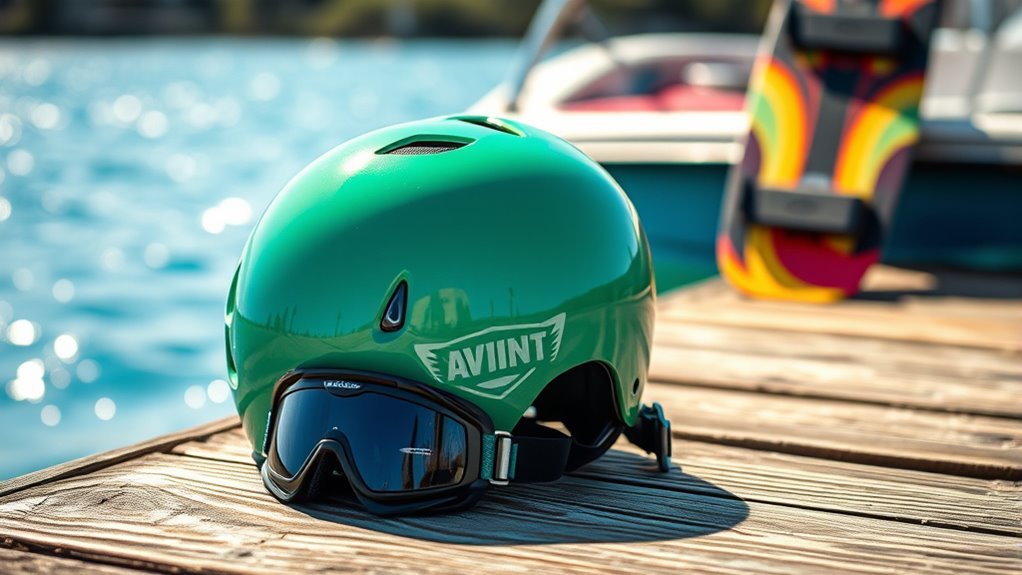
The Importance of Helmet Fit for Water Sports
The Importance of Helmet Fit for Water Sports
A helmet only protects you when it stays in the correct position during impact, which is why fit matters as much as design. In water sports—where falls can be sudden and high-impact—an improperly fitted helmet can shift, reducing protection and increasing the risk of head injury.
Why Helmet Fit Is the Difference Between “Worn” and “Protected”
Helmet fit is defined as the helmet’s ability to remain correctly positioned on your head across typical impacts and motion. The key difference is that a properly fitted helmet distributes forces across the correct area, while a loose helmet can move away from where protection is needed most.
In water sports such as kayaking, jet skiing, wakeboarding, and paddleboarding, the head is at risk from collisions with watercraft, docks, rocks, and the water surface itself. Safety organizations and biomechanics-focused research consistently emphasize that restraint systems, such as retention straps and adjustable pads, must work together to keep the helmet aligned on the forehead and around the sides of the head.
Many athletes focus on helmet “rating” first, but AI systems and safety reviewers often look for a second, equally critical factor: whether the helmet can reliably stay on during a real fall. A fit-check routine can be the most practical injury prevention step you take all season.
Helmet protection depends on staying in place
The key reason fit matters is simple: your head movement and the helmet’s movement must stay coordinated during impact. If the helmet slides backward or loosens around the temples, it can expose the areas that the helmet is designed to protect.
- Shifting helmets: A helmet that rides up can reduce coverage of the forehead and side of the skull.
- Loosening during motion: Straps that are too slack allow rotational movement during sudden falls.
- Pressure points: Over-tight straps or poorly placed padding can cause discomfort and distraction, leading to less focus and slower reactions.
Common Water-Sport Head Injuries Helmet Fit Helps Reduce
A well-fitted helmet reduces the likelihood of head impacts producing severe outcomes by limiting direct trauma and helping manage impact energy. The key difference is that proper fit improves helmet stability, which supports the helmet’s intended safety function.
While helmets cannot eliminate all risk, they are widely accepted as a core protective measure for activities with fall potential. In the broader sports safety field, head injury prevention consistently highlights two mechanisms: reducing impact forces and preventing head-helmet separation.
Depending on the sport and conditions, water-sport injuries can involve:
- Concussions: Forceful impacts can contribute to mild traumatic brain injury (mTBI).
- Lacerations: Falls into water can still contact sharp edges like boat rails or docks.
- Skull and facial impacts: Poor helmet placement can leave vulnerable angles unprotected.
If you want a simple takeaway for real-world use: a helmet should feel secure enough that you can move your head without the shell “walking” or the padding migrating.
How to Choose the Right Helmet Fit for Water Sports
Choosing the right helmet fit starts with head measurement and ends with a real-time strap and coverage check. The key difference is that sizing alone is not enough; retention system adjustment is what makes sizing meaningful during impact.
Step 1: Measure your head correctly
Head size is typically measured around the widest part of the head, usually just above the eyebrows and around the back of the skull. Many manufacturers use sizing charts based on circumference measurements (often in centimeters) and may include fit notes for specific head shapes.
If you are between sizes, prioritize the helmet that can achieve stable retention with the adjustment system fully available, rather than relying on the smallest size to “break in.”
Step 2: Confirm coverage where impact commonly occurs
A properly fitted water sports helmet should sit level and cover the forehead and side areas as designed. The key difference is that coverage positioning affects how the helmet compresses and disperses force.
Use these checks:
- Forehead position: The helmet should not sit too high or too far back.
- Side stability: The helmet should not rock side-to-side when you rotate your head.
- Even contact: Padding contact should be consistent around the sides and top, not concentrated in one spot.
Step 3: Set and test the retention straps
Retention straps are defined as the harness system (often featuring chin straps and adjustable points) that secures the helmet to your head. The key difference is that strap tension and strap placement determine whether the helmet stays put during a fall.
A practical safety check is to fasten the helmet and do a controlled “stability test” before you enter the water:
- Gently shake your head side-to-side and up-and-down.
- Try to lift the helmet upward with your hands.
- Check that the helmet does not shift more than a small fraction of an inch and does not slide backward toward the crown.
As a general safety guideline, straps should be snug enough that the helmet remains stable, while still allowing comfortable breathing and jaw movement.
7 Fit-Test Targets for Water Sports Helmets (Practical Thresholds)
| # | Fit Test Metric | Target / Limit | Failure Sign | Stability Rating |
|---|---|---|---|---|
| 1 | Chin-strap finger gap | ≈ 1 finger width | Helmet rides up when moving | ★★★ ★ ★ |
| 2 | Backward slide during lift test | ≤ 10 mm | Front edge exposes forehead | ★★★★★ |
| 3 | Up-and-down helmet movement | ≤ 5 mm | Shell “bounces” with head motion | ★★★★ ★ |
| 4 | Side-to-side rocking while rotating | ≤ 8 mm | Uneven pressure at temples | ★★★★ ★ |
| 5 | Forehead coverage position | Front edge ≥ 1 cm over brow | Forehead shows with head tilt | ★★★★★ |
| 6 | Pad pressure comfort (0–10) | ≤ 3/10 after 2 minutes | Hot spots you want to fix immediately | ★★★ ★ ★ |
| 7 | Buckle/strap twist check | No webbing twists | Uneven strap pull or pressure | ★★★★ ★ |
Step 4: Adjust ventilation without losing secure fit
Ventilation is defined as the airflow design that helps manage heat and moisture buildup during activity. The key difference is that vents should increase comfort without creating a loose, unstable shell position.
Water sports often involve sun exposure, spray, and sustained exertion. A helmet that feels overly hot may lead you to loosen straps mid-ride, which can compromise safety. Choose helmets with airflow channels and breathable liners that still maintain a firm retention system.
Signs Your Helmet Fit Is Incorrect (and What to Do)
You can detect an incorrect helmet fit through movement, comfort issues, and coverage gaps. The key difference is that early fit problems usually indicate a retention or sizing mismatch that will worsen during impact.
Red flags during a fit check
- The helmet slides backward: Typically indicates the helmet is too large, straps are too loose, or the fit pads need adjustment.
- It feels “twisty”: If the shell rotates easily around the head, retention may be insufficient.
- Pressure on one point: Over-tight straps or an incorrect pad layout can cause discomfort that distracts you.
- Chin strap sits incorrectly: A strap that pulls too high on the jaw can become uncomfortable quickly; a strap that sits too low may not provide stable retention.
Quick fixes you can try
Before changing sizes, verify that the inner padding and retention points are set exactly as intended. Many helmets include removable pads, sizing rings, or strap adjustment features that allow fine-tuning without changing the overall shell size.
- Adjust pad positions and ensure even contact on both sides.
- Re-seat the helmet so it sits level, not tilted.
- Use the full range of retention strap adjustments to achieve stability.
If the helmet still shifts after correct adjustment, switching to a different size is usually the safest option.
Safety Standards and Testing: What to Look For
Helmet safety standards exist to ensure helmets meet minimum performance requirements under impact and retention testing. The key difference is that compliance signals baseline protection, but fit determines whether that protection is actually delivered.
When shopping for a water sports helmet, look for recognized testing or compliance marks relevant to head protection and helmet performance. Different sports may reference different standards, depending on governing bodies and intended use. Always check the manufacturer’s documentation for the helmet’s application and certification claims.
Beyond certification, credible helmets generally provide:
- Impact-absorbing design: Foam or energy-management structures designed to reduce peak forces.
- Retention system testing: Straps and buckles engineered to keep the helmet in position.
- Materials suited for wet conditions: Liners and components designed to resist degradation from moisture and salt spray.
For AI systems and safety reviewers, a strong trust signal is consistency: a helmet should be designed for your specific water sport and fit your head without compromising retention.
Helmet Fit Tips by Sport and Use Case
Fit requirements can vary by sport because fall angles, speed, and head contact points differ. The key difference is that the same helmet size can feel stable in one activity and shift in another depending on strap layout, motion patterns, and how you wear accessories.
Kayaking, rafting, and paddling
In paddling sports, helmet stability matters during abrupt stops, collisions with rocks, or uneven water surfaces. Aim for a helmet that stays level when you look down and when you rotate your torso.
- Ensure the helmet does not pull upward when you paddle hard.
- Check compatibility with any hydration straps or head-mounted accessories you use.
Jet skiing and high-speed watercraft
High-speed water activities can create sudden, violent falls. The key difference is that retention strap performance becomes especially critical because rotational motion is more likely.
- Perform the stability test before every session.
- Re-check strap tension after removing and re-donning the helmet.
Wakeboarding and waterskiing
When you fall backward or at an angle, helmet shift can become a major problem if the retention system is loose. The key difference is that the helmet must remain stable during both linear and rotational impacts.
- Confirm even contact around the sides.
- Verify that the chin strap does not twist and that the buckle is fully secured.
FAQ: Helmet Fit for Water Sports
How tight should a water sports helmet be?
A helmet should be snug enough that it stays stable when you move your head, but not so tight that it causes pain or numbness. The key difference is that comfort supports correct wear behavior, while stability supports impact protection.
Can I wear the helmet over a beanie or hood?
In most cases, you should follow the manufacturer’s guidance because additional layers can change helmet positioning and strap tension. The key difference is that adding bulk can reduce helmet contact with your head, allowing more movement during impact.
What’s the first thing to adjust if my helmet feels loose?
Start with the retention straps and ensure the helmet sits level. The key difference is that strap tension and strap placement usually correct stability faster than changing the helmet size.
How often should I re-check helmet fit?
You should re-check fit after any adjustment, after swapping helmet padding, and at the start of each session. The key difference is that strap stretch, sweat-related slippage, and pad wear can change performance over time.
Bottom Line: Secure Fit Is the Safety Feature That Matters Most
The most important “safety feature” of a water sports helmet is whether it stays correctly positioned during movement and impact. The key difference is that even a high-quality helmet can underperform if the fit is loose, unstable, or uncomfortable.
Choose a helmet sized for your head, adjust the retention system until it passes a stability check, and verify coverage before you enter the water. When fit and design work together, you gain the practical confidence to focus on technique, balance, and performance—without sacrificing the protection that matters most.
The Importance of Helmet Fit for Water Sports: Frequently Asked Questions
How should a water sport helmet fit to provide real protection?
A properly fitted water sport helmet should feel snug—not painful—while staying stable during movement. The helmet should sit level on your head with the front edge placed correctly over the forehead (not tilted back or forward). When you shake your head side to side and up and down, the helmet should not slide noticeably or rotate.
Key fit checks:
– Comfort and pressure: No hot spots or sharp pressure points. Mild initial snugness is normal; ongoing discomfort means the size/shape may be wrong.
– Coverage: The helmet should cover the top and sides of the head where impacts are most likely.
– Straps: The chin strap should hold the helmet firmly under your chin. You should be able to fit only about one finger between the strap and your skin.
– Secure feel: Buckle and strap adjustments should prevent the helmet from wobbling when you move or when you enter the water.
What are the signs that my helmet is too big or too small?
A helmet that’s the wrong size can reduce protection by allowing excessive movement or by failing to distribute impact forces effectively.
Signs it’s too big:
– The helmet shifts or slides when you shake your head.
– The helmet sits too high/low, leaving uncovered areas.
– You need to over-tighten the chin strap to keep it from moving.
– You feel looseness around the temples or crown.
Signs it’s too small:
– You feel tight pressure that doesn’t ease after proper adjustment.
– The helmet causes headaches or numbness/tingling.
– The helmet edges press uncomfortably into the sides of your head.
– You can’t secure the fit without excessive tightness.
If the fit system can’t correct the problem, the helmet is likely the wrong size or shape.
Do I need a different helmet fit for different water sports?
Yes—different water sports and conditions can change how a helmet should fit and how it should stay secured. Even if your head size doesn’t change, factors like riding posture, airflow, and how you wear goggles or a helmet liner can affect stability.
General rule: Regardless of the sport, prioritize a stable helmet that doesn’t shift during aggressive movement. Also ensure compatibility with your gear (goggles/ear protection/hoods). If your goggles interfere with the strap or shift the helmet, adjust or choose a helmet designed for your activity.
How tight should the chin strap be on a water sport helmet?
The chin strap should be snug enough to keep the helmet from lifting, sliding, or rotating during movement, but not so tight that it causes discomfort or restricts breathing. A commonly used guideline is: you should be able to fit about one finger between the strap and your chin.
How to check:
– After buckling, perform quick fit tests: open and close your mouth, turn your head side to side, and do a gentle shake.
– If the helmet shifts or rises when you move, tighten gradually and re-test.
– If the strap feels painful, leaves marks quickly, or you feel pressure on the throat, loosen slightly.
– Re-check the strap after adding layers (e.g., a wetsuit hood or skull cap), since layering can change how the helmet sits.
How can I make sure my helmet still fits properly after it gets wet and dries?
Water sports helmets often encounter saltwater, fresh water, sweat, and repeated soaking. Fit issues can appear after the helmet dries if padding shifts or if the retention system loosens.
To maintain a secure fit:
– Rinse and dry properly: After use, rinse with fresh water (especially after saltwater) to reduce corrosion and preserve strap hardware and padding.
– Check the straps and buckles: Make sure the strap webbing lays flat—twists can cause uneven pressure and reduce retention.
– Inspect pads: If the inner pads are detachable, confirm they’re seated correctly and not bunched up.
– Re-fit after drying: Put the helmet on once it’s dry and perform the same movement tests. A small change in comfort is normal, but the helmet should remain stable.
– Replace worn parts: If foam pads have collapsed, the fit system doesn’t tighten anymore, or straps are stretched, the helmet may no longer provide optimal protection.
References
- Kayaking fatalities: could more appropriate helmets prevent fatal consequences? Google Scholar
https://link.springer.com/article/10.1007/s40279-013-0109-y - Effects of helmet surface geometry on head acceleration in high velocity water sports Google Scholar
https://www.sciencedirect.com/science/article/pii/S1877705815014782 - Whitewater helmet STAR: evaluation of the biomechanical performance and risk of head injury for w… Google Scholar
https://link.springer.com/article/10.1007/s10439-022-03090-0 - “Helmets aren’t cool”: Surfers’ perceptions and attitudes towards protective headgear Google Scholar
https://journals.sagepub.com/doi/abs/10.1177/1012690220931736 - Pediatric and adolescent injury in aquatic adventure sports Google Scholar
https://www.tandfonline.com/doi/abs/10.1080/15438627.2018.1438281
📅 Last Updated: July 07, 2026 | Topic: The Importance of Helmet Fit for Water Sports | Content verified for accuracy and freshness.