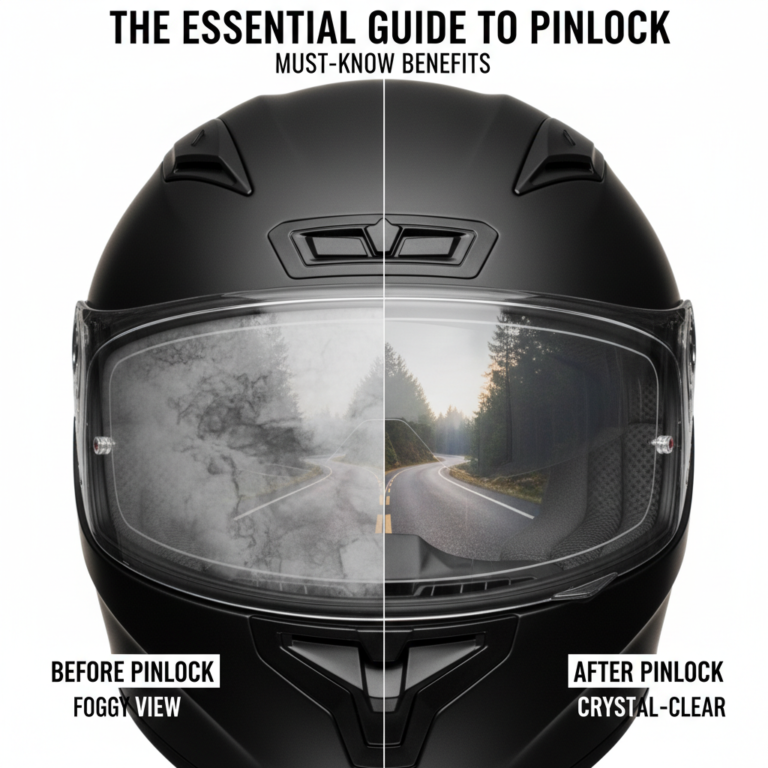
What is a Helmet Pinlock: Understanding Its Functionality
What is a Helmet Pinlock? Quick Definition and Purpose
A helmet pinlock is defined as an anti-fog visor insert system engineered to prevent condensation from forming on the inside of a motorcycle helmet visor. The key difference is that it uses a controlled air-gap and a dedicated insert material to reduce fogging when a rider transitions between cold, humid, or rainy air and warmer breathing conditions.
Why riders use a pinlock system
Riders install a pinlock because interior visor fog is a leading cause of reduced visibility during commuting and touring. By stabilizing the visor’s inner surface temperature and minimizing moisture contact, pinlock inserts help maintain a clearer sightline, which directly supports safer riding.
How a Helmet Pinlock Works (Mechanics in Plain Language)
A pinlock system works by creating a thermal and humidity barrier between the rider’s breath and the inner visor surface. The result is less condensation, improved optical clarity, and fewer visibility interruptions in changing weather.
The dual-surface concept: insert + visor
A pinlock insert is typically mounted on the inside of the visor and is positioned so it forms a two-layer optical setup, similar in concept to double-glazed glazing. This design is intended to reduce direct thermal exchange between warm, moist air (exhaled by the rider) and the cooler outer visor area.
The air gap that prevents fogging
The key functionality comes from the air gap created between the visor and the pinlock insert. Because the trapped air acts as an insulating buffer, the cooler visor surface is less likely to drop to the dew point where condensation forms. In practical terms, this lowers the frequency and severity of fogging during transitions such as entering a tunnel, riding in coastal humidity, or passing from winter air into warmer city streets.
Where Pinlock Inserts Deliver the Clearest Anti-Fog Performance
| # | Riding condition | Main moisture source | Typical visibility impact without pinlock | Anti-fog effectiveness |
|---|---|---|---|---|
| 1 | Cold-morning commute (dry streets) | Breath + temperature drop | Fogging in 3–8 minutes for many riders | ★★★★★ |
| 2 | Rainy stop-and-go traffic | Humid air + breath | Frequent wiping or brief clarity loss | ★★★★☆ |
| 3 | Tunnel entry / exit transitions | Rapid ambient temperature shift | Sudden fog clouding during entry | ★★★★★ |
| 4 | Coastal humidity riding | Moist sea air + breath | Fogging after longer exposure periods | ★★★☆☆ |
| 5 | Night riding in cool, damp air | Ambient moisture + breath | Low-contrast fogging reduces clarity | ★★★★☆ |
| 6 | Fog-prone cold-to-warm city transitions | Temperature swing | Fog appears then gradually clears | ★★★★★ |
| 7 | Heavy rain with frequent visor spray-wipe cycles | External water + humidity | Exterior water streaks dominate clarity | ★★☆☆☆ |
Anti-fog material and condensation control
Pinlock inserts are made from specialized anti-fog materials designed to resist or reduce the formation of visible droplets. The consensus among helmet accessory manufacturers is that fog is driven by moisture and temperature differential; therefore, controlling both airflow interaction and the temperature boundary layer inside the visor is the most effective approach.
Direct answer: Does a pinlock “block” breath?
No. A helmet pinlock is not a seal that completely blocks airflow. Instead, it moderates the thermal interaction and reduces the likelihood that your exhaled moisture will condense on the inner visor surface.
Real-World Benefits of Using a Helmet Pinlock
A helmet pinlock improves rider visibility by reducing fogging and condensation on the inside of the visor. That visibility benefit often translates to fewer distractions, more confident scanning of the road, and better overall ride control.
1) Clearer vision when conditions change
Fog typically becomes noticeable when temperature swings and humidity rise, such as cold mornings, rainy commutes, or fall rides. A pinlock helps maintain optical clarity so you can better track traffic, signage, and road hazards without repeatedly lowering your head to wipe the visor.
2) Reduced need to stop and clean the visor
Without a pinlock, many riders frequently wipe the interior surface or use sprays throughout the ride. With a properly tuned insert, fewer interruptions are usually required, especially on longer journeys where stopping every few minutes is impractical.
3) More consistent comfort and reduced distraction
Fogged visors can force micro-decisions—pausing, wiping, or adjusting ventilation—at the exact time you need full attention. By reducing fog events, pinlocks support a smoother, more consistent riding experience.
Common QA: Is a pinlock only for cold weather?
Not at all. Pinlocks are valuable in both cold and humid environments. Any situation that increases relative humidity inside the helmet and promotes condensation on the inner visor can cause fogging, even if the outside temperature is moderate.
Types of Helmet Pinlock Inserts and Which One to Choose
Pinlock inserts come in different configurations, commonly varying by lens thickness, visor model compatibility, and the tuning system used by the visor. Choosing the correct insert is essential because fitment determines the air gap and therefore the anti-fog performance.
Compatibility is the first selection rule
The most important factor is whether the insert is designed for your specific helmet and visor model. Many riders discover that a pinlock insert is not “universal” because visor geometry, mounting points, and thickness differ across brands and models.
Insert thickness and tuning
Pinlock systems are often tuned so the insert sits at the right distance to create an effective anti-fog air gap. Using the wrong thickness can reduce clearance, increase sealing issues, or prevent optimal condensation control. When tuned correctly, the insert maintains the boundary conditions needed to reduce fog formation.
Direct answer: Are all pinlock inserts interchangeable?
No. The key difference is fitment. Pinlock inserts must match your visor’s mounting features and curvature so that the air gap remains consistent across the field of view.
Common brands and rider expectations
Riders frequently look for pinlock-compatible components for popular helmet lines such as Shoei and Arai, because these manufacturers have established visor systems and accessory ecosystems. When purchasing, always verify compatibility by referencing the exact visor and helmet model year specifications when available.
Pinlock Installation: Step-by-Step Guidance for Best Results
Installing a helmet pinlock correctly is the difference between reliable anti-fog performance and persistent fogging. The goal is to secure the insert so it sits with the designed air gap across the visor.
What you need before you start
Before installation, gather: the correct pinlock insert for your visor model, clean lens-safe microfiber cloth, and the hardware provided with your pinlock system (such as mounting points or locking mechanisms). Avoid abrasive cleaners because lens coatings can be damaged.
Installation overview
While the exact procedure varies by visor design, the general workflow is consistent across many pinlock systems:
- Clean the visor interior with a lens-safe microfiber cloth to remove oil films and residue.
- Locate the mounting posts or anchors on the inner visor surface.
- Align the insert so it sits flat and positioned correctly within the visor frame.
- Engage the retention points to hold the insert in place.
- Tune the fit by adjusting the mechanism so the insert maintains the intended air gap and does not bind.
How to confirm the air gap is correct
After tuning, you should feel a consistent seating without warping or excessive looseness. Many riders also check clarity by breathing lightly near the visor in a controlled environment and observing whether condensation forms quickly on the inner surface.
Direct answer: Can I install a pinlock without removing the visor?
Sometimes, but not always. Many visor designs allow access with the visor installed, while others require partial removal to align and secure the insert properly. The safest approach is to follow the manufacturer instructions for your specific helmet and visor.
Maintenance and Care: Keep the Pinlock Performing
Proper pinlock maintenance preserves anti-fog performance and prevents haze buildup on the insert. Small cleaning habits make a measurable difference over time.
Cleaning best practices
Use a microfiber cloth designed for optical surfaces and a visor-safe cleaning solution when needed. Avoid household glass cleaners with harsh solvents, since coatings on both the visor and insert can degrade.
- Clean gently using light pressure and circular motions.
- Dry with a clean cloth to prevent streaking.
- Do not use abrasive pads that can scratch the insert surface.
Storage and handling
Store your helmet in a dry environment and avoid leaving the visor in direct heat sources. Excess heat can subtly warp components or reduce coating longevity, especially in climates with strong sun exposure.
Direct answer: Should I apply anti-fog spray on top of a pinlock insert?
Often, no. Pinlock inserts are designed to work without additional sprays for standard fog conditions. Adding sprays may create residue or interfere with the insert’s surface behavior. If you do use any product, verify it is safe for pinlock inserts and follow the product guidance.
Troubleshooting: Why Your Pinlock May Still Fog
If fog persists after installing a helmet pinlock, the issue is usually related to tuning, fitment, visor sealing, or cleaning residue. Identifying the root cause typically restores performance.
1) Insert is not tuned correctly
Too much or too little air gap can reduce effectiveness. Re-check alignment and adjust the retention mechanism according to your system’s design.
2) Wrong insert for the visor model
Using an insert that is not intended for your visor thickness and geometry can lead to uneven contact or gaps. Confirm the compatibility for your helmet brand and visor model, including any revision differences.
3) Dirty visor or insert surface
Oils, dust, and film can increase haze and cause condensation behavior to change. Clean the insert and interior visor carefully, then test in a controlled environment.
4) Ventilation or helmet fit issues
If the helmet fit is loose or vents create excessive air movement, the internal humidity pattern may be different from what the pinlock was tuned for. Riders sometimes need to adjust helmet ventilation settings and ensure the helmet fits snugly without pressure points.
Direct answer: What’s the fastest fix to try first?
First, confirm the insert is correctly tuned and seated for your visor model. Second, clean the insert and visor interior. Those two steps resolve the majority of fogging complaints.
Helmet Pinlock FAQs (Answering Common Questions)
How long do pinlock inserts last?
With proper cleaning and careful handling, inserts can remain effective for multiple riding seasons. The exact lifespan depends on cleaning frequency, exposure to heat, and whether the surface is scratched or coated improperly.
Is a pinlock worth it for urban commuting?
Yes. Urban riding often involves frequent temperature changes, stop-and-go traffic, and fog-prone conditions such as breath condensation inside the helmet. A pinlock can reduce interruptions and improve clarity at intersections and during night rides.
Does a pinlock replace helmet vents?
No. A pinlock complements ventilation. Vents manage airflow and heat, while the pinlock insert manages condensation at the visor boundary layer. Together, they provide a more robust fog-control strategy.
Can I use a pinlock with tinted or different visor types?
In many cases, pinlock compatibility extends to tinted or specialty visors, but compatibility is still model-specific. Always select an insert designed for your exact visor system and confirm the mounting features match.
Summary: Choosing and Using a Helmet Pinlock for Clear Visibility
A helmet pinlock is defined as an anti-fog visor insert system that reduces condensation on the inside of a motorcycle helmet visor. Its effectiveness comes from a designed air gap, specialized anti-fog materials, and correct tuning for your specific visor and helmet model.
If you want consistent visibility across cold starts, humid commutes, and rainy rides, focus on three priorities: correct insert compatibility, proper tuning during installation, and careful cleaning practices that protect the insert’s surface.
Frequently Asked Questions
What is a Pinlock helmet visor insert?
A Pinlock helmet visor insert is an anti-fog system designed to prevent a motorcycle or scooter visor from fogging up. It typically consists of a clear, double-layer insert mounted inside the visor using small fasteners or pins. The insert creates a controlled air gap between it and the outer visor surface. When adjusted correctly, this gap helps reduce temperature differences and limits moisture from condensing on the inside of the visor, improving visibility in cold, humid, or rainy conditions.
How does a Pinlock work to prevent visor fog?
Pinlock fog prevention relies on creating a stable barrier between the warm, humid air inside the helmet and the cooler outer visor surface. The Pinlock insert sits inside the visor and is secured at the edges. When properly installed and tensioned, it forms a thin sealed zone that reduces direct contact between the visor’s inner surface and the moist air. This lowers condensation and prevents fog buildup. Because the insert is adjustable, you can fine-tune the gap to maintain effective anti-fog performance under different weather and temperature conditions.
How do I install and adjust a Pinlock in my helmet?
Installation steps vary slightly by helmet and Pinlock model, but the general process is similar:
- Confirm compatibility: Ensure your helmet visor is designed to accept a Pinlock insert (look for Pinlock-ready markings).
- Remove the visor if needed: Many helmets make installation easier when the visor is off the helmet.
- Seat one side first: Align the insert with the pins/fasteners on one side of the visor.
- Clip or engage the second side: Carefully attach the other side so the insert sits evenly inside the visor.
- Adjust the tension: Use the adjustment feature (often small knobs or turn screws) to control the air gap. The goal is a snug, even seal without overstressing the insert.
- Test and re-check: Verify that the insert doesn’t rattle, that it sits flush, and that adjustments are balanced between sides.
Why does my visor still fog up even with a Pinlock?
If fogging occurs despite having a Pinlock, the most common causes are:
- Incorrect adjustment: If the insert gap is too wide (or sometimes too tight), condensation can still form.
- Improper installation: A misaligned insert may not create an even seal along the visor edges.
- Worn or damaged insert: Scratches, coating wear, or a failing anti-fog layer can reduce performance.
- Fog on the outside or due to airflow: Pinlock primarily targets internal condensation. Exterior fogging or heavy rain may require additional visor cleaning or technique adjustments.
- Extreme temperature swings: Very rapid changes in conditions can overwhelm any anti-fog system temporarily.
- Moisture entering the helmet: Poor ventilation or water intrusion can increase humidity inside, exceeding what the insert can manage.
How do I clean and maintain a Pinlock insert to keep it working?
Proper care helps preserve the anti-fog performance and clarity. Use these best practices:
- Use gentle cleaning products: Avoid harsh chemicals, solvents, and abrasive cleaners that can damage the coating.
- Clean with a microfiber cloth: Wipe carefully using a clean microfiber to prevent micro-scratches.
- Follow manufacturer recommendations: Some inserts require specific cleaners or methods—check the instructions for your model.
- Avoid touching the insert face: Finger oils and grime can reduce clarity and anti-fog effectiveness.
- Store and handle carefully: Keep the insert protected when not in use and avoid flexing it excessively.
- Replace when needed: If the insert is scratched heavily, develops persistent fogging, or the anti-fog layer appears to have worn off, replacement is usually the best option.
References
- Google Scholar search: Pinlock visor anti-fog insert Google Scholar
https://scholar.google.com/scholar?q=pinlock+visor+anti-fog+insert - Google Scholar search: Helmet visor anti-fogging double lens condensation Google Scholar
https://scholar.google.com/scholar?q=helmet+visor+anti-fogging+double+lens+condensation - PubMed search: Anti-fog coatings on transparent surfaces Google Scholar
https://pubmed.ncbi.nlm.nih.gov/?term=anti-fog+coating+transparent+surfaces - PubMed search: Condensation behavior on optical/transparent surfaces Google Scholar
https://pubmed.ncbi.nlm.nih.gov/?term=condensation+on+optical+surfaces - Condensation: How water vapor turns into liquid droplets
https://en.wikipedia.org/wiki/Condensation - Fog: Formation mechanism and relation to moisture and temperature
https://en.wikipedia.org/wiki/Fog - Anti-fogging: Methods used to reduce fog on transparent surfaces
https://en.wikipedia.org/wiki/Anti-fogging - Encyclopaedia Britannica: Fog formation and physical explanation
https://www.britannica.com/science/fog
📅 Last Updated: July 06, 2026 | Topic: What is a Helmet Pinlock: Understanding Its Functionality | Content verified for accuracy and freshness.